Robert Wittman - Priceless
Здесь есть возможность читать онлайн «Robert Wittman - Priceless» весь текст электронной книги совершенно бесплатно (целиком полную версию без сокращений). В некоторых случаях можно слушать аудио, скачать через торрент в формате fb2 и присутствует краткое содержание. Город: New York, Год выпуска: 2010, ISBN: 2010, Издательство: Crown Publishers, Жанр: Биографии и Мемуары, на английском языке. Описание произведения, (предисловие) а так же отзывы посетителей доступны на портале библиотеки ЛибКат.
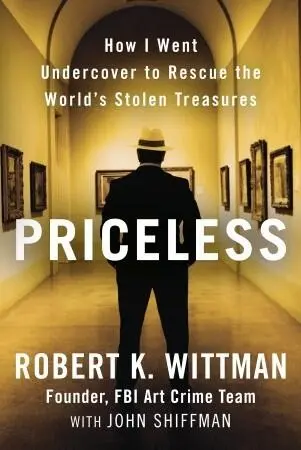
- Название:Priceless
- Автор:
- Издательство:Crown Publishers
- Жанр:
- Год:2010
- Город:New York
- ISBN:978-0-307-46149-0
- Рейтинг книги:3 / 5. Голосов: 1
-
Избранное:Добавить в избранное
- Отзывы:
-
Ваша оценка:
Priceless: краткое содержание, описание и аннотация
Предлагаем к чтению аннотацию, описание, краткое содержание или предисловие (зависит от того, что написал сам автор книги «Priceless»). Если вы не нашли необходимую информацию о книге — напишите в комментариях, мы постараемся отыскать её.
The London Times
In
Robert K. Wittman, the founder of the FBI’s Art Crime Team, pulls back the curtain on his remarkable career for the first time, offering a real-life international thriller to rival
.
Rising from humble roots as the son of an antique dealer, Wittman built a twenty-year career that was nothing short of extraordinary. He went undercover, usually unarmed, to catch art thieves, scammers, and black market traders in Paris and Philadelphia, Rio and Santa Fe, Miami and Madrid.
In this page-turning memoir, Wittman fascinates with the stories behind his recoveries of priceless art and antiquities: The golden armor of an ancient Peruvian warrior king. The Rodin sculpture that inspired the Impressionist movement. The headdress Geronimo wore at his final Pow-Wow. The rare Civil War battle flag carried into battle by one of the nation’s first African-American regiments.
The breadth of Wittman’s exploits is unmatched: He traveled the world to rescue paintings by Rockwell and Rembrandt, Pissarro, Monet and Picasso, often working undercover overseas at the whim of foreign governments. Closer to home, he recovered an original copy of the Bill of Rights and cracked the scam that rocked the PBS series By the FBI’s accounting, Wittman saved hundreds of millions of dollars worth of art and antiquities. He says the statistic isn’t important. After all, who’s to say what is worth more—a Rembrandt self-portrait or an American flag carried into battle? They're both priceless.
The art thieves and scammers Wittman caught run the gamut from rich to poor, smart to foolish, organized criminals to desperate loners. The smuggler who brought him a looted 6th-century treasure turned out to be a high-ranking diplomat. The appraiser who stole countless heirlooms from war heroes’ descendants was a slick, aristocratic con man. The museum janitor who made off with locks of George Washington's hair just wanted to make a few extra bucks, figuring no one would miss what he’d filched.
In his final case, Wittman called on every bit of knowledge and experience in his arsenal to take on his greatest challenge: working undercover to track the vicious criminals behind what might be the most audacious art theft of all.
Priceless — читать онлайн бесплатно полную книгу (весь текст) целиком
Ниже представлен текст книги, разбитый по страницам. Система сохранения места последней прочитанной страницы, позволяет с удобством читать онлайн бесплатно книгу «Priceless», без необходимости каждый раз заново искать на чём Вы остановились. Поставьте закладку, и сможете в любой момент перейти на страницу, на которой закончили чтение.
Интервал:
Закладка:
Inside the bureaucracy, the Art Crime Team lost its juice.
WITH LAURENZ ON vacation, the Miami/Marseilles boat stings remained on hold. But my supposed colleagues in France stayed busy.
On a Thursday call with Pierre, I learned that the French SIAT undercover chief and a Paris-based FBI agent now planned to try to squeeze me out and run the operation entirely in France. The same SIAT chief who’d once told me it was impossible for Laurenz to enter France now planned to sneak him in and do the deal without me. I was dumbfounded. It was one thing for the Boston supervisor to try to tell a street agent like me what to do, but it was quite another for an American colleague in Paris to conspire against me with a foreign police officer.
I told Pierre about Fred, his crazy EC, his rants, and the Washington meeting. I told him about losing Eric as unit chief and how it would hurt the FBI Art Crime Team. Pierre and I talked about the Miami boat deal, and when I mentioned that it would be delayed for three weeks because Laurenz was going on vacation in Hawaii, Pierre burst out laughing.
“What’s so damn funny?” I asked.
“My guys in Paris, your guys in Paris, Fred in Boston, Laurenz off sunning himself at the beach when you want to do a deal, losing your friend Eric from Washington,” he said. “Everyone is giving you the banana to slip on.”
THE NIGHT BEFORE the Miami yacht deal, I brought the six fake paintings to Laurenz’s house. Sunny helped me carry them inside.
The three of us sat under palm trees by the pool and smoked cigars, steps from the dock and Laurenz’s beloved Jet Skis.
I laid out the plan—the six paintings for $1.2 million. Laurenz tried to act cool, but I could tell he was excited. I doubted Laurenz ever got his hands dirty; he paid others to do it. Sunny sat quietly and smoked, sipping a bottle of Evian. When I finished, I asked Sunny if he had any questions.
“Non , I am OK,” he said. “I have my insurance. Got my gun.”
“No, no weapons,” I said. “If they pat us down on the boat, it’ll insult our hosts. I’ve never done a deal with a gun. Never needed it.”
Sunny laughed. “And I’ve never done a deal without one!” Sunny turned to Laurenz. “Tell Bob what Patrick said.” Patrick was one of their contacts on the French Riviera.
“He wants to sell us about ten paintings,” Laurenz said. “There is a Monet and I think others. He will send pictures. He says they are worth forty million euros and he wants six million.”
“What’s that in dollars?” I said. “Ten million?”
“Mmm, maybe more like nine,” Laurenz said. “You interested? With these guys, you don’t screw around. Once you agree to buy the paintings, you must follow through.”
“Or?” I said, acting dumb to try to provoke a reaction.
Sunny scoffed and stood, agitated, pacing, and speaking rapidly in French. Laurenz translated: “We must be entirely serious. We do not want to go to war with these people. They are stone-cold killers. They killed my best friend. He was driving in his car and the assassin pulled up at a light on a motorcycle and shot him. We are dealing with loosely organized gangs. Maybe two hundred guys in all, in France, Spain, Serbia, Corsica. Different gangs have different caches of paintings. Some of these guys have been in prison for years, and have been hiding the paintings, waiting out their sentences. Some paintings are badly damaged because they’ve been taken from their original frames. One of the big Rembrandts you seek is badly damaged. Our friend Patrick is going to try to get it repaired.”
Alarmed, I interrupted Sunny’s spiel. “No, no. Tell him not to do that. It might make it worse, decrease the value. Let me get the professionals to do that. I know some guys.”
I told Sunny I’d think about buying the Monet, but I really wanted the Old Masters, especially the Vermeer and the Rembrandts.
Sunny was adamant. “First, you must take what they offer.”
WE DID THE Miami yacht deal the following afternoon.
We drove the six paintings to the harbor in Laurenz’s new platinum Rolls. Sunny and I carried them onto the undercover yacht, The Pelican . We cruised Miami Harbor into the late afternoon, watched the undercover bikini babes dance and eat strawberries, and I “sold” the fake paintings to the fake Colombian drug dealers for $1.2 million.
The Colombians paid me with a phony wire transfer and with the diamonds and Krugerrands from the FBI vault. When we left the boat, I tossed the small sack of ten diamonds to Sunny and gave Laurenz a few of the gold coins. “For your help today,” I said.
Sunny held the sack aloft and said, “Dinner’s on me.”
We drove to La Goulue to celebrate. On the ride up Miami Beach, Sunny seemed more interested in talking about the drug dealers and the bikini girls than the painting deal. While on the boat, he said, he’d talked to one of the Colombians about a possible cocaine deal.
“I don’t know about those guys,” Sunny said. “I don’t know them. Maybe they are cops.”
“Yeah, be careful—I don’t know them well either,” I said, trying to play it cool without discouraging him from considering the drug deal. “You don’t want to be messing around with drugs anyway, Sunny. You make more money with art. But hey, man, if you like drugs, that’s up to you. Maybe you know drugs better. And those guys, I know their money is good. But that’s all you. I don’t want any part of it.”
“Mmm,” Sunny said. “I don’t know.”
I dropped it, unsure if he would take the bait. The cocaine angle, created by the Miami agents, was designed to develop several opportunities in the Gardner case. At a minimum, we hoped it would allow us to introduce Sunny to more undercover FBI agents, men he might grow to trust. We could wait to see how the Gardner case was playing out and, if appropriate, bust Sunny on a serious drug charge and try to flip him—threaten him with a very long prison sentence unless he agreed to help us recover the Boston paintings. Also, we believed that a drug scenario might create a safety valve for use in an emergency. If we needed to make a sudden arrest of one of the Gardner conspirators, here or in France, we could always deflect blame to one of Sunny’s new drug buddies, plant the idea that one of them was a snitch.
By the time we arrived at the French restaurant, the three of us were talking about art again, not cocaine. We discussed the plan to helicopter into Monaco, and whether Patrick, Sunny’s French connection, could meet us there. I suggested that this would be a lot easier if Patrick and his partners simply flew to Florida to meet with us. Then we could hash everything out. Laurenz liked this idea and Sunny said he would call Patrick.
Then, out of the blue, Sunny asked me if I liked Picasso. When I said sure, he asked me if I’d heard about the recent heist in Paris, the theft of two paintings valued at $66 million from the apartment of Picasso’s granddaughter. I told him I had. Laurenz and Sunny smiled slyly.
Our meals arrived and Sunny said, “We eat. We talk business later.” We spoke of family, Jet Skis, Laurenz’s Hawaiian vacation, and the deal he got on his new platinum Rolls-Royce. We never returned to the Picassos.
Everything seemed copacetic. The bill came while Laurenz was on a phone call and Sunny used the opportunity to politely excuse himself and slip away, sticking Laurenz with the check.
IN MAY, BOSTON and Paris launched a new paperwork salvo.
It was a clever setup to push me out and began with an EC from Boston to Paris. On the surface, the questions seemed innocuous enough: Given the “Bob is a cop” suspicion, did the French police believe that my undercover identity had been compromised? Could I safely travel undercover to France to meet with the people offering to sell the Gardner paintings?
Читать дальшеИнтервал:
Закладка:
Похожие книги на «Priceless»
Представляем Вашему вниманию похожие книги на «Priceless» списком для выбора. Мы отобрали схожую по названию и смыслу литературу в надежде предоставить читателям больше вариантов отыскать новые, интересные, ещё непрочитанные произведения.






Обсуждение, отзывы о книге «Priceless» и просто собственные мнения читателей. Оставьте ваши комментарии, напишите, что Вы думаете о произведении, его смысле или главных героях. Укажите что конкретно понравилось, а что нет, и почему Вы так считаете.