Robert Wittman - Priceless
Здесь есть возможность читать онлайн «Robert Wittman - Priceless» весь текст электронной книги совершенно бесплатно (целиком полную версию без сокращений). В некоторых случаях можно слушать аудио, скачать через торрент в формате fb2 и присутствует краткое содержание. Город: New York, Год выпуска: 2010, ISBN: 2010, Издательство: Crown Publishers, Жанр: Биографии и Мемуары, на английском языке. Описание произведения, (предисловие) а так же отзывы посетителей доступны на портале библиотеки ЛибКат.
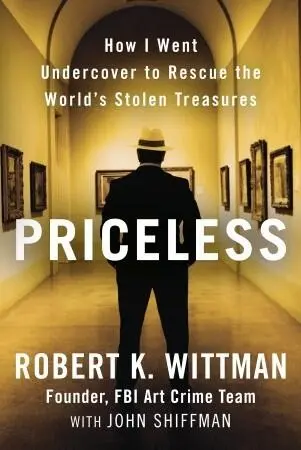
- Название:Priceless
- Автор:
- Издательство:Crown Publishers
- Жанр:
- Год:2010
- Город:New York
- ISBN:978-0-307-46149-0
- Рейтинг книги:3 / 5. Голосов: 1
-
Избранное:Добавить в избранное
- Отзывы:
-
Ваша оценка:
Priceless: краткое содержание, описание и аннотация
Предлагаем к чтению аннотацию, описание, краткое содержание или предисловие (зависит от того, что написал сам автор книги «Priceless»). Если вы не нашли необходимую информацию о книге — напишите в комментариях, мы постараемся отыскать её.
The London Times
In
Robert K. Wittman, the founder of the FBI’s Art Crime Team, pulls back the curtain on his remarkable career for the first time, offering a real-life international thriller to rival
.
Rising from humble roots as the son of an antique dealer, Wittman built a twenty-year career that was nothing short of extraordinary. He went undercover, usually unarmed, to catch art thieves, scammers, and black market traders in Paris and Philadelphia, Rio and Santa Fe, Miami and Madrid.
In this page-turning memoir, Wittman fascinates with the stories behind his recoveries of priceless art and antiquities: The golden armor of an ancient Peruvian warrior king. The Rodin sculpture that inspired the Impressionist movement. The headdress Geronimo wore at his final Pow-Wow. The rare Civil War battle flag carried into battle by one of the nation’s first African-American regiments.
The breadth of Wittman’s exploits is unmatched: He traveled the world to rescue paintings by Rockwell and Rembrandt, Pissarro, Monet and Picasso, often working undercover overseas at the whim of foreign governments. Closer to home, he recovered an original copy of the Bill of Rights and cracked the scam that rocked the PBS series By the FBI’s accounting, Wittman saved hundreds of millions of dollars worth of art and antiquities. He says the statistic isn’t important. After all, who’s to say what is worth more—a Rembrandt self-portrait or an American flag carried into battle? They're both priceless.
The art thieves and scammers Wittman caught run the gamut from rich to poor, smart to foolish, organized criminals to desperate loners. The smuggler who brought him a looted 6th-century treasure turned out to be a high-ranking diplomat. The appraiser who stole countless heirlooms from war heroes’ descendants was a slick, aristocratic con man. The museum janitor who made off with locks of George Washington's hair just wanted to make a few extra bucks, figuring no one would miss what he’d filched.
In his final case, Wittman called on every bit of knowledge and experience in his arsenal to take on his greatest challenge: working undercover to track the vicious criminals behind what might be the most audacious art theft of all.
Priceless — читать онлайн бесплатно полную книгу (весь текст) целиком
Ниже представлен текст книги, разбитый по страницам. Система сохранения места последней прочитанной страницы, позволяет с удобством читать онлайн бесплатно книгу «Priceless», без необходимости каждый раз заново искать на чём Вы остановились. Поставьте закладку, и сможете в любой момент перейти на страницу, на которой закончили чтение.
Интервал:
Закладка:
The answer from Paris: While there was no direct evidence that my cover was blown, the Paris office noted that “a significant degree of danger will exist” if I worked undercover in France.
I studied the two documents and shook my head. Of course an international undercover operation would pose “a significant degree” of danger! You didn’t need to be an FBI agent to know that. But in the risk-averse culture of the FBI, I knew that a memo like that would set off alarm bells and flashing yellow lights. Everyone was now on notice that I might be hurt or killed in France, and no supervisor wanted that on his record, especially when we’d all been warned in writing.
No one was directly saying I couldn’t remain on the case and work undercover in Paris, but the vibe was chilling. My supervisors in Philadelphia got on the line with Fred and his bosses, then with the FBI supervisors in Paris and Miami. Afterward, my Philadelphia bosses told me that the atmosphere had grown so toxic that Boston didn’t even want me to play a consulting role. The internal strife was so intense that it now jeopardized the case and the safety of the agents involved, including me. My Philadelphia bosses advised me to withdraw from the Gardner investigation. Reluctantly, I agreed.
But how to tell Laurenz and Sunny without ruining the case?
I kept it short, sweet, and as close to the truth as possible. It was nice working with you guys, I explained, but my boss has lost confidence in me and wants someone else to step in. I told them I could no longer take their calls.
Hysterical, Laurenz left me voice mails and sent several unsettling e-mails, rants that revealed desperation and vulnerabilities he had never displayed in person.
“Good evening!” Laurenz wrote in one e-mail in broken English and peppered with capital letters and exclamation points. “I am very sad. I am really in a difficult situation tonight. Why doing all the risks, my life, my future, my time? For nothing! Why? I was thinking we could really get these paintings and now I know it is just an illusion? Why? Why? I REALLY NEED SOME EXPLANATIONS. Good night! Sweet dreams!”
I felt compelled to reply, but did so with an incredibly bureaucratic, cover-your-ass e-mail, one that conveyed the warmth of a corporate customer service representative. “I understand your concerns and questions and have relayed them…” I felt awful, but I didn’t have a choice.
Laurenz responded in minutes. “It’s ridiculous! I am spending/investing a lot of money and now you throw me a DOG BONE? Be nice? Talk to someone else? No! The only person I will talk to is BOB! ONLY BOB! I don’t trust anyone else.”
I let the FBI offices in Boston and Paris know about the e-mails and calls and they were not pleased. In short order, they sent a request to my boss in Philadelphia, demanding all recordings and investigative notes of my contacts with Laurenz. The memo read like a subpoena.
It marked the lowest moment in my FBI career since December 20, 1989, the night of the accident. I began growing irritable, sleepless. I tried to hide it from the kids, but Donna bore the brunt of my frustration. She understood I was one year from retirement, and encouraged me to fight for my reputation.
Few inside or outside the FBI knew of my despair. On the surface, everything seemed fine and my success as the FBI’s top art-crime sleuth only grew. That summer, I recovered the original, hand-edited manuscript of Pearl Buck’s Pulitzer Prize-winning novel The Good Earth . The press conference was well attended, but as I took my usual place, out of sight behind the television cameras, I couldn’t help feeling hollow.
FOR A FEW weeks, I followed orders and didn’t call anyone involved in the Gardner case. But I couldn’t stop Laurenz or Pierre from contacting me.
One afternoon in mid-July, Laurenz sent me several e-mails I couldn’t ignore.
Attached to each e-mail was a photograph of a Picasso painting beside a week-old copy of a Paris newspaper. I instantly recognized these “proof of life” pictures as the paintings stolen from Picasso’s granddaughter’s apartment—the ones Sunny and Laurenz had mentioned offhandedly at the restaurant a few months earlier. Laurenz wanted me to buy them.
I didn’t respond, but I let my supervisors know. Soon, Pierre was calling from Paris.
“You know of the Picassos stolen in Paris?” he said. “I have now seen the e-mails.”
“Right,” I said, cautiously.
“There is more,” Pierre said. I knew Pierre was tapping many phones, including Sunny’s, and his team was doing its best to monitor any calls Laurenz made to France. “On the wiretaps, Sunny and Laurenz are talking to these bad guys who have the Picassos about selling the paintings to our undercover man, Andre. And on the phone, they say that Andre can be trusted because he works with a man named Bob in Miami. And I do not think there is another Bob in Miami who they are talking about.”
“Probably not, no.”
I shook my head as I untangled the logic of the situation. At the beginning of the Gardner investigation, Andre had vouched for me to Laurenz, leading him to believe that Andre and I had worked together as shady art dealers. But now that Laurenz and Sunny believed the three of us had actually committed a major crime together—the “sale” on The Pelican —the vouch had doubled back on itself. Sunny and Laurenz were now telling the thieves that Andre could be trusted because Bob could be trusted. Yes, Laurenz was annoyed with me because I’d pulled out of the Gardner deal, but he still believed I was trustworthy. After all, we’d done business together and no one had been arrested. What could be better evidence of my criminal credentials than that?
“So, this has created a problem because of the Boston case,” Pierre said. “Your friends Fred and the others at FBI, they ask us to wait. To not take the paintings right now. You understand why?”
“Yeah, I do.” The moment Andre and his fellow officers completed their sting in the Picasso case, making arrests, the thieves would know that someone involved was actually an informant or an undercover cop. Suspicion would likely turn to Andre and perhaps to his American partner, Bob, the man whose bona fides Sunny and Laurenz had used to convince the thieves to work with Andre in the first place. If that happened, it might ruin any chance of using Laurenz and Sunny to recover the Gardner paintings.
I also understood Pierre’s dilemma. He couldn’t let $66 million worth of Picassos slip away. If word got out that he had failed to recover the artwork as a favor to the FBI, it would create a scandal and probably scuttle his career.
So I offered Pierre a suggestion: When you make the bust, pretend to arrest your undercover police officer. That way the thieves won’t know who betrayed them. At a minimum, it will buy us time.
Pierre liked the idea. “You are a good chess player,” he said, and promised to make it happen.
Incredibly, Pierre’s orders were not carried out during the Paris sting—the French SWAT team failed to arrest their undercover officer with the thieves. Worse, during an interrogation, another French policeman confirmed to one of the thieves that the buyer was in fact an undercover agent. It didn’t take long for the thieves in Paris to make the link from Andre to Laurenz and to me.
Pierre called and apologized profusely for the screwup. It wasn’t intentional, he said, and I believed him.
Unfortunately, the consequences were immediate and severe.
LAURENZ CALLED IN a panic a few days after the Picasso sting.
“They want to kill me! They want you! You and me! They want to assassinate us both!”
I told him to calm down and start from the beginning. Associates of the Picasso thieves were in Miami with Sunny, he said, demanding answers from Laurenz and money for the thieves’ legal bills.
Читать дальшеИнтервал:
Закладка:
Похожие книги на «Priceless»
Представляем Вашему вниманию похожие книги на «Priceless» списком для выбора. Мы отобрали схожую по названию и смыслу литературу в надежде предоставить читателям больше вариантов отыскать новые, интересные, ещё непрочитанные произведения.











Обсуждение, отзывы о книге «Priceless» и просто собственные мнения читателей. Оставьте ваши комментарии, напишите, что Вы думаете о произведении, его смысле или главных героях. Укажите что конкретно понравилось, а что нет, и почему Вы так считаете.