Robert Wittman - Priceless
Здесь есть возможность читать онлайн «Robert Wittman - Priceless» весь текст электронной книги совершенно бесплатно (целиком полную версию без сокращений). В некоторых случаях можно слушать аудио, скачать через торрент в формате fb2 и присутствует краткое содержание. Город: New York, Год выпуска: 2010, ISBN: 2010, Издательство: Crown Publishers, Жанр: Биографии и Мемуары, на английском языке. Описание произведения, (предисловие) а так же отзывы посетителей доступны на портале библиотеки ЛибКат.
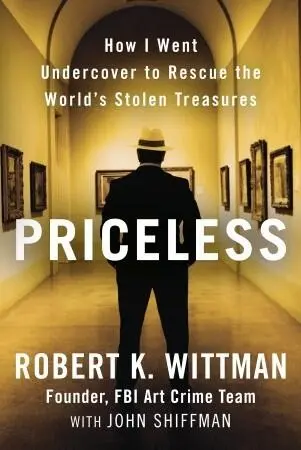
- Название:Priceless
- Автор:
- Издательство:Crown Publishers
- Жанр:
- Год:2010
- Город:New York
- ISBN:978-0-307-46149-0
- Рейтинг книги:3 / 5. Голосов: 1
-
Избранное:Добавить в избранное
- Отзывы:
-
Ваша оценка:
Priceless: краткое содержание, описание и аннотация
Предлагаем к чтению аннотацию, описание, краткое содержание или предисловие (зависит от того, что написал сам автор книги «Priceless»). Если вы не нашли необходимую информацию о книге — напишите в комментариях, мы постараемся отыскать её.
The London Times
In
Robert K. Wittman, the founder of the FBI’s Art Crime Team, pulls back the curtain on his remarkable career for the first time, offering a real-life international thriller to rival
.
Rising from humble roots as the son of an antique dealer, Wittman built a twenty-year career that was nothing short of extraordinary. He went undercover, usually unarmed, to catch art thieves, scammers, and black market traders in Paris and Philadelphia, Rio and Santa Fe, Miami and Madrid.
In this page-turning memoir, Wittman fascinates with the stories behind his recoveries of priceless art and antiquities: The golden armor of an ancient Peruvian warrior king. The Rodin sculpture that inspired the Impressionist movement. The headdress Geronimo wore at his final Pow-Wow. The rare Civil War battle flag carried into battle by one of the nation’s first African-American regiments.
The breadth of Wittman’s exploits is unmatched: He traveled the world to rescue paintings by Rockwell and Rembrandt, Pissarro, Monet and Picasso, often working undercover overseas at the whim of foreign governments. Closer to home, he recovered an original copy of the Bill of Rights and cracked the scam that rocked the PBS series By the FBI’s accounting, Wittman saved hundreds of millions of dollars worth of art and antiquities. He says the statistic isn’t important. After all, who’s to say what is worth more—a Rembrandt self-portrait or an American flag carried into battle? They're both priceless.
The art thieves and scammers Wittman caught run the gamut from rich to poor, smart to foolish, organized criminals to desperate loners. The smuggler who brought him a looted 6th-century treasure turned out to be a high-ranking diplomat. The appraiser who stole countless heirlooms from war heroes’ descendants was a slick, aristocratic con man. The museum janitor who made off with locks of George Washington's hair just wanted to make a few extra bucks, figuring no one would miss what he’d filched.
In his final case, Wittman called on every bit of knowledge and experience in his arsenal to take on his greatest challenge: working undercover to track the vicious criminals behind what might be the most audacious art theft of all.
Priceless — читать онлайн бесплатно полную книгу (весь текст) целиком
Ниже представлен текст книги, разбитый по страницам. Система сохранения места последней прочитанной страницы, позволяет с удобством читать онлайн бесплатно книгу «Priceless», без необходимости каждый раз заново искать на чём Вы остановились. Поставьте закладку, и сможете в любой момент перейти на страницу, на которой закончили чтение.
Интервал:
Закладка:
Patrick described his four accomplices as two close friends and two nobodies, gypsies. The five of them dressed in blue city maintenance jumpsuits and shielded their faces with either bandanas or motorcycle helmets. Security was a joke. No surveillance cameras. No alarms. The half dozen guards on duty were unarmed, pimply-faced kids. Pushovers, Patrick recalled. With their ill-fitting blazers and drooping khakis, the guards were perhaps the worst-dressed males in France.
Patrick said his crew was in and out in four minutes.
Wielding handguns, the thieves pushed open the glass door at the entrance and ordered the guards and a handful of visitors to the floor. The gypsy henchmen held everyone at bay in the foyer as the others sprinted toward their targets. One thief ran through a sky-lit ground floor garden to a rear gallery, removing two paintings by the Flemish artist Jan Brueghel the Elder, Allegory of Water and Allegory of Earth . Patrick and an accomplice vaulted up sixty-six marble steps to the second floor, then scampered another thirty-four paces, past a Chéret mural and a Rodin rendering of The Kiss , to a room lined with Impressionist paintings, each hanging by a single hook. Patrick and his buddy lifted Monet’s Cliffs Near Dieppe and Sisley’s Lane of Poplars at Moret-sur-Loing and raced back downstairs. The thieves escaped by motorbike and blue Peugeot van.
I’d already read the French police file and knew the story well. But as Patrick related his tale, I reacted with awe at his cleverness and derring-do.
As a favor to Pierre, I began by pushing hard for the Sisley and Monet. Pierre sought these above the others because they were property of the French national government, on loan from the Musée d’Orsay in Paris. The Brueghels were owned by the city of Nice and less valuable.
Patrick opened the negotiation by valuing the paintings at $40 million. I told him he was crazy, that the four paintings were worth no more than $5 million on the open market, which meant they were worth $500,000 tops on the black market. We negotiated for more than ninety minutes in the foul hotel room, with its dingy drapes and air stale with cigarette smoke. The air conditioner didn’t work and I didn’t dare flip on the ceiling fan because I worried it might gum up the hidden camera and microphone.
Patrick was a fierce negotiator and I found myself in an unusual position. In other cases—with the Rembrandt in Copenhagen, the Geronimo headdress in Philadelphia, the Koplowitz paintings in Madrid—I’d been able to offer any amount, knowing I’d never have to pay the money. But here, it was possible we might let the money for the Nice paintings walk— if we were near certain it would lead to the Gardner paintings .
As the afternoon waned, Patrick dropped his offer from $4 million to $3 million. Patrick was hungry to cash in. He’d planned this great heist, pulled it off, and all he had to show for it was four pretty pictures that could land him back in prison. He’d said he’d left the Nice paintings in France and had come only to talk. But what he if was lying? What if he had the paintings close by? Could he be tempted by a bag of cash? And what of the Gardner paintings?
I threw out a couple of options.
What if I gave Patrick $50,000 cash on the spot for the four Nice paintings with the balance due after I sold them? If I didn’t sell them, I told Patrick, I’d return the paintings and he could keep the $50,000. He said no.
OK, I said, what if I gave him the $50,000 for just the Monet and Sisley? He could keep the other two while I tried to sell them. Again, Patrick said no.
I gave it one last try and swung for the fences. On the chance that Sunny had lied, and that Patrick somehow had access to the Gardner paintings, I made a proposal. I pointed to my friends from Miami on the bed and told Patrick that they had a boat moored on the coast here, ready to smuggle the paintings back to Florida. Now, I said, Sunny knows I’ve got $30 million sitting in the bank, cash ready to be wired the moment I receive the Vermeer, the Rembrandt, and the other Boston paintings. So while I’m here, I said, why don’t we just do that deal too, and put all the paintings on the boat?
Sunny looked away from both of us, quiet. Patrick switched from French to English. He said, “You want Vermeer? I’ll get you Vermeer.”
“Can you get it?” I asked.
“No problem,” he said confidently. “I get anything you want. I find you one. There are many Vermeer.” He was offering to steal one for me.
“No, I don’t want a new one—they’re too hot,” I said. “I want an old one, missing for many years.”
Patrick nodded. “I sell you paintings from Nice. Then we talk more with Sunny.”
“Right,” I said. “OK.” So Patrick had no access to the Gardner paintings. But Sunny, I still believed, was using the Nice sale to test me. If I could win his trust with this buy, we still had a chance.
Patrick and I negotiated for another hour and finally settled on a tentative price for the Nice paintings, a little less than $3 million.
Patrick took a long drag on his cigarette. He blew smoke from the corner of his mouth, toward the translator. In English, he said, “Bob, very important, we would like business but very quiet business. You understand what I say?”
“I understand.”
“Very, very quiet.”
“Silencieux,” I said.
“Voilà,” Patrick said and stubbed out his cigarette.
AFTER BARCELONA, I never saw Sunny or Patrick again.
We spoke by phone in code but once we settled on the price I told them to work out the logistics with the undercover FBI agents in Miami. I was a financier, I explained, not a smuggler.
Four months later, when Patrick and a French friend visited Sunny in South Florida, I told them I was too busy to see them. My colleagues in Miami treated Sunny, Patrick, and their friends to one last party aboard The Pelican , and they set the final handover of the Nice paintings for June in Marseilles. The French were still refusing to allow me or any other FBI agents to go undercover in Marseilles, and Sunny knew better than to meet with anyone but me. Luckily, Patrick was calling the shots now, and he was dumb and desperate enough to agree to deal with my buyer in Marseilles—who was, of course, a SIAT agent, a member of the French undercover police.
The final takedown was imminent.
ON THE MORNING of June 4, 2008, a blue Peugeot van pulled out of a garage in Carry-le-Rouet, a tiny coastal Riviera town west of Marseilles. A compact beige jalopy followed close behind, Patrick at the wheel.
Undercover French officers watching nearby radioed ahead, noting that the van was heading southeast, as expected. The vehicles wove through downtown Marseilles on side streets, doubling back to avoid detection in Wednesday morning rush-hour traffic. But they did not shake Pierre’s surveillance men. How could they? The French police knew precisely where they were headed. The thieves were on their way to meet a SIAT agent, a man they believed to be working for me.
When the van and the jalopy reached the old harbor, they headed for the Corniche John Fitzgerald Kennedy, the picturesque road that hugs the rocky Riviera coast, rising fifty feet above the lapping waves of the glimmering Mediterranean Sea. The gangsters with the paintings came armed for battle. One of the men in the van brought an automatic weapon. In the small car that followed, Patrick carried a Colt .45 under his jacket. His passenger, a hulking man with shoulder-length blond hair, gripped a Czech-made hand grenade.
The vehicles snaked their way past the four-star Pullman Marseille Palm Beach, a mod-style hotel cut into the seaside beneath the roadway. Pierre and a small army of French police officers were coordinating the sting from the Pullman, two hundred meters from the takedown site, staffing a command center with a SWAT team and, in case it was necessary, a suitcase full of euros.
Читать дальшеИнтервал:
Закладка:
Похожие книги на «Priceless»
Представляем Вашему вниманию похожие книги на «Priceless» списком для выбора. Мы отобрали схожую по названию и смыслу литературу в надежде предоставить читателям больше вариантов отыскать новые, интересные, ещё непрочитанные произведения.











Обсуждение, отзывы о книге «Priceless» и просто собственные мнения читателей. Оставьте ваши комментарии, напишите, что Вы думаете о произведении, его смысле или главных героях. Укажите что конкретно понравилось, а что нет, и почему Вы так считаете.