Hugh Mills - Low Level Hell
Здесь есть возможность читать онлайн «Hugh Mills - Low Level Hell» весь текст электронной книги совершенно бесплатно (целиком полную версию без сокращений). В некоторых случаях можно слушать аудио, скачать через торрент в формате fb2 и присутствует краткое содержание. Город: Novato, CA, Год выпуска: 2009, ISBN: 2009, Издательство: Presidio Press, Жанр: Биографии и Мемуары, military_history, на английском языке. Описание произведения, (предисловие) а так же отзывы посетителей доступны на портале библиотеки ЛибКат.
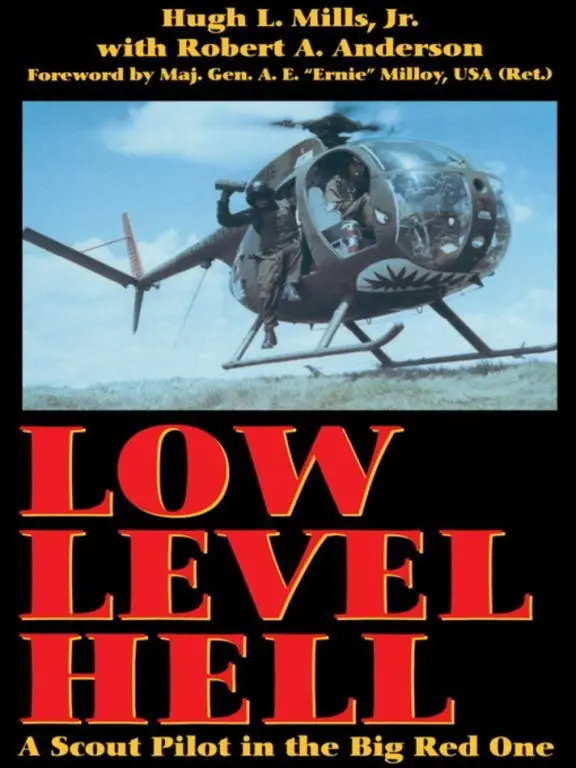
- Название:Low Level Hell
- Автор:
- Издательство:Presidio Press
- Жанр:
- Год:2009
- Город:Novato, CA
- ISBN:978-0-307-53792-8
- Рейтинг книги:4 / 5. Голосов: 1
-
Избранное:Добавить в избранное
- Отзывы:
-
Ваша оценка:
Low Level Hell: краткое содержание, описание и аннотация
Предлагаем к чтению аннотацию, описание, краткое содержание или предисловие (зависит от того, что написал сам автор книги «Low Level Hell»). Если вы не нашли необходимую информацию о книге — напишите в комментариях, мы постараемся отыскать её.
Low Level Hell — читать онлайн бесплатно полную книгу (весь текст) целиком
Ниже представлен текст книги, разбитый по страницам. Система сохранения места последней прочитанной страницы, позволяет с удобством читать онлайн бесплатно книгу «Low Level Hell», без необходимости каждый раз заново искать на чём Вы остановились. Поставьте закладку, и сможете в любой момент перейти на страницу, на которой закончили чтение.
Интервал:
Закладка:
We hadn’t been in An Loc more than twenty minutes before another OH-6 bearing Bob Davis’s tail number roared in from the south. He set down and came running over to my ship.
“Hey, Hubie,” he panted, “you need to get your ass back to the troop pronto. You have obviously pissed off somebody somethin’ terrible and they want to see you at division. Has something to do with yesterday’s action. That’s all I know!”
“OK, but what in the hell have I done?”
“I told you all I know,” Davis responded, “but you better get a move on.”
I quickly filled Bob in on the briefing, then jumped back into the airplane with crew chief Jim Slater and headed back to Phu Loi.
It was not unusual when on a nontactical mission for the crew chief to ride up front in the left seat. That’s where Slater jumped in, and as soon as we were up and on a direct to Phu Loi, I told him, “Hey, Jimbo, you’re going to fly. I’m dead, man.” He grabbed the controls. “Yes, sir! I want to fly, Lieutenant.”
I pulled my legs up and tried to relax, but my leg muscles still cramped up every time I moved them. I lit a cigarette and thought to myself that I wouldn’t last long in this damned war with many more days like yesterday. I wondered what I had done to get called off a mission and back to division.
Back down in Phu Loi, the operations CQ informed me that I was to go on to division headquarters at Lai Khe and see the G-2. “You are to brief intelligence on what you saw yesterday,” he said, “and Mr. Ameigh will be going with you.”
Ameigh was my hootch mate. He was a scout pilot and was also the troop historian. But why would he be going back to division with me? By now I was beginning to get pretty worried.
Ameigh climbed in the left seat with his camera in hand. “What are you carrying a camera for, Jim?” I asked him.
“You never know when there’s a good picture waiting to be taken, ol’ buddy.”
The comment went right over the top of my head. But leaving it at that, we flew off to division headquarters, where we were met by a major who was the coordinator of the division commander’s staff. He looked at my name tag and the Darkhorse patch on my flight suit. “Lieutenant Mills, the people you actually need to see are not here. I want you to go on up to fire support base Lorraine. There are some people there who want to talk to you.”
Ameigh and I got back into the OH-6. I began to wonder if I had hit some friendlies on that last smokin’ pass over the enemy base camp. FSB Lorraine was home base for Alpha Company, 2d Battalion, 16th Infantry—the same outfit that was pinned down yesterday at LZ Toast. My mind was conjuring up all the kinds of trouble I could be in.
As I came in on short final over Lorraine, I noticed that all the troops at the base were standing formation out near the helicopter landing area. I landed, shut down the bird, and began walking over toward the formation. Nobody paid any attention to either Ameigh or me until a bedraggled captain came walking up and stuck out his hand. “Are you Darkhorse One Seven… Lieutenant Hugh Mills?” he asked.
I answered, “Yes, sir.”
He grinned. “I’m Gangplank Six, the guy on the ground who you spent most of the day talking to yesterday.”
“Hey… howya doin’?” We looked at each other for a moment. I laughed and said, “Sir, you look like shit!”
“You don’t look a damned bit better yourself, One Seven!” He told me that he and his troops had been in the action area all night. Their lift into the base had dropped them off just an hour ago.
I asked him quietly, “What am I doing here? Did I hit one of your friendlies on that last pass at dusk?”
“No. Just hang on, there are some people coming out here to the fire base who want to talk to you.”
About that time a Huey landed near my OH-6, and out stepped a general grade officer, a lieutenant who was obviously the general’s aide, and a colonel wearing sunglasses. He looked like the stereotypical Hollywood press agent.
The lieutenant walked up to me and announced, “Lieutenant Mills, Brigadier General Herbert Smith is here to present you with a decoration, along with the division public affairs officer to get official pictures. If you will just kindly stand over there beside the assembled troops, the presentation will get underway.”
I was flabbergasted. Seeing my jaw drop in surprise, the lieutenant continued in a patient tone. “Just stand over there, Lieutenant Mills. That’s right, all you have to do is stand there. The general will handle the rest.”
I went over to the ranks and stood at the indicated position. The brigade adjutant stepped forward and, speaking into a small public address system, began reading from a blue three-by-five card:
On 26 April 1969, First Lieutenant Hugh L. Mills, flying a scout aircraft as part of a Delta 1/4 Cav hunter-killer team, flew in support of A Company, 2d Battalion, 16th Infantry. When elements of A Company attacked a bunker complex, two members were wounded in a position that kept other persons from recovering the wounded. Lieutenant Mills circled the contact area for more than ten hours, guiding the remainder of the company to the point of contact. Although he received enemy fire on every pass, he continued to return to the unit in contact. He did not leave the area until A Company had consolidated and withdrawn its wounded personnel. First Lieutenant Mills’s heroic actions and extraordinary flying skill enabled A Company to clear the enemy from heavily fortified positions, resulting in eleven VC KIA. Lieutenant Mills’s actions are in keeping with the finest traditions of military service and reflect great credit upon himself and the United States Army.
With that, the assistant division commander walked forward with his aide. The lieutenant removed the Distinguished Flying Cross medal from its presentation case and handed it to the general, who in turn pinned it on the left breast of my flight suit.
I was humbled beyond belief. Fortunately I had the presence of mind to salute. The general returned my salute and shook my hand. “Lieutenant, you should know that it’s a very unusual situation when we present an impact award—an award that is made immediately following the action it honors.”
He continued while still grasping my hand. “I found out last night at ten o’clock that both the company and battalion commanders of this unit wanted me to find the scout pilot who flew for them yesterday. They wanted me to give you a medal, which is, in itself, quite impressive. But what is really impressive to me is that it was the unanimous decision of the men of this company that you should be given a medal for what you did for them. And that you were to come here, to their fire support base, to get it!
“Lieutenant Mills, I am now going to step back and let every man in this unit have the opportunity to step forward and shake your hand.”
CHAPTER 6
FSB GELA
On 1 May, a billet opened up in our troop for an R and R to Bangkok. I hadn’t had any time off since arriving in Vietnam, so I took the opportunity to get a little rest and see the capital city of Thailand.
I had a week’s leave, but ended up taking only four days because I really didn’t like Bangkok. I enjoyed seeing the imperial temples and doing a little shopping in the market area, but I was sick the whole time I was there. My digestive system just couldn’t tolerate the highly seasoned Thai food. So cutting short my leave, I got back to the troop on the fifth and was marked up to fly Scramble 1 the next morning.
The VR teams were sent out to fly regularly scheduled reconnaissance missions. The scramble teams, numbers 1 and 2, usually stayed at Phu Loi until they were needed to support either a particular tactical situation or an enemy contact made during a routine VR mission. It was top priority at the base to get the scramble team in the air the moment the call came. Controllers even stopped all normal traffic on the strip until they got off the scramble team.
Читать дальшеИнтервал:
Закладка:
Похожие книги на «Low Level Hell»
Представляем Вашему вниманию похожие книги на «Low Level Hell» списком для выбора. Мы отобрали схожую по названию и смыслу литературу в надежде предоставить читателям больше вариантов отыскать новые, интересные, ещё непрочитанные произведения.











Обсуждение, отзывы о книге «Low Level Hell» и просто собственные мнения читателей. Оставьте ваши комментарии, напишите, что Вы думаете о произведении, его смысле или главных героях. Укажите что конкретно понравилось, а что нет, и почему Вы так считаете.