Питер Мэй - Lockdown
Здесь есть возможность читать онлайн «Питер Мэй - Lockdown» весь текст электронной книги совершенно бесплатно (целиком полную версию без сокращений). В некоторых случаях можно слушать аудио, скачать через торрент в формате fb2 и присутствует краткое содержание. Город: London, Год выпуска: 2020, ISBN: 2020, Издательство: riverrun, Жанр: Триллер, на английском языке. Описание произведения, (предисловие) а так же отзывы посетителей доступны на портале библиотеки ЛибКат.
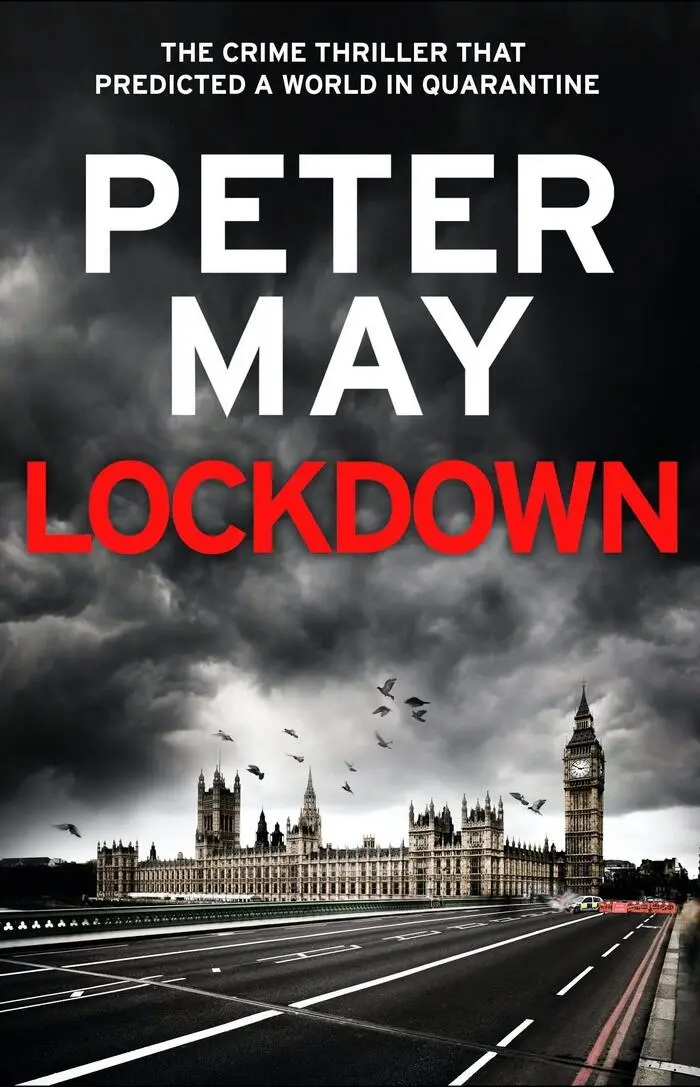
- Название:Lockdown
- Автор:
- Издательство:riverrun
- Жанр:
- Год:2020
- Город:London
- ISBN:978-1-5294-1169-0
- Рейтинг книги:4 / 5. Голосов: 1
-
Избранное:Добавить в избранное
- Отзывы:
-
Ваша оценка:
Lockdown: краткое содержание, описание и аннотация
Предлагаем к чтению аннотацию, описание, краткое содержание или предисловие (зависит от того, что написал сам автор книги «Lockdown»). Если вы не нашли необходимую информацию о книге — напишите в комментариях, мы постараемся отыскать её.
London, the epicenter of a global pandemic, is a city in lockdown. Violence and civil disorder simmer. Martial law has been imposed. No-one is safe from the deadly virus that has already claimed thousands of victims. Health and emergency services are overwhelmed.
A MURDERED CHILD
At a building site for a temporary hospital, construction workers find a bag containing the rendered bones of a murdered child. A remorseless killer has been unleashed on the city; his mission is to take all measures necessary to prevent the bones from being identified.
A POWERFUL CONSPIRACY
D.I. Jack MacNeil, counting down the hours on his final day with the Met, is sent to investigate. His career is in ruins, his marriage over and his own family touched by the virus. Sinister forces are tracking his every move, prepared to kill again to conceal the truth. Which will stop him first — the virus or the killers?
Lockdown — читать онлайн бесплатно полную книгу (весь текст) целиком
Ниже представлен текст книги, разбитый по страницам. Система сохранения места последней прочитанной страницы, позволяет с удобством читать онлайн бесплатно книгу «Lockdown», без необходимости каждый раз заново искать на чём Вы остановились. Поставьте закладку, и сможете в любой момент перейти на страницу, на которой закончили чтение.
Интервал:
Закладка:
MacNeil turned into Cranley Place and found a spot to park. Rows of pristine, white-painted terraced town houses stretched off into the night, black wrought-iron balconies supported on pillared doorways. There were a few hotels and guest houses here, empty of course, but mostly these were private homes, great rambling houses divided and subdivided into luxury apartments. Prime real estate, light years removed from the scruffy two-bedroomed lower terrace that MacNeil had been able to afford in Forest Hill. On the far side of the street, on the shuttered windows of Knightsbridge Pianos, beneath a large sign which read BILL POSTERS WILL BE PROSECUTED, some graffiti artist with a sense of humour had sprayed BILL POSTERS IS INNOCENT!
Steel grilles protected the glass in Flight’s door beneath a red and green decorative lintel. There were two bell-pushes on the electronic entry system. One marked STUDIO, the other marked FLIGHT. MacNeil stood back and looked up. Lights were on in the first floor studio. The apartment above it was in darkness. He stepped forward and pressed the STUDIO bell. After a few moments, a rasping electronic hum accompanied a man’s voice issuing from a speaker set into the wall. ‘Yes?’
‘Mr Flight?’
A moment’s pause, and then a voice laden with suspicion. ‘Who wants to know?’
‘Detective Inspector Jack MacNeil, Mr Flight. I’m investigating a murder in Soho tonight.’
‘I’ve been here all evening, Inspector,’ Flight said quickly.
‘Yes, I don’t doubt that, sir. I know you didn’t kill him, but you might have known him. Can I come up?’
‘What’s his name?’
‘Kazinski, Mr Flight,’ MacNeil said. ‘Ronald Kazinski.’ There was another long silence, which MacNeil broke. ‘Can I come up, sir?’ he repeated.
‘Have you had the flu?’
‘No, sir. But I’m protected,’ MacNeil lied.
‘Put a mask on, if you have one. If you haven’t, I’ll give you one. And please wear gloves. I don’t want you touching anything in my studio.’
‘Yes, sir.’
The buzzer went, and MacNeil pushed the door open. A carpeted stairway led up to a first floor landing and a door marked STUDIO. There was a window in it, and Flight appeared on the other side of it, his face almost obscured by a double mask. Even from his side of the door, MacNeil could see that Flight was tall. He had a strangely cadaverous head covered with a steel grey stubble. Blue eyes blinked suspiciously at him through the glass. ‘Let me see your hands,’ Flight said, and MacNeil held up his latex-gloved hands. ‘And your ID.’ Patiently, MacNeil took out his warrant card and opened it up to the glass. Flight scrutinised it carefully, before unlocking the door and stepping away from it. ‘You can’t be too careful these days,’ he said. ‘And please keep your distance.’
MacNeil walked into Flight’s studio. What had once been a polished wooden floor was stained and scarred and littered with the debris of an untidy artistic temperament. It was a large, well-lit space that covered just about the entire area of the gallery below. A dozen works in various stages of completion sat on the floor or on work benches. A grotesquely deformed head, intertwined arms, a mangled torso with breasts and a penis. The walls were covered with sketches. There was a potter’s wheel, and tall cabinets with half-open drawers full of art materials — paints, inks, dyes, sculpting tools, tracing paper. Centre stage was Flight’s work table, and the piece he was currently sculpting. An arm raised on its fingertips, partially fleshed, partially stripped down to the tendons and bone, half a head growing out of the armpit, an exposed brain sectioned through its centre revealing all its folds and colours and interior textures. MacNeil wondered how it remained standing, until he saw the support spike that passed through the upper arm. For all its unnatural distortion, there was an unpleasantly lifelike quality about it. Which was true of all of Flight’s works.
Something of MacNeil’s distaste must have been apparent to Flight. His eyes smiled, supercilious and superior. ‘Don’t you like my work, Inspector?’
‘I prefer a nice picture I can hang on my wall.’
‘Like?’
MacNeil shrugged. ‘Vettriano.’
‘Ah,’ Flight said. ‘ The Singing Butler . I’ve often wondered who bought those things.’ He turned towards his work in progress. ‘The brain’s a fascinating subject, don’t you think? Of course, you have to know a little about it. The brachium pontis. The colliculus superior.’ He pointed to lobes and leafs of his sculpted brain. ‘An amazing piece of engineering. It’s extraordinary to think that just anyone can have one. Of course, they come in all models, from a Rolls Royce to a Mini.’
‘And what do you have, Mr Flight?’
‘I like to think I’m probably in the BMW bracket. What about you, Inspector?’
‘Oh, probably a Ford Granada,’ MacNeil said. ‘Solid, reliable, doesn’t need much servicing, and just keeps going till it gets there. So what can you tell me about Ronald Kazinski, sir?’
‘Nothing, I’m afraid.’ Flight began circling his sculpture, casting a thoughtful eye over its curves and planes. MacNeil saw now that he was, indeed, a tall man. Six-six, perhaps, and painfully thin, with long, feminine fingers. He was wearing a three-quarter-length white apron, like a surgeon’s gown. Only it was smeared with clay and paint rather than blood. ‘I’ve never heard of him.’
‘He’d heard of you.’
Flight flicked him a look. ‘Had he? Did he tell you that?’
‘No, Mr Flight. He was dead. Don’t you want to know how he died?’
‘It’s no concern of mine.’
‘He was shot three times in the chest.’
‘How unpleasant for him.’
‘And he had your business card in his wallet.’
‘Did he? Well, you know, there’s probably a few thousand people of whom you could say that.’
‘Most of whom are probably interested in art.’
‘And Mr Kazinski wasn’t?’
‘He was a crematorium worker, Mr Flight. He lived in a slum south of the river.’
‘Then I take your point.’
MacNeil let his eyes wander around the studio, flicking from one obscenity to another. He said, ‘It’s possible, of course, that he picked up your card at the Black Ice Club. Do you know it?’
‘I’ve heard of it, of course. Avante-garde performance art. Shock for the sake of shocking.’
‘Familiar territory for you, I’d have thought.’ Flight cast him a withering look. MacNeil said, ‘You’ve never been, then?’
‘Really, Inspector, credit me with a little taste.’
‘I do,’ MacNeil said. ‘Very little.’ He looked around the studio. ‘Most of it bad.’
Flight’s patience with him was starting to wear thin. ‘If that’s all, Inspector, I’d like to get on, if you don’t mind.’ He nodded towards the arm and head. ‘The hours of darkness are my most creative.’
‘I’m not surprised,’ MacNeil said. There was more than just something of the night about the cadaverous sculptor. He gave MacNeil the creeps. ‘Thank you for your cooperation, sir.’
II
Pinkie watched MacNeil back his car out into Old Brompton Road and turn towards South Kensington tube station. He waited until the tail lights were gone, and then he got out of the car and walked slowly across the road to the green, grilled door of Flight’s apartment. He hesitated there and looked around. There were lights shining in an atrium conservatory on the other side of Cranley Place, but he couldn’t see anyone moving around. Most of the other windows in the street were black holes, protective curtains drawn tight to shut out a scary world. Pinkie hated wearing a mask, but there was one good thing about it. It hid your face, and nobody thought it was strange. Any witness questioned by the police would always be certain of at least one thing. He was wearing a mask, officer .
Читать дальшеИнтервал:
Закладка:
Похожие книги на «Lockdown»
Представляем Вашему вниманию похожие книги на «Lockdown» списком для выбора. Мы отобрали схожую по названию и смыслу литературу в надежде предоставить читателям больше вариантов отыскать новые, интересные, ещё непрочитанные произведения.


Обсуждение, отзывы о книге «Lockdown» и просто собственные мнения читателей. Оставьте ваши комментарии, напишите, что Вы думаете о произведении, его смысле или главных героях. Укажите что конкретно понравилось, а что нет, и почему Вы так считаете.