Dan Brown - Origin
Здесь есть возможность читать онлайн «Dan Brown - Origin» весь текст электронной книги совершенно бесплатно (целиком полную версию без сокращений). В некоторых случаях можно слушать аудио, скачать через торрент в формате fb2 и присутствует краткое содержание. Город: London, Год выпуска: 2017, ISBN: 2017, Издательство: Bantam Press, Transworld, Penguin Random House, Жанр: Триллер, на английском языке. Описание произведения, (предисловие) а так же отзывы посетителей доступны на портале библиотеки ЛибКат.
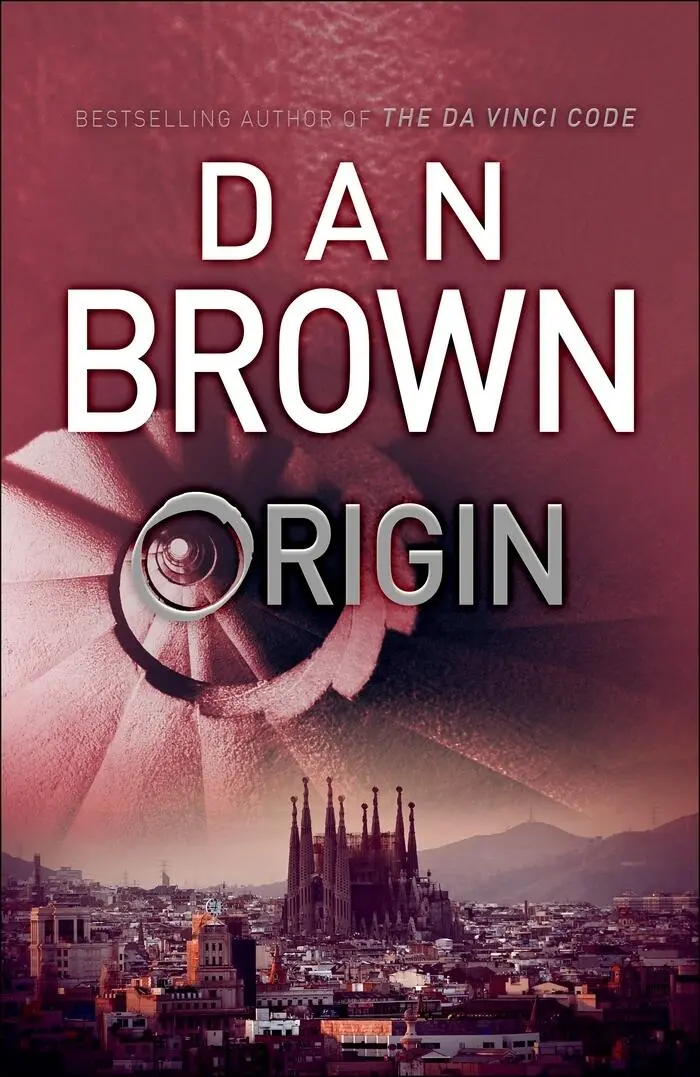
- Название:Origin
- Автор:
- Издательство:Bantam Press, Transworld, Penguin Random House
- Жанр:
- Год:2017
- Город:London
- ISBN:978-0-593-07875-4
- Рейтинг книги:5 / 5. Голосов: 1
-
Избранное:Добавить в избранное
- Отзывы:
-
Ваша оценка:
Origin: краткое содержание, описание и аннотация
Предлагаем к чтению аннотацию, описание, краткое содержание или предисловие (зависит от того, что написал сам автор книги «Origin»). Если вы не нашли необходимую информацию о книге — напишите в комментариях, мы постараемся отыскать её.
But Langdon and several hundred other guests are left reeling when the meticulously orchestrated evening is blown apart before Kirsch’s precious discovery can be revealed. With his life under threat, Langdon is forced into a desperate bid to escape, along with the museum’s director, Ambra Vidal. Together they flee to Barcelona on a perilous quest to locate a cryptic password that will unlock Kirsch’s secret.
In order to evade a tormented enemy who is one step ahead of them at every turn, Langdon and Vidal must navigate labyrinthine passageways of hidden history and ancient religion. On a trail marked only by enigmatic symbols and elusive modern art, Langdon and Vidal uncover the clues that will bring them face-to-face with a world-shaking truth that has remained buried — until now.
Origin — читать онлайн бесплатно полную книгу (весь текст) целиком
Ниже представлен текст книги, разбитый по страницам. Система сохранения места последней прочитанной страницы, позволяет с удобством читать онлайн бесплатно книгу «Origin», без необходимости каждый раз заново искать на чём Вы остановились. Поставьте закладку, и сможете в любой момент перейти на страницу, на которой закончили чтение.
Интервал:
Закладка:
“I do. It’s just ahead.”
“Excellent. One final point. As you enter, you will see collection bins for headsets. Edmond asked that you not return your unit, but rather keep it. This way, after the program, I will be able to guide you out of the museum through a back door, where you’ll avoid the crowds and be sure to find a taxi.”
Langdon pictured the strange series of letters and numbers that Edmond had scrawled on the business card, telling him to give it to the taxi driver. “Winston, all Edmond wrote was ‘BIO-EC346.’ He called it a painfully simple code.”
“He speaks the truth,” Winston replied quickly. “Now, Professor, the program is about to begin. I do hope you enjoy Mr. Kirsch’s presentation, and I look forward to assisting you afterward.”
With an abrupt click, Winston was gone.
Langdon neared the entry doors, removed his headset, and slipped the tiny device into his jacket pocket. Then he hurried through the entrance with the last few guests just as the doors closed behind him.
Once again, he found himself in an unexpected space.
We’re standing up for the presentation?
Langdon had imagined the crowd gathering in a comfortable sit-down auditorium to hear Edmond’s announcement, but instead, hundreds of guests stood packed into a cramped, whitewashed gallery space. The room contained no visible artwork and no seating — just a podium at the far wall, flanked by a large LCD screen that read:
Live program begins in 2 minutes 07 seconds
Langdon felt a surge of anticipation, and his eyes continued down the LCD screen to a second line of text, which he needed to read twice:
Current remote attendees: 1,953,694
Two million people?
Kirsch had told Langdon he would be live-streaming his announcement, but these numbers seemed unfathomable, and the ticker was climbing faster with each passing moment.
A smile crossed Langdon’s face. His former student had certainly done well for himself. The question now was: What in the world was Edmond about to say?
Chapter 13
In a moonlit desert just east of Dubai, a Sand Viper 1100 dune buggy veered hard to the left and skidded to a stop, sending a veil of sand billowing out in front of the blazing headlights.
The teenager behind the wheel ripped off his goggles and stared down at the object he had almost run over. Apprehensive, he climbed out of the vehicle and approached the dark form in the sand.
Sure enough, it was exactly what it had appeared to be.
There in his headlights, sprawled facedown on the sand, lay a motionless human body.
“ Marhaba? ” the kid called out. “Hello?”
No response.
The boy could tell it was a man from his clothing — a traditional chechia hat and loose-fitting thawb — and the man looked well fed and squat. His footprints had long since blown away, as had any tire tracks or hints as to how he might have gotten this far out into the open desert.
“ Marhaba? ” the kid repeated.
Nothing.
Uncertain what else to do, the boy reached out with his foot and gently nudged the man’s side. Although his body was plump, his flesh felt taut and hard, already desiccated by the wind and sun.
Definitely dead.
The boy reached down, grasped the man’s shoulder, and heaved him onto his back. The man’s lifeless eyes stared up at the heavens. His face and beard were covered in sand, but even dirty, he looked friendly somehow, even familiar, like a favorite uncle or grandfather.
The roar of a half-dozen quad bikes and buggies thundered nearby as the kid’s dune-bashing buddies circled back to make sure he was all right. Their vehicles roared up over the ridge and slid down the face of the dune.
Everyone parked, removed their goggles and helmets, and gathered around the macabre discovery of a parched corpse. One of the boys started speaking excitedly, having recognized the dead man as the famous allamah Syed al-Fadl — a scholar and religious leader — who spoke from time to time at the university.
“ Matha Alayna ‘an naf’al? ” he asked aloud. What should we do?
The boys stood in a circle, staring silently at the corpse. Then they reacted like teenagers around the world. They pulled out their phones and began snapping photos to text to their friends.
Chapter 14
Standing shoulder to shoulder with guests jostling around the podium, Robert Langdon watched in amazement as the number on the LCD screen ticked steadily higher.
Current remote attendees: 2,527,664
The background chatter in the cramped space had risen to the level of a dull roar, the voices of hundreds of guests buzzing with anticipation, many making excited last-minute phone calls or tweeting their whereabouts.
A technician stepped to the podium and tapped the microphone. “Ladies and gentlemen, we asked earlier that you please turn off your mobile devices. At this time, we will be blocking all Wi-Fi and cellular communications for the duration of this event.”
Many guests were still on their phones, and they abruptly lost their connections. Most of them looked wholly stupefied, as if they had just witnessed some miraculous piece of Kirschian technology capable of magically severing all connection with the outside world.
Five hundred dollars at an electronics store , Langdon knew, being one of several Harvard professors who now used portable cell-jamming technology to render their lecture halls “dead zones” and keep students off their devices during class.
A cameraman now moved into position with a massive camera on his shoulder, which he directed at the podium. The room lights dimmed.
The LCD screen read:
Live program begins in 38 seconds
Current remote attendees: 2,857,914
Langdon watched the attendee counter with amazement. It seemed to be climbing faster than the U.S. national debt, and he found it nearly impossible to fathom that close to three million people were sitting at home at this very moment watching a live stream of what was about to happen in this room.
“Thirty seconds,” the technician announced softly into the microphone.
A narrow door opened in the wall behind the podium, and the crowd immediately hushed, all looking expectantly for the great Edmond Kirsch.
But Edmond never materialized.
The door stood open for nearly ten seconds.
Then an elegant woman emerged and moved toward the podium. She was strikingly beautiful — tall and willowy with long black hair — wearing a formfitting white dress with a diagonal black stripe. She seemed to drift effortlessly across the floor. Taking center stage, she adjusted the microphone, took a deep breath, and gave the attendees a patient smile as she waited for the clock to tick down.
Live program begins in 10 seconds
The woman closed her eyes a moment, as if to gather herself, and then she opened them again, a portrait of poise.
The cameraman held up five fingers.
Four, three, two...
The room fell completely silent as the woman raised her eyes to the camera. The LCD display dissolved into a live image of her face. She fixed the audience with spirited dark eyes as she casually brushed a strand of hair from her olive-toned cheek.
“Good evening, everyone,” she began, her voice cultured and gracious, with a light Spanish accent. “My name is Ambra Vidal.”
An unusually loud burst of applause erupted in the room, making it apparent that a good number of people knew who she was.
“ ¡Felicidades! ” someone shouted. Congratulations!
The woman blushed, and Langdon sensed there was some piece of information he was missing.
“Ladies and gentlemen,” she said, quickly pressing on, “for the past five years, I have been the director of this Guggenheim Museum Bilbao, and I am here tonight to welcome you to an incredibly special evening presented by a truly remarkable man.”
Читать дальшеИнтервал:
Закладка:
Похожие книги на «Origin»
Представляем Вашему вниманию похожие книги на «Origin» списком для выбора. Мы отобрали схожую по названию и смыслу литературу в надежде предоставить читателям больше вариантов отыскать новые, интересные, ещё непрочитанные произведения.



Обсуждение, отзывы о книге «Origin» и просто собственные мнения читателей. Оставьте ваши комментарии, напишите, что Вы думаете о произведении, его смысле или главных героях. Укажите что конкретно понравилось, а что нет, и почему Вы так считаете.