Джонатан Келлерман - Crime Scene
Здесь есть возможность читать онлайн «Джонатан Келлерман - Crime Scene» весь текст электронной книги совершенно бесплатно (целиком полную версию без сокращений). В некоторых случаях можно слушать аудио, скачать через торрент в формате fb2 и присутствует краткое содержание. Город: New York, Год выпуска: 2017, ISBN: 2017, Издательство: Ballantine Books, Жанр: Триллер, на английском языке. Описание произведения, (предисловие) а так же отзывы посетителей доступны на портале библиотеки ЛибКат.
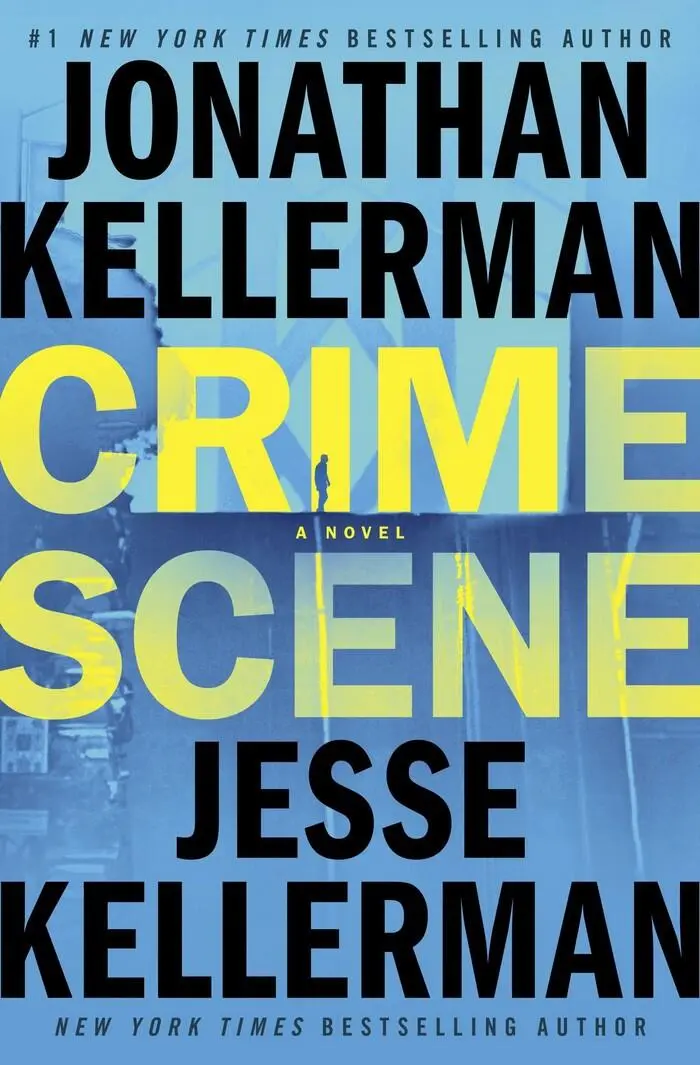
- Название:Crime Scene
- Автор:
- Издательство:Ballantine Books
- Жанр:
- Год:2017
- Город:New York
- ISBN:978-0-399-59460-1
- Рейтинг книги:4 / 5. Голосов: 1
-
Избранное:Добавить в избранное
- Отзывы:
-
Ваша оценка:
Crime Scene: краткое содержание, описание и аннотация
Предлагаем к чтению аннотацию, описание, краткое содержание или предисловие (зависит от того, что написал сам автор книги «Crime Scene»). Если вы не нашли необходимую информацию о книге — напишите в комментариях, мы постараемся отыскать её.
Eccentric, reclusive Walter Rennert lies cold at the bottom of his stairs. At first glance the scene looks straightforward: a once-respected psychology professor, done in by booze and a bad heart. But his daughter Tatiana insists that her father has been murdered, and she persuades Clay to take a closer look at the grim facts of Rennert’s life.
What emerges is a history of scandal and violence, and an experiment gone horribly wrong that ended in the brutal murder of a coed. Walter Rennert, it appears, was a broken man — and maybe a marked one. And when Clay learns that a colleague of Rennert’s died in a nearly identical manner, he begins to question everything in the official record.
All the while, his relationship with Tatiana is evolving into something forbidden. The closer they grow, the more determined he becomes to catch her father’s killer — even if he has to overstep his bounds to do it.
The twisting trail Clay follows will lead him into the darkest corners of the human soul. It’s his job to listen to the tales the dead tell. But this time, he’s part of a story that makes his blood run cold.
Crime Scene — читать онлайн бесплатно полную книгу (весь текст) целиком
Ниже представлен текст книги, разбитый по страницам. Система сохранения места последней прочитанной страницы, позволяет с удобством читать онлайн бесплатно книгу «Crime Scene», без необходимости каждый раз заново искать на чём Вы остановились. Поставьте закладку, и сможете в любой момент перейти на страницу, на которой закончили чтение.
Интервал:
Закладка:
“He played video games, and they gave him help with school? Anything else?”
“That’s what they said they were gonna do. But I didn’t see none of that. Later I heard that the man, he said there was two groups, one got the tutoring and the other didn’t get nothing. I say that’s some bullshit.” She paused. “They fed him, though.”
“Fed him.”
“He said the man got him a burger. He liked that.”
Rennert passing out McDonald’s bags: life at Tolman Hall had improved since the days of free Oreos. “Nice of him.”
She stared at me incredulously. “You think a hamburger makes up for what they did?”
I was quick to agree that it did not.
“It was them made him crazy,” she said. “He was normal before that.”
She seemed to believe it, too. A game had driven her son to violence. Because that was easier than the alternative, that a terrible crime had spilled forth from some poisonous well within his being.
Either way, she wasn’t denying he’d done it.
I said, “After he got out, did he ever talk about the people from the study?”
“Like what?”
“Was he mad at them? Talk about wanting to get revenge?”
“Julian didn’t get mad,” she said. “He got scared.”
“Scared of what.”
“Himself,” she said. “People look, they see that big body of his and think the wrong things. I never seen a boy so scared his own shadow. I get scared, too, thinking about him out there, on his own. I just pray God keeps him safe. Nothing more I can do.”
“Is that where you think he is? On the street?”
She shook her head, dejectedly. “I don’t know.”
She yawned twice. “I’m tired, Mr. Edison. You made me tired.”
I stood. “I’m leaving you another card. Maybe you’ll like it better than the first.”
The barest smile. Another yawn.
“Ms. Triplett, if you remember anything, think of something else that might make it easier for me to find Julian and help him, please give me a call.”
“Coroner,” she said. “You sure he ain’t dead?”
“Definitely not,” I said. “We do other things, too.”
She said, “Hmm.” Reached for the remote control.
Chapter 20
Dwight Baptist Church was on my route home, a brick cube dressed up by a small steeple and an iron cross.
I rang the doorbell and spoke to an elderly lady in a smart navy suit who bid me please wait outside. The Reverend D. Geoffrey Willamette’s name presided atop the letterboard. Tacked below the schedule of services was a poster for an upcoming event called Get Woke, Stay Woke: Empowering Our Youth! There would be free food, a DJ, a dance contest, a winter coat drive, a poetry slam.
There’d be a moment of silence to honor two young men, victims of gun violence. I recognized their names.
The woman returned to show me to the pastor’s office.
Rail-thin, bald, in his sixties, Willamette greeted me with an open face, an open hand, a broad pleasant baritone that offered me a seat and a cup of water.
I accepted both and watched for a shift in demeanor as I explained who I was and why I was there. Employing the soft fib I’d told Edwina Triplett: main gig with dead people, but additional duties.
“How is Sister Edwina?” he asked. “I haven’t seen her here in too long.”
“She said she comes when she can.”
Willamette chuckled. “I suppose she does. Which makes it my responsibility to seek after her.”
“She could stand a checkup at the doctor.”
“That’s good to know. I’ll arrange for it. I try to keep tabs on people, but things escape me. I used to be better at storing it all up here.” Tapping his temple. “Nowadays, unless it’s in front of my eyes... It pains me to think how much suffering might’ve been avoided, if I were a more diligent man.”
“I wouldn’t blame yourself, Reverend.”
He smiled. “Got to blame somebody. Might as well be me. As far as Julian is concerned, I haven’t laid eyes on him for a long, long time. That pains me. The boy needs a certain degree of support to function.”
“What kind of support?”
“The kind that only a community can provide.”
“His mom said you got him a job here.”
He nodded. “I’m not ashamed to admit that my motives were strictly charitable.”
“Why would you be ashamed to admit that?”
“Because in the end, charity is patronizing,” he said. “I gave him that job to keep him out of trouble. I never suspected he would be any good at it.”
“But he was.”
“More than good,” Willamette said. “He had a talent.”
“For?”
“Fixing things.”
The first kind words anyone had had to say about Julian Triplett.
Willamette tented his fingers. “Let’s agree, Deputy, at the outset, that he did a grievous wrong. Nevertheless he lives, he is a man, and he is free to make choices. So the question becomes: What will make a better world for him and everyone else? Tormenting him? Turning him into an outcast? These are the very forces that pushed him toward darkness. Whom do we serve, by serving the past? It’s my belief that every man retains within him the light of God, just as each one of us who professes virtue bears the taint of sin. Julian revealed to me his godly spirit. For me that’s reason enough to say: Praise be.”
“Did he ever express remorse for what he’d done?”
“He didn’t often voice his thoughts.”
“So that’s a no.”
“He has a unique mind. Whether he repented in his heart, I can’t say. But he never gave us any problems.”
“Did you encourage him to repent?”
“I encouraged him to concentrate on building a worthy future.”
“By fixing things,” I said.
Willamette rubbed the top of his desk. “Before I was called here, I had a prison ministry. Seven years. I looked into the faces of hundreds of men, some of whom had committed unspeakable acts. Comparable to Julian’s. Worse, if you can imagine.”
“I can.”
“We must not be afraid to call evil deeds by their true name. By the same token, we must not be so vested in our own righteousness, so afraid of appearing weak to ourselves, that we deny goodness when it rises from the ashes. Many of those men were little more than frightened boys themselves.”
“That’s what Edwina said about Julian.”
“It doesn’t excuse him, of course. What I hoped for was to get him on the right path, so that he could exceed the sum total of his history.”
I said, “What sort of things did he fix?”
“Whatever we needed. Drywall. Gutters. He installed those bookshelves.” He chinned at me. “He made that chair you’re sitting on.”
I tensed, feeling the imaginary pressure of Triplett’s hands on my back, my legs. Willamette didn’t seem to notice, and I forced myself to relax.
“I don’t want to give you the impression that I took him on as my personal carpenter,” Willamette said. “He was always paid fairly for his work. But the good it did went beyond that. It nourished him to create.”
I glanced at the bookshelves: straight and true, with tidy corners, the wood polished to a satin luster. “Where’d he learn to make furniture?”
“He picked up the basics while he was incarcerated. When I saw that he had a gift, I arranged for him to take private lessons with a gentleman I know, a friend of mine who’s a superior craftsman. Are you familiar with the Urban Foundry?”
I was: an industrial arts school in Oakland’s warehouse district, not far from the old Coroner’s building.
“My friend gave Julian permission to use their woodshop in the off hours, so he could go in and work on projects of his own.”
Читать дальшеИнтервал:
Закладка:
Похожие книги на «Crime Scene»
Представляем Вашему вниманию похожие книги на «Crime Scene» списком для выбора. Мы отобрали схожую по названию и смыслу литературу в надежде предоставить читателям больше вариантов отыскать новые, интересные, ещё непрочитанные произведения.






Обсуждение, отзывы о книге «Crime Scene» и просто собственные мнения читателей. Оставьте ваши комментарии, напишите, что Вы думаете о произведении, его смысле или главных героях. Укажите что конкретно понравилось, а что нет, и почему Вы так считаете.