Джонатан Келлерман - Crime Scene
Здесь есть возможность читать онлайн «Джонатан Келлерман - Crime Scene» весь текст электронной книги совершенно бесплатно (целиком полную версию без сокращений). В некоторых случаях можно слушать аудио, скачать через торрент в формате fb2 и присутствует краткое содержание. Город: New York, Год выпуска: 2017, ISBN: 2017, Издательство: Ballantine Books, Жанр: Триллер, на английском языке. Описание произведения, (предисловие) а так же отзывы посетителей доступны на портале библиотеки ЛибКат.
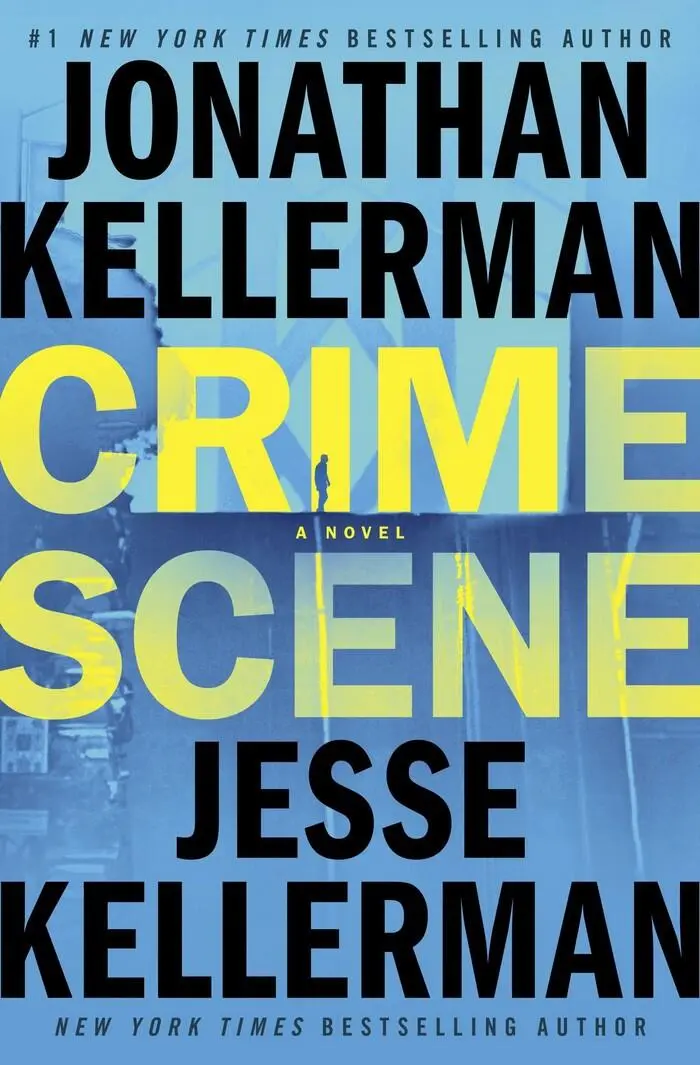
- Название:Crime Scene
- Автор:
- Издательство:Ballantine Books
- Жанр:
- Год:2017
- Город:New York
- ISBN:978-0-399-59460-1
- Рейтинг книги:4 / 5. Голосов: 1
-
Избранное:Добавить в избранное
- Отзывы:
-
Ваша оценка:
Crime Scene: краткое содержание, описание и аннотация
Предлагаем к чтению аннотацию, описание, краткое содержание или предисловие (зависит от того, что написал сам автор книги «Crime Scene»). Если вы не нашли необходимую информацию о книге — напишите в комментариях, мы постараемся отыскать её.
Eccentric, reclusive Walter Rennert lies cold at the bottom of his stairs. At first glance the scene looks straightforward: a once-respected psychology professor, done in by booze and a bad heart. But his daughter Tatiana insists that her father has been murdered, and she persuades Clay to take a closer look at the grim facts of Rennert’s life.
What emerges is a history of scandal and violence, and an experiment gone horribly wrong that ended in the brutal murder of a coed. Walter Rennert, it appears, was a broken man — and maybe a marked one. And when Clay learns that a colleague of Rennert’s died in a nearly identical manner, he begins to question everything in the official record.
All the while, his relationship with Tatiana is evolving into something forbidden. The closer they grow, the more determined he becomes to catch her father’s killer — even if he has to overstep his bounds to do it.
The twisting trail Clay follows will lead him into the darkest corners of the human soul. It’s his job to listen to the tales the dead tell. But this time, he’s part of a story that makes his blood run cold.
Crime Scene — читать онлайн бесплатно полную книгу (весь текст) целиком
Ниже представлен текст книги, разбитый по страницам. Система сохранения места последней прочитанной страницы, позволяет с удобством читать онлайн бесплатно книгу «Crime Scene», без необходимости каждый раз заново искать на чём Вы остановились. Поставьте закладку, и сможете в любой момент перейти на страницу, на которой закончили чтение.
Интервал:
Закладка:
We’d take this remnant of humanity, weigh him, stick him in the freezer. Tell someone he had passed, if someone could be found who cared.
So what?
In six-plus years on the job, I’d never questioned my purpose. I took the bad with the good because what I did was, foremost, necessary. That perfect fit, that sense of sealing airtight a crack in society, gave me deep satisfaction.
A setup man.
Now I felt pushed up against the limits of my mandate, and I had a sudden and awful premonition. Saw myself slide toward a darker state, where the work wasn’t necessary, let alone fulfilling; just a temporary relief from uncertainty.
The question marks awaiting all of us.
“Earth to dude.”
I snapped to. “Sorry.”
Moffett shook his head. “One, two, three, up. ”
We rose.
On my next day off, I drove over to Cal.
What I’d told Tatiana was true: I did come by every so often, to use the gym. But it had been years since I’d stepped foot in the psych building.
Sneakers chirping on linoleum.
Bulletin board soliciting human subjects.
One elevator out of service. Did it ever get fixed?
That things hadn’t changed one bit was less charming than terrifying: long before I’d arrived on campus, the structure had been condemned as seismically unstable.
I made my way up to the fourth floor. The halls were hushed and ill lit. I found the door and knocked.
A boyish voice said, “Come in.”
Spellman-Rohatyn Professor of Psychology and Social Issues Paul J. Sandek taught in the department’s social-personality track. He hadn’t changed much, either. A few extra veins of white in his beard, a modest pouching around the eyes.
I’d never seen him in anything other than argyle sweaters, or maybe a sweater vest in late spring. The fluttering array of Far Side cartoons still blanketed the wall above his computer. At one point I’d known them all by heart. Cover up a caption and I could recite it.
“Clay.” He hugged me warmly. “It’s good to see you.”
“You too.”
He beamed up at me, inspecting me at arm’s length. In his day, you could be five-ten and play Division I point guard. Granted, in the Ivy League. But still.
He clapped my shoulders. “So good. Sit. You want some coffee?”
“Please.”
He pivoted to a side table set with a pod espresso machine and a stack of demitasses.
“That’s new,” I said.
“Birthday present from Amy.” He pressed a button, and the machine gurgled to life. “I use it way too much. Bad for the heart but I can’t stop.”
“How is Amy?”
“Wonderful, thanks. Finishing up her PhD.”
I remembered Sandek’s daughter as a pale, gangly high schooler, sneaking looks at me over the dinner table while her mother heaped me more mashed potatoes. “Send her my congratulations.”
“Will do. Now comes the hard part: finding a job.”
“I’m sure she’ll be fine.”
“Oh, she will. That’s just me being parental. She’s done some outstanding research, and to my amazement, having Yale on your diploma continues to mean something. It’s a jungle out there, though.” He smiled and handed me my cup. “Like I need to tell you that.”
Prior to getting hurt, I’d never paid attention to academics. No one on the team did. We got “help” with our papers, prep for tests. To say nothing of those who preferred not to take their own tests. It happens everywhere. I had no reason to care. I was going pro.
Even after surgery, I entertained fantasies of a comeback. My first question upon waking in the recovery room was when I could start rehab. Junior year was a slog of stretching, ice, heat, water therapy, resistance bands, balance drills, speed drills, weights. By summertime, I’d been cleared to play. But I was different. I knew. Coach knew.
My first scrimmage back I was sluggish, wooden, ineffective. And — this was the dagger — timid where I once would have been bold. We had a sophomore, a transfer from San Diego State; he ran circles around me. Afterward Coach asked if I didn’t think he showed real promise.
He offered me a spot on the roster, regardless, more as a reward for previous performance than for anything I could contribute going forward.
I turned him down. Soon enough, the same people who had chanted my name were labeling me vain or selfish. Was I too good to come off the bench? Mentor my own replacement? I had obligations, they said, to set an example of leadership, of self-sacrifice and team spirit and loyalty.
Maybe they were right. I only know that my desire to play was gone, utterly, and that any physical pain was dwarfed by the agony of perceiving the chasm between before and after. It was the pain of a phantom limb. Reviewing myself on tape was unbearable, like watching a bird shot down, midflight.
That fall, I almost quit school. My transcript was in shambles. I had no declared major. I might as well have chosen classes by tossing darts at the course catalog. If not for Sandek — a fanatical team booster, but more important a profoundly kind and empathic human being — I doubt I would’ve graduated.
Now, waiting for the machine to finish sputtering his own cup of espresso, he wheeled his chair around from behind the desk. “Theresa sends her love, too.”
“Same to her,” I said before breaking into laughter.
“What,” he said.
I pointed to his kneeling chair. “I forgot you have one of those.”
He laughed. “It’s since been replaced by a newer model.”
“How’s the back?” I asked.
“For shit. How’s the knee?”
“Holding up.”
He took his coffee and knelt. “I look like a supplicant, right? Salùd. ”
We drank.
“So,” he said, wiping froth from his mustache. “Pretty mysterious email you sent.”
“I wanted to speak to you in person,” I said. “You were around in ninety-three, right? What can you tell me about Walter Rennert?”
He paused, the cup near his mouth. “There’s a name I haven’t heard in a while.”
“Were you aware he passed away?”
“I wasn’t, no. Shame.”
“How well did you know him?”
“Not very well at all. He was in the developmental track, I think, and I’d only come on board a year or two before. And then of course he got caught up in that sorry situation, so he wasn’t doing a whole lot of fraternizing. I’d call us acquaintances.”
“It’s his study that I’m trying to learn about, actually,” I said.
“Whatever for?”
“It may bear on a case of mine.”
“A current case.”
“Do you recall anything about the research? Or know who would?”
“Not offhand. I’d be surprised if you could get anyone to talk about it. The entire episode remains somewhat of a bugaboo around these parts. Same for Walter. I’m sure that’s why nobody’s mentioned his death. What happened to him?”
“Heart trouble.”
“Ah. Nothing sinister, then.”
“Not really.”
“I take it you’re not going to tell me what’s going on.”
I smiled. “Do you remember anything about the victim, Donna Zhao?”
“Never met her. She was an undergrad, yes? There was also a grad student involved, I think. Walter’s TA?”
“Nicholas Linstad.”
“That’s the one. Big blond fellow.”
“Him you remember.”
“Only because I didn’t much care for him. It’s strange, given how little interaction we had. But there you have it.”
“What about him didn’t you like?”
Sandek scratched his beard. “I suppose I found him... superficial? He sounded like what an Ikea chair would sound like if it could talk. He ended up leaving the program.”
Читать дальшеИнтервал:
Закладка:
Похожие книги на «Crime Scene»
Представляем Вашему вниманию похожие книги на «Crime Scene» списком для выбора. Мы отобрали схожую по названию и смыслу литературу в надежде предоставить читателям больше вариантов отыскать новые, интересные, ещё непрочитанные произведения.





Обсуждение, отзывы о книге «Crime Scene» и просто собственные мнения читателей. Оставьте ваши комментарии, напишите, что Вы думаете о произведении, его смысле или главных героях. Укажите что конкретно понравилось, а что нет, и почему Вы так считаете.