Джонатан Келлерман - Crime Scene
Здесь есть возможность читать онлайн «Джонатан Келлерман - Crime Scene» весь текст электронной книги совершенно бесплатно (целиком полную версию без сокращений). В некоторых случаях можно слушать аудио, скачать через торрент в формате fb2 и присутствует краткое содержание. Город: New York, Год выпуска: 2017, ISBN: 2017, Издательство: Ballantine Books, Жанр: Триллер, на английском языке. Описание произведения, (предисловие) а так же отзывы посетителей доступны на портале библиотеки ЛибКат.
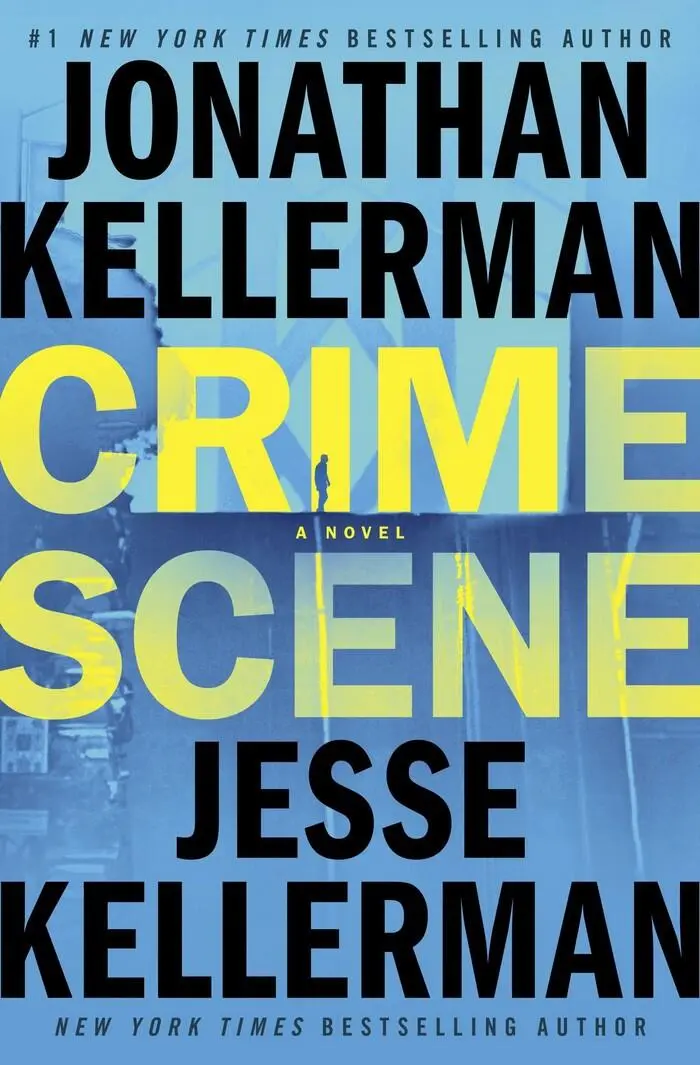
- Название:Crime Scene
- Автор:
- Издательство:Ballantine Books
- Жанр:
- Год:2017
- Город:New York
- ISBN:978-0-399-59460-1
- Рейтинг книги:4 / 5. Голосов: 1
-
Избранное:Добавить в избранное
- Отзывы:
-
Ваша оценка:
Crime Scene: краткое содержание, описание и аннотация
Предлагаем к чтению аннотацию, описание, краткое содержание или предисловие (зависит от того, что написал сам автор книги «Crime Scene»). Если вы не нашли необходимую информацию о книге — напишите в комментариях, мы постараемся отыскать её.
Eccentric, reclusive Walter Rennert lies cold at the bottom of his stairs. At first glance the scene looks straightforward: a once-respected psychology professor, done in by booze and a bad heart. But his daughter Tatiana insists that her father has been murdered, and she persuades Clay to take a closer look at the grim facts of Rennert’s life.
What emerges is a history of scandal and violence, and an experiment gone horribly wrong that ended in the brutal murder of a coed. Walter Rennert, it appears, was a broken man — and maybe a marked one. And when Clay learns that a colleague of Rennert’s died in a nearly identical manner, he begins to question everything in the official record.
All the while, his relationship with Tatiana is evolving into something forbidden. The closer they grow, the more determined he becomes to catch her father’s killer — even if he has to overstep his bounds to do it.
The twisting trail Clay follows will lead him into the darkest corners of the human soul. It’s his job to listen to the tales the dead tell. But this time, he’s part of a story that makes his blood run cold.
Crime Scene — читать онлайн бесплатно полную книгу (весь текст) целиком
Ниже представлен текст книги, разбитый по страницам. Система сохранения места последней прочитанной страницы, позволяет с удобством читать онлайн бесплатно книгу «Crime Scene», без необходимости каждый раз заново искать на чём Вы остановились. Поставьте закладку, и сможете в любой момент перейти на страницу, на которой закончили чтение.
Интервал:
Закладка:
“When was that?”
“Right around the time Walter did. Not a happy parting for either of them. Extremely messy.”
“How so?”
Sandek finished his coffee. “The department did what it always does when something goes wrong — and this was way beyond wrong. They established a review committee. If memory serves, the report put the blame partly on Linstad.”
“What for?”
He shook his head. “I never read it. It wasn’t made public. Everything I’m telling you is just scuttlebutt. Whatever the case may be, the buck stopped with Walter. It was his lab, so he ended up taking the brunt. I have no idea what became of Linstad after he left.”
“He’s dead, too,” I said.
“Holy Toledo. That is one cursed study.”
“I’d like to know more about it,” I said.
“Honestly, Clay, I’m not sure there’s anything to know. I don’t think they’d finished collecting data before everything fell apart.”
“The design had to be submitted to IRB for approval.”
“Yes.”
“So that might be on file somewhere.”
A slow nod. “It might.”
“The review committee’s report, too,” I said. “I’d like to get a copy of that.”
Sandek put his cup down. “You know, my boy, I’m not some crime-solving whiz like you. I’m not sure what you think I can do.”
“Try to get the reports?”
He slapped his thighs. “For you, I will.”
“Thanks.”
“Don’t thank me yet,” he said, swiveling to the coffee machine. As he racked in a fresh pod, he said, “You get a chance to play much these days?”
“Here and there.”
“I’m good for HORSE,” he said. “Just don’t ask me to run.”
“Is there money involved?”
“If you like.”
“I don’t,” I said.
“Scared, are we?”
“Compassionate. You’re on a teacher’s salary.”
He laughed. “Out of my office.”
The rain had let up, and I stood beyond the breezeway, filling my lungs with the scent of damp mulch. Tolman Hall was shaped like a squat H, two blocky legs and a low-slung bridge connecting them. Windows scaled its exterior, a move intended to soften the design’s brutalism. Over time, the frames had rusted from the inside out, leaking streaky brown pennants down the raw concrete, so that the building appeared to be weeping, or bleeding, from a thousand eyes.
It struck me that the entire Greek tragedy — all its significant locales, spread out over twenty-plus years — fell within a five-mile radius. The poles were Edwina Triplett’s apartment and Walter Rennert’s house, lying at opposite corners of the city, a distance befitting the class disparity. The other places that mattered were bunched closer together. From where I stood, Donna Zhao’s apartment was a fifteen-minute walk south. The spot where Nicholas Linstad had died was even closer — virtually across the street, up the hill on Le Conte.
Considering the circumstances of his departure from the university, I found it peculiar that he’d chosen to set up shop so close by.
I headed there to have a look.
Most of the block consisted of multi-unit dwellings catering to students. Halloween had recently come and gone, and the insides of some windows were still lined with paper jack-o’-lanterns and nylon cobwebs.
Twenty-four Halloweens since Donna Zhao died. The party never ended.
Nicholas Linstad’s former residence, a skinny brown duplex, was set back from the sidewalk, cowed by a larger building of more recent provenance.
I knocked first at the downstairs unit, where he had worked. Receiving no answer, I went down the driveway to the exterior staircase, climbed up slowly. Sure enough, I spotted a series of waist-high grooves in the shingling, scrubbed down by a decade of weather but visible nonetheless. I remembered the pathologist’s note that one of Linstad’s nails had torn partway off in the fall. He really didn’t want to die.
I reached the landing. The wobbly banister in Ming’s report had since been repaired, a large nailhead driven into the base of the post.
My knock again met silence. I stuffed my hands in my jacket pockets and turned, scanning for sight lines. Steep, wavy terrain put the surrounding homes at relatively different heights. None had a perfectly unobstructed view of the landing. I saw, mostly, power lines and trees. Nearest was a majestic redwood, wide and woolly, rooted in the rear yard of the adjacent multi-unit, on the other side of a rough picket fence.
“Can I help you?”
Below, a woman in a flowing turquoise dress and matching chunky necklace was walking a ten-speed up the driveway. Long white hair cascaded from beneath her helmet.
“Admiring the tree,” I said, clomping down the stairs. “Are you the upstairs tenant?”
“May I ask why you’re interested?”
I showed her my badge. “I’d like to take a look around inside, if you don’t mind.”
“I’m afraid I do,” she said. “I object to all manifestations of the fascist state.”
“It’s for an old case,” I said.
She smiled pleasantly and flipped me off. “Go fuck yourself.”
Chapter 22
Julian Triplett’s sister now went by the name of Kara Drummond. I phoned her at her place of employment, the Macdonald Avenue branch of Wells Fargo in Richmond, where she was an assistant manager. She agreed to speak to me during her lunch break.
With time to kill, I hung around in the parking lot, seeing ghosts. It was a neighborhood with a high body count. The year before I’d worked a shooting outside Target, two people dead, spillover of an argument that began with a dinged car door. More recently, I’d read that the city had begun paying high-risk kids a stipend for not getting arrested, a policy that kicked up controversy, folks arguing over whether it represented a new standard for creativity or a new low for desperation.
Noon thirty, a woman I knew from her DMV photo emerged, blinking against the cold bright sun. We headed into Starbucks. She declined my offer of a drink and we took a booth.
Kara Drummond was eight years younger than her brother, pretty, with good skin and quick, wide eyes. Heavy bone structure lurked beneath her surface; she’d put work into staying trim. She wore gray slacks, a white crepe blouse, black heels. No ring, leading me to wonder if she’d changed her surname in order to escape its notoriety. Could be divorced; a different father. She spoke with a polish that belied her age and origins. A pair of earrings, tiny dangling sunflowers, swung as she shook her head at me.
She said, “I don’t have contact with either of them. Edwina’s toxic. God knows where he is.”
I asked when she’d seen Julian last.
“A long time ago. After he got out,” she said. “I went over there to get him away from her. I didn’t want him picking up her habits. I told him he could move in with me but he wouldn’t budge.” She made a disgusted face. “I was about ready to slap him. All that time he was inside, she never went once to see him. She wouldn’t even pay for my bus tickets. You believe that? How cheap can you get?”
“Where’d they keep him?”
“Atascadero,” she said. Unconsciously she reached across the table and picked up my napkin, began twisting it. “It took me all day to get down there. They never wanted to let me in, cause I didn’t have ID. I was too young. I had to argue my way in.”
Her devotion impressed me. The youth camp was in San Luis Obispo, over two hundred miles to the south. “You went by yourself?”
“Who else’s going to take me?”
“Reverend Willamette?”
“I don’t do church,” she said. “Only thing I believe in is me.”
I decided I’d misread her reasons for changing her name.
Читать дальшеИнтервал:
Закладка:
Похожие книги на «Crime Scene»
Представляем Вашему вниманию похожие книги на «Crime Scene» списком для выбора. Мы отобрали схожую по названию и смыслу литературу в надежде предоставить читателям больше вариантов отыскать новые, интересные, ещё непрочитанные произведения.




Обсуждение, отзывы о книге «Crime Scene» и просто собственные мнения читателей. Оставьте ваши комментарии, напишите, что Вы думаете о произведении, его смысле или главных героях. Укажите что конкретно понравилось, а что нет, и почему Вы так считаете.