Джонатан Келлерман - Crime Scene
Здесь есть возможность читать онлайн «Джонатан Келлерман - Crime Scene» весь текст электронной книги совершенно бесплатно (целиком полную версию без сокращений). В некоторых случаях можно слушать аудио, скачать через торрент в формате fb2 и присутствует краткое содержание. Город: New York, Год выпуска: 2017, ISBN: 2017, Издательство: Ballantine Books, Жанр: Триллер, на английском языке. Описание произведения, (предисловие) а так же отзывы посетителей доступны на портале библиотеки ЛибКат.
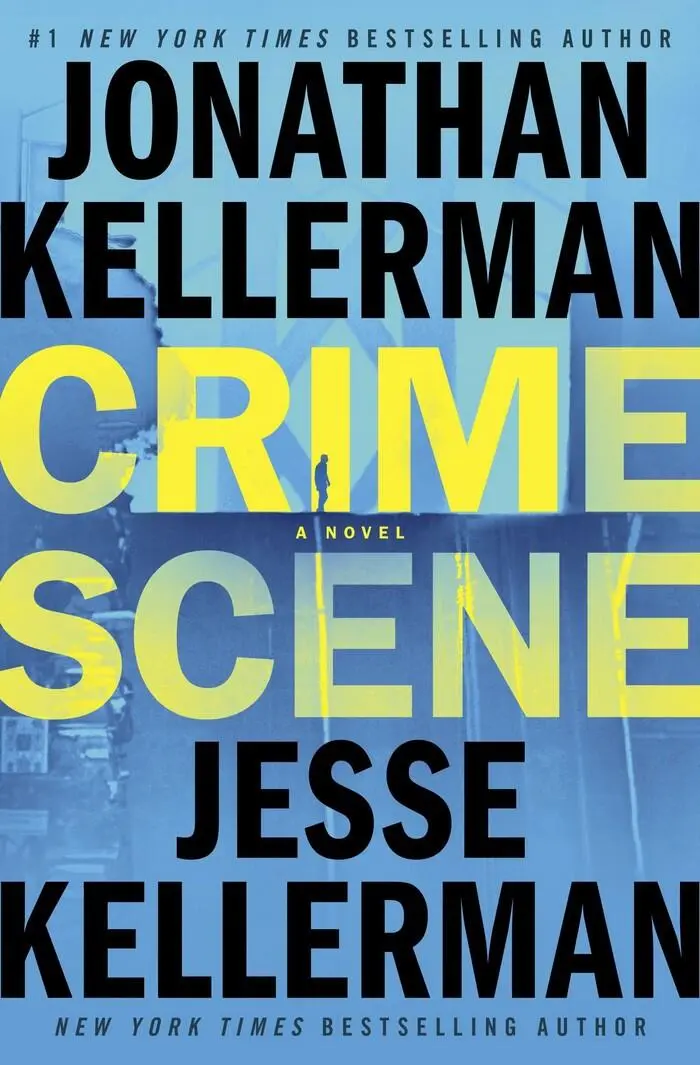
- Название:Crime Scene
- Автор:
- Издательство:Ballantine Books
- Жанр:
- Год:2017
- Город:New York
- ISBN:978-0-399-59460-1
- Рейтинг книги:4 / 5. Голосов: 1
-
Избранное:Добавить в избранное
- Отзывы:
-
Ваша оценка:
Crime Scene: краткое содержание, описание и аннотация
Предлагаем к чтению аннотацию, описание, краткое содержание или предисловие (зависит от того, что написал сам автор книги «Crime Scene»). Если вы не нашли необходимую информацию о книге — напишите в комментариях, мы постараемся отыскать её.
Eccentric, reclusive Walter Rennert lies cold at the bottom of his stairs. At first glance the scene looks straightforward: a once-respected psychology professor, done in by booze and a bad heart. But his daughter Tatiana insists that her father has been murdered, and she persuades Clay to take a closer look at the grim facts of Rennert’s life.
What emerges is a history of scandal and violence, and an experiment gone horribly wrong that ended in the brutal murder of a coed. Walter Rennert, it appears, was a broken man — and maybe a marked one. And when Clay learns that a colleague of Rennert’s died in a nearly identical manner, he begins to question everything in the official record.
All the while, his relationship with Tatiana is evolving into something forbidden. The closer they grow, the more determined he becomes to catch her father’s killer — even if he has to overstep his bounds to do it.
The twisting trail Clay follows will lead him into the darkest corners of the human soul. It’s his job to listen to the tales the dead tell. But this time, he’s part of a story that makes his blood run cold.
Crime Scene — читать онлайн бесплатно полную книгу (весь текст) целиком
Ниже представлен текст книги, разбитый по страницам. Система сохранения места последней прочитанной страницы, позволяет с удобством читать онлайн бесплатно книгу «Crime Scene», без необходимости каждый раз заново искать на чём Вы остановились. Поставьте закладку, и сможете в любой момент перейти на страницу, на которой закончили чтение.
Интервал:
Закладка:
“Someone might come in,” she said.
“Does that bother you?”
She smiled. “I like it.”
I should have figured: she was a performer.
Chapter 19
In the morning I woke alone, blinking up at the blushing ceiling of her bedroom. My clothes lay folded on the floor. A dent in the sheets beside me. I flopped over the edge of the bed, scrabbling for my phone, dragging it toward me by my fingernails. Ten after eight.
I called Tatiana’s name. No response.
Pulling on my pants, I went into the bathroom to wash my face.
I heard the front door open and came out to find her balancing a cardboard tray with coffee, a bulging waxed-paper bag in her other hand. A thoughtful gesture, but it sent a chill through me. The same items had been spilled across her father’s foyer.
“I had to guess if you take milk,” she said, handing me the tray.
“I do.”
“That’s what I thought,” she said. “He’s a big boy, he probably drank a lot of milk as a kid.” She smiled and rose up on her tiptoes to kiss me. “Good morning.”
“Morning. Thanks for this.”
“You’re welcome.”
We sat cross-legged on the carpet and ate, surrounded by the stacks of banker’s boxes.
“What are you going to do with all of it?” I asked.
“I rented a storage locker. I’m supposed to hang on to everything for a full year. There’s even more stuff waiting for me in Tahoe. Just thinking about it stresses me out.”
“Then we won’t think about it.”
“Too late.” She wiped her mouth. “Did you sleep okay?”
“Great. You?”
She shrugged. “You have long legs. Long, active legs.”
“Sorry.”
“It’s all right. I need to be up anyway.” She tore at a croissant. “Tell me the truth. You do that for all the girls?”
“What. The basketball thing?” I shook my head. “Just you.”
“Uh-huh. Does it work?”
“Like forty percent of the time.”
She smiled.
I liked that about her. Quick to smile but hard to make laugh. It kept you honest.
We finished our breakfast and I carried her bags down to her car. My knee felt shockingly healthy.
“I’ll call you when I’m back,” she said.
“Any sense of when that’ll be?”
“Two weeks,” she said. “Three.”
“Which one is it? Two or three?”
She kissed me, got into the Prius, and drove off toward the freeway.
It’s true: I did want to see her again. But that wasn’t my reason for asking.
However long she remained away — two weeks or three — that was how long I had to locate Julian Triplett.
It wasn’t yet nine a.m. The day was clear. I moved my car to avoid a ticket and set out on foot for Delaware Street.
West of San Pablo, the neighborhood took a turn. Not for the worse, exactly; more for the tired. Weeds marching forth in their ranks. Indoor furniture living outdoors. Some creative soul had erected a two-foot-high “fence” out of chicken wire, staked to tomato cages, everything held together with supermarket twist-ties. All manner of crap had been put on the sidewalk and left to the mercy of the elements: mattresses, crates of mushy paperbacks. Some folks had bothered to add a sign — FREE or PLEASE TAKE — as though words alone could transform junk into treasure.
Litterbug!
Julian Triplett’s mother, Edwina, still lived at the same address as a decade ago, in the rearmost unit of a small stucco complex called Manor Le Grande. The name was goofy enough as is, without the cartoon-bubble lettering bolted to the brick façade. Something about it momentarily sapped my zeal. Most people would be at work at quarter to ten on a Monday morning, and even if Edwina Triplett was home, I couldn’t make her talk to me. Nor could I see why she would do so willingly.
I had little to lose, though. Even if she refused to tell me where her son was, she might warn him that the cops had come around, and that might be enough to scare him off.
Concrete pavers led to a cracked trapezoidal courtyard. The curtains to #5 hung ajar.
I looked through the window. The living room beyond the glass was too sparse to qualify as messy; what I could see showed evidence of hard use. Tube TV squaring off with a soiled, defeated sofa. A tray on legs stood at the ready, but unhappily, like some dried-up butler. Dark puddles splotched the popcorn ceiling.
I rapped the screen door’s frame.
No answer.
I got out my card and wrote on the back: Please call when you have a chance. I started to stick it in the mail slot but paused, worried about needlessly frightening her.
A note from the Coroner’s Bureau, asking for a call, with no context?
Impetuously, I tacked on a smiley face.
Please call when you have a chance.:)
Well. That just looked ridiculous.
While I went through my wallet for a fresh card, the front door whined. An obese black woman of about fifty peered out through the screen. She wore a formidable floral-print housedress and leaned on a shiny purple cane.
I raised a hand. “Good morning, ma’am.”
“Good morning.”
I flashed my badge quickly, identifying myself as a deputy sheriff. “I’m looking for Julian Triplett.”
She listed a little to the right, examining me. “Is he in trouble?”
“No ma’am. I’m just trying to find him, and yours is the last address I have.”
“What you want him for?”
“Just checking in.”
She sniffed skeptically. “He ain’t around.” She reached for the door.
“It’s important that I find him.”
“I said he ain’t around.”
“When’s the last time you saw him? Ma’am.”
She shut the door.
I crossed out the smiley face and pushed the card through the mail slot. If that made her anxious, so be it. Maybe it’d motivate her to cooperate.
I started back toward the street, jumping as the screen door banged open behind me.
Edwina Triplett came humping out, her gait jerky and pained. She was sweating, clutching the card fiercely, bending it into a U.
“You got no right.” She spoke quietly, her features glittering with rage. “No right.”
“All I want is to ask him a couple of questions.”
She whooped laughter. “Coroner? You must think I’m some kind of stupid.” Squinting at the card: “Edison? That’s you?”
“Yes ma’am.”
“He’s dead?”
“No ma’am.”
“Then why you harassing me, Mr. Edison?”
“Ma’am—”
“What you think about this?” She tore the card in half, stacked the halves, tore them again. “Huh, Mr. Edison? Tell me what you think about that.”
She halved the card twice more. Getting through thirty-two layers proved a challenge — she strained with effort, the flesh of her arms and under her neck rippling like disturbed water — and she began shredding individual pieces, sprinkling them on the cement.
She said, panting, “What you think about that. ”
I said, “I think I’ve upset you, and I apologize. For what it’s worth, I’m not concerned with whatever happened before. This is something happening now.”
“I guess you didn’t hear me the first five times,” she said. “He. Ain’t. Around. ”
“I heard you.”
“Then why you still—” She broke off with a grunt, wincing and pressing a fist to her chest. The cane began to vibrate, her spine to bow.
I took a step forward.
“Don’t touch me,” she wheezed. She sank down, slumping against the doorframe, her mouth gaping, grabbing at the air.
I asked if she could breathe.
She didn’t reply. I took out my phone to call an ambulance.
“Nnn.” She tossed a hand over her shoulder. “Pills.”
Читать дальшеИнтервал:
Закладка:
Похожие книги на «Crime Scene»
Представляем Вашему вниманию похожие книги на «Crime Scene» списком для выбора. Мы отобрали схожую по названию и смыслу литературу в надежде предоставить читателям больше вариантов отыскать новые, интересные, ещё непрочитанные произведения.





Обсуждение, отзывы о книге «Crime Scene» и просто собственные мнения читателей. Оставьте ваши комментарии, напишите, что Вы думаете о произведении, его смысле или главных героях. Укажите что конкретно понравилось, а что нет, и почему Вы так считаете.