Jason Elliot - The Network
Здесь есть возможность читать онлайн «Jason Elliot - The Network» весь текст электронной книги совершенно бесплатно (целиком полную версию без сокращений). В некоторых случаях можно слушать аудио, скачать через торрент в формате fb2 и присутствует краткое содержание. Жанр: Триллер, на английском языке. Описание произведения, (предисловие) а так же отзывы посетителей доступны на портале библиотеки ЛибКат.
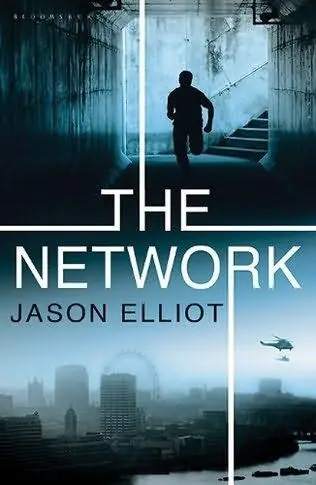
- Название:The Network
- Автор:
- Жанр:
- Год:неизвестен
- ISBN:нет данных
- Рейтинг книги:4 / 5. Голосов: 1
-
Избранное:Добавить в избранное
- Отзывы:
-
Ваша оценка:
The Network: краткое содержание, описание и аннотация
Предлагаем к чтению аннотацию, описание, краткое содержание или предисловие (зависит от того, что написал сам автор книги «The Network»). Если вы не нашли необходимую информацию о книге — напишите в комментариях, мы постараемся отыскать её.
The Network — читать онлайн бесплатно полную книгу (весь текст) целиком
Ниже представлен текст книги, разбитый по страницам. Система сохранения места последней прочитанной страницы, позволяет с удобством читать онлайн бесплатно книгу «The Network», без необходимости каждый раз заново искать на чём Вы остановились. Поставьте закладку, и сможете в любой момент перейти на страницу, на которой закончили чтение.
Интервал:
Закладка:
For an hour the Adoo poured fire into the fort, by now wreathed in smoke and dust and impossible even to see from the BATT house except when lit up momentarily by the bursts of exploding shells. But the rate of fire of the heavy gun manned by Labalaba was faltering and, unable to reach the gun pit on the radio, Kealey decided to run for it with his medical orderly, Tobin.
They sprinted in bursts, firing in turn and hearing the deadly whisper of enemy bullets all around them. Throwing themselves into the gun pit a few minutes later, they scrambled across piles of shell casings to find Tak propped up in a pool of blood, wounded in the back and head but still firing his weapon. Labalaba, with a field dressing tied around his chin, was struggling to load shells into the 25-pounder. A badly wounded Omani gunner was sprawled among the ripped sandbags and ammunition boxes. Despite sustained fire from the BATT house, the Adoo then breached the perimeter wire, and were close enough to begin throwing grenades into the gun pit. Labalaba, after slamming a final shell into the breech of the gun, fell to an Adoo bullet. Taking his place, Tobin was shot through the jaw. He died later.
Tak and Kealey, now firing point blank into the enemy, were on the point of being overrun when two Strikemaster jets from Salalah, braving the low cloud and storms of bullets from the Adoo guns, raked the enemy positions with machine-gun fire. On a second run a perfectly placed 500-pound bomb decimated the Adoo lines. The rescue helicopter now flew in and the dead and wounded and the body of Labalaba were gathered up. Tak refused all help and walked to the helicopter unaided.
The war dragged on for several more years until the guerrillas were finally pushed back to the border of Yemen, but they were never able to mount such a large-scale operation again. Back in England nothing was heard of this astonishing victory against the odds.
I ask H what his souvenir was. His hands move to the cuff of his shirt, and for a moment it looks as though he’s going to show me an Omani bracelet or a tattoo. But he pulls up the sleeve to his elbow and turns his forearm towards me. There’s a pale oval scar the size of an olive, matched by a slightly larger one on the other side. The bullet, he explains, passed between the bones of his forearm and lodged in the butt of his rifle, but was prevented from entering his chest by the metal base plate.
‘Bet that hurt,’ I say.
‘Didn’t feel a thing till afterwards. Bit messy though.’
‘Where were you?’
‘In the BATT house. Drove up from Taqa two days before, but the jeep behind me hit a mine so we had to overnight in Mirbat. I was supposed to fly out the next day with the injured driver, but the cloud was too low. Hell of a day to get stuck.’ He rolls down his sleeve and sighs. ‘Regiment’s gone downhill since then.’
It’s midday. H throws a restless look around the kitchen and asks if there’s a pub nearby. ‘We can have a walk and a blather,’ he suggests, ‘and make bit of a plan.’ I need the walk and agree. We take our coats, cut across the fields from the house, and walk the mile and a half to the Crown, soaking ourselves up to the knees in the wet grass. At the pub we sit by a smoky fireplace and talk over our beers, learning details of each other’s lives with a friendly complicity to which I’m unaccustomed but which I’m enjoying more than I expect.
H asks about Afghanistan. A few of his Regiment friends paid visits to the country in the 1980s, he says, training Afghan mujaheddin to use the Stinger missile. They even brought a few Afghans to Scotland to train them in guerrilla tactics and advanced communications. From a drab building behind Victoria station one or two others helped to dream up exotic operations to hinder the Soviets. But he doesn’t know much else about the place, he confesses.
I try to convey the fondness, despite all the privations and difficulties of conflict, that I feel for the place and its people. I’ve come to respect the Afghans for their bravery and hardiness, and I’m relieved when H says he felt the same mixture of sympathy and respect for the tribesmen he trained and fought alongside in Oman. From my wallet I pull a photograph taken on my very first trip to Afghanistan, and H points to the bearded Afghan posing next to me with an AK-47 assault rifle held proudly across his chest.
‘Looks like a fellow in my troop,’ he says, grinning.
He asks about politics too. I say the present conflict there can be traced back to the Soviet occupation of the country throughout the 1980s. The Soviets had hoped to establish a loyal communist regime in Afghanistan, calculating that the poorest people in all Asia would be quickly subdued. Things went badly from the start. There was widespread armed resistance to the Soviet presence, and their total failure to win popular support from the rural population was equalled by their poor strategy. Pinned down in their bases and controlling only the cities and main roads, Soviet soldiers were rarely able to move freely about the country, relying on airpower and heavily armoured operations to bludgeon their enemies into submission. There was no attempt to win the hearts and minds of a deeply traditional and religious people, who had been fighting – and beating – invaders since the beginning of time.
‘Mindset,’ says H quietly, nodding. ‘You can’t win a war without understanding the mindset.’
For ten years the Soviets fought an increasingly brutal and unsuccessful conflict, killing as many as a million Afghans in the process. They withdrew in 1989, leaving an ailing communist government in a shattered nation, which further disintegrated as rival mujaheddin factions fought each other for control. American support for the Afghans evaporated in the wake of the Soviet exodus, and in the lawless provinces of the south the Taliban were born a few years later, supported increasingly by extremists from abroad. They took Kabul in 1996 and soon imposed their cruelly medieval outlook on almost the entire country. Only a shrinking province in the north controlled by Massoud continued to resist their rule.
The counter-insurgency campaign in Oman, though on a much smaller scale, made an instructive contrast. The Regiment had made it a priority to understand the local culture, realising from the outset that without local support they could never hope to defeat the enemy. The strategic emphasis was on winning allies rather than killing the enemy, and on avoiding the death of civilians at any cost. When Adoo defectors surrendered to the government side they were neither imprisoned nor even interrogated, but gently persuaded to see the logic of fighting for a progressive sultan rather than the brutal hierarchy of their communist sponsors.
‘When we found a village we wanted to keep the Adoo out of,’ says H, ‘we’d build a well and a clinic, and a school if they needed it. And we’d never have any trouble from it again. Simple, but it worked.’
‘Imagine we’d done the same thing in Afghanistan in the 90s,’ I say. ‘The Taliban would never have got the platform they have now.’
‘Probably some accountant in the Foreign Office said it was too expensive,’ he replies.
H asks how soon I can come to Hereford. As soon as he wants, I say. He suggests we meet in two days’ time, and I stay with him until the end of the week. He gives me his phone number and directions to his home, and advises me to memorise them rather than write them down. I’ll need boots, he says, outdoor gear, and a Bergen. He doesn’t use the word rucksack.
‘We’ll go for some nice tabs, and work on some security SOPs,’ he says. It’s strange to hear army-speak again. A tab is a tactical advance to battle. Basically a long walk. SOP means standard operating procedure.
Читать дальшеИнтервал:
Закладка:
Похожие книги на «The Network»
Представляем Вашему вниманию похожие книги на «The Network» списком для выбора. Мы отобрали схожую по названию и смыслу литературу в надежде предоставить читателям больше вариантов отыскать новые, интересные, ещё непрочитанные произведения.






Обсуждение, отзывы о книге «The Network» и просто собственные мнения читателей. Оставьте ваши комментарии, напишите, что Вы думаете о произведении, его смысле или главных героях. Укажите что конкретно понравилось, а что нет, и почему Вы так считаете.