Махи Бинбин - Marrakech Noir
Здесь есть возможность читать онлайн «Махи Бинбин - Marrakech Noir» весь текст электронной книги совершенно бесплатно (целиком полную версию без сокращений). В некоторых случаях можно слушать аудио, скачать через торрент в формате fb2 и присутствует краткое содержание. Город: New York, Год выпуска: 2018, ISBN: 2018, Издательство: Akashic Books, Жанр: Детектив, на английском языке. Описание произведения, (предисловие) а так же отзывы посетителей доступны на портале библиотеки ЛибКат.
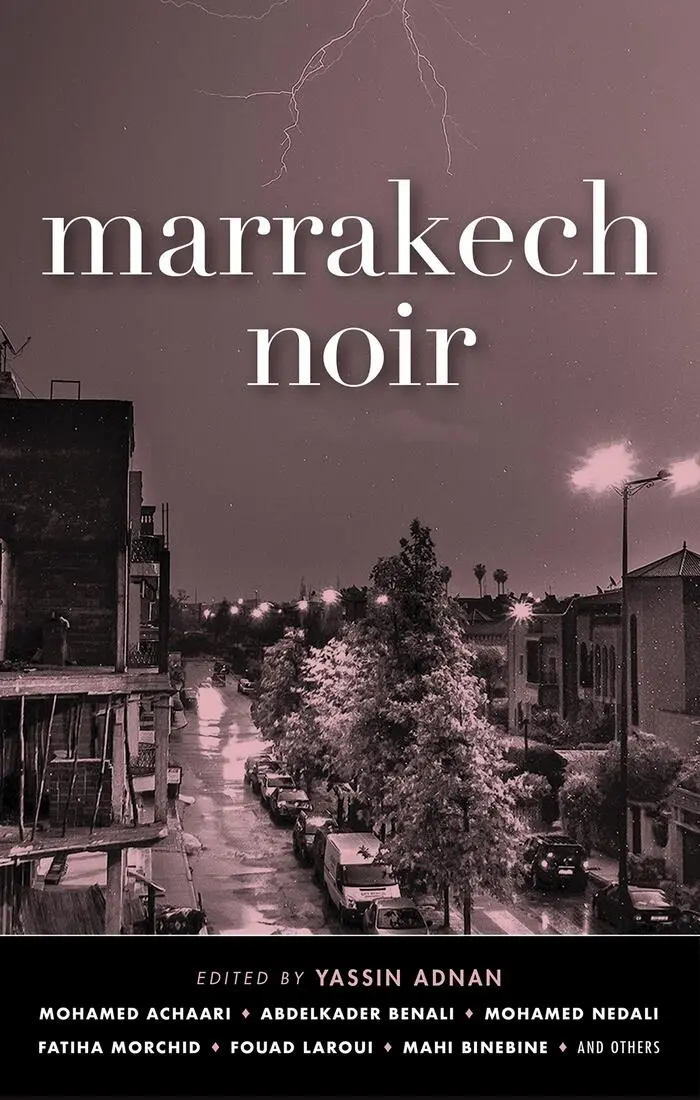
- Название:Marrakech Noir
- Автор:
- Издательство:Akashic Books
- Жанр:
- Год:2018
- Город:New York
- ISBN:978-1-61775-473-9
- Рейтинг книги:5 / 5. Голосов: 1
-
Избранное:Добавить в избранное
- Отзывы:
-
Ваша оценка:
Marrakech Noir: краткое содержание, описание и аннотация
Предлагаем к чтению аннотацию, описание, краткое содержание или предисловие (зависит от того, что написал сам автор книги «Marrakech Noir»). Если вы не нашли необходимую информацию о книге — напишите в комментариях, мы постараемся отыскать её.
Marrakech Noir — читать онлайн бесплатно полную книгу (весь текст) целиком
Ниже представлен текст книги, разбитый по страницам. Система сохранения места последней прочитанной страницы, позволяет с удобством читать онлайн бесплатно книгу «Marrakech Noir», без необходимости каждый раз заново искать на чём Вы остановились. Поставьте закладку, и сможете в любой момент перейти на страницу, на которой закончили чтение.
Интервал:
Закладка:
She approached the terrifying building with hesitant steps. Whom should she ask? And how? What had her son been accused of doing? Why had they taken him? Did they know Aziz? Do you know Aziz? Aziz, the handsome young man with the enchanting smile. He was a good boy, did well at school, drew suns with his colored pens. Was it simply because he had drawn a rising sun that he deserved to be punished?
The questions crowded together inside her head. She imagined herself making her way around the building and asking the policemen who surrounded it one by one. But when a stout, cruel-looking officer came over and ordered her to move along, she realized that she was all but rooted in place in front of the building. Her eyes began to overflow with tears, soaking her veil.
The policeman repeated his order. “Can’t you hear? I told you to get going. You’re not allowed to stand here. There’s nothing to see — the show’s over there, behind you, you crazy woman. So move along, scram.”
“I’m not looking for a show, sir. I want my boy, my son...” she said, stumbling over her words in fear.
“Your son? Is he a policeman? Does he work here?”
“My son is only a student, sir, a young man in the baccalaureate division. Ever since he started school he’s always been the first in his class. He’s seventeen and his name is Aziz.”
“I thought you were asking about an employee here. This building is not a school or a youth center. Go look for your son somewhere else.”
“But my son is here, sir. Locked up here three months ago.”
The policeman was confused. He was only a lowly patrol officer. He had nothing to do with what happened inside. He didn’t know what to do. He tried to hide his confusion behind curses and shouts: “I told you to get out of my sight, you bitch! Get on your way or I’ll break your teeth! This isn’t a high school. If your son is a criminal, go look for him in Boulmharez Prison. This isn’t a school or a jail. So get lost!”
No one in her whole life had ever cursed at Mama Aicha. Bitch . That was the first time another person had flung this hurtful word in her face. She who knew nothing of the world. She who had left her small Amazigh village to come to her husband’s house in Marrakech without ever having had her ears polluted by a dirty word. In Jemaa el-Fnaa, as she moved among the fortune-tellers holding court in the square, she had heard obscenities that embarrassed her. But this foul word now exploded like a bomb in her own face. It was directed at her .
“A bitch? I’m a bitch?”
She hurried to get away from the policeman who had broken her resolve and wounded her deeply. As she rushed on, the face of her husband appeared before her tear-filled eyes. How could she confront him after today? How could she look him in the eye now that her modesty had been defiled by a stranger with a word that had never even crossed her mind before? She ran as though she were trying to escape herself and escape the word bitch that pursued her. She came to a halt in the middle of a circle of Abidat Rma. They were singing their nomadic songs and dancing. If only she could disappear. To hide from what she was accused of, she slipped in among the audience. Her feet betrayed her and she collapsed into a seated position on the ground in the first row. Her veil hid her face. She stared at the dancers without seeing them, as silent tears soaked her veil and traced rivulets down her cheeks. The roar of the blood in her veins drowned out the voices of the singers and the music they were making. The dance kept going energetically in front of her, but she couldn’t see it. She couldn’t hear. She couldn’t feel.
As she made her way home, crushed with disappointment, she noticed a gathering of people not far from the commissariat, near the taxi stand. Her heart alone steered her toward them. She heard somebody wail in anguish: “Let me talk to the person in charge of the jail so I can ask him about my son! The baccalaureate exam is around the corner and he’s being prevented from going to school!”
Aziz was just one of many. She found on every pair of lips her very own questions. They were fathers and mothers, wives and sons, worn out with watching and waiting. Chance had brought them all together in the same place. They came as individuals and convened without having known each other before. Each mother told her story. Each father condemned the brutality with which his son had been treated during his arrest. The police chased them away, but they returned. For Mama Aicha, there was something about finding herself united with those who shared her pain that made her forget the ugly word and feel that at least she was not alone.
The news of the secret jail spread throughout the city, and eventually it was no longer secret. It was the commissariat of Jemaa el-Fnaa. The arrests didn’t stop, so the number of guards in the vicinity of the commissariat doubled. The mothers began to gather in the middle of the square. They rested in the chairs belonging to the food vendors. Jemaa el-Fnaa gradually became an area for protests. Tourists and visitors to the square, Moroccan and foreign, wandered through without paying attention to the intermittent clashes between the families of those imprisoned and the security forces, the families forming into lines and moving en masse toward the building, and the police, always vigilant, driving them back among the circles of storytellers.
Suddenly, with no warning, the process of releasing the prisoners began, without a trial. Each day a few would leave, bringing with them news of who would come out next.
The number of families shrank. The remaining ones kept up their vigil near the jail. Their initial worry transformed into a real hope that the confinement might be lifted for all of the city’s young men who had disappeared.
Early one morning in January, with rain sweeping across the desolate square as it usually did on cold mornings, the families were surprised to see, through the filaments of falling water, lights shining at the door of the jail. They hurried over to find out what was going on. The lights were from a jeep that was transporting the remaining prisoners. Mama Aicha saw her son as he was being pushed roughly to climb into the vehicle. His head was shaved and a band of black cloth covered his eyes. She slapped her cheeks and cried: “Aziz! It’s my son, Aziz! Where are you going, my boy?”
Aziz heard her cry. He raised his shackled hand and clenched his fist. Cries and cheers filled the air. The names of the prisoners were repeated in every corner of Jemaa el-Fnaa that day. Mama Aicha steeled her heart. She banished the tears from her eyes. They were forbidden from betraying her devastation.
It was an agonizing moment for Mama Aicha, who was torn between fear of the cold and the dark, and fear of the wolves that were looking for scapegoats.
The cars began to move and the families trembled with worry. Rumors spread through the city, confirming that the prisoners who had been charged with conspiracy and plotting to overthrow the regime had been transferred directly to the execution wing at Kenitra Central Prison outside of Rabat. They would execute them after a quick trial. The most important work of proving them guilty had already been carried out by the police in the Jemaa el-Fnaa commissariat. Other sources, however, maintained that they were still in Marrakech. That they were being held inside a secret vault in el-Badi Palace, an old prison where the Saadi kings used to entomb their Portuguese prisoners alive. Aziz’s mother tried to discover the way to this vault but she could find no one to guide her. She continued meeting regularly with the other mothers and fathers and wives. They met up near the Jemaa el-Fnaa commissariat and then congregated in the shade of the giant trees in Arset el-Bilk just beside the square. The security officers watched them and counted their very breaths, but the families didn’t care. They supported each other and fortified themselves against despair by nurturing their dreams and pursuing hope, however false it might be.
Читать дальшеИнтервал:
Закладка:
Похожие книги на «Marrakech Noir»
Представляем Вашему вниманию похожие книги на «Marrakech Noir» списком для выбора. Мы отобрали схожую по названию и смыслу литературу в надежде предоставить читателям больше вариантов отыскать новые, интересные, ещё непрочитанные произведения.










Обсуждение, отзывы о книге «Marrakech Noir» и просто собственные мнения читателей. Оставьте ваши комментарии, напишите, что Вы думаете о произведении, его смысле или главных героях. Укажите что конкретно понравилось, а что нет, и почему Вы так считаете.