Махи Бинбин - Marrakech Noir
Здесь есть возможность читать онлайн «Махи Бинбин - Marrakech Noir» весь текст электронной книги совершенно бесплатно (целиком полную версию без сокращений). В некоторых случаях можно слушать аудио, скачать через торрент в формате fb2 и присутствует краткое содержание. Город: New York, Год выпуска: 2018, ISBN: 2018, Издательство: Akashic Books, Жанр: Детектив, на английском языке. Описание произведения, (предисловие) а так же отзывы посетителей доступны на портале библиотеки ЛибКат.
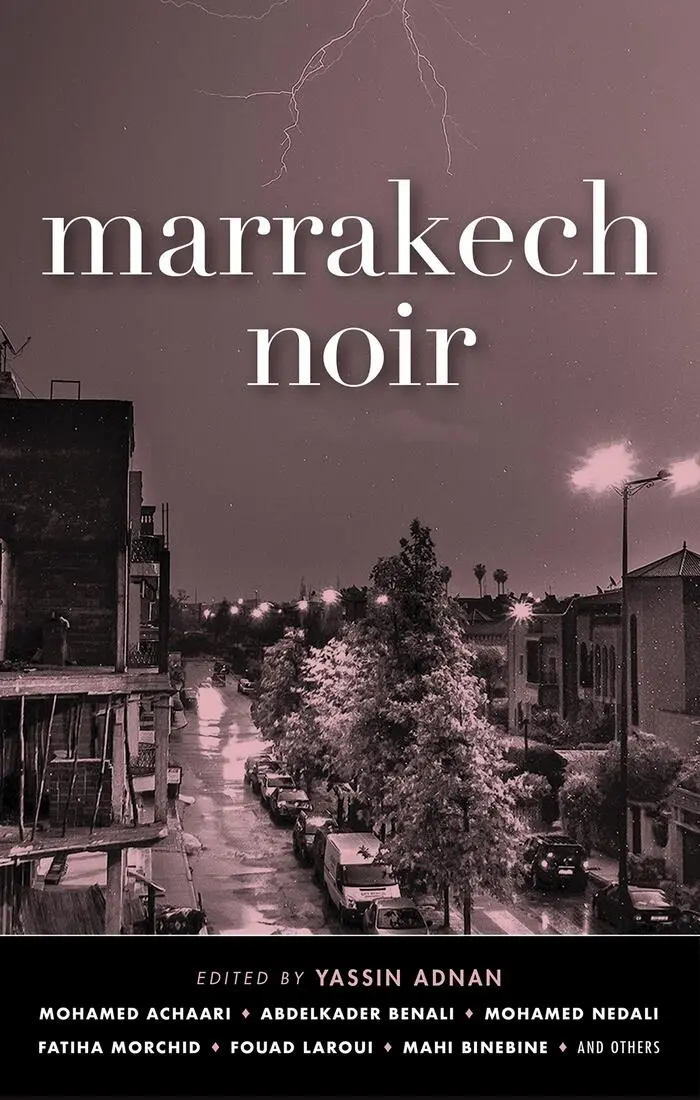
- Название:Marrakech Noir
- Автор:
- Издательство:Akashic Books
- Жанр:
- Год:2018
- Город:New York
- ISBN:978-1-61775-473-9
- Рейтинг книги:5 / 5. Голосов: 1
-
Избранное:Добавить в избранное
- Отзывы:
-
Ваша оценка:
Marrakech Noir: краткое содержание, описание и аннотация
Предлагаем к чтению аннотацию, описание, краткое содержание или предисловие (зависит от того, что написал сам автор книги «Marrakech Noir»). Если вы не нашли необходимую информацию о книге — напишите в комментариях, мы постараемся отыскать её.
Marrakech Noir — читать онлайн бесплатно полную книгу (весь текст) целиком
Ниже представлен текст книги, разбитый по страницам. Система сохранения места последней прочитанной страницы, позволяет с удобством читать онлайн бесплатно книгу «Marrakech Noir», без необходимости каждый раз заново искать на чём Вы остановились. Поставьте закладку, и сможете в любой момент перейти на страницу, на которой закончили чтение.
Интервал:
Закладка:
They made another plan to go to the Faculty of Literature in Rabat, and so they went. The students there joined forces with them in a demonstration the likes of which Mohammed V University had not seen since the Moroccan Student Union was banned. In Aicha’s house, they made signs to carry during the May Day marches. They raised their voices high to expose the truth about the prisoners of conscience who were denied the right to education and medical care. They camped out at the Ministry of Justice and the minister met with them. He made them promises that the demands of the prisoners would be met, and a committee traveled from his ministry to the prison to negotiate with the inmates to end the strike. The demands were met, but the sacrifices were great. All of them emerged from the forty-day strike as thin as skeletons. A young man from Marrakech named Selim el-Mnabhi had died during the strike. Mama Aicha was right there alongside her comrade Umm Fkhita, the mother of the martyred Selim, as she prepared to receive the corpse and carry out the burial according to custom. They held a martyr’s funeral — Selim’s funeral — a funeral in which old and young marched together, men and women. Leftist activists from every Moroccan city were in attendance, walking beside the two mothers, Fkhita and Mama Aicha, in a funeral that was unique in all the history of Marrakech.
The phone rang. It was Aziz.
“Hi, Aziz. I’ve arrived, my friend. I’m in Jemaa el-Fnaa now. I just parked my car. I’ll be there in five minutes.”
I wandered around the café looking for Aziz, but I didn’t see him. I stopped in the middle of the room and dialed his number, only to have his voice speak to me from a table right beside me. I saw an old man with haggard features and white hair searching my face as he tried to smile. But I didn’t know him. I approached him to ask him about Aziz. Maybe this was a friend of his. Maybe Aziz was in the bathroom and he would return in a moment. Instead, the old man raised his cloudy eyes to my face and addressed me by name: “At long last, Josef.” As he said this, he attempted to rise to embrace me. “At last.”
Damn! It was him. He used to address me as Comrade Josef , and I would call him Azizovitch.
“You didn’t recognize me, Yusuf? I’ve changed that much?”
What? Changed? You’re a completely different person, my friend. A person I don’t know. A different face. Features I don’t recognize. Only the voice still resembles the old Aziz, I thought. “What did they do to you, my friend, during all those years you spent in prison?”
“I don’t remember anymore, Yusuf,” he whispered. “I don’t remember anything. I don’t like to remember. Nothing makes me suffer now except the pain that my condition causes my mother and father when they see death creeping slowly over my body. If you only knew how hard Mama Aicha fought to get me out alive, Josef. Yes, if only you knew.”
“I do know, my friend. My mother told me all about Mama Aicha’s determination, alongside the mothers and wives of the other political prisoners. How they pressured the regime and embarrassed it in front of the international community before they were able to wring out a blanket pardon for their sons and husbands. Mama Aicha and her companions were behind many changes that this country has seen. When I was in Japan, I used to follow the news from here almost daily, before the Internet — and after. The justice-and-reconciliation initiative that brought about your release, along with the adoption of guidelines for making financial reparations to former detainees — this is what opened the airports and the borders to us.” I was proud that something good had come out of the tragedy. “But I didn’t come back right away. It was as though I was afraid of seeing you — all of you. I dreaded the moment when my eyes would meet yours. You especially, comrade.”
“Oh, my friend... whatever was in my eyes has been extinguished forever. You have nothing to fear from them. Forget your friend Aziz. He’s only a ghost now. Let’s go see your second mother, Aicha. She’s waiting for us with a seven-vegetable couscous she made in your honor.”
Mama Aicha greeted me with a warm hug. She kissed me and kept kissing me as though I were a sweet child. Her eyes were shining. The house was just as it had been when I left it. Flowerpots still surrounded the courtyard. The mulberry tree was still ripening. Mama Aicha seemed younger than her son. She must have been around fifty-four by now. Were it not for the traces of sadness that lingered in the depths of her eyes, I would have said that she had not changed. She was as radiant and pure as she had been when I last saw her twenty years before.
I handed her my gift, wrapped in rose-colored cellophane paper. She removed the paper with a huge smile. “Cloth made from the purple silkworm. Organdy. My first dream. This is wonderful, Yusuf, my son. How fine and beautiful it is. This is cloth for a sultaness, Aziz. I’ll take it to the tailor tomorrow, and within a month at most he’ll make me a dress from it. When will you get married, Aziz? When will you get married, my son? I want to wear it in your honor.”
Translated from Arabic by Anna Ziajka Stanton
Part III
Outside the City’s Walls
Frankenstein’s Monster
by My Seddik Rabbaj
Sidi Youssef Ben Ali
Marrakech is known for its seven patrons; we call it the city of the Seven Saints. Devout visitors all make the same pilgrimage from one mausoleum to the next, exploring the most intimate corners of the medina. This peregrination begins with the shrine to Sidi Youssef Ben Ali, born Abou Yacoub Senhaji, the revered sage who chose to live outside the walls of the Red City until his death in the year of the hegira 593 — more than a century after the capital of the Almoravids was built. It was because he had leprosy that he secluded himself, even digging a deep cellar where he could pray in isolation. Little did the holy man know that a community would form around this place in his honor, growing with the centuries to become Sidi Youssef Ben Ali, a neighborhood defined not only by its borders — it’s situated in the zone between the city and its suburbs — but also by the character of its inhabitants. Anywhere in Marrakech, when you introduce yourself as a son of Sidi Youssef Ben Ali, people react with an odd mixture of admiration and suspicion. These “sons” are known for their street smarts: they are cunning almost to the point of crookedness.
Long after his death, the saint continued to watch over his children, preparing them for life by instilling in them a certain self-sufficiency. Here, especially to the north, near the sanctuary, we start to earn our keep at an early age. Several businesses have sprouted up around the marabout’s tomb and we all take part in them, we children of the neighborhood. We begin by selling candles in front of the sanctuary, around the age of nine. Poor women who can’t afford to buy a full packet as an offering to the saint are content to bargain for a few of the singles that M’kadma, the sanctuary guard, collects and gives us to resell. This business allows us kids — and our supplier — to go home at night with a bit of cash in our pockets. And just as in ancient Rome, when slaves gradually accumulated wages to put toward their emancipation, this modest savings lets us buy our freedom. Our parents leave us to our own devices. We look after ourselves from childhood — or, rather, the saint looks after us.
As we grow up we take on new responsibilities. We become porters, not of luggage but of children — two- and three-year-olds, usually — who we carry down to a sort of underground hovel. We lock the child in there alone for a long while, listening with satisfaction as their screams pierce the darkness. Our saint is known all over the city for his power to cure fitful babies. Mothers bring their little ones who suffer from this particular curse — toddlers who cry for no reason, to the point of seeming possessed — and leave them with one of us. Our task is to place the ailing child in the hands of the saint before bolting up the stairs like a cat, leaving him or her lost in the blackness of the narrow cellar as if at the bottom of a well. The child wails and wails with all its might, and soon rids itself of its affliction.
Читать дальшеИнтервал:
Закладка:
Похожие книги на «Marrakech Noir»
Представляем Вашему вниманию похожие книги на «Marrakech Noir» списком для выбора. Мы отобрали схожую по названию и смыслу литературу в надежде предоставить читателям больше вариантов отыскать новые, интересные, ещё непрочитанные произведения.









Обсуждение, отзывы о книге «Marrakech Noir» и просто собственные мнения читателей. Оставьте ваши комментарии, напишите, что Вы думаете о произведении, его смысле или главных героях. Укажите что конкретно понравилось, а что нет, и почему Вы так считаете.