The - ZOMBIE
Здесь есть возможность читать онлайн «The - ZOMBIE» весь текст электронной книги совершенно бесплатно (целиком полную версию без сокращений). В некоторых случаях можно слушать аудио, скачать через торрент в формате fb2 и присутствует краткое содержание. Жанр: Юмористические книги, Юмористическая фантастика, на английском языке. Описание произведения, (предисловие) а так же отзывы посетителей доступны на портале библиотеки ЛибКат.
- Название:ZOMBIE
- Автор:
- Жанр:
- Год:неизвестен
- ISBN:нет данных
- Рейтинг книги:3 / 5. Голосов: 1
-
Избранное:Добавить в избранное
- Отзывы:
-
Ваша оценка:
ZOMBIE: краткое содержание, описание и аннотация
Предлагаем к чтению аннотацию, описание, краткое содержание или предисловие (зависит от того, что написал сам автор книги «ZOMBIE»). Если вы не нашли необходимую информацию о книге — напишите в комментариях, мы постараемся отыскать её.
ZOMBIE — читать онлайн бесплатно полную книгу (весь текст) целиком
Ниже представлен текст книги, разбитый по страницам. Система сохранения места последней прочитанной страницы, позволяет с удобством читать онлайн бесплатно книгу «ZOMBIE», без необходимости каждый раз заново искать на чём Вы остановились. Поставьте закладку, и сможете в любой момент перейти на страницу, на которой закончили чтение.
Интервал:
Закладка:
1587 A.D., ROANOKE ISLAND, NORTH CAROLINA
English colonists, isolated from any support from Europe, sent regular hunting parties to the mainland in search of food. One of these parties disappeared for three weeks. When a lone survivor returned, he described an attack by “a band of savages… their putrid, worm-ridden skin impervious to powder and shot!” Although only one of the eleven-man party was killed, four of the others were savagely mauled. These men died the following day, were buried, then rose from their shallow graves within hours. The survivor swore that the remainder of his party was eaten alive by his former comrades, and that he alone escaped. The colony magistrate declared the man both a liar and a murderer. He was hanged the next morning.
A second expedition was sent to recover the bodies “lest their remains be desecrated by heathens.” The five-man party returned in a state of near collapse, bite and scratch marks covering their bodies. They had been attacked on the mainland, both by the “savages” described by the now-vindicated, deceased survivor, and also by members of the first hunting party. These new survivors, after a period of medical examination, passed away within hours of each other. Burial was set for the following dawn. That night, they reanimated. Details are sketchy as to the rest of the story. One version describes the eventual infection and destruction of the entire town. Another has the Croatan Nation, recognizing the danger for what it was, rounding up and burning every colonist on the island. In a third account, these same Native Americans rescued the surviving townspeople and dispatched the undead and wounded. All three stories have appeared in fictional accounts and historical texts for the last two centuries. None presents an airtight explanation as to why the first English settlement in North America literally vanished without a trace.
1611 A.D., EDO, JAPAN
Enrique Desilva, a Portuguese merchant doing business in the islands, wrote this passage in a letter to his brother:
Father Mendoza, reacquainting himself with Castillian wine, spoke of a man who has recently converted to our faith. This Savage was a member of one of the most secretive orders in this exotic, barbaric land, “The Brotherhood of Life.” According to the old clergyman, this secret society trains assassins for, and I speak in all sincerity, the purpose of executing demons… These creatures, from his explanation, were once human beings. After their death, some unseen evil caused them to arise… feasting upon the flesh of the living. To combat this terror, “The Brotherhood of Life” has been formed, according to Mendoza, by the Shogun himself… They are taken from an early age… trained in the art of destruction… Their strange manner of unarmed battle devotes much time to avoiding manhandling by the demons, wriggling as does a snake to avoid being seized… Their weapons, oddly shaped Oriental scimitars, are designed for the severing of heads… Their temple, although its location remains the utmost secret, is said to possess a room where the live and still-wailing heads of destroyed monsters adorn the walls. Senior recruits, primed for their ascension into the brotherhood, must spend an entire night in this room, with nothing but the unholy objects for company… If Father Mendoza’s story is true, this land is, as we have always suspected, one of godless evil… Were it not for the lure of silk and spice, we would do well to avoid it at all costs… I asked the old priest where this new convert was, in order to hear the words of this tale from his own lips. Mendoza informed me that he had been found murdered almost a fortnight ago. “The Brotherhood” do not allow their secrets to be spilled, nor their members to renounce their allegiance.
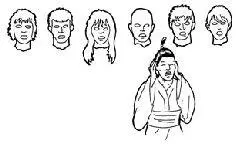
Many secret societies existed in feudal Japan. “The Brotherhood of Life” does not appear in any text, past or present. Desilva does make some historical inaccuracies in his letter, such as referring to a Japanese sword as a “scimitar.” (Most Europeans did not bother with learning any aspects of Japanese culture.) His description of the wailing heads is also an inaccuracy as a severed zombie head could not produce any noise without a diaphragm, lungs, and vocal cords. If his story is true, however, it would explain why there have been few reported outbreaks in Japan as opposed to the rest of the world. Either Japanese culture has produced an effective wall of silence surrounding its outbreaks or the Brotherhood of Life accomplished its mission. Either way, there were no reports of outbreaks in connection with Japan until the mid-twentieth century.
The Portuguese merchantman Marialva left Bissau, West Africa, with a cargo of slaves bound for Brazil. It never reached its destination. Three years later, in the middle of the South Atlantic, the Danish vessel Zeebrug spotted the drifting Marialva. A boarding party was dispatched for the purpose of salvage. They found, instead, a cargo hold of undead Africans still chained to their bunks, writhing and moaning. There was no sign of the crew, and each of the zombies had at least one bite taken from its body. The Danes, believing this ship to be cursed, rowed hastily back to their vessel and reported their findings to the captain. He immediately sank the Marialva with cannon fire. Because there is no way of knowing exactly how the infestation came aboard, all that is left to us is speculation. No lifeboats were found aboard. Only the captain’s body was found, locked in his cabin, with a self-inflicted pistol wound to the head. Many believe that, since the Africans were all chained, the initial infected person must have been a member of the Portuguese crew. If this is true, the unfortunate slaves would have to have endured watching their captors devour or infect one another after their slow transformation into living dead, the virus having worked its way through their systems. Even worse is the awful likelihood that one of these crewmembers attacked and infected a chained slave. This new ghoul, in turn, bit the chained, screaming person next to him. On and on down the line, until the screams were eventually quiet and the entire hold was filled with zombies. Imagining those at the end of the line, seeing their future creeping steadily closer, was enough to conjure the worst nightmares.
1762 A.D., CASTRIES, ST. LUCIA, THE CARIBBEAN
The story of this outbreak is still told today, both by Caribbean islanders and Caribbean immigrants in the United Kingdom. It serves as a powerful warning, not just of the power of the living dead but of humanity’s frustrating inability to unite against them. An outbreak of indeterminate source began in the poor white area of the small, overcrowded city of Castries on the island of St. Lucia. Several free black and mulatto residents realized the source of the “illness” and attempted to warn the authorities. They were ignored. The outbreak was diagnosed as a form of rabies. The first group of infected people were locked in the town jail. Those who suffered bites while trying to restrain them were sent home without treatment. Within forty-eight hours, all of Castries was in chaos. The local militia, not knowing how to stem the onslaught, was overrun and consumed. The remaining whites fled the city to the outlying plantations. Because many of them had already been bitten, they eventually spread the infection throughout the entire island. By the tenth day, 50 percent of the white population was dead. Forty percent, more than several hundred individuals, were prowling the island as reanimated zombies. The remainder had either escaped by whatever seacraft they could find or remained holed up in the two fortresses at Vieux Fort and Rodney Bay. This left a sizable force of black slaves who now found themselves “free” but at the mercy of the undead.
Читать дальшеИнтервал:
Закладка:
Похожие книги на «ZOMBIE»
Представляем Вашему вниманию похожие книги на «ZOMBIE» списком для выбора. Мы отобрали схожую по названию и смыслу литературу в надежде предоставить читателям больше вариантов отыскать новые, интересные, ещё непрочитанные произведения.









Обсуждение, отзывы о книге «ZOMBIE» и просто собственные мнения читателей. Оставьте ваши комментарии, напишите, что Вы думаете о произведении, его смысле или главных героях. Укажите что конкретно понравилось, а что нет, и почему Вы так считаете.