The - ZOMBIE
Здесь есть возможность читать онлайн «The - ZOMBIE» весь текст электронной книги совершенно бесплатно (целиком полную версию без сокращений). В некоторых случаях можно слушать аудио, скачать через торрент в формате fb2 и присутствует краткое содержание. Жанр: Юмористические книги, Юмористическая фантастика, на английском языке. Описание произведения, (предисловие) а так же отзывы посетителей доступны на портале библиотеки ЛибКат.
- Название:ZOMBIE
- Автор:
- Жанр:
- Год:неизвестен
- ISBN:нет данных
- Рейтинг книги:3 / 5. Голосов: 1
-
Избранное:Добавить в избранное
- Отзывы:
-
Ваша оценка:
ZOMBIE: краткое содержание, описание и аннотация
Предлагаем к чтению аннотацию, описание, краткое содержание или предисловие (зависит от того, что написал сам автор книги «ZOMBIE»). Если вы не нашли необходимую информацию о книге — напишите в комментариях, мы постараемся отыскать её.
ZOMBIE — читать онлайн бесплатно полную книгу (весь текст) целиком
Ниже представлен текст книги, разбитый по страницам. Система сохранения места последней прочитанной страницы, позволяет с удобством читать онлайн бесплатно книгу «ZOMBIE», без необходимости каждый раз заново искать на чём Вы остановились. Поставьте закладку, и сможете в любой момент перейти на страницу, на которой закончили чтение.
Интервал:
Закладка:
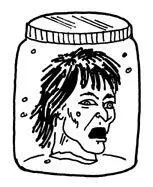
The Venetian explorer Marco Polo wrote in his journal that during one visit to the emperor’s summer palace of Xanadu, Kublai Khan displayed a severed zombie head preserved in a jar of clear alcoholic fluid (Polo described the fluid as “with the essence of wine but clear and biting to the nose”). This head, the Khan stated, had been taken by his grandfather, Genghis, when he returned from his conquests in the West. Polo wrote that the head was aware of their presence. It even watched them with nearly decomposed eyes. When he reached out to touch it, the head snapped at his fingers. The Khan chastised him for this foolish act, recounting the tale of a low-ranking court official who had tried the same thing and had been bitten by the severed head. This official later “seemed to die within days but rose again to attack his servants.” Polo states that the head remained “alive” throughout his stay in China. No one knows the fate of this relic. When Polo returned from Asia, his story was suppressed by the Catholic Church and therefore does not appear in the official publication of his adventures. Historians have theorized that, since the Mongols reached as far as Baghdad, the head may be one of the original subjects of Ibrahim Obeidallah, which would entitle the head to the record of the best-preserved, oldest “living” relic of a zombie specimen.
1523 A.D., OAXACA, MEXICO
The natives tell of a sickness that darkens the soul, causing a thirst for the blood of their brothers. They tell of men, women, even children whose flesh have become gray with rot and possess an unholy smell. Once darkened, there is no method of healing, save death, and that can only be achieved through fire, since the body becomes resistant to all arms of man. I believe this to be a tragedy of the heathen, for, without their knowledge of Our Lord Jesus Christ, there was indeed no cure for this illness. Now that we have blessed their masses with the light and truth of His love, we must strive to seek these darkened souls, and cleanse them with all the force of Heaven.
This text was, supposedly, taken from the accounts of Father Esteban Negron, a Spanish priest and student of Bartolome de las Casas, previously edited from the original works and recently discovered in Santo Domingo. Opinions vary on the authenticity of this manuscript. Some believe it to be a part of a Vatican order to suppress all information on the subject. Others believe it to be an elaborate hoax along the lines of the “Hitler diaries.”
A Spanish expedition under the command of Don Rafael Cordoza penetrated the Amazon jungle in search of the fabled El Dorado, the City of Gold. Tupi guides warned him not to enter an area known as “The Valley of Endless Sleep.” In it, they cautioned, he would find a race of creatures who moaned like wind and thirsted for blood. Many men had entered this valley, said the Tupi. None ever returned. Most of the conquistadors were terrified by this warning and begged to return to the coast. Cordoza, believing that the Tupi had fabricated this story in order to hide the golden city, pushed his expedition forward. After dark, the camp was attacked by dozens of walking dead. What transpired that night is still a mystery. The passenger manifest from the San Varonica, the ship that carried Cordoza from South America to Santo Domingo, has shown that he was the only survivor to reach the coast. Whether he fought to the end or simply abandoned his men, no one knows. A year later, Cordoza reached Spain, where he provided a full account of this attack to both the Royal Court in Madrid and the Holy Office in Rome. Accused of squandering crown resources by the Royal Court, and of speaking blasphemous acts by the Vatican, the conquistador was stripped of his title and died in obscure poverty. His story is a compilation of fragments from many texts concerning this period in Spain ’s history. No original work has been discovered.
During his circumnavigation of the globe, Francis Drake, the pirate who later became a national hero, stopped at an unnamed island to restock his supplies of food and fresh water. The natives warned him not to visit a small, nearby cay that was inhabited by “the Gods of the Dead.” According to custom, the deceased and terminally ill were placed on this island, where the gods would take them, body and soul, to live on forever. Drake, fascinated by their story, decided to investigate. Observing from aboard ship, he watched as a native shore party placed the body of a dying man on the island’s beach. After blowing several calls from a conch shell, the natives retreated to the sea. Moments later, several figures staggered slowly out of the jungle. Drake watched them feed on the corpse before slouching out of sight. To his amazement, the half-eaten body rose to its feet and hobbled after them. Drake never spoke of this incident during his life. The facts were discovered in a secret journal he kept hidden until his death. This journal, passing from one personal collector to another, eventually found its way into the library of Admiral Jackie Fischer, the father of the modern Royal Navy. In 1907 Fischer had it copied and gave it to several of his friends as a Christmas gift. Along with exact coordinates, Drake proclaimed this landmass “the Isle of the Damned.”
1583 A.D., SIBERIA
A scouting party for the infamous Cossack Yermak, lost and starving in the frozen wild, was sheltered by an indigenous, Asiatic tribe. Once they had recovered their strength, the Europeans repaid the kindness by declaring themselves the rulers of the village, and settled down for the winter until Yermak’s main force arrived. After feasting for several weeks on the village’s stored food, the Cossacks now turned their hunger upon the villagers themselves. In a savage act of cannibalism, thirteen people were eaten, while the others fled into the wilderness. The Cossacks went through this new source of food within days. In desperation, they turned to the village burial ground, where, it was believed, the freezing temperatures had preserved any fresh corpses. The first body exhumed was a woman in her early twenties, who had been buried with her hands and legs bound and her mouth gagged. Once defrosted, the dead woman revived. The Cossacks were astounded. Hoping to learn how she had achieved such a feat, they removed her gag. The woman bit one Cossack on the hand. With continued shortsightedness, ignorance, and brutality, the Cossacks dismembered, roasted, and ate her flesh. Only two abstained: the wounded warrior (it was believed by his comrades that food should not be wasted on the dying) and a deeply superstitious man who believed the meat to be cursed. In a manner of speaking, he was right. All who ate the zombie’s flesh died that night. The wounded man expired the next morning.
The one survivor attempted to burn the bodies. As he was preparing a funeral pyre, the bitten corpse revived. With the new zombie in hot pursuit, the lone survivor took off across the steppe. Barely an hour into the chase, the exposed zombie froze solid. The Cossack wandered for several days until he was rescued by another scouting party from Yermak. His account was documented by a Russian historian, Father Pietro Georgiavich Vatutin. The work remained obscure for several generations, housed in the remote monastery on Valam Island on Lake Ladoga. It is only now being translated into English. Nothing is known of the fate of the Asiatic villagers or even what their true identity is. The subsequent genocide against these people by Yermak left few survivors. From a scientific point of view, this account represents the first known occurrence of a zombie freezing solid.
Читать дальшеИнтервал:
Закладка:
Похожие книги на «ZOMBIE»
Представляем Вашему вниманию похожие книги на «ZOMBIE» списком для выбора. Мы отобрали схожую по названию и смыслу литературу в надежде предоставить читателям больше вариантов отыскать новые, интересные, ещё непрочитанные произведения.










Обсуждение, отзывы о книге «ZOMBIE» и просто собственные мнения читателей. Оставьте ваши комментарии, напишите, что Вы думаете о произведении, его смысле или главных героях. Укажите что конкретно понравилось, а что нет, и почему Вы так считаете.