The - ZOMBIE
Здесь есть возможность читать онлайн «The - ZOMBIE» весь текст электронной книги совершенно бесплатно (целиком полную версию без сокращений). В некоторых случаях можно слушать аудио, скачать через торрент в формате fb2 и присутствует краткое содержание. Жанр: Юмористические книги, Юмористическая фантастика, на английском языке. Описание произведения, (предисловие) а так же отзывы посетителей доступны на портале библиотеки ЛибКат.
- Название:ZOMBIE
- Автор:
- Жанр:
- Год:неизвестен
- ISBN:нет данных
- Рейтинг книги:3 / 5. Голосов: 1
-
Избранное:Добавить в избранное
- Отзывы:
-
Ваша оценка:
ZOMBIE: краткое содержание, описание и аннотация
Предлагаем к чтению аннотацию, описание, краткое содержание или предисловие (зависит от того, что написал сам автор книги «ZOMBIE»). Если вы не нашли необходимую информацию о книге — напишите в комментариях, мы постараемся отыскать её.
ZOMBIE — читать онлайн бесплатно полную книгу (весь текст) целиком
Ниже представлен текст книги, разбитый по страницам. Система сохранения места последней прочитанной страницы, позволяет с удобством читать онлайн бесплатно книгу «ZOMBIE», без необходимости каждый раз заново искать на чём Вы остановились. Поставьте закладку, и сможете в любой момент перейти на страницу, на которой закончили чтение.
Интервал:
Закладка:
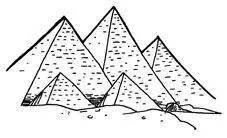
A British dig in 1892 unearthed a nondescript tomb. No clues could be found to reveal who the person who occupied it was or anything about his place in society. The body was found outside the open crypt, curled up in a corner and only partially decomposed. Thousands of scratch marks adorned every surface inside of the tomb, as if the corpse had tried to claw its way out. Forensic experts have revealed that the scratches were made over a period of several years! The body itself had several bite marks on the right radius. The teeth match those of a human. A full autopsy revealed that the dried, partially decomposed brain not only matched those infected by Solanum (the frontal lobe was completely melted away) but also contained trace elements of the virus itself. Debate now rages as to whether or not this case prompted late Egyptian specialists to remove the brains from their mummies.
500 B.C., AFRICA
During his voyage to explore and colonize the continent’s western coast, Hanno of Carthage, one of Western civilization’s most famous ancient mariners, wrote in his sea log:
On the shores of a great jungle, where green hills hide their crowns above the clouds, I dispatched an expedition inland in search of sweet water… Our soothsayers warned against this action. In their eyes was a cursed land, a place of demons abandoned by the gods. I ignored their warnings and paid the highest price… Of the thirty and five men sent, seven returned… The survivors sobbed a tale of monsters from the jungles. Men with fangs of snakes, claws of leopards, and eyes burning with the fires of hell. Bronze blades cut their flesh but drew no blood. They feasted upon our sailors, their wails carried on the wind… our soothsayers warned of the wounded survivors, claiming they would bring sorrow on all they touched… We hastened to our ships, abandoning those poor souls to this land of man-beasts. May the Gods forgive me.
As most readers know, much of Hanno’s work is controversial and debated among academic historians. Given that Hanno also describes a confrontation with large, ape-like creatures he dubbed “Gorillas” (actual gorillas have never inhabited that part of the continent), it can be inferred that both these incidents were a product either of his imagination or those of later historians. Even with this in mind, and disregarding the obvious exaggerations of snake’s fangs, leopard’s claws, and burning eyes, Hanno’s basic description does closely resemble the walking dead.
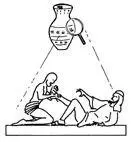
An unnamed Macedonian column built by the legendary conqueror Alexander the Great was visited many times by Soviet Special Forces during their own war of occupation. Five miles from the monument, one unit discovered the ancient remains of what is believed to be Hellenic Army barracks. Among other artifacts, there was a small bronze vase. Its inlaid pictures show: (1) one man biting another; (2) the victim lying on his deathbed; (3) the victim rising up again; and back to (1) biting another man. The circular nature of this vase, as well as the pictures themselves, could be evidence of an undead outbreak either witnessed by Alexander or related to him by one of the local tribes.
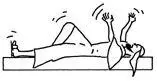
During the Qin Dynasty, all books not relating to practical concerns such as agriculture or construction were ordered burned by the emperor to guard against “dangerous thought.” Whether accounts of zombie attacks perished in the flames will never be known. This obscure section of a medical manuscript, preserved in the wall of an executed Chinese scholar, might be proof of such attacks:
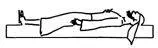
The only treatment for victims of the Eternal Waking Nightmare is complete dismemberment followed by fire. The patient must be bodily restrained, his mouth filled with straw then bound securely. All limbs and organs must be removed, avoiding contact with any bodily fluids. All must be burned to ash then scattered at least twelve li in all directions. No other remedy will suffice as the sickness has no cure… the desire for human meat, unquenchable… If victims are encountered in numbers, with no hopes of restraining them, immediate decapitation must be used… the Shaolin spade being the swiftest weapon for this task.
There is no mention of the “Eternal Waking Nightmare” victims as actually being dead. Only the section about craving the flesh of the healthy, and the actual “treatment,” suggest a presence of zombies in ancient China.
121 A.D., FANUM COCIDI, CALEDONIA (SCOTLAND)
Although the source of the outbreak is unknown, its events are well-documented. The local barbarian chieftains, believing the undead to be simply insane, sent more than 3,000 warriors to “end this mad uprising.” The result: More than 600 warriors were devoured, the rest wounded and eventually transformed into walking dead. A Roman merchant named Sextus Sempronios Tubero, who was traveling through this province at the time, witnessed the battle. Although not realizing that the walking dead were just that, Tubero was observant enough to notice that only the decapitated zombies ceased to be a threat. Barely escaping with his life, Tubero reported his findings to Marcus Lucius Terentius, commander of the nearest military garrison in Roman Britannia. Less than a day away were well over 9,000 zombies. Following the stream of refugees, these ghouls continued to migrate south, moving steadily toward Roman territory. Terentius had only one cohort (480 men) at his disposal. Reinforcements were three weeks away. Terentius first ordered the digging of two seven-foot-deep, inwardly narrowing ditches that eventually straightened to form a straight, mile-long corridor. The result looked similar to a funnel opening into the north. The bottoms of both trenches were then filled with bitumen liquidum (crude oil: common for heating lamps in this part of Britannia). As the zombies approached, the oil was ignited. All ghouls falling into the trench were trapped in its deep confines and incinerated. The remainder were forced into the funnel, where no more than 300 could stand abreast. Terentius ordered his men to draw swords, raise shields, and advance on the enemy. After a nine-hour battle, every zombie had been decapitated, the still-snapping heads rolled into the ditches for cremation. Roman casualties numbered 150 dead, no wounded (the legionnaires killed any bitten comrade).
Ramifications from this outbreak were both immediately and historically important. Emperor Hadrian ordered all information regarding the outbreak to be compiled in one comprehensive work. This manual not only detailed a zombie’s behavioral pattern and instructions on efficient methods of disposal, it recommended overwhelming numerical force “to deal with the inevitable panic of the general populace.” A copy of this document, known simply as “Army Order XXXVII,” was distributed to every legion throughout the empire. For this reason, outbreaks in areas under Roman rule never reached critical numbers again and were therefore never reported in detail. It is also believed that this first outbreak prompted the building of “Hadrian’s Wall,” a structure that effectively isolated Northern Caledonia from the rest of the island. This is a textbook Class 3 outbreak, and easily the largest on record.
Читать дальшеИнтервал:
Закладка:
Похожие книги на «ZOMBIE»
Представляем Вашему вниманию похожие книги на «ZOMBIE» списком для выбора. Мы отобрали схожую по названию и смыслу литературу в надежде предоставить читателям больше вариантов отыскать новые, интересные, ещё непрочитанные произведения.












Обсуждение, отзывы о книге «ZOMBIE» и просто собственные мнения читателей. Оставьте ваши комментарии, напишите, что Вы думаете о произведении, его смысле или главных героях. Укажите что конкретно понравилось, а что нет, и почему Вы так считаете.