William Trevor - Two Lives
Здесь есть возможность читать онлайн «William Trevor - Two Lives» весь текст электронной книги совершенно бесплатно (целиком полную версию без сокращений). В некоторых случаях можно слушать аудио, скачать через торрент в формате fb2 и присутствует краткое содержание. Год выпуска: 0101, Издательство: Penguin Publishing, Жанр: Старинная литература, на английском языке. Описание произведения, (предисловие) а так же отзывы посетителей доступны на портале библиотеки ЛибКат.
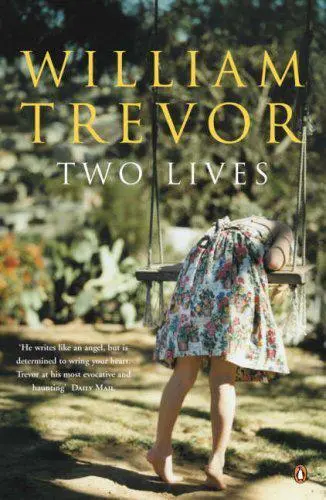
- Название:Two Lives
- Автор:
- Издательство:Penguin Publishing
- Жанр:
- Год:0101
- ISBN:нет данных
- Рейтинг книги:5 / 5. Голосов: 1
-
Избранное:Добавить в избранное
- Отзывы:
-
Ваша оценка:
Two Lives: краткое содержание, описание и аннотация
Предлагаем к чтению аннотацию, описание, краткое содержание или предисловие (зависит от того, что написал сам автор книги «Two Lives»). Если вы не нашли необходимую информацию о книге — напишите в комментариях, мы постараемся отыскать её.
Two Lives — читать онлайн бесплатно полную книгу (весь текст) целиком
Ниже представлен текст книги, разбитый по страницам. Система сохранения места последней прочитанной страницы, позволяет с удобством читать онлайн бесплатно книгу «Two Lives», без необходимости каждый раз заново искать на чём Вы остановились. Поставьте закладку, и сможете в любой момент перейти на страницу, на которой закончили чтение.
Интервал:
Закладка:
‘Crewe and McMichael are being a nuisance,’ he confided a little later, and for a moment I imagined the two he spoke of were boys, like Jobson, at the school. In all four of us bewilderment easily became confusion.
In fact, he referred to solicitors. Crewe and McMichael were his: Johnston Johnson his son-in-law’s. Both firms had written to him. Having offered their commiserations, they turned now to wills and property, to affairs being tidied up, legalities of one kind or another. Soothingly, I said:
‘They see it as their duty, I suppose.’
He nodded, half resigned to that, half questioning such duty. He spoke of the empty house in Hampshire and of his daughter’s effects: he was the inheritor of both. He did not say so but I knew he dreaded going from room to room, opening drawers and cabinets. Pieces of jewellery had been named, to be given to the children of friends. A letter from one of the solicitors stated in a pernickety way that there might well be doubt as to which article was which. There were the son-in-law’s belongings also, his collection of Chinese postage stamps, his photographs. There were the clothes of both of them, and books and records. Articles of a personal nature , the same solicitor had written. We shall in the fullness of time need to take instruction regarding all these matters .
‘A friend of your daughter would sort the stuff out, you know.’
He said he didn’t want to shirk what was expected of him. And yet I knew – for it was there in his face – that his soldier’s courage faltered, probably for the first time in his life. He could not bear to see those clothes again, nor the house in Hampshire where he might now be living with his daughter and the man he hadn’t cared for. How petty that small aversion seemed to him in retrospect! How petty not to have come to terms with a foible! His gaze slipped from the far-off hills; tired eyes, expressionless, were directed toward mine. Had his heart been full of that dislike as he fiddled with his watch in Carrozza 219? Had it nagged at him even while death occurred?
‘Oh, my God,’ he whispered, without emotion.
Tears were repressed, lost somewhere in that sudden exclamation. His grasp on consolation weakened, the Memory Lane of boyhood was useless dust. I reached for his hand, took it in both of mine, and held it. In that moment I would have given him whatever he asked of me.
‘No one can help disliking a person.’ I whispered also. ‘Don’t dwell on it.’
‘All these years she must have guessed. All these years I hurt her.’
‘Your daughter looked far too sensible to be hurt when it wasn’t meant.’
‘I couldn’t stand his laugh.’
I imagined his wife standing up for their son-in-law, saying he wasn’t bad, saying what was important was their daughter’s happiness. How could it possibly matter that a laugh was irritating? ‘Now, you behave yourself: her reprimand was firm, though never coming crossly from her. She managed people well.
‘No, it wasn’t meant,’ he said. He slipped his hand away, but I knew he had experienced the comfort I intended. His voice had calmed. He was less huddled; even sitting down, his military bearing had returned.
‘I wish they’d just dispose of everything,’ he said with greater spirit.
‘Well, perhaps they will.’
I smiled at him again. He needed an excuse, a cover for what he saw as cowardice. ‘When in distress, pretend, my dear,’ Lady Daysmith pronounces in Precious September , and I pretended now, suggesting that his reluctance to return to England was perhaps because England was so very different from the country it had been in his Cotswold days. Tourists I’d talked to complained of violence in the streets, and derelict cities, and greed. Jack-booted policemen scowled from motorcycles. In television advertisements there was a fashion for coarsely-spoken people, often appearing to be mentally afflicted. The back windows of motor-cars were decorated with snappy obscenities.
‘I never noticed.’ His interest was only momentarily held. He rarely watched the television, he confessed.
‘Oh, I’ve been assured. Not once but many times. Corner-boys rule the roost in England’s green and pleasant land. The Royals sell cheese for profit.’
Pursuing the diversion, I threw in that Ernie Chubbs had managed to get the royal warrant on the sanitary-ware he sold, that there’d been a bit of a fuss when it was discovered he was using it without authority. The General nodded, but I knew I’d lost him: in their grey offices the solicitors were already droning at him through pursed solicitors’ lips. He stood forlorn among old books and box-files and sealed documents in out-trays. A lifetime’s bravery oozed finally away to nothing.
‘General, you’re welcome to remain here for as long as you feel like it. You’re not alone in this, you know.’
‘That’s a great kindness, Mrs Delahunty.’ The beaten head was raised; again, blank eyes stared deeply into mine. ‘Thank you so much,’ the General said.
A conversation with Otmar was similar in a way. In the salotto I had just lit a cigarette when he entered and in his self-effacing way slipped into an armchair by the tall, wide-open french windows. I smiled at him. ‘An uncle of Aimée’s has been found,’ I said. ‘Isn’t that good news at last?’
‘Oh, ja .’
He nodded several times.
‘ Ja ,’ he said again.
I didn’t press; I didn’t try to draw enthusiasm from him. But the fact was that someone would love Aimée now; and in time Aimée herself would love. I didn’t say to Otmar that there has to be love in a person’s life, that no one can do without either receiving it or giving it. I didn’t say that love, as much as a daughter and a girlfriend, had been taken away. I didn’t say that love expired for me on a Wall of Death. ‘They killed themselves in the end,’ Mrs Trice callously replied when I asked. ‘Stands to reason with a dangerous game like that.’ A thousand times I have mourned the passing of the people who abandoned me, the motor-cycle skittering over the edge, smashing through the inadequate protection of a wooden rail. To this day, the woman’s arm is still triumphantly raised in a salute. A red handkerchief still flies from her mouth, and the machine races on to nowhere.
‘Where did you learn your English, Otmar?’ I asked the question when I had poured the boy his coffee. I watched him awkwardly breaking a brioche.
‘I learn in school. I was never in England or America.’
A finger ran back and forth on the edge of the saucer beneath his coffee cup. Once Madeleine had been in England, he said, working in some relation’s business in Bournemouth. ‘Silk scarves. At first she is in the factory, then later in the selling.’
For a moment it seemed he made an effort, as the General had, to contain his tears: his eyes evaded mine when he spoke of Madeleine. He dipped his brioche into his coffee and I watched him eating it. In answer to another question he said he’d had hopes of becoming a journalist. It was in this connection that he and Madeleine made the journey to Italy – because he’d heard so much about the murderer of lovers who was known in Florence as the Beast. The murders took place at night when couples made love in parked cars. Otmar had a theory about it and wanted to write an article in the hope that a Munich newspaper would print it. Following a lead, they travelled down to Orvieto and it was there they’d decided to get married, even though Otmar was penniless. It was in Orvieto that Madeleine had telephoned her father in Jerusalem.
‘A cigarette?’
He took one and politely thanked me. It was the right arm that was gone. The coffee cup in his left hand, now placed on the table, was still unnatural. I smiled to make him feel a little more at ease. I lit my own cigarette and his, and as I did so my fingers brushed the back of his hand. I said:
Читать дальшеИнтервал:
Закладка:
Похожие книги на «Two Lives»
Представляем Вашему вниманию похожие книги на «Two Lives» списком для выбора. Мы отобрали схожую по названию и смыслу литературу в надежде предоставить читателям больше вариантов отыскать новые, интересные, ещё непрочитанные произведения.





Обсуждение, отзывы о книге «Two Lives» и просто собственные мнения читателей. Оставьте ваши комментарии, напишите, что Вы думаете о произведении, его смысле или главных героях. Укажите что конкретно понравилось, а что нет, и почему Вы так считаете.