William Trevor - Two Lives
Здесь есть возможность читать онлайн «William Trevor - Two Lives» весь текст электронной книги совершенно бесплатно (целиком полную версию без сокращений). В некоторых случаях можно слушать аудио, скачать через торрент в формате fb2 и присутствует краткое содержание. Год выпуска: 0101, Издательство: Penguin Publishing, Жанр: Старинная литература, на английском языке. Описание произведения, (предисловие) а так же отзывы посетителей доступны на портале библиотеки ЛибКат.
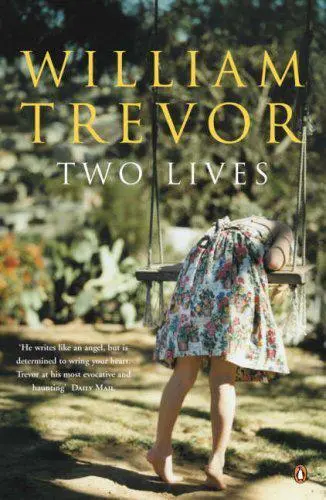
- Название:Two Lives
- Автор:
- Издательство:Penguin Publishing
- Жанр:
- Год:0101
- ISBN:нет данных
- Рейтинг книги:5 / 5. Голосов: 1
-
Избранное:Добавить в избранное
- Отзывы:
-
Ваша оценка:
Two Lives: краткое содержание, описание и аннотация
Предлагаем к чтению аннотацию, описание, краткое содержание или предисловие (зависит от того, что написал сам автор книги «Two Lives»). Если вы не нашли необходимую информацию о книге — напишите в комментариях, мы постараемся отыскать её.
Two Lives — читать онлайн бесплатно полную книгу (весь текст) целиком
Ниже представлен текст книги, разбитый по страницам. Система сохранения места последней прочитанной страницы, позволяет с удобством читать онлайн бесплатно книгу «Two Lives», без необходимости каждый раз заново искать на чём Вы остановились. Поставьте закладку, и сможете в любой момент перейти на страницу, на которой закончили чтение.
Интервал:
Закладка:
‘How did you meet her?’
‘In a supermarket.’
She’d been reaching for a packet of herbs and had upset some jars of mustard. He had helped her to replace them, and later at the checkout they found themselves together again. ‘Come and have a coffee,’ he invited, and they walked through the car park and across a street to a café. I was reminded of the encounter in Petals of a Summer , but naturally I kept that to myself.
‘These are good cigarettes,’ Otmar remarked, rising as he spoke. ‘I must walk now,’ he said, and left me to my thoughts.
Such a romance had never occurred in Madeleine’s life before. I imagined her saying that to herself as they strolled together to the café, he politely carrying the plastic bag that contained her supermarket groceries. In the café he confessed he’d seen her on previous occasions, that he had often seen her. He had bided his time, he confessed, and spoke with passion of her pretty features – how they had come into his dreams, how he had wondered about her voice. ‘Oh, I’m not pretty in the very least,’ she protested, but he took no notice. He said he was in love with her, using the word that had so endlessly been on the lips of the Austrian ivory cutter. ‘ Liebe ,’ Otmar repeated as they passed again through the car park. ‘ Liebe .’
Madeleine could not sleep that night. She tossed and turned until the dawn. If there could be a pretence about her prettiness there could be none about his. He was not handsome, even a little ugly, she considered. Yet none of it mattered. Never before had she experienced such intense protestations, not just of love, but of adoration.
‘ O Otmar, ich liebe dich ,’ Madeleine said exactly a month later.
When Dr Innocenti came the next time he complimented Aimée on her latest drawings and then drew me aside. He spoke of her uncle, a professor of some kind apparently. Their conversation on the telephone had been a lengthy one.
‘I have urged il professore that this tranquillity in your house should be maintained for a while longer. That she should not yet be returned to the United States.’
‘Of course.’
‘For the moment I oppose so long a journey for the child.’ He paused. ‘For you, signora, is inconvenient?’
‘Aimée is more than welcome here.’
‘You are generous, signora.’
‘Doctor, what do you believe happened?’
‘How, signora?’
‘What was the reason for this crime? The police still come here.’
He shrugged in his expressive way, eyebrows and lips moving with his shoulders, his palms spread in a question mark.
‘They still come because still they do not know.’ The shrug went on. ‘No one takes the blame.’
‘There must be a reason for such an act. Somewhere there must be.’
‘Signora, it is on all occasions the policy of our carabinieri to preserve a silence. They have the intention to entice forward some amateur tormented by their game.’
‘Or a lunatic. I’ve heard that mentioned.’
‘A clever lunatic, signora. A package that belongs to no one among the passengers placed on to a luggage rack. Terrorists, not lunatics, I think we guess.’
‘But which one of us were they seeking to kill? These are just ordinary people.’
‘Signora, which one did they seek to kill at Bologna? Angela Fresu, aged three?’
4
For the first time since the outrage I walked again in the early morning, on the roads that now and again turn into dusty-white tracks, among the olive shrubs and the broom. The line of the hills in the distance was softened by a haze that drained the sky of colour. Tiny clouds, like skilful touches in a painting, stayed motionless above the umbrella pines and cypresses that claim this landscape for Umbria.
I wondered about the American professor. As a name, River-smith had a ring to it, but it told me nothing else. Its bearer was the brother of the dimpled, fair-haired woman on the train, which suggested a man in his thirties. When I thought about him, his face became like hers.
‘ Buongiorno, signora! ’ an old woman with a stack of wood on her back greeted me. Further on, her husband was cutting the grass of the verge with a hook. You don’t meet many on the white roads; sometimes a young man rides by on an auto-cycle; in autumn the harvesters come for the grapes, in November for the olives. It was pleasant to walk there again.
‘ Buongiorno, signora! ’ I called back. Once I made a terrible mistake in Sunday school when giving an answer to a question, saying that Joseph was God. Someone began to titter and I could feel myself going red with embarrassment, but Miss Alzapiedi said no, that was an error anyone could make. Miss Alzapiedi’s long chest was as flat as a table-top. Summer or winter, she never wore stockings, her white, bony ankles exposed to all weathers. It seemed a natural confusion to say that Joseph was God, Joseph being Jesus’s father and God being the Father also. ‘Of course.’ Miss Alzapiedi nodded, and the tittering ceased.
I dare say remembering Sunday school was much the same as the General having tea in Mrs Patch’s cottage and Otmar recalling the comfort of his parents’ house. It was a way of coming to terms, of finding something to cling to in the muddle; I dare say it’s natural that people would. In all my time at Miss Alzapiedi’s Sunday school there was only that one uneasy moment, before Miss Alzapiedi stepped in with kindness. Otmar similarly recalled being reprimanded because he’d overturned a tin of paint when the decorators came to paint the staircase wall and the hall, and again when he stole a pear from the sideboard dish. There was a moment of embarrassment in the dormitory the old man had spoken of, with its rows of blue-blanketed beds and little boys in pyjamas. But these instances, dreadful at the time, were pleasant memories now.
‘And they spread out palms before the donkey’s feet,’ Miss Alzapiedi said, and while she spoke you could easily see the figure of Jesus in his robes, with his long hair and his beard. The donkey was a sacred animal. ‘You have only to note the cross on every donkey’s back,’ Miss Alzapiedi said. ‘All your lives please note the black cross on that holy creature.’
The General had led his men to the battle-fronts of the world but always he’d returned to the girl he’d proposed to on a sunlit lawn, whose tears of joy had stained the leather of his uniform. He had not looked at other women. Amid the banter and camaraderie of the barracks his desires had never wandered, not even once, not even in the heat of the desert with the promise of desert women only a day or two away. His happy marriage was written in the geography of the old man’s face, a simple statement: that for nearly a lifetime two people had been as one.
‘Isn’t that much better?’ Otmar’s mother said the first time he wore spectacles, when a world of blurred objects and drifting colours acquired precision. In the oculist’s room he couldn’t read the letters on the charts. The oculist had spectacles, too, and little red marks on the fat of his face, the left-hand side, close to the nose. When Otmar asked his mother if he’d always have to wear the spectacles now she nodded, and the oculist nodded also. When the oculist smiled his white teeth glistened. The mother’s coat was made of fur.
It was Mary who began the business about donkeys, riding on one all the way to the stable of the inn. Joseph walked beside her, guiding the donkey’s head, thinking about carpentry matters. Mary understood the conversation of angels. Joseph sawed wood and planed it smooth. He made doors and boxes and undertook repairs. To this day I can see Joseph’s sandals and Jesus’s bare feet, and the women washing them. To this day I can see Jesus on the holy donkey in the picture above my bed.
Читать дальшеИнтервал:
Закладка:
Похожие книги на «Two Lives»
Представляем Вашему вниманию похожие книги на «Two Lives» списком для выбора. Мы отобрали схожую по названию и смыслу литературу в надежде предоставить читателям больше вариантов отыскать новые, интересные, ещё непрочитанные произведения.




Обсуждение, отзывы о книге «Two Lives» и просто собственные мнения читателей. Оставьте ваши комментарии, напишите, что Вы думаете о произведении, его смысле или главных героях. Укажите что конкретно понравилось, а что нет, и почему Вы так считаете.