William Trevor - Two Lives
Здесь есть возможность читать онлайн «William Trevor - Two Lives» весь текст электронной книги совершенно бесплатно (целиком полную версию без сокращений). В некоторых случаях можно слушать аудио, скачать через торрент в формате fb2 и присутствует краткое содержание. Год выпуска: 0101, Издательство: Penguin Publishing, Жанр: Старинная литература, на английском языке. Описание произведения, (предисловие) а так же отзывы посетителей доступны на портале библиотеки ЛибКат.
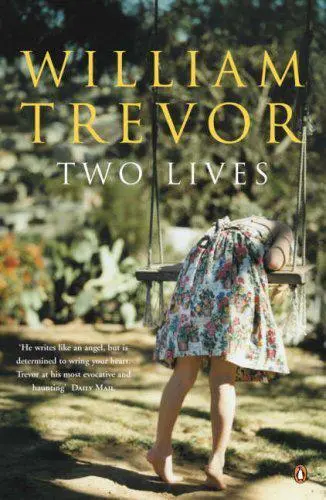
- Название:Two Lives
- Автор:
- Издательство:Penguin Publishing
- Жанр:
- Год:0101
- ISBN:нет данных
- Рейтинг книги:5 / 5. Голосов: 1
-
Избранное:Добавить в избранное
- Отзывы:
-
Ваша оценка:
Two Lives: краткое содержание, описание и аннотация
Предлагаем к чтению аннотацию, описание, краткое содержание или предисловие (зависит от того, что написал сам автор книги «Two Lives»). Если вы не нашли необходимую информацию о книге — напишите в комментариях, мы постараемся отыскать её.
Two Lives — читать онлайн бесплатно полную книгу (весь текст) целиком
Ниже представлен текст книги, разбитый по страницам. Система сохранения места последней прочитанной страницы, позволяет с удобством читать онлайн бесплатно книгу «Two Lives», без необходимости каждый раз заново искать на чём Вы остановились. Поставьте закладку, и сможете в любой момент перейти на страницу, на которой закончили чтение.
Интервал:
Закладка:
‘Madeleine,’ Otmar said, speaking now of the girl who had died in the outrage. I told him she had reminded me of a famous actress, Lilli Palmer, perhaps before his time. I recollected, as I spoke, the scratchy copy of Beware of Pity that had arrived in Ombubu in the 1960s, the film seeming dated and old-fashioned by then.
‘Madeleine, too, was Jewish,’ Otmar said, and I realized I’d been wrong to assume the film actress was not known to him.
They’d been on their way from Orvieto to Milan. Otmar was to continue by train to Germany, Madeleine to fly from Linata Airport to Israel, where her parents were. For weeks they’d talked about that, about whether or not she should seek her father’s permission to marry. If he gave it he might also give them money to help them on their way, even though Otmar was not Jewish himself, which would be a disappointment. ‘When the day comes you wish to marry you must seek his permission,’ her mother had warned Madeleine years ago. ‘Otherwise he will be harsh.’ Her father had left Germany for Jerusalem five years ago, offering his wealth and his business acumen to the land he regarded as his spiritual home. Madeleine had never been there, but when she wrote to say she wished to visit her family her father sent a banker’s draft, its generosity reflecting his pleasure. ‘So we afford the expensive train,’ Otmar explained. ‘Otherwise it would be to hitchhike.’
I did not say anything. I did not say that surely it would have been more sensible to travel to Rome to catch a plane, since Rome is closer to Orvieto than Milan is. I was reminded of the General revealing to me that he and his daughter and son-in-law had originally intended to travel the day before, and of the businessmen and the fashion woman going to the dining-car. Otmar went on talking, about the girl and the days before the outrage, the waiting for the banker’s draft and its arrival. In August they would have married.
‘The kraut hasn’t any money,’ Quinty said in his joky way. ‘He’s having us on.’
‘He told me he hadn’t any money. I’ll pay what’s owing.’
‘You’re not running a charity, don’t forget.’
‘I’m sorry for these people.’
I might have reminded Quinty that once I’d been sorry for him too. I might have reminded him that I had been sorry for Rosa Crevelli when first she came to my house, ill-nourished and thin as fuse-wire, her fingernails all broken. I’d been sorry for the cat that came wandering in.
‘You’ll get your reward in heaven,’ Quinty said.
That summer I opened my eyes at a quarter past five every morning and wished there were birds to listen to, but the summer was too far advanced. Dawn is bleak without the chittering of birds; and perhaps because of it I began, at that particular time, to wonder again about the perpetrators. No political group had claimed responsibility, and the police were considering a theory that we had possibly been the victims of a lunatic. Naturally I endeavoured to imagine this wretched individual, protected now by a mother who had always believed that one day he would commit an unthinkable crime, or even by a wife who could not turn her back on him. What kind of lunatic, or devil? I wondered. What form of mental sickness, or malignancy, orders the death of strangers on a train? In the early morning I took my pick of murderers – the crazed, the cruel, the embittered, the tormented, the despised, the vengeful. Was it already a joke somewhere that six were dead and four maimed, that a child had been left an orphan, her own self taken from her too? The cuts on my face and body would heal and scarcely leave a scar: I’d been assured of that, and did not doubt it. But in other ways neither I nor any of the others had recovered and I wondered if we ever would. The ceaseless tears of my title mocked me now; still understanding nothing, I felt defeated.
We were in a nowhere land in my house: there was a sense of waiting without knowing in the least what we were waiting for. Grief, pain, distress, long silences, the still shadows of death, our private nightmares: all that was what we shared without words, without sharing’s consolation. Ghosts you might have called us had you visited my house in Umbria that summer.
The police came regularly. Two carabinieri remained outside by the police car while the detectives asked their questions and showed us photographs of suspects. Signora Bardini carried out iced tea to the uniformed men. Every day Dr Innocenti spent some time with the child, his presence so quiet in the house that often we didn’t notice he was there. Time, he always said – we must have faith in time.
In my private room I opened the glass-faced cabinet where my titles are arranged, and displayed for Aimée the pleasantly colourful jackets in the hope that they’d influence the hours she spent with her crayons. Obediently she examined the illustrations and even nodded over them. She opened one or two of the books themselves, and appeared briefly to read what was written. But still she did not speak, and when she returned to her room it was to complete a picture full of horrors even more arresting than the previous ones. ‘The appetite is good,’ Dr Innocenti soothingly pointed out, and appeared to take some heart from that.
One night there was at least a development. A telephone call came from the American official who had several times visited the hospital in connection with the child’s orphaning. He informed Quinty that a brother of Aimée’s mother had been located in America. This time there was no mistake. Dr Innocenti had already spoken to the man.
‘Isn’t that good news?’ I remarked to the General the following morning while we were breakfasting on the terrace.
‘News? I beg your pardon?’
‘They’ve found Aimée’s uncle.’
‘Oh.’
‘Riversmith the name is.’
‘There was a Riversmith at school.’
‘This one’s an American.’
The General was fond of the child; I had watched him becoming so. But he had difficulty in concentrating on the discovery of an uncle, and with hindsight I can see he didn’t even want to think about this man. The conversation drifted about, edging away from the subject I had raised. He spoke of the Cotswold village near the boarding-school he’d mentioned, the warm brown stones, the little flower gardens. He and his friends could walk to the outskirts of the village, where a woman – a Mrs Patch – would give them tea in her small dining-room, charging sixpence for a table which seated four. Mrs Patch made lettuce sandwiches, and honey sandwiches, and sardine sandwiches; and there were hot currant scones on which the butter melted, and banana cake with chocolate filling, and as much tea as you wanted. It was a tradition, the walk to the village, the small dining-room of the cottage, the sixpenny piece placed on the tablecloth, and Mrs Patch saying she had sons of her own, now grown up. If you paid more – a shilling for a table for four – and if you gave her warning well in advance, Mrs Patch would cook fish.
These memories of time past were delivered in a tone that did not vary much. Jobson played the organ in the chapel. He played the voluntary while everyone stood in long pews, parallel to the aisle, waiting for the masters to process to their places behind the choir. Handel or Bach would thunder to a climax and then there’d be a fidgeting silence before the headmaster led the way. Sometimes, afterwards, Jobson revealed the errors he had made, but no one had noticed because Jobson was skilful at disguising his errors even as he made them. Jobson and the General had been friends from the moment they met, their first night in the Junior Dormitory.
Odd, I reflected as I listened, how an old man’s memory operates in distress! Odd, the flotsam that has been caught and surfaces to assist him: the mustiness of Mrs Patch’s dining-room, a prefect’s voice, a mug dipped into a communal pail of milk. Housemasters – six older men – sprawled in splendour in the Chapel, a chin held in a hand, an arm thrown back, black gowns draping their crossed legs. While he spoke, the old man’s gaze remained fixed on the distant hills. Remembered bells had different sounds: the Chapel bell, the School bell, the night-time bell. A conjuror came once and performed with rabbits and with birds. Boys smoked behind a gymnasium. Rules were broken, but no one stole. Owning up was taken for granted, and if you were caught you did not lie. At that school, modestly set in undemanding landscape, he said he’d learned what honour was. Again there was his effort at a smile, more successful now than in the hospital.
Читать дальшеИнтервал:
Закладка:
Похожие книги на «Two Lives»
Представляем Вашему вниманию похожие книги на «Two Lives» списком для выбора. Мы отобрали схожую по названию и смыслу литературу в надежде предоставить читателям больше вариантов отыскать новые, интересные, ещё непрочитанные произведения.





Обсуждение, отзывы о книге «Two Lives» и просто собственные мнения читателей. Оставьте ваши комментарии, напишите, что Вы думаете о произведении, его смысле или главных героях. Укажите что конкретно понравилось, а что нет, и почему Вы так считаете.