Doreen Tovey - Donkey Work
Здесь есть возможность читать онлайн «Doreen Tovey - Donkey Work» весь текст электронной книги совершенно бесплатно (целиком полную версию без сокращений). В некоторых случаях можно слушать аудио, скачать через торрент в формате fb2 и присутствует краткое содержание. Год выпуска: 2013, Издательство: Summersdale Publishers Ltd, Жанр: Старинная литература, на английском языке. Описание произведения, (предисловие) а так же отзывы посетителей доступны на портале библиотеки ЛибКат.
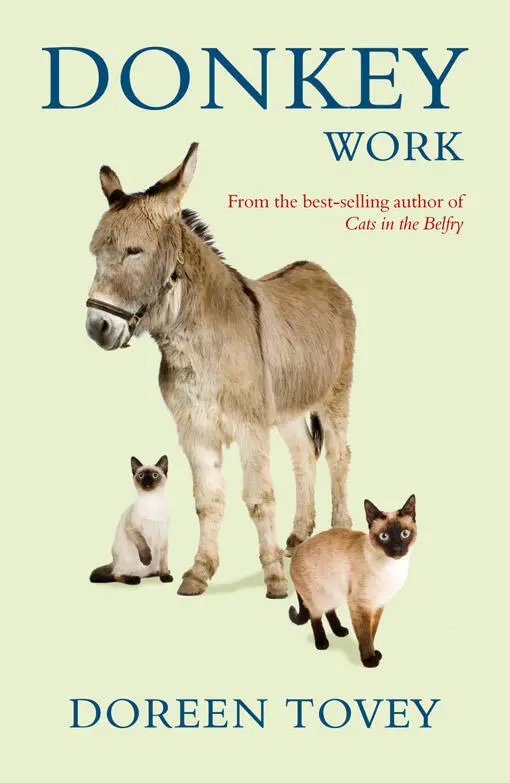
- Название:Donkey Work
- Автор:
- Издательство:Summersdale Publishers Ltd
- Жанр:
- Год:2013
- ISBN:нет данных
- Рейтинг книги:3 / 5. Голосов: 1
-
Избранное:Добавить в избранное
- Отзывы:
-
Ваша оценка:
Donkey Work: краткое содержание, описание и аннотация
Предлагаем к чтению аннотацию, описание, краткое содержание или предисловие (зависит от того, что написал сам автор книги «Donkey Work»). Если вы не нашли необходимую информацию о книге — напишите в комментариях, мы постараемся отыскать её.
Donkey Work — читать онлайн бесплатно полную книгу (весь текст) целиком
Ниже представлен текст книги, разбитый по страницам. Система сохранения места последней прочитанной страницы, позволяет с удобством читать онлайн бесплатно книгу «Donkey Work», без необходимости каждый раз заново искать на чём Вы остановились. Поставьте закладку, и сможете в любой момент перейти на страницу, на которой закончили чтение.
Интервал:
Закладка:
Disgraceful or not, they went on doing it. Never in the house or garden, only when we were coming back from walks, and only when we were far enough ahead for them to pose before we could stop them.
It meant – for the information of psychiatrists who may see in this some evidence of sad frustration – absolutely nothing. In their minds it was part of the fun of the walk, like shinning up the fire-warning notice when we came to the forestry gate and drinking from muddy puddles, and it was forgotten the moment they got home. It was also typical of Siamese, a fitting answer to the suggestion that now they were six they were settling down, and it carried them inevitably on to the time when Solomon caught up with the ginger tom again and got another germ.
This time they fought in the garden shed and the tom gashed Solomon on the cheek. That, judging from the tufts of ginger fur we found scattered in the shed next day, with Solomon going gloatingly in to look at them every time he passed, was nothing to what Solomon had done to the tom. But it was enough. A fortnight later Solomon started sitting by the fire looking sorry for himself. The next day his tell-tale third eyelids came up, with Solomon peering woefully over the tops of them looking like Chu Chin Chow. Once more Solomon was sick.
It was fortunate, the Vet assured us, that, spectacular as it looked, the illness wasn't dangerous and lots of other cats around had had it, because Solomon said he was dying. Freezing, he said, huddling up to the fire for warmth. Couldn't See, he wailed, raising his sad veiled eyes to us for sympathy. When he ate it was even sadder. His appetite was unimpaired, but when he bent his head the effort set the tears running down his cheeks and into his food, and poor old Fatso ate them willy-nilly with his rabbit. On and off he had stomach-ache as well which was why, of course, his eyelids were up; as a sign of intestinal disturbance. Poisoned! he would yell, leaping violently to his feet whenever a pang struck him and frightening us into a sweat.
A fortnight later Sheba appeared one evening with her third eyelids up, announcing that she was poisoned as well, and we started all over again. Six weeks the infection took from start to finish. Eight in all for the pair of them, allowing for the fact that Sheba developed it a fortnight later. At the end of that time, save for the fact that they were considerably thinner and their whiskers had whitened under the strain they were as fit as ever while we, after what we'd been through, were a good deal nearer Colney Hatch. A few weeks later we had Annabel. The fact that the cats could be seen so often after that sitting soberly on her paddock wall had, as may now be appreciated, nothing to do with age but was a sign that they were waiting for us to arrive. So that they could pursue their latest interest, of being Donkey Owners.
Being donkey owners meant patrolling our side of the fence, while we fed her, with superior looks on their faces. Our side of the fence because it showed they belonged to the boss class, could rub possessively round our legs, stroll out to the lane when they liked, and walk importantly back to the cottage with us when we'd finished. Annabel's side of the fence was reserved for Solomon's racing sorties – when he tore madly into the lion's den to show how brave he was, sat in her bed and had to be hauled out again. Annabel's side of the fence, as far as Sheba was concerned, was reserved for strolling nonchalantly through when we were on hand, sitting down with her back to Annabel, and looking around.
Nice in here, she would announce, her back a study in sublime, pale blue indifference. Better before we had a donkey of course. She remembered it then. She remembered it Always. In here now, she would comment, ambling innocently through the grass towards Annabel's sleeping house while Annabel raised her head to look after her, we used to have... At which Annabel would stop eating and chase her and Sheba would dash through Annabel's bed, leap smartly on to the wall and shout for Charles to rescue her. Not that she needed rescuing. It was just a tradition of having to be saved by Charles at every opportunity that Sheba had kept up since kittenhood. Left to herself, as we discovered on the odd occasions when Charles was in sandals and had to fetch his gumboots from the cottage before wading through the nettles to get her out, Sheba would pass the time of waiting rolling blissfully in the slack of Annabel's tarpaulin roof, a scant two inches above Annabel's vengeful ears, as nonchalantly as you liked.
SEVEN
As Sure as a Siamese Cat
Time passes swiftly in the country. Sheba's nose began to turn blue again. Solomon's whiskers, to our great relief, started to grow out spotted. Up the hill the bungalow was finished; the people, who were very nice, were living in it; the only snag, by way of one of those situations that are typical of village life, was that the doctor was now more involved about his septic tank than ever.
Initially he'd worried in case the builder damaged it. After that he'd worried because it was now officially inside the new people's boundary and how, he said, was he going to get in to examine it? In order to be obliging the new people had accordingly fenced off the land under which the tank lay into a sort of little lane so that he could examine it whenever he liked. On reference to the maps it had in any case been discovered that the doctor's predecessor had, twenty years before, unwittingly put the tank under a right of way to a disused quarry, and nobody in their senses would have a right of way through their garden in a village for a moment longer than they could help. And now the doctor was worried about that.
Tradesmen's vans, seeing a convenient turning lane suddenly opened up to them, started to reverse in it. Twice the doctor had gone out at night and found a courting couple parked in a car in it. Supposing they went through the concrete cover, he demanded, and was not one whit comforted by Father Adams' observation that he didn't suppose they'd like it very much either.
The doctor said it ought to be barricaded to protect his tank. The village said he couldn't block a right of way, he couldn't, 'twas against the law, and watched hopefully from its windows to see if he did. The doctor put a couple of boulders pillar-wise in the entrance and, confident on the one hand that the tank was safe while people could still walk the right of way if they wanted to, was now worrying on the other in case a car backed into the boulders, as everybody predicted, and claimed on him for damage. Made life interestin', din' it? commented Sidney.
Down in the valley life was equally interesting. Annabel was growing up. She was, which we very much regretted, beginning to lose her coat. She'd rubbed a good two inches off her fringe on the paddock wire and now we could see her eyes. Beautiful eyes they were. Dark, demure, slanted with a doe-eyed softness that was quite enchanting. Except when she was feeling stubborn about something and showed the whites of them at us.
Charles said she'd probably been doing that under cover of her fringe ever since we'd had her. Maybe she had. All I know is that Annabel rolling her eyes at me incognito was one thing. Annabel rolling her eyes so I could see them, with what remained of her fringe sticking rakishly up on top like the comb of a rebellious cockatoo, was very definitely another. When we went for walks for the next few weeks, even though it was summer and people stared, I wore a duffle coat, gum boots and gardening gloves, kept a weather eye open when she was behind me, and felt a whole lot safer.
Meanwhile Annabel was beginning to evolve at the other end, too. By dint of industriously rubbing her rear on a convenient ash tree she'd worn down her coat until from her woolly brown pantaloons there were beginning to emerge the smooth grey rump and slender legs of a young she-donkey. A little odd-looking when one viewed her from behind. Rather on the lines of a statue appearing inch by inch from a block of somewhat woolly stone. Far more graceful than we would have expected – she was, we told each other with pride, while yet we regretted the passing of her baby Shetland look, going to be a very attractive filly donkey. And at the same time strangely touching.
Читать дальшеИнтервал:
Закладка:
Похожие книги на «Donkey Work»
Представляем Вашему вниманию похожие книги на «Donkey Work» списком для выбора. Мы отобрали схожую по названию и смыслу литературу в надежде предоставить читателям больше вариантов отыскать новые, интересные, ещё непрочитанные произведения.




Обсуждение, отзывы о книге «Donkey Work» и просто собственные мнения читателей. Оставьте ваши комментарии, напишите, что Вы думаете о произведении, его смысле или главных героях. Укажите что конкретно понравилось, а что нет, и почему Вы так считаете.