Erin Bow - Plain Kate
Здесь есть возможность читать онлайн «Erin Bow - Plain Kate» весь текст электронной книги совершенно бесплатно (целиком полную версию без сокращений). В некоторых случаях можно слушать аудио, скачать через торрент в формате fb2 и присутствует краткое содержание. Год выпуска: 2010, ISBN: 2010, Издательство: Scholastic Inc., Жанр: Старинная литература, на английском языке. Описание произведения, (предисловие) а так же отзывы посетителей доступны на портале библиотеки ЛибКат.
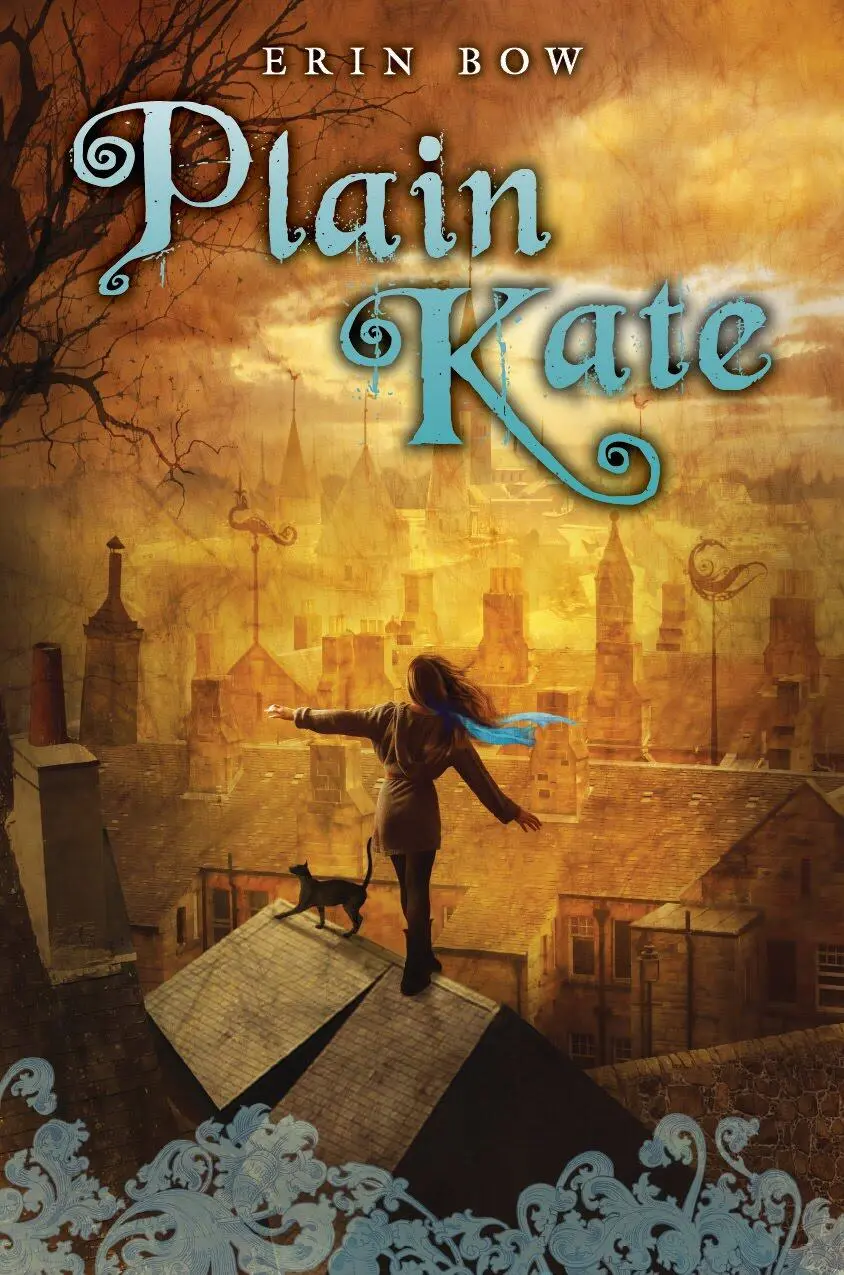
- Название:Plain Kate
- Автор:
- Издательство:Scholastic Inc.
- Жанр:
- Год:2010
- ISBN:9780545166645
- Рейтинг книги:3 / 5. Голосов: 1
-
Избранное:Добавить в избранное
- Отзывы:
-
Ваша оценка:
Plain Kate: краткое содержание, описание и аннотация
Предлагаем к чтению аннотацию, описание, краткое содержание или предисловие (зависит от того, что написал сам автор книги «Plain Kate»). Если вы не нашли необходимую информацию о книге — напишите в комментариях, мы постараемся отыскать её.
Plain Kate — читать онлайн бесплатно полную книгу (весь текст) целиком
Ниже представлен текст книги, разбитый по страницам. Система сохранения места последней прочитанной страницы, позволяет с удобством читать онлайн бесплатно книгу «Plain Kate», без необходимости каждый раз заново искать на чём Вы остановились. Поставьте закладку, и сможете в любой момент перейти на страницу, на которой закончили чтение.
Интервал:
Закладка:
Her scorched smock that had been her father’s, that she had worn for years, was gone. She was wearing a linen dress, white and embroidered in white, a fine thing edged with lace. It was too big for her and the lace trailed on the floor. She hitched it up.
“I did not catch the fish,” Taggle said, continuing his tale of food as he followed her. “I could, of course, but there is the matter of getting wet. He gave them to me. Though I still do not like him.”
Daylight poured down from the hatch and fell in a square on the decking. The rest of the cabin was shadowy clutter. Bags and coils of ropes and strings of dried sausages hung on the wall. There was a smell of wet wood, river rot, human sweat, sausage, spices, and the musty smell of many herbs. Plain Kate looked around for her boots.
She found them slumped in the shadows. She bent to pick them up. Then she stopped. The boots were sitting beside a box, a crooked little chest of splintered planks. The lid, though, was carved and beautiful: a stag leaping.
She knew that stag. The box was made from pieces of her father’s stall.
And there was something wrong about it.
All of Kate’s hair stood up. The box was darker than it should have been. It looked as if it were breathing. “Taggle?” she whispered. “I’m looking for a hatchet.”
“I wouldn’t,” said a lilting voice behind her.
Plain Kate spun around. Linay was leaning at the ladder, white in the stream of sun.
“That box is not a matter for hatchets. As you love your life, leave it alone.” He smiled at her, that slow, slow smile. “Unless, of course, the hatchet is for me.”
She didn’t answer.
“It’s good to see you up. There’s no one about. Come above.”
She hesitated, squinting at his brightness.
“Don’t worry. It’s safe enough while the day lasts.” He slipped up the ladder.
Plain Kate watched him go, and threw a long look at the huddled, splintery box. Then she went to get her boots. Moving them stirred up a smell of scorched leather and smoke that made her for an instant almost sick with fear. She swallowed it and took a steadying breath. Then she pulled on the boots, checked her knife, and followed Linay through the hatch.

The punt Kate remembered from Samilae was tied up in a slow curve of the river, where the current had cut a straighter channel and left a loop of still water, shielded by a sand spit and hung with willows. Plain Kate stood up out of the hatch and breathed deep.
Big willows surrounded the river, and beyond them was a strip of wheat fields. The air smelled like bread. Beside them in the water, a gray heron was standing above its own reflection. She looked at it and it looked at her and they were still for a moment, until the heron lifted heavily on its huge wings, and was gone.
“Oooo,” said Taggle, springing onto the bench at the punt’s blunt end.
“He’s too big for you, catkins,” said Linay. He sat cross-legged on the roof of the cabin. “Could kill a pike, that beauty.”
“Hmmph,” said Taggle, and closed his eyes in the dappling sun.
Plain Kate stood weak-kneed on the tiny deck and had nowhere to look but at the sky, and at Linay. She looked at Linay. He was wrapping strips of white cloth around his hands, tugging them into place with his teeth. The sleeves of his zupan were hanging down his back; his arms were bare, and the bandages went to his elbows. The insides of his forearms were spotted with fresh blood.
Plain Kate knew knives: A man might cut himself there, but only on purpose.
He looked at her watching, and held up a hand as if to show the blood. She turned away.
Her face floated in the dark water. Kate saw herself and closed her eyes, her hands rising up to cover her burnt face. She felt the bubbled scars. She moved her hands away.
The water below was a pool of dark mirror, showing willow and small gusts of sky. And her face. Plain Kate she is, she thought. Plain as a stick. One side of her face was splattered with burn scar, mostly pale and slick, but thickened and bubbled where it was worst, a rectangle from ear to eyebrow. Her hair had been singed off on that side too, and was growing back only in patches, ugly as a chick just getting its feathers in.
“It’s as well,” said Linay gently, behind her. “Everyone will turn away from you. Fewer will see.”
That she had no shadow, he meant. Once she looked past the burns she could see that being shadowless too had marked her: Her nose threw no shadow across her face; her eyes had no weight. She looked half washed away, floating in the water like a drowned ghost. She turned away. Linay was still watching her, intense, as if he were hungry.
He was bloody and wild and pale. Pale…He’d been pale when he took her shadow, but pale and strong. Now he looked gray, weak as she was, and wild in his weakness.
He raised a white eyebrow at her. “If you would wash, do it before darkness.”
She hesitated.
“Go on. It will do you good, if your legs will hold you. I shan’t peek.

Plain Kate was working her way toward the pool that was hidden from Linay’s boat by the largest willow. She inched along the bottom of the V made by the steep bank and the willow’s great furrowed trunk, balancing with both hands. The willow’s rough bark made her feel the fragile tightness of the new scars on her hands. Her hands felt as stiff as if gloved.
“I could kill the heron,” said Taggle. “If I wanted. I would lie in wait on one of the willow branches and take him from above.”
“Like a panther,” said Kate, who wasn’t really listening. Her hands. Her hands that held her carving knife. Her skill with that knife was her whole life, the only thing she had left in the world. Her hands felt so strange.
Taggle curled his tail. “Like a panther. Ah. A panther.” He sprang up on a branch and padded along by her ear.
“Taggle,” she began. She wanted to ask him what would happen to her if she couldn’t carve. What would happen—but she could not think of any words. And then she came clear of the willow, and found herself above the edge of a pool set like a jewel into the bank. The willow branched above and green fronds trailed like a curtain, all around.
Taggle stretched himself out on a branch over the pool. “I would wait,” he announced, “like this.”
Plain Kate stood looking down at the green, dappled space. Her skin was sticky and grimed as if she’d been wound up in a spiderweb for months. Her legs trembled with weakness. And her hands felt numb, bigger than they should have, and farther away.
“I will keep watch,” yawned the cat, and closed his eyes.
What will I do? she had wanted to ask him. What will I do if I cannot carve? But it was the wrong question. What will I do without my shadow? What will I do with no family and no people, no place to belong? What will I do with my life in the hands of this dangerous man? “Taggle,” she began.
But the cat was so intently keeping watch that he had fallen asleep. He lay on the branch with his dangling feet dream-twitching. Kate laughed. And laughed. And found she couldn’t stop laughing. It tore at her until she doubled up and her eyes streamed. And still she kept laughing, until she threw up with the horror of it.
The physical shock of the sickness calmed her. She washed. Exhausted, she slept. When she woke it was golden afternoon. Linay’s boat was out of sight behind the big willows, but she could hear the river patting its flat sides. She could go back there.
Or she could leave.
Anyone who saw her would take her for a demon. She could not go among people; they would kill her. She could not live on her own; she would die.
When you are carving a narrow point, like the tail of this fish, her father had said to her, big hands over her little ones, and the carving beneath them, this is a time of danger. The knife may slip. It may follow a grain and spoil the line. There may be a flaw deep in the wood that will snap your work in two. You will want to leave the tail thick and crude; that is safer. A master carver will be brave, and trust the wood. Things will find their shape. Kate, My Star. Lift your knife.
Читать дальшеИнтервал:
Закладка:
Похожие книги на «Plain Kate»
Представляем Вашему вниманию похожие книги на «Plain Kate» списком для выбора. Мы отобрали схожую по названию и смыслу литературу в надежде предоставить читателям больше вариантов отыскать новые, интересные, ещё непрочитанные произведения.




Обсуждение, отзывы о книге «Plain Kate» и просто собственные мнения читателей. Оставьте ваши комментарии, напишите, что Вы думаете о произведении, его смысле или главных героях. Укажите что конкретно понравилось, а что нет, и почему Вы так считаете.