Erin Bow - Plain Kate
Здесь есть возможность читать онлайн «Erin Bow - Plain Kate» весь текст электронной книги совершенно бесплатно (целиком полную версию без сокращений). В некоторых случаях можно слушать аудио, скачать через торрент в формате fb2 и присутствует краткое содержание. Год выпуска: 2010, ISBN: 2010, Издательство: Scholastic Inc., Жанр: Старинная литература, на английском языке. Описание произведения, (предисловие) а так же отзывы посетителей доступны на портале библиотеки ЛибКат.
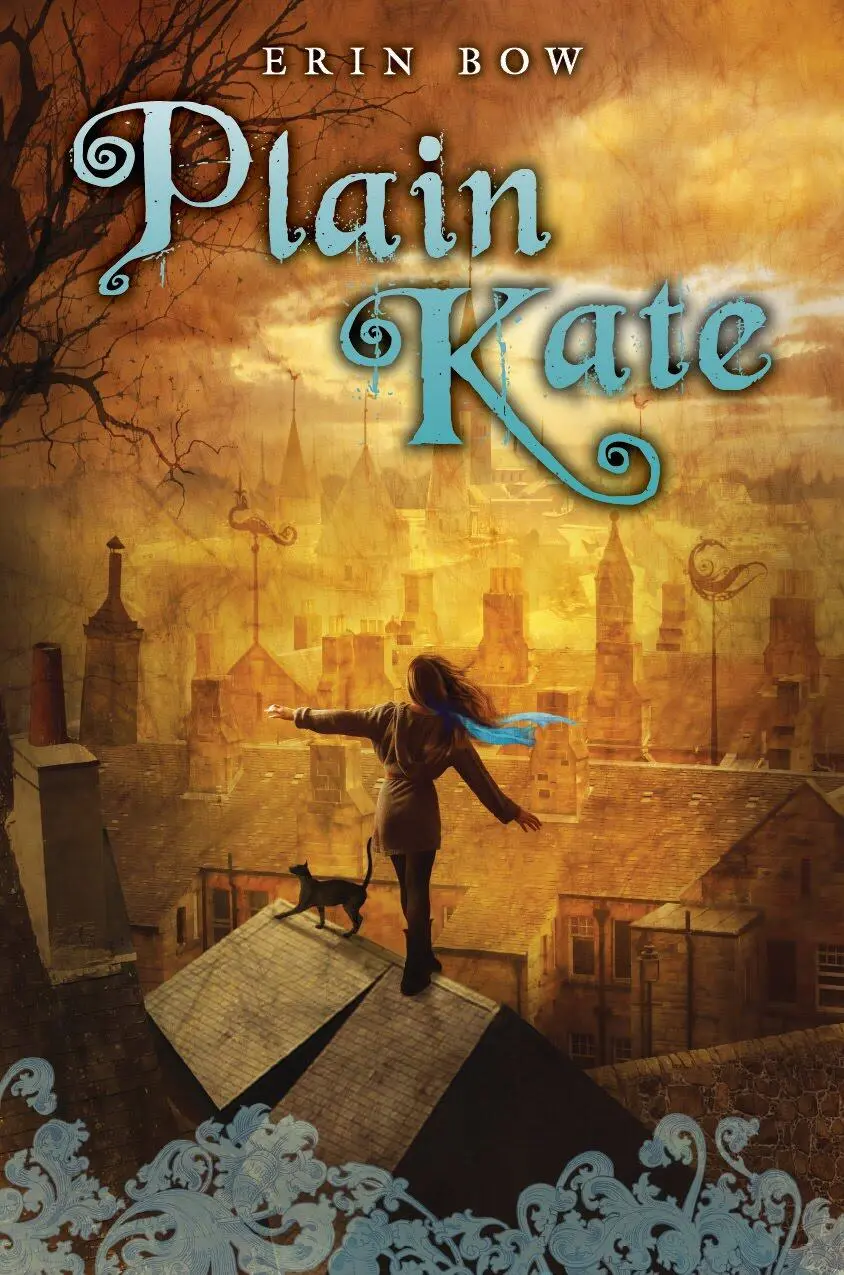
- Название:Plain Kate
- Автор:
- Издательство:Scholastic Inc.
- Жанр:
- Год:2010
- ISBN:9780545166645
- Рейтинг книги:3 / 5. Голосов: 1
-
Избранное:Добавить в избранное
- Отзывы:
-
Ваша оценка:
Plain Kate: краткое содержание, описание и аннотация
Предлагаем к чтению аннотацию, описание, краткое содержание или предисловие (зависит от того, что написал сам автор книги «Plain Kate»). Если вы не нашли необходимую информацию о книге — напишите в комментариях, мы постараемся отыскать её.
Plain Kate — читать онлайн бесплатно полную книгу (весь текст) целиком
Ниже представлен текст книги, разбитый по страницам. Система сохранения места последней прочитанной страницы, позволяет с удобством читать онлайн бесплатно книгу «Plain Kate», без необходимости каждый раз заново искать на чём Вы остановились. Поставьте закладку, и сможете в любой момент перейти на страницу, на которой закончили чтение.
Интервал:
Закладка:
In naked fear, Kate shouted. She banged at the bars, still caught eye to eye with the thing: skin pale and thin as an onion’s, her hair white and wavering like seaweed, face knife-sharp and starving. “Help me!” Kate screamed. “Help! Let me out!”
Out of the tent and down from the vardo , the Roamers were coming toward her, cautious, looking around. All at once Kate found her eyes released; the white creature was fading back toward the river. Kate gasped and leaned forward against the bars, breathing hard. “Katerina…” warned Taggle. She looked up just in time to see Behjet, running up from the horse meadow, fall full length over Stivo’s sprawled body.
Behjet pushed up to his knees, his hands on his brother, his sweet, sad face twisting in fear and grief. “Stivo!” he cried. “God! By the Black Lady, come and help us!” He lifted Stivo, pale and still in his arms. Just like Wen, Kate thought. Just like Wen.
Daj ran up to them, heavy and rolling like a bear running. She fell to her knees, and her low chant became a keening wail. “Oh, no!” she cried. “No, no!”
“Daj!” said Behjet. “What has happened?”
“God save us!” she answered. “This sleep is killing a thing. Wen is dead. My husband! My son!”
Stillness came into Behjet. He picked up Stivo’s sputtering lamp. He stood slow as the tide rising. He walked over to Plain Kate.
She scooted away from the look on his face, until the bars stopped her. Taggle stood up, crooked and dazed. “No closer,” he said. “I bite.” Kate barely heard the gathering crowd gasp. Behjet’s grief-blasted eyes caught like the white creature’s had.
“Witch-child,” said Behjet calmly. “This is too much.” And he threw the lamp at her.
The clay lamp cracked and the tallow splashed. The cage flashed hot. The straw and the horse blanket started smoking. Plain Kate cried out and threw herself at the door, fumbling with the wooden key.
“Katerina!” yowled Taggle. His fur was already frizzled. He backed out between the bars, stumbling. “Katerina!”
“Go, Taggle, go!” But he pressed so close to the hot bars she could smell his smoking fur. Her soaked wool leggings smoldered, her light smock crawled with fire and she slapped at it. She reached through the bars, twisting her wrist backward. Her hair was full of flames. The key went into the lock. Behjet was staring but he didn’t stop her. The key almost turned, then turned. She fell against the door and it swung open. She scooped up Taggle and staggered for the river. She heard Behjet start to cry, and Daj sobbing: “Enough, enough, let her go.” The crowd parted around her. The water was cold, and it took her in.
ten
the punt, the pool, and the empty road
She rocked like a cradle. There was a chuck, chuck like a dove or waves on a dock. Plain Kate woke.
She was dry. She was lying on something soft. She was wrapped in quilts. There was a star of light drifting above her, and a smell like an herb garden. Taggle was a long warmth stretched at one side, his chin in her hand, his tail curled over her neck. She thought they might be in heaven.
Taggle farted.
Plain Kate coughed and sneezed. And then she was really awake.
She was not in heaven, but in a little bunk on a boat. The painted ceiling was close above her. The slap of water thudded through the wall at her ear. Taggle’s tail flip-flipped over her face. She smelled his scorched fur. He squirmed around and soon his face appeared from under the blanket. “Taggle,” she whispered. Her voice was rough with smoke.
He made a little meow. There weren’t any words.
The golden light stirred. A rush lamp of pierced tin swung over her like the night sky. A pale face floated above it. “Fair maid of the wood,” said a familiar voice. “Are you awake?”
“You,” Taggle spat. Because it was Linay.
He barked with surprise and laughter. “This was your wish? A talking cat!”
Taggle’s ears went back. “We don’t like you.”
Linay grinned. “Well, now, I don’t blame you, catkins. But I can heal you, like me or not.” He hung the lantern. “Can you sit, little one?” Plain Kate struggled to sit and he put his arms around her shoulders. He had a little jar in one hand; it smelled of herbs and thunder. Taggle sniffed once, squinted in disgust, and started backing up.
“What—?” Kate tried to say, and coughed. Her throat felt like it had been filed down with a rasp.
“Shhhhh,” he said. “It’s only salve.”
“What do you want?” she whispered.
The salve felt cool as seaweed on her burns. Linay was humming. He put the salve on her forehead and cheekbones. The humming faded into song:
Lenore my sister: she had power
She could bring the bud to flower
Seal the wound or soothe the fever
And so she spent her life
In their fevered year they found her
Drove her mad with whips and fire
Drove her to the freezing river
And there they thought she died
But her wronged soul turned into water
Rusalka, lost ghost of the river
Vampire, siren, doomed to wander
and never find her rest
Lenore, my sister—I would save her
I would pull her up the river
Do to that town what they did to her
and so remake her life
The song was important. Kate tried to hear it and keep it, but she could not. She felt as if she might break into the air as salt breaks into water. “Drink,” Linay said. There was a cup at her lips. The drink was both cool and warm.
She slept.

Kate woke again, and again the boat was rocking. She felt as if she had been asleep for days and days and days, sunk halfway in long bad dreams. The current spoke in the wood by her ear, and she could feel the surge of the boat against it and hear the plosh and clock of a pole. They were moving.
They. Linay.
She sat up. How long had she been asleep? There was dry sourness in her mouth, and the dream stretched out so long behind her. “Taggle,” she whispered, and it came out croaky.
The cat was curled up in a nook by her feet, between a little cauldron and a lumpy bag: three round heaps. She didn’t spot him till he lifted his head and cracked an eye open. “Oh.” He yawned. “Hello.”
“How long—” She rubbed at her eyes and her fingers found patches of numbed slickness on her face. “How long—where are we?”
“A boat,” he said, getting up and leaning into a long stretch. His fur was scorched off on one side, but the bare patches were with new fuzz. “I do not care for it: There’s water. But also, fish, which is nice for me.” He sidled over and rubbed the corner of his mouth on her hand, marking her with his scent.
“How long—I don’t remember anything. How long have I been asleep?”
Taggle shrugged with his whiskers. “It is not a matter for cats, how long .” He tilted his chin up and looked at her—he seemed almost concerned. “I have eaten many times,” he offered. “Many fish, many mice, three muskrats, two rabbits, and a small bird that was sleeping. You have had broth.”
She tried to remember broth, but couldn’t. There was only the long dream about burning and drowning and a woman made of fog, hungry and terribly sad. Stivo crumpling to the ground at a single touch. Daj turning away. Drina bleeding. Behjet throwing the lamp. She shook herself. Broth. It would have been hot. But she felt cold: In her sleep, Linay had fed her, had dressed her—her skin shuddered and her hair prickled. She got up.
The ceiling was low and hung thick with trinkets and bundles of herbs. They tangled and bumped in her hair. She stooped and inched away from the bunk and into the dim and tiny space.
Читать дальшеИнтервал:
Закладка:
Похожие книги на «Plain Kate»
Представляем Вашему вниманию похожие книги на «Plain Kate» списком для выбора. Мы отобрали схожую по названию и смыслу литературу в надежде предоставить читателям больше вариантов отыскать новые, интересные, ещё непрочитанные произведения.









Обсуждение, отзывы о книге «Plain Kate» и просто собственные мнения читателей. Оставьте ваши комментарии, напишите, что Вы думаете о произведении, его смысле или главных героях. Укажите что конкретно понравилось, а что нет, и почему Вы так считаете.