Gary Rivlin - Broke, USA
Здесь есть возможность читать онлайн «Gary Rivlin - Broke, USA» весь текст электронной книги совершенно бесплатно (целиком полную версию без сокращений). В некоторых случаях можно слушать аудио, скачать через торрент в формате fb2 и присутствует краткое содержание. Город: New York, Год выпуска: 2010, ISBN: 2010, Издательство: HarperCollins Publishers Inc., Жанр: Старинная литература, на английском языке. Описание произведения, (предисловие) а так же отзывы посетителей доступны на портале библиотеки ЛибКат.
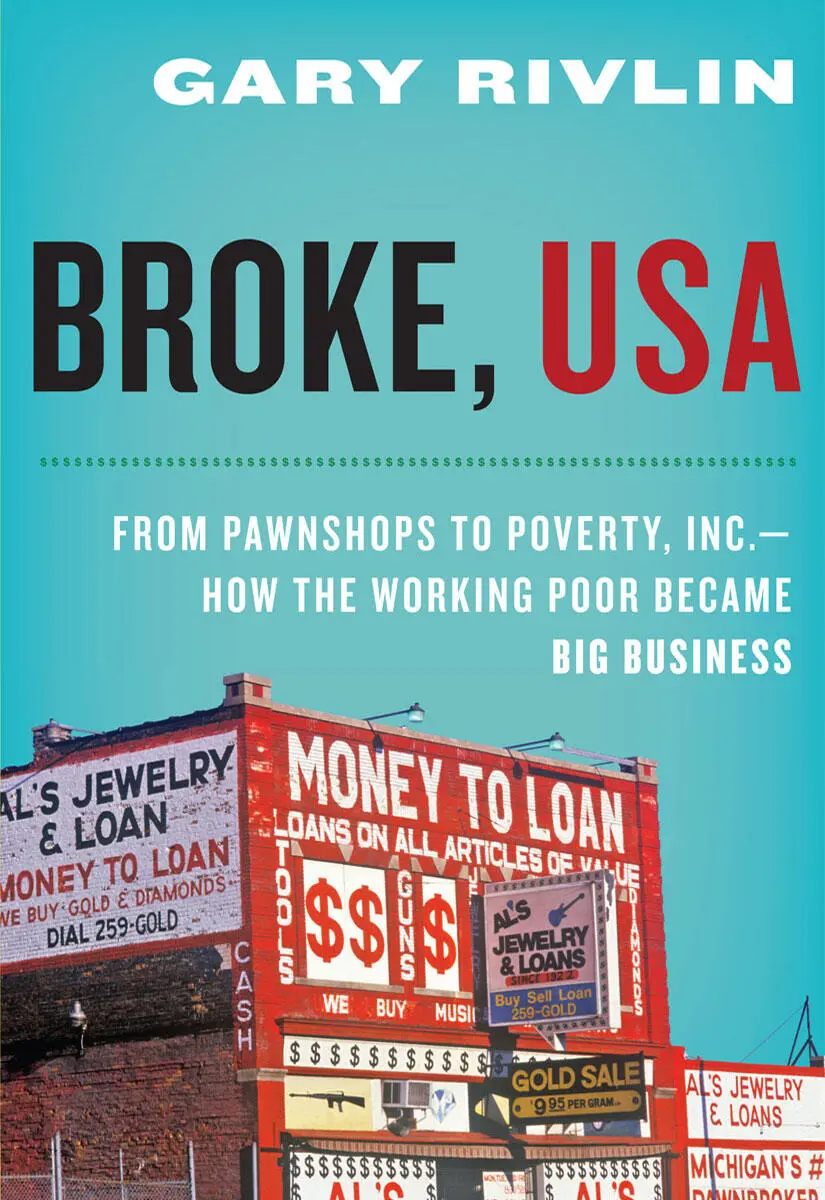
- Название:Broke, USA
- Автор:
- Издательство:HarperCollins Publishers Inc.
- Жанр:
- Год:2010
- Город:New York
- ISBN:978-0-06-199794-5
- Рейтинг книги:3 / 5. Голосов: 1
-
Избранное:Добавить в избранное
- Отзывы:
-
Ваша оценка:
Broke, USA: краткое содержание, описание и аннотация
Предлагаем к чтению аннотацию, описание, краткое содержание или предисловие (зависит от того, что написал сам автор книги «Broke, USA»). Если вы не нашли необходимую информацию о книге — напишите в комментариях, мы постараемся отыскать её.
Broke, USA — читать онлайн бесплатно полную книгу (весь текст) целиком
Ниже представлен текст книги, разбитый по страницам. Система сохранения места последней прочитанной страницы, позволяет с удобством читать онлайн бесплатно книгу «Broke, USA», без необходимости каждый раз заново искать на чём Вы остановились. Поставьте закладку, и сможете в любой момент перейти на страницу, на которой закончили чтение.
Интервал:
Закладка:
Jones emerged from the fog of those lost months fighting with Logan more determined than ever to grow his expanding empire of payday stores. For that, he needed cash but all the bankers he knew proved to be squeamish about venturing into this shadowy world of fringe financing. He ended up securing the $3.5 million he was seeking from a private equity firm at an interest rate of 14 percent. Check Into Cash opened more than two stores a week through 1997. Jones secured an additional $11 million line of credit from NationsBank at the end of the year, allowing him to open an average of three stores per week through the first half of 1998. Jones promoted Steve Scoggins to president and gave him a 2.5 percent share of the company.
What is there about the entrepreneur who, if he owns two stores, can think of little else but growing his holdings to four or six or ten? Or the corporate executive successfully managing 100 outlets dreaming of running 500 or 1,000? Blame it on Sam Walton, the founder of Walmart, or travel further back in time to the turn of the last century and blame Frederick Winslow Taylor, who might reasonably be dubbed the world’s first efficiency expert and also its first management consultant. It was Taylor, a student of the manufacturing process, who championed the notion that a business was nothing but an immense and expandable management-designed machine populated by replaceable cogs whose only job was to learn the processes that the top managers had put into place.
Allan Jones has never heard of Frederick Taylor; nor did he attend any of the symposia put on by those who had rediscovered Taylor’s ideas. He is not a man who has much use for management theories, but Taylor would certainly have approved of his approach to growth. Jones established the systems and routines intended to make his business run most efficiently and then ruled over his burgeoning empire with an iron fist. Hiring the best and the brightest was not necessary. With an effective template in place, the only thing that was required was obedience by all those replaceable parts residing in the lower reaches of the organizational chart.
Simplify, routinize, monitor, control—those were the watchwords of Taylorism and they were also the principles that Jones and Scoggins employed as their budding payday loan empire grew. Marketing, payroll, human resources, and other functions that could be centralized were handled by the home office and an expanding core of vice presidents were charged with keeping close tabs on the performance of individual stores. The company would hire a new regional manager every time they added ten to fifteen new stores, depending on the size of the region, and a new divisional vice president would be hired in Cleveland for every five to seven regional managers. Bonuses were granted based on the performance of those directly below them on the organizational chart. If the stores under a regional or district manager saw an increase in fees collected—assuming those financial gains were not washed out by bad debts—they would receive a bonus for that month. If not, well, the disappointed divisional managers chewed out their regional managers, who in turn dressed down the laggards among their store managers, who also were paid bonuses only if their numbers rose.
Store managers tended to have a year or two of college on their résumés; assistant managers typically had high school degrees. The managers were flown to the mothership for four days of intensive training and then, according to a Check Into Cash document, “closely monitored on a daily basis for two to three months.” While in Cleveland they were given a policy manual that they were instructed to treat as if it were the word of God handed down from the mountaintop. The manual spelled out in intricate detail the most mundane of tasks, from the proper storage of bank receipts to the number of times a day a manager should phone a bank to see if a customer’s postdated check (the check a customer had written when initially taking out the cash advance) was good. There were daily business reports that were to be faxed to the company headquarters at the end of each day and also weekly and monthly summaries.
Study, evaluate, jigger, refine. With time Scoggins and company perfected their system for scouting out new locales. First they would seek out a town’s name-brand grocery stores and discount retailers. The Holy Grail was a shopping center anchored by a Walmart, but a shop close to a Kmart or a Kroger was also pretty much a guaranteed winner. The next choice was typically a strip mall because it tended to offer cheap rents and ample parking. Trial and error taught the Check Into Cash brain trust that they should cluster stores rather than renting wherever a scout happened to find a good spot. Clustering meant better oversight and a more efficient use of marketing dollars. It wasn’t uncommon for Check Into Cash to open one store in an area and then open a bunch more, even if that meant opening branches no more than a few miles apart. On average a new store would start showing a profit less than five months after opening. By its ninth month, it had typically generated enough cash to cover the initial start-up costs.
The new stores all looked exactly the same. Uniformity meant expediency—the ability to move in quickly and cheaply while also helping to build a brand. By 1998, a Check Into Cash team could open a new store in less than two weeks at a cost of $20,000. The new look conjured up something like a bank branch, though one outfitted by the local Office Depot. The walls of each new store were painted the same pale yellow, its floors covered by the same industrial-strength tufted mauve carpeting, the furniture made of particleboard finished with the same cherry wood veneer. Male employees were instructed to dress in a starched blue or white cotton shirt and tie; female employees were told to wear similarly professional attire. Clothing expenses would be borne by the employees, who were paid salaries in the high teens or low twenties.
When Jones first got into the payday business, he was cautious about how much Check Into Cash would lend a borrower, but he gradually loosened those guidelines and by the late 1990s the company established the lending standard that it still uses today: A person can borrow as much as one-quarter of his or her monthly paycheck. Predictably, that increased the proportion of people unable to pay back the money they had borrowed (the percentage of loans the company wrote off doubled from 2 percent in 1993 to 4 percent in 1998) but the company’s financial statements from that period show that the change made economic sense. The increased revenues more than made up for the jump in people who failed to pay back a loan. Profits soared.
Jones, as well as McKenzie and the Davis brothers and others, moved into Ohio. They competed out in California and in Missouri, North Carolina, and Washington state. In 1997 Check Into Cash generated $21 million in fees; it brought in that same amount through the first six months of 1998. By then, the average store in Jones’s growing archipelago of shops was generating $46,000 in profits. The only thing stopping him, Jones concluded, was a shortage of money. He sold his collections business. He started meeting with investment bankers about a possible public offering. It was time, Jones decided, “to really throw the hammer down.”
Four
Confessions of a Subprime Lender
When conservatives defend the Bush administration against the charge that its devotion to deregulation helped bring about the 2008 global economic collapse, they like to talk about the past. The real culprit wasn’t unbridled capitalism as it was practiced in the early years of the twenty-first century; it wasn’t missed opportunities to rein in strange new creatures, such as credit default swaps and collateralized debt obligations, that had been birthed by Wall Street. Instead, fault lies with all those inept if well-intentioned liberals who forced otherwise sober bankers to extend credit to marginal borrowers to buy houses they couldn’t afford. They blame legislation like the Community Reinvestment Act, or CRA, a Jimmy Carter–era law that forced banks to make loans in every neighborhood in which they had branches.
Читать дальшеИнтервал:
Закладка:
Похожие книги на «Broke, USA»
Представляем Вашему вниманию похожие книги на «Broke, USA» списком для выбора. Мы отобрали схожую по названию и смыслу литературу в надежде предоставить читателям больше вариантов отыскать новые, интересные, ещё непрочитанные произведения.










Обсуждение, отзывы о книге «Broke, USA» и просто собственные мнения читателей. Оставьте ваши комментарии, напишите, что Вы думаете о произведении, его смысле или главных героях. Укажите что конкретно понравилось, а что нет, и почему Вы так считаете.