Richard Patterson - Conviction
Здесь есть возможность читать онлайн «Richard Patterson - Conviction» весь текст электронной книги совершенно бесплатно (целиком полную версию без сокращений). В некоторых случаях можно слушать аудио, скачать через торрент в формате fb2 и присутствует краткое содержание. Жанр: Старинная литература, на английском языке. Описание произведения, (предисловие) а так же отзывы посетителей доступны на портале библиотеки ЛибКат.
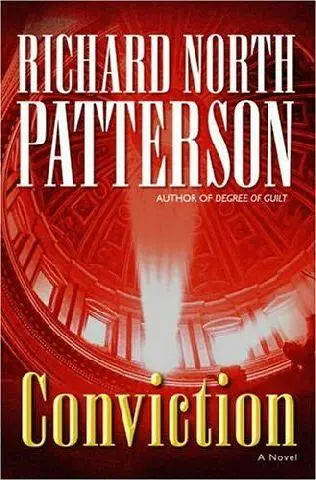
- Название:Conviction
- Автор:
- Жанр:
- Год:неизвестен
- ISBN:нет данных
- Рейтинг книги:3 / 5. Голосов: 1
-
Избранное:Добавить в избранное
- Отзывы:
-
Ваша оценка:
Conviction: краткое содержание, описание и аннотация
Предлагаем к чтению аннотацию, описание, краткое содержание или предисловие (зависит от того, что написал сам автор книги «Conviction»). Если вы не нашли необходимую информацию о книге — напишите в комментариях, мы постараемся отыскать её.
Conviction — читать онлайн бесплатно полную книгу (весь текст) целиком
Ниже представлен текст книги, разбитый по страницам. Система сохранения места последней прочитанной страницы, позволяет с удобством читать онлайн бесплатно книгу «Conviction», без необходимости каждый раз заново искать на чём Вы остановились. Поставьте закладку, и сможете в любой момент перейти на страницу, на которой закончили чтение.
Интервал:
Закладка:
Opposite Caroline, Huddleston smiled: in his view, distrust of the Ninth Circuit undermined his hope of saving what remained of the barriers against executing the innocent, and it was best to put this problem squarely on the table. Fini, too, smiled but sourly—he knew, as Caroline did, that the centrists did not wish to appear intemperate.
"As the Ninth Circuit's opinion noted," Caroline continued, "the California Supreme Court offered no analysis of the facts, which the State acknowledges could not—now—sustain a prosecution. The finding of retardation also hinges on the facts. And for this Court to deny Mr. Price a chance to prove, under Atkins, that he is retarded, would be to do what the Ninth Circuit is so often accused of—to go out of our way to achieve a desired result." She paused for effect. "But in our case it would be to execute one man rather than to save him. All of which makes me question why we want to touch this case."
The justices were still now, most soberly contemplating that: Caroline had portrayed a vote to hear the Price case as both spiteful and petty, an act beneath their dignity. "Which brings me," she said smoothly, "to Tony's principal concern—the passage regarding freestanding innocence.
"I make two points. First, the panel's primary ruling is that Mr. Price's evidence of innocence satisfies AEDPA, and rests on a constitutional defect at trial—a grossly incompetent lawyer who, believing Price's brother guilty, had an inescapable conflict of interest. Approving that claim is hardly revolutionary."
Glancing at McGeorge Glynn, she cut to the heart of her argument. "As for the majority's alternative grounds—that Price has the right to prove his innocence, even if the trial was fair—let me pose a question. Does this Court, in this case, truly want to say that there are no circumstances—no matter how compelling the evidence—under which a habeas corpus petitioner who is merely innocent can avoid execution?" Pausing, she held Glynn's troubled gaze. "Executing the innocent is every judge's nightmare. Nothing about the case of Rennell Price would justify this Court in enshrining such a risk."
Caroline stopped abruptly, allowing her colleagues to absorb this. After a sober silence, she looked toward Huddleston. "Walter?"
Huddleston leaned forward. "Practicing rough justice," he said flatly, "is to promote injustice. Denying innocent prisoners the right to prove their innocence is grotesque. I vote against."
Looking about the table, Caroline addressed the others in order of seniority. "Bryson?"
Head butting forward like a prow, Kelly spoke with typical brusqueness. "This case isn't about one man. It's about respecting the Supreme Court of California, and sending the Ninth Circuit a message so clear that we finally get out of the business of having to reverse them. I vote yes."
So far, Caroline thought, the tally was as expected. Addressing Judge Glynn, she reached the first moment of doubt. "What about you, McGeorge?"
Knowing that this vote could be decisive, Fini turned to Glynn with an expression far more imperative than imploring. Fingers clasped, Glynn propped his elbows on the table. "I'm very troubled by this opinion," he said at length. "Were Mr. Price's fate presently before us, I honestly don't know how I'd vote—it's the type of case which, however you decide it, virtually assures a bad result." He drew a breath. "Sometimes, the best way to deal with such a dilemma is to avoid it. This Court has that luxury. With some reluctance, I vote against granting this petition."
Caroline felt a tentative spurt of relief. But were Fini to garner the next vote, Justice Raymond's, the certain vote of Justice Ware would provide the fourth required to grant the State's petition. "Thomas," she said quietly.
Raymond glanced at McGeorge Glynn, seeming to take comfort in Glynn's familiar aspect and, perhaps, his colleague's inherent caution, which in Caroline's jaundiced view, masqueraded as wisdom. "Like McGeorge," he said amiably, "I'm of two minds—perhaps three or four. Which is probably the number of concurrences or dissents deciding this case would provoke." Facing Fini, he said, "I share your concerns, Tony. But even if the panel's decision is a mess, ours could be a bigger one—not to mention that it would become the law of the land. One thing we don't owe America is another piece of junk in an area like capital punishment."
Surprised by this conclusion, much like her own, Caroline saw Fini suppress a shrug of irritation before he trained his gaze on the most junior justice, Millar. Fini's eyes did not waiver when the seventh justice, John Ware, tersely voted yes, or when Miriam Rothbard countered with the no which Caroline had anticipated, leaving Anthony Fini one vote short.
Turning to Dennis Millar, Caroline said evenly, "It's down to you, Dennis."
Lips compressed, her thin, dark-haired colleague studied the papers before him. Tense with anticipation, Caroline prepared herself for the Hamlet-like circumlocutions which, so often, preceded some utterly unpredictable conclusion. "As Tony points out," Millar ventured, "there is a conflict in the circuits, and the opinion does raise serious questions regarding several aspects of AEDPA.
"But what worries me most," Millar went on, "is that deciding these death penalty cases, especially from the Ninth Circuit, seems to trap all of us in a recriminatory cycle . . ."
So don't take this case, Caroline silently urged him. But something in his turn of phrase—"recriminatory cycle"—sounded less like Millar than like Anthony Fini. "I fear for our collegiality," Millar said in a reluctant tone. "Perhaps, as Tony and Bryson suggest, it is time to draw some clearer lines to keep these cases from our door." He hesitated, then finished softly, "To allow us to attempt this—collegially, I hope—I vote to grant the petition."
That was it, Caroline thought. She saw Walter Huddleston quiver with disgust: in a particularly telling display of his notion of "collegiality," Fini had lobbied Millar against casting the fifth vote necessary to stay an execution in another case where four justices, led by Huddleston, had granted the prisoner's petition to be heard. Then, as now, Millar had complied with Fini's wishes: one might say that the prisoner had died from a shortfall of collegiality.
Ignoring Fini's look of triumph, Caroline said calmly, "The State of California's petition is granted," and moved to the next case on the list.
* * *
Chris and Carlo were waiting at a French brasserie when Terri arrived late from the office, looking tired and distressed. "The Supreme Court is taking Rennell's case."
"Shit," Carlo said softly.
In sympathy and dismay, Chris reached across the white tablecloth to touch Terri's hand. "It's not good," he told Carlo. "At the least, it means that four out of nine justices are inclined to reinstitute Rennell's death sentence."
"Oh," Terri said, "it's a little worse than that. In eighty percent of these cases, the Supreme Court has reversed the lower court. With the Ninth Circuit, their record is twenty-seven in a row."
Carlo put down his beer, as if he could no longer taste it.
* * *
Driving toward the office down California Street, Terri heard her cell phone ring on the console where she had placed it.
The screen read "private caller." Hastily, she answered.
"See you lost again," the familiar voice said. "Time to let the sucker die, or face the con-sequences."
Willing herself to be calm, Terri answered tightly, "And what might those be?"
"The ones that happen to bitches keep huntin' for Betty Sims."
There was no way, Terri knew, to trace the call. "What if I found her? Or her daughter?"
For a moment, the voice was silent. "What if I find your daughter?" it asked softly. "Maybe I'd teach her, and send you the pictures. Close-ups, with her lookin' up at me, eyes as big as her mouth need to be."
Читать дальшеИнтервал:
Закладка:
Похожие книги на «Conviction»
Представляем Вашему вниманию похожие книги на «Conviction» списком для выбора. Мы отобрали схожую по названию и смыслу литературу в надежде предоставить читателям больше вариантов отыскать новые, интересные, ещё непрочитанные произведения.









Обсуждение, отзывы о книге «Conviction» и просто собственные мнения читателей. Оставьте ваши комментарии, напишите, что Вы думаете о произведении, его смысле или главных героях. Укажите что конкретно понравилось, а что нет, и почему Вы так считаете.