Richard Patterson - Conviction
Здесь есть возможность читать онлайн «Richard Patterson - Conviction» весь текст электронной книги совершенно бесплатно (целиком полную версию без сокращений). В некоторых случаях можно слушать аудио, скачать через торрент в формате fb2 и присутствует краткое содержание. Жанр: Старинная литература, на английском языке. Описание произведения, (предисловие) а так же отзывы посетителей доступны на портале библиотеки ЛибКат.
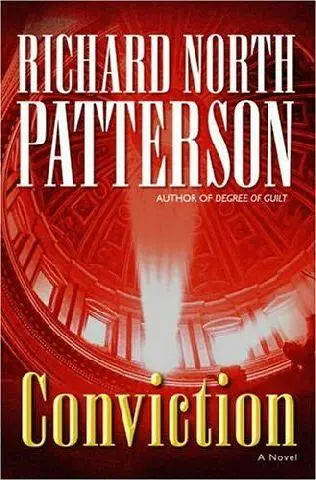
- Название:Conviction
- Автор:
- Жанр:
- Год:неизвестен
- ISBN:нет данных
- Рейтинг книги:3 / 5. Голосов: 1
-
Избранное:Добавить в избранное
- Отзывы:
-
Ваша оценка:
Conviction: краткое содержание, описание и аннотация
Предлагаем к чтению аннотацию, описание, краткое содержание или предисловие (зависит от того, что написал сам автор книги «Conviction»). Если вы не нашли необходимую информацию о книге — напишите в комментариях, мы постараемся отыскать её.
Conviction — читать онлайн бесплатно полную книгу (весь текст) целиком
Ниже представлен текст книги, разбитый по страницам. Система сохранения места последней прочитанной страницы, позволяет с удобством читать онлайн бесплатно книгу «Conviction», без необходимости каждый раз заново искать на чём Вы остановились. Поставьте закладку, и сможете в любой момент перейти на страницу, на которой закончили чтение.
Интервал:
Закладка:
The rhythms of that work were unvarying. For seven two-week sessions each term—the first in October, the last in April—the Court sat for argument in the cases it deigned to hear. During each week of oral argument, the justices met in conference twice—on Wednesday after hearing oral argument, to debate and vote on the cases argued on the preceding Monday; and on Friday, to resolve the cases presented on Tuesday and Wednesday. But the periods between these sessions were equally intense: this was when the justices and their clerks drafted and polished the opinions which, for better or worse, defined the law for the nearly three hundred million Americans outside this building.
Much of Callista's day was spent coping with—or generating—a tsunami of paper: advising the Chief Justice on emergency applications for relief, often requests for stays of execution; writing bench memos to prepare the Chief to hear oral argument; drafting majority opinions, dissents, or concurrences; or commenting on the drafts of majority opinions, dissents, and concurrences circulated by the other justices—each with his or her own philosophy, style, and mode of working with clerks. Caroline Masters insisted that her four clerks be prepared to challenge her thinking and defend their own, which meant that Callista's work life, while stimulating, was even more demanding than that of clerks for some of the other justices. But there was one aspect of the Court's work so overwhelming that it mandated a pooling of resources among the nine chambers of the justices—the flood of petitions for certiorari in civil and criminal cases, roughly one hundred fifty every week, through which litigants defeated in the courts below pled with the High Court to hear them.
Every week, the clerks' office would roll a wooden cart groaning with cert petitions into Callista's office. Her job was to administer what insiders called the "cert pool": the division of these petitions among the chambers by rotation, wherein a law clerk for one of the justices would draft, and then circulate, a recommendation to grant or deny a given petition. In theory these recommendations were based on common criteria: whether the petition presented an issue of broad national importance; or a process which departed in some dramatic way from the commonly accepted operation of law; or was based on a decision which conflicted with the decision of the State Supreme Court, or another federal circuit, or—most remarkably—the United States Supreme Court itself. These criteria eliminated all but a relative handful: the average petition, Callista sometimes thought, had the life expectancy of a sperm. But the recommendations in the toughest cases were, inevitably, colored by the views of the justice, and the law clerk, who drafted it. Which was the reason for another of Callista's tasks—reviewing the recommendations of other chambers with a gimlet eye.
By now, Callista understood very well the ideological fissures which made Caroline Masters desirous of such scrutiny. In league with those of two other justices, the somewhat severe Miriam Rothbard and the venerable Walter Huddleston, Caroline's philosophy was moderate to liberal; their ideological opposites, led by Anthony Fini, the engaging and combative heir to Roger Bannon, reliably included Justices Bryson Kelly, a choleric former Attorney General, and John Ware, a black archconservative whose contentious nomination hearings had made him wounded and reclusive. The Court's fulcrum was the centrists: Justices Thomas Raymond, Dennis Millar, and most important, McGeorge Glynn, who particularly relished the leverage the Court's schism accorded him. This complex dynamic—wherein the Chief Justice and Justice Fini mingled vigilance with a surface cordiality as they angled for votes in the middle—affected not only the few cases which the Court determined to hear but the many it did not. All of these dynamics made Callista's work with the cert pool both onerous and exacting, and never more so—given the justices' fraught emotions on the subject—than when the stakes presented were the life or death of a human being.
Shortly before ten, Callista turned with little relish to the contents of the wooden cart.
After a half hour mechanically winnowing the petitions into stacks, one for each of the nine chambers, the caption of the next petition caught her eye. Immediately she realized why—roughly six weeks before, she had reviewed the papers relating to a death row inmate, Rennell Price. To Callista's relief, the Ninth Circuit had granted Price's habeas corpus petition, terminating her work on a prospective recommendation which, had Price lost, would have plunged Caroline Masters into the vexing task of inducing four other justices to stay his execution. Instead, like a card dealt from the bottom of the deck, the State of California's petition for certiorari—challenging the Ninth Circuit's ruling—sat atop the stack destined for one of the Chief Justice's four law clerks.
This stack, too, was dispersed among the clerks by rotation—on each petition in turn, Callista would scribble her own initials or those of a fellow clerk. The petition in the Price case was destined for Brian Eng—among Caroline's clerks, the sole enthusiast for the death penalty.
Pouring herself more coffee, Callista pondered this complication.
She had retained her file in the Price case—the original papers, the relevant cases and statutes, and the beginnings of her draft recommendation to Caroline Masters. She could simply pass the file on to Brian. But getting up to speed would take Brian twice as long; writing the memo herself would, at least for this week, make the burden of the cert pool a couple of hours lighter. And also, Callista rationalized, she, not Brian, best understood the Chief Justice's thinking on the thorny matter of capital punishment.
Scrawling her initials on one corner of the petition, Callista reshuffled the stack.
* * *
It was past seven o'clock at night before Callista, fortified by a cheeseburger she had gobbled in the cafeteria, went to the library.
The vast room still inspired almost as much awe in Callista as the courtroom itself—above her, three enormous brass chandeliers hung from thirty-foot ceilings filigreed with multicolored marble and plaster. She chose an empty table, relishing the silence of a Renaissance cathedral, and began her work on the matter of Rennell Price.
In due course, the memo she was about to write would, with Caroline Masters's approval, circulate to the other justices' chambers for discussion between each justice and his clerks. A memo in a capital case would receive special scrutiny—a series of abrasive and close decisions, with bruising dissents, had left both wings of the Court raw and angry beneath its surface politesse. But the Supreme Court did not grant petitions for the purpose of settling scores, or even correcting legal error: the issue to be addressed by Callista's memo was whether this case presented unresolved questions of constitutional law which resonated far beyond the fate of Rennell Price.
The authors of the State's petition and Price's response, Callista saw, understood this well—depending on whose argument she accepted, the opinion of the two Ninth Circuit judges was either a massive affront to AEDPA or the routine parsing of facts specific to Rennell Price. This divide was complicated by another factor, which made Callista's task harder: the vehemence of Judge Nhu's dissent—a virtual open letter to Justices Fini, Kelly, and Ware—whose weight Callista could not ignore.
But Janie Hill's daughter was not a fool, and neither were Rennell Price's lawyers. They had given her much to work with—which was precisely what Callista intended to do.
* * *
At a little after ten on the East Coast, when Callista went home, but three hours earlier in San Francisco, the Paget family, including Carlo, gathered around their candlelit dining room table.
Читать дальшеИнтервал:
Закладка:
Похожие книги на «Conviction»
Представляем Вашему вниманию похожие книги на «Conviction» списком для выбора. Мы отобрали схожую по названию и смыслу литературу в надежде предоставить читателям больше вариантов отыскать новые, интересные, ещё непрочитанные произведения.









Обсуждение, отзывы о книге «Conviction» и просто собственные мнения читателей. Оставьте ваши комментарии, напишите, что Вы думаете о произведении, его смысле или главных героях. Укажите что конкретно понравилось, а что нет, и почему Вы так считаете.