Conn Iggulden - Conqueror (2011)
Здесь есть возможность читать онлайн «Conn Iggulden - Conqueror (2011)» — ознакомительный отрывок электронной книги совершенно бесплатно, а после прочтения отрывка купить полную версию. В некоторых случаях можно слушать аудио, скачать через торрент в формате fb2 и присутствует краткое содержание. Жанр: Старинная литература, на английском языке. Описание произведения, (предисловие) а так же отзывы посетителей доступны на портале библиотеки ЛибКат.
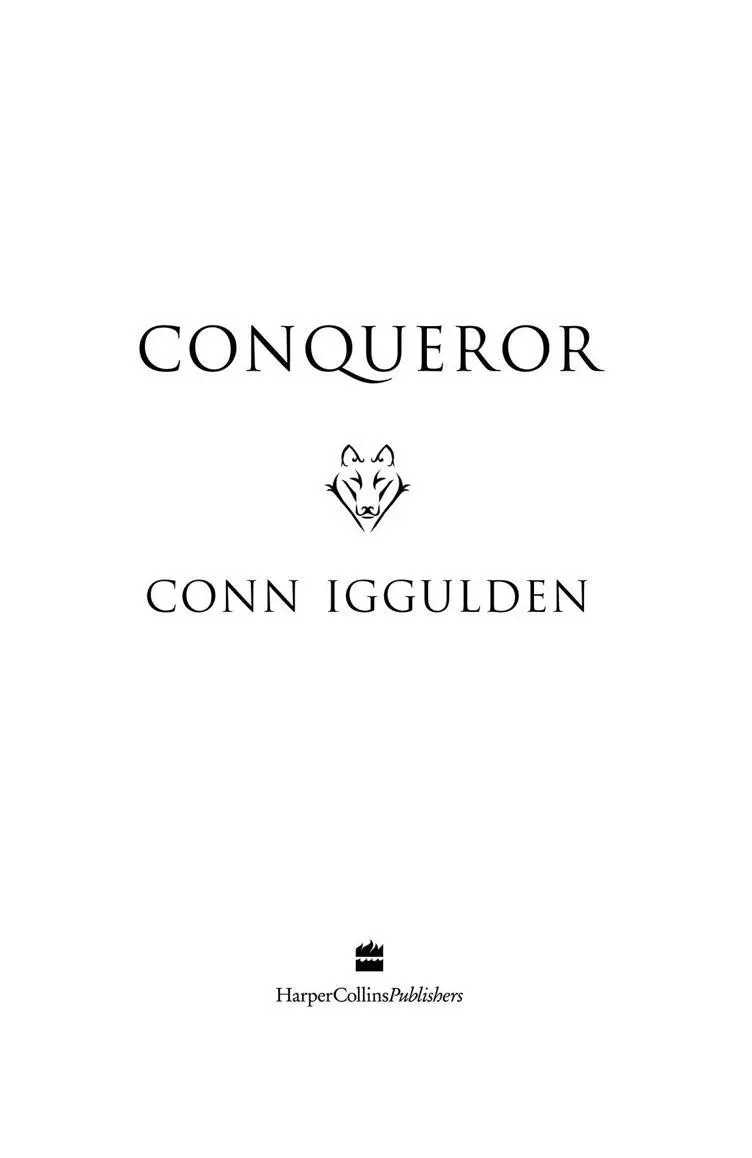
- Название:Conqueror (2011)
- Автор:
- Жанр:
- Год:неизвестен
- ISBN:нет данных
- Рейтинг книги:4 / 5. Голосов: 1
-
Избранное:Добавить в избранное
- Отзывы:
-
Ваша оценка:
Conqueror (2011): краткое содержание, описание и аннотация
Предлагаем к чтению аннотацию, описание, краткое содержание или предисловие (зависит от того, что написал сам автор книги «Conqueror (2011)»). Если вы не нашли необходимую информацию о книге — напишите в комментариях, мы постараемся отыскать её.
Conqueror (2011) — читать онлайн ознакомительный отрывок
Ниже представлен текст книги, разбитый по страницам. Система сохранения места последней прочитанной страницы, позволяет с удобством читать онлайн бесплатно книгу «Conqueror (2011)», без необходимости каждый раз заново искать на чём Вы остановились. Поставьте закладку, и сможете в любой момент перейти на страницу, на которой закончили чтение.
Интервал:
Закладка:
The mobs shrank in the face of sanctioned aggression, fading back into the shadows of normal life. They whispered the name of the fallen boy to themselves like a talisman against evil, but the collections went on even so.
After eleven days, Hulegu was at the end of his patience when the message came that the disarming was complete and he could enter and inspect the city. The sheer weight of weapons had been impressive, forcing Hulegu to use a full tuman to cart them away. Most were buried to rust, with just a few choice pieces finding new owners among the Mongol officers. Baghdad waited before him, truly defenceless for the first time in its history. He savoured the thought as he mounted his horse and waited for a minghaan of a thousand to form up around him. At the head, the caliph took his place in his chariot, his clothes filthy and his skin covered in flea bites. Hulegu laughed when he saw the man, then gave the order to go in.
There would still be an element of danger in entering the city, Hulegu was certain. Just a few hidden bows used from roofs as he passed could set off another riot. He wore full armour as well as his helmet, the weight and solidity making him feel invulnerable as he dug in his heels and rode through the gates at last. His tumans were ready to assault the city and he left men to hold the gates open at each point of entry. He hoped he had thought of everything and he was cheerful as he trotted his mount down a main road, empty and echoing.
In just a short time, the outer walls were long behind. The city was predominantly built from a brown baked brick. It reminded Hulegu of the smaller city of Samarra to the north. His tumans had fought a pitched battle there in his absence before looting it. By the time he had come south from the Assassin fortress, Samarra had been sacked, with blood running in the gutters and parts reduced to rubble. That was one reason the caliph’s city would not be relieved. Hulegu’s officers had been thorough.
Baghdad was many times the size of Samarra and the brown buildings were interspersed with highly decorated mosques. Bright blue tiles and extraordinary geometric patterns caught the sunlight, gleaming in the dun roads as splashes of colour. Hulegu knew the Moslems were forbidden from using human forms in their art, so they made patterns of reflected and interwoven shapes. It was said their mathematics had grown out of the art, from men forced to consider angles and symmetry to worship their god. To his surprise, Hulegu found he enjoyed the style far more than the battle scenes Ogedai had commissioned in Karakorum. There was something almost soothing about the repeated shapes and lines that covered vast walls and courtyards. Above the city, minarets and towers loomed, more splashes of colour. When Hulegu looked up, he could see the distant figures of men watching from the heights. No doubt they could see his army outside the city as they stared into the distance.
He passed the famous House of Wisdom and ducked down in his saddle to peer through an archway into the dark blue courtyard there. Nervous scholars peeped out of every window and he recalled that they were said to possess the greatest library in the region. If Kublai had been present, Hulegu knew his brother would have been salivating to get in, but he had other things to see. His minghaan followed a small group of the caliph’s guards through the city, passing over the Tigris at one point on a bridge of white marble. Baghdad was larger than Hulegu had realised, the sheer scale of it only truly visible from inside the walls.
The sun was high by the time he reached the caliph’s gated palace and passed through into sheltered green gardens. Hulegu snorted at the sight of a peacock, running from the armed men with its tail quivering.
Most of the minghaan stayed outside the caliph’s residence, with orders to visit all the banks in the city. Hulegu cared little for what the caliph thought of him. Even as he dismounted, a full tuman of ten thousand was entering the city in slow procession, disciplined men who would seek out its hidden wealth without touching off another riot.
Hulegu was in good spirits as the caliph’s servants led him through cool rooms and down steps to where their master waited. He knew he could be ambushed, but he depended on the threat of his men to keep him safe. The caliph would have to be insane to take him with so many Mongols already in the city - and so few weapons to fight them. Hulegu was certain there were still caches of blades in Baghdad. It was almost impossible to find every knife, sword and bow in a population with basements and hidden rooms. It had been a symbolic act for the most part, though it increased the sense of helplessness in the city as they waited for him to keep his word and leave.
Caliph al-Mustasim was waiting at the bottom of a flight of stone steps that led on from two more above it, so that the treasure rooms were deep into the bedrock and lit only by lamps. No sunlight reached so far down, but it was dusty and cool rather than damp. Even in his soiled clothes, the leader of the city looked far more confident than he had in the Mongol camp. Hulegu watched for some sign of deceit as the caliph’s guards removed a heavy locking bar, a piece of iron so massive that two of them could barely lift it out of its brackets. Al-Mustasim then stepped in and pressed his hands on the doors, heaving at them until they swung open noiselessly. Unable to help himself, Hulegu edged forward to the threshold to get the first sight of what lay within. He was watched in turn by the caliph, who saw greed kindle in his eyes.
The treasure rooms must once have been a natural cave under the city. The walls were still rough in places, stretching far away. The servants of the caliph had obviously gone in before, as the place was well lit with lamps hanging from the ceiling. Hulegu smiled as he realised the grand opening of the doors had been staged for his benefit alone.
It had been worth the wait. Gold gleamed its unique colour in stacks of bars as thick as a man’s finger, but that was just a small part of the whole. Hulegu swallowed drily as he saw the extent of the cave, every corner of it packed with statuary and shelves. He could not help but wonder how much had been removed before that day. The caliph would want to keep some portion of his wealth back and Hulegu knew he would have a struggle finding the other rooms and chests, wherever they were hidden. Still, it was an impressive sight. Just that one room was equal to or greater than all Mongke’s vaults. Though Hulegu knew he would have to hand over at least half of it to his brother, he realised that at a stroke he had become one of the richest men in the world. He laughed as he stood there, seeing the wealth of ancient nations.
The caliph smiled nervously at the sound.
‘When you check the lists I gave you, you will see I have accounted for it all. I have dealt honourably for my city.’
Hulegu turned to him and laid a hand on his shoulder. One of the caliph’s guards bristled and found a sword laid across his throat in an instant. Hulegu ignored them.
‘You have shown me the visible treasures, yes. They are magnificent. Now show me the rest, the true wealth of Baghdad.’
The caliph looked at the smiling man in horror. He shook his head wordlessly.
‘Please, there is nothing else.’
Hulegu reached out and took a firm grip on one of the caliph’s jowls, shaking him gently.
‘Are you certain?’ he asked.
‘I swear it,’ the caliph responded. He stepped away from the insulting grip as Hulegu spoke again to one of the Mongol warriors.
‘Tell General Kitbuqa to begin burning the city,’ he said. The man ran back up the steps and al-Mustasim watched him go, his face twisting in panic.
‘No! Very well, there is a store of gold hidden in the garden ponds. That is all. I give you my word.’
Читать дальшеИнтервал:
Закладка:
Похожие книги на «Conqueror (2011)»
Представляем Вашему вниманию похожие книги на «Conqueror (2011)» списком для выбора. Мы отобрали схожую по названию и смыслу литературу в надежде предоставить читателям больше вариантов отыскать новые, интересные, ещё непрочитанные произведения.


Обсуждение, отзывы о книге «Conqueror (2011)» и просто собственные мнения читателей. Оставьте ваши комментарии, напишите, что Вы думаете о произведении, его смысле или главных героях. Укажите что конкретно понравилось, а что нет, и почему Вы так считаете.