Conn Iggulden - Conqueror (2011)
Здесь есть возможность читать онлайн «Conn Iggulden - Conqueror (2011)» — ознакомительный отрывок электронной книги совершенно бесплатно, а после прочтения отрывка купить полную версию. В некоторых случаях можно слушать аудио, скачать через торрент в формате fb2 и присутствует краткое содержание. Жанр: Старинная литература, на английском языке. Описание произведения, (предисловие) а так же отзывы посетителей доступны на портале библиотеки ЛибКат.
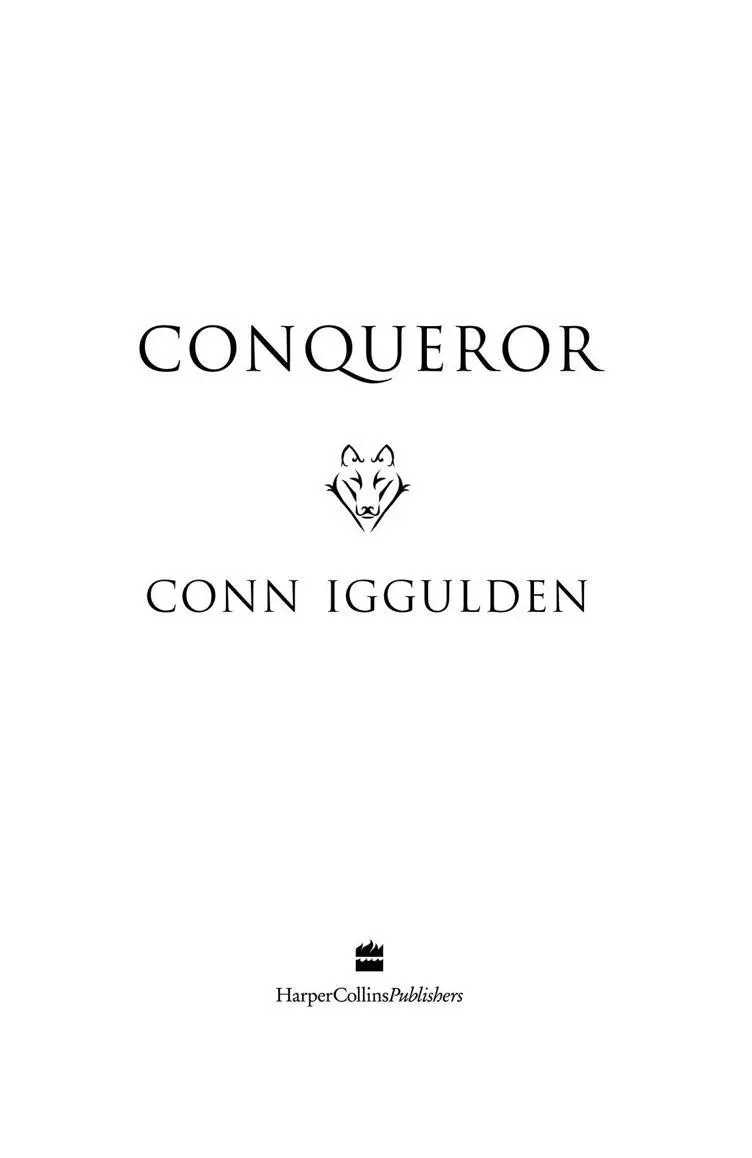
- Название:Conqueror (2011)
- Автор:
- Жанр:
- Год:неизвестен
- ISBN:нет данных
- Рейтинг книги:4 / 5. Голосов: 1
-
Избранное:Добавить в избранное
- Отзывы:
-
Ваша оценка:
Conqueror (2011): краткое содержание, описание и аннотация
Предлагаем к чтению аннотацию, описание, краткое содержание или предисловие (зависит от того, что написал сам автор книги «Conqueror (2011)»). Если вы не нашли необходимую информацию о книге — напишите в комментариях, мы постараемся отыскать её.
Conqueror (2011) — читать онлайн ознакомительный отрывок
Ниже представлен текст книги, разбитый по страницам. Система сохранения места последней прочитанной страницы, позволяет с удобством читать онлайн бесплатно книгу «Conqueror (2011)», без необходимости каждый раз заново искать на чём Вы остановились. Поставьте закладку, и сможете в любой момент перейти на страницу, на которой закончили чтение.
Интервал:
Закладка:
At least it would soon be over. There had been two attempts to escape his grip around the city, both of them along the river. The first had been in small boats constructed inside the iron river gates. They had been destroyed with naphtha oil, the helpless men in them drenched as clay jugs were thrown from the banks, then set alight with flaming arrows. Hulegu did not know who had died that day. There had been no way to identify the bodies afterwards, even if he had been interested.
The second attempt had been more subtle, just six men with their bodies blackened in soot and oil. They had reached the pontoons his men had built across the Tigris, anchored to heavy trunks jammed into the soft riverbed. The sharp eyes of one of his scouts had seen them sliding through the water and his warriors had unlimbered their bows, taking care with each shot as they laughed and called targets to each other. It may have been the last blow to the caliph’s hopes; Hulegu did not know. He had received word that al-Mustasim would meet him outside the city the following day.
Hulegu frowned as he watched a long retinue stride out of the city. He had demanded surrender once again, but the caliph had not even answered, preferring to wait for the meeting between them. Hulegu counted as the small column lengthened. Two hundred, three, perhaps four. At last it came to an end and the gates closed behind them, leaving the caliph’s soldiers to march their master into Hulegu’s presence.
Hulegu had not been idle the night before. He had no awning large enough to hold the caliph’s retinue, but he had cleared a spot on the stony ground and covered it in thick carpets taken from towns along their route. The edges of the spot were lined with plump cushions and Hulegu had added rough wooden benches, almost like one of the Christian churches he had seen in Russia. There was no altar, only a simple table and two chairs for the leaders to sit. Hulegu’s generals would stand, ready to draw their swords at the first sign of treachery.
Hulegu knew the caliph’s men would have reported his arrangements, viewed from the city walls. The small column made their way to it unerringly, giving Hulegu the chance to smile at the perfect steps of the marching men. He had not limited the numbers of soldiers the caliph could bring. Ten tumans surrounded the city and he made sure the caliph’s route was lined with his own horsemen, heavily armed and scowling. The message would be clear enough.
The man himself was carried in a chariot drawn by two large geldings. Hulegu blinked when he saw the size of the caliph who ruled the city and called himself the light of Islam. No warrior, then, not that one. The hands that held the leading edge of his chariot were swollen and the eyes that searched for Hulegu were almost hidden in bloated flesh. Hulegu said nothing as the caliph was helped down by his servants. General Kitbuqa was there at hand to guide him to his place, while Hulegu thought through what he wanted from the meeting. He chewed the inside of his cheek as the caliph’s men took their seats. The whole thing was a farce, a mask to allow the man some shred of dignity when he deserved none. Even so, Hulegu had not refused the offer, or even quibbled over details. The important thing was that the man would bargain. Only the caliph could do so and Hulegu wondered yet again what vast wealth lay within the city known as the navel of the world. He had heard stories of Baghdad for a thousand miles, tales of ancient jade armour and ivory spears, holy relics and statues of solid gold, taller than three men. He hungered to see such things. He had turned gold into bars and rough coins, but he yearned to find pieces that would impress his brothers, both Mongke and Kublai. He was even tempted to keep the libraries, so that Kublai would know he had them. A man could never have enough wealth, but he could at least have more than his brothers.
As the caliph lowered his bulk to his chair, Hulegu clenched and unclenched his hands, grasping unconsciously at what was owed to him. He took his seat and stared coldly into the watery eyes of al-Mustasim. Hulegu could feel the sun stinging the back of his neck and considered calling for an awning until he saw the full glare was in the caliph’s face. Despite his Persian blood, the fat man was not comfortable in the heat. Hulegu nodded to him.
‘What do you intend to offer me, caliph, for your city and your life?’ he said.
Kublai rode east through thick forest that seemed endless. He knew he did not have to fear an attack. His scouts were out in all directions for thirty miles, yet the trees were thick and made an unnatural darkness that had his horse rearing at shadows. He had been told of a natural clearing ahead, but the sun was setting and he could not yet see the vast boulder or the lake his scouts had described.
General Bayar rode just ahead, a master horseman who made light work of the thick foliage. Kublai lacked the man’s easy touch, but he stayed in sight, his personal guards all around him. At least the forest was empty. He and his men had found one abandoned village deep in thick cover and miles from the nearest road. Whoever had made the wretched houses had vanished long ago.
The ground had been rising gently for half a day and Kublai reached a high ridge as the sun touched the horizon, looking down into a steep valley with a perfect black bowl of water at its foot. His horse whickered gratefully at the sight, as scratched and thirsty as its rider. Kublai let Bayar lead the way, happy to follow the path he chose. Together they guided the horses down the slope, seeing lamps ahead like a host of fireflies.
Bayar did not look as weary as Kublai felt. He was not much younger, though the man was still fitter than Kublai’s life among books in Karakorum had made him. No matter how he worked his body, it never seemed to have the easy endurance of warriors and senior men. Half his tumans had gone before him and many would already be asleep in the close confines of gers, or sleeping out under the stars if there was no place to set up.
Kublai sighed at the thought. He could hardly remember the last time he had slept through the night. He dreamed and woke in fits and starts, his mind whirring away as if it had an independent existence. Chabi would soothe him with a cool hand on his brow, but she fell asleep again quickly, leaving him still awake and thinking. He had been forced to keep a leather book of blank pages close to him, so he could write down the ideas that presented themselves just at the moment he was finally drifting off. In time, he would copy his journal onto better paper, a record of his time among the Sung. It would be worthy of the shelves in Karakorum if it continued as it had begun.
After the city of Ta-li had fallen to him, three others had followed within the month. He had sent scouts far ahead of him, carrying news of his mercy. He made a point of choosing men from the Chin who had joined his tumans over the years. They understood what he wanted and of course they approved, so he did not doubt they spoke well of the Mongol leader who was as much a Chin lord as anyone could be.
There had been a moment in those first months when he was able to dream of sweeping right across the Sung lands, of armies and cities surrendering without a blow being struck, until he stood before the emperor himself. That had lasted just long enough for Uriang-Khadai to approach. Kublai frowned at the memory, certain the older general had enjoyed being the bearer of bad news.
‘The men are not paid,’ Uriang-Khadai had lectured him. ‘You have said they are not allowed to loot and they are becoming angry. I have not seen this level of unrest before, lord. Perhaps you did not realise they would resent the mercy and kindness you have shown to our enemies.’ Kublai remembered how the orlok’s eyes glittered with suppressed anger as he went on. ‘I believe they will become difficult to manage if you continue this policy. They do not understand it. All the men know is that you have taken away their baubles and rewards.’
Читать дальшеИнтервал:
Закладка:
Похожие книги на «Conqueror (2011)»
Представляем Вашему вниманию похожие книги на «Conqueror (2011)» списком для выбора. Мы отобрали схожую по названию и смыслу литературу в надежде предоставить читателям больше вариантов отыскать новые, интересные, ещё непрочитанные произведения.


Обсуждение, отзывы о книге «Conqueror (2011)» и просто собственные мнения читателей. Оставьте ваши комментарии, напишите, что Вы думаете о произведении, его смысле или главных героях. Укажите что конкретно понравилось, а что нет, и почему Вы так считаете.