Conn Iggulden - Conqueror (2011)
Здесь есть возможность читать онлайн «Conn Iggulden - Conqueror (2011)» — ознакомительный отрывок электронной книги совершенно бесплатно, а после прочтения отрывка купить полную версию. В некоторых случаях можно слушать аудио, скачать через торрент в формате fb2 и присутствует краткое содержание. Жанр: Старинная литература, на английском языке. Описание произведения, (предисловие) а так же отзывы посетителей доступны на портале библиотеки ЛибКат.
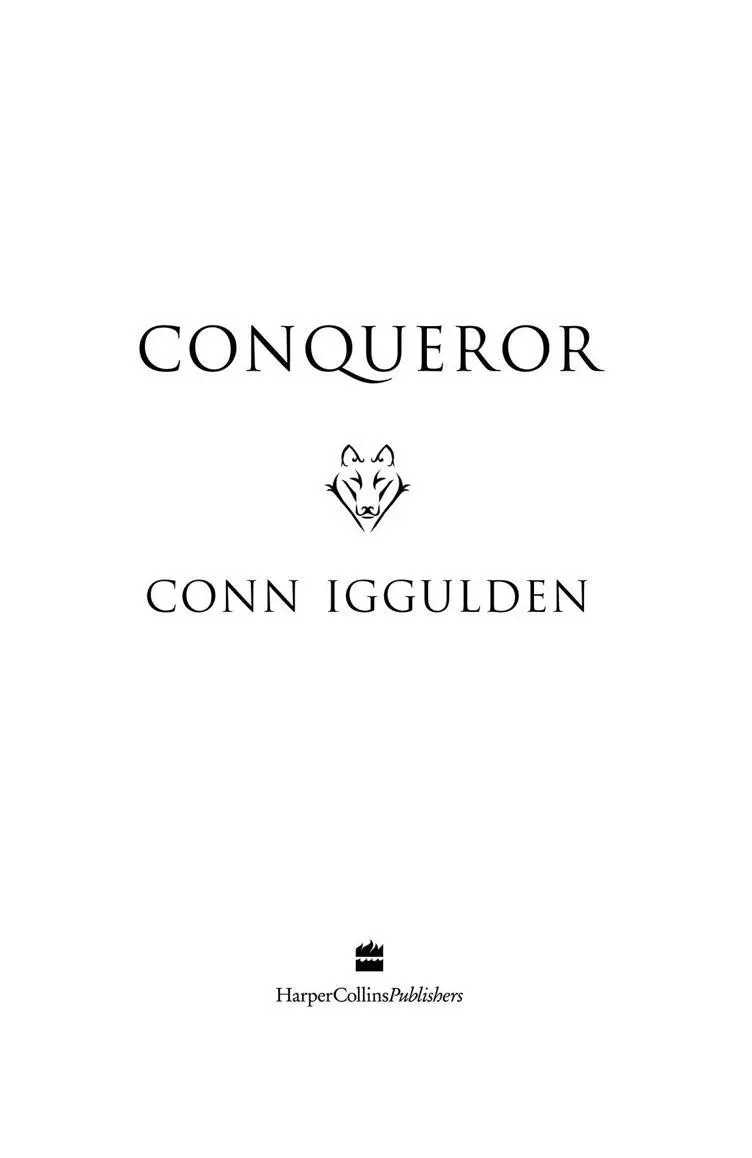
- Название:Conqueror (2011)
- Автор:
- Жанр:
- Год:неизвестен
- ISBN:нет данных
- Рейтинг книги:4 / 5. Голосов: 1
-
Избранное:Добавить в избранное
- Отзывы:
-
Ваша оценка:
Conqueror (2011): краткое содержание, описание и аннотация
Предлагаем к чтению аннотацию, описание, краткое содержание или предисловие (зависит от того, что написал сам автор книги «Conqueror (2011)»). Если вы не нашли необходимую информацию о книге — напишите в комментариях, мы постараемся отыскать её.
Conqueror (2011) — читать онлайн ознакомительный отрывок
Ниже представлен текст книги, разбитый по страницам. Система сохранения места последней прочитанной страницы, позволяет с удобством читать онлайн бесплатно книгу «Conqueror (2011)», без необходимости каждый раз заново искать на чём Вы остановились. Поставьте закладку, и сможете в любой момент перейти на страницу, на которой закончили чтение.
Интервал:
Закладка:
He raised his head, refusing to be afraid. They had not troubled Genghis and he had done more than his share of destruction, torn more than most from the sunlit world. If the angry spirits had not dared to touch Genghis, they could have no terrors for his grandson.
The moment he had been waiting for came deep into the afternoon, when even Hulegu had allowed his servants to drape his sunburnt neck in a damp cloth. The caliph’s fine robes were stained in great dark patches and he looked exhausted, though he had only sat and sweated through the long day.
‘I have offered you the riches of Croesus,’ Caliph al-Mustasim said. ‘More than any one man has ever seen. You asked me to value my people, my city, and I have done so. Yet you refuse again? What more would you have from me? Why am I even here, if you will take nothing in exchange?’
His eyes were weak and Hulegu took his seat once more, laying his sword across his thighs and settling himself.
‘I will not be made to look a fool, caliph. I will not take a few cartloads of pretty things and have men say I never knew what else lay within the ancient city. No, you will not laugh when we are gone.’
The caliph looked at him in sheer confusion.
‘You have seen the lists, the official records of the treasury!’
‘Lists your scribes could well have written in the weeks before you came out armed with them. I will choose the tribute from Baghdad. You will not grant it to me.’
‘What …’ The caliph paused and shook his head. Once more he looked at the army around him, stretching into the distance so that they became a shimmering blur. He did not doubt they could destroy the city if he gave them the opportunity. His heart beat painfully in his chest and he could smell his own sweat strongly.
‘I am trying to negotiate a peaceful end to the siege. Tell me what you want and I will begin again.’
Hulegu nodded as if the man had made a good point. He scratched his chin, feeling the bristles growing there.
‘Have your people disarm. Have them throw every sword, every knife, every axe out of the city, so that my men can collect them. You and I will walk together into Baghdad then, with just an honour guard to keep the mob at bay. When that is done, we will talk again.’
Wearily, the caliph heaved himself to his feet. His legs had gone numb and he staggered a step before catching himself.
‘You ask me to leave my people defenceless.’
‘They are already defenceless,’ Hulegu said, with a wave of his hand. He put his boots up on the table and sat back in his chair. ‘Look around you once more, caliph, and tell me it is not so. I am trying to find a way to a peaceful solution. When my men have searched your palaces, I will know there is no trickery. Don’t worry, I will leave you a little gold, enough to buy some new robes at least.’
The men around him chuckled and the caliph stared in impotent fury.
‘I have your word there will be no violence?’
Hulegu shrugged.
‘Unless you force my hand. I have told you the terms, caliph.’
‘Then I will return to the city,’ al-Mustasim said.
Hulegu thought for a moment.
‘You are my guest. Send a man back with the order. You will stay in a ger tonight, to learn our ways. We have Moslems in the camp. Perhaps they will appreciate your guidance.’
They locked gazes and the caliph looked away first. He felt completely without choices, a fish on a line that Hulegu was happy to pull in at his own pace. He could only grasp at the slightest chance to turn the Mongol from Baghdad without blood in the streets. He nodded.
‘I would be honoured,’ he said softly.
CHAPTER TWENTY

It was no simple task to disarm the city of Baghdad. It started well enough, with a populace who could see the vast Mongol army around their walls. The caliph’s heralds read his orders from every street corner and it was not long before the first weapons were being dragged out onto the street for collection. It was common for families to have a sword or spear in their home, relics of an old war, or just to protect the house. Many of them did not want to give up a weapon their father or grandfather had used. It was no easier to make butchers, carpenters and builders give up their precious tools. By the end of the first morning, the mood of the city had become resentful and some weapons were even taken back in before they could be collected. Before sunset, the caliph’s city guards had to face down angry mobs and at one point were almost engulfed in them. Across the city, three thousand guards faced the simmering anger of the citizens, always vastly outnumbered. Groups of the caliph’s men went street by street, trying to bring massive force to bear on a single point and then moving on. As a result, the collection slowed even further. It was not a promising start and the troubles grew as night fell.
The guards had to keep their own weapons to enforce the caliph’s rule, but the sight of them inflamed already dangerous passions. Every father and son feared armed men when they had given up their own weapons. The guards were pelted with roof tiles and rotting vegetables as they checked each street, thrown from above or by darting little boys yelling curses at them.
As the hot days passed, shouting crowds dogged their steps. The guards grew tight-lipped with fury as they continued their work and tried to ignore the sight of people running out of each street with swords and knives as they entered.
On the fourth day, one of the caliph’s men was hit by something foul that slithered wetly down the back of his head. He had been under intense pressure for a long time: called a traitor and a coward, jeered and spat at. He swung round in a rage with his sword drawn and saw a group of teenage boys laughing at him. They scattered, but in his rage he caught one and felled him with a blow. The guard panted as he turned the body over. He had killed the youngest of them, a thin boy who lay with a great red gash across his neck, ugly and wide, so that bone showed. The guard looked up into the faces of the burly men he had paid to carry the blades. One of them dropped his armful with a crash and walked away. Behind him, others pressed forward, calling for still more to come and see what had been done. The anger was growing and the guard knew about rough street justice. His fear showed on his face and he began to back away. He managed to retreat only a few paces before he was tripped and brought down. The crowd fell on him in a rush of fear and rage, tearing with their nails, smashing their fists and shoes into his flesh.
At the end of the street a dozen guards came running. As if at a signal, the crowd suddenly scattered in all directions, running away mindlessly. They left another body with the dead boy, so battered and torn as to be barely human.
The following dawn there were riots across Baghdad. Trapped as he was in the Mongol camp, the caliph lost patience when he was told. It was true that his guards were outnumbered in the teeming city, but he had eight major guard houses built in good stone and three thousand men. He sent new orders, giving his personal permission to kill any malcontents or rioters. He made sure the order was read on every street corner. The guards heard the news with relish and sharpened their swords. One of their own had fallen to the mob and it would not happen again. They moved in groups of two hundred and scoured areas, with hundreds more employed to take the weapons to the walls and drop them over. If anyone protested, the guards used heavy sticks to knock him senseless and threw in a few kicks for good measure. If a blade was drawn in anger against them, they killed quickly and left the bodies where they could be seen. There was no shame or fear in them to spark the revenge heat of a crowd. Instead, the guards stared the citizens down while they went about their work.
Читать дальшеИнтервал:
Закладка:
Похожие книги на «Conqueror (2011)»
Представляем Вашему вниманию похожие книги на «Conqueror (2011)» списком для выбора. Мы отобрали схожую по названию и смыслу литературу в надежде предоставить читателям больше вариантов отыскать новые, интересные, ещё непрочитанные произведения.


Обсуждение, отзывы о книге «Conqueror (2011)» и просто собственные мнения читателей. Оставьте ваши комментарии, напишите, что Вы думаете о произведении, его смысле или главных героях. Укажите что конкретно понравилось, а что нет, и почему Вы так считаете.