Robert Harris - Archangel
Здесь есть возможность читать онлайн «Robert Harris - Archangel» весь текст электронной книги совершенно бесплатно (целиком полную версию без сокращений). В некоторых случаях можно слушать аудио, скачать через торрент в формате fb2 и присутствует краткое содержание. Год выпуска: 2009, ISBN: 2009, Издательство: Arrow, Жанр: Старинная литература, на английском языке. Описание произведения, (предисловие) а так же отзывы посетителей доступны на портале библиотеки ЛибКат.
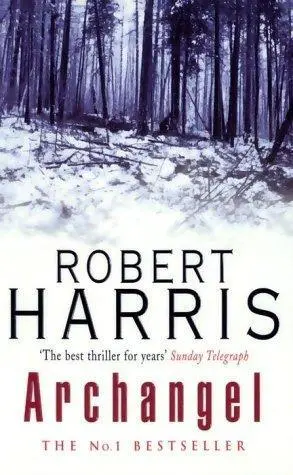
- Название:Archangel
- Автор:
- Издательство:Arrow
- Жанр:
- Год:2009
- ISBN:9780099282419
- Рейтинг книги:4 / 5. Голосов: 1
-
Избранное:Добавить в избранное
- Отзывы:
-
Ваша оценка:
Archangel: краткое содержание, описание и аннотация
Предлагаем к чтению аннотацию, описание, краткое содержание или предисловие (зависит от того, что написал сам автор книги «Archangel»). Если вы не нашли необходимую информацию о книге — напишите в комментариях, мы постараемся отыскать её.
Archangel — читать онлайн бесплатно полную книгу (весь текст) целиком
Ниже представлен текст книги, разбитый по страницам. Система сохранения места последней прочитанной страницы, позволяет с удобством читать онлайн бесплатно книгу «Archangel», без необходимости каждый раз заново искать на чём Вы остановились. Поставьте закладку, и сможете в любой момент перейти на страницу, на которой закончили чтение.
Интервал:
Закладка:
He laid this carefully to one side, climbed the steps to his door, unfastened the padlock and went inside. After a brief exchange of looks with O'Brian, Kelso followed, ducking his head to pass through the low entrance, emerging into the one small room. It was dark and cold and he could smell the insanity - he inhaled the lonely madness, as sharp and sour as the lingering stink of unwashed flesh. He put his hand to his mouth. Behind him he heard O'Brian suck in his breath.
Their host had lit a kerosene lamp. The whitened skulls of a bear and a wolf shone from the shadows. He put the notebook on the table, next to a half-eaten plate of some dark and bony fish, put a pot of water on the hob and bent to rekindle the old iron stove, keeping his rifle close to hand.
Kelso could imagine him an hour ago: hearing the distant sound of their car on the track, abandoning his meal, grabbing his gun and heading for the forest, his fire doused, his trap set -There wasn't a bed, merely a thin mattress, leaking stuffing, rolled and tied with string. Beside it was an ancient Soviet-made transistor radio, the size of a packing case, and next to that a wind-up gramophone with a tarnished brass horn.
The Russian unfastened the satchel and took out the notebook. He opened it at the picture of the girl gymnasts in Red Square and held it up for them: there, you see? They nodded. He set it down on the table. Then he pulled on a length of greasy leather hanging round his neck and kept on pulling until he hauled from somewhere deep in the fetid fluids of his clothes a small piece of clear plastic. He offered it to Kelso. It was warm from the heat of his body: the same picrure~ but folded very small, so that only Anna Safanova's face was visible.
'You are the ones,' he said. 'I am the one you seek. And now: the proof.'
He kissed the home-made locket and lowered it back into his clothes. Then, from the belt of his greatcoat, he drew out a short, wide-bladed knife with a leather hilt. He turned it, showing them the sharpness of the edge. He grinned at them. He kicked back the bit of carpet at his feet, dropped to his knees and prised up a crude trapdoor.
He reached down and pulled out a large and shabby suitcase.
HE unpacked his reliquary like a priest, reverently placing each object on the crude wooden table as if it were an altar.
The holy texts came out first: the thirteen volumes of Stalin’s collected works and thoughts, the Sochineniya, published in Moscow after the war. He showed the title page of each book to Kelso and then to O'Brian. All of them were signed in the same way - 'To the future, J. V. Stalin' - and all, clearly, had been read and re-read endlessly. On some of the volumes, the spines were badly cracked or hanging off. The pages were swollen by markers and bent corners.
Then came the uniform, each part carefully wrapped in yellowing tissue paper. A pressed grey tunic with red epaulets. A pair of black trousers, also pressed. A greatcoat. A pair of black leather boots, gleaming like polished anthracite. A marshal's cap. A gold star in a crimson leather case embossed with the hammer and sickle, which Kelso recognised as the Order of Hero of the Soviet Union.
And then came the mementoes. A photograph (in a wooden frame, glazed) of Stalin standing behind a desk:
signed, like the books, 'To the future, J. V. Stalin'. A Dunhill pipe. An envelope containing a lock of coarse grey hair. And finally a stack of gramophone records, old 78s, as thick as dinner plates, each still in its original paper sleeve: 'Mother, the Fields are Dusty', 'I'm Waiting For You', 'Nightingale ~f the Taiga,' 'J. V. Stalin: Speech to the First All-Union Congress of Collective Farm Shock Workers, February 19 1933', 'J. V. Stalin: Report to the Eighteenth Congress of the Communist Party of the Soviet Union, March 10 1939'...
Kelso couldn't move. He couldn't speak. It was O'Brian who took the first step. He glanced at the Russian, touched himself on his chest, gestured at the table, and received in return a nod of approval. Tentatively, he reached out to pick up the photograph. Kelso could see what he was thinking:
the likeness was indeed striking. Not exact, of course - no man ever looks exactly like his father - but there was something there, no doubt about it, even with the younger man's beard and straggling hair. Something in the cast of the eyes and the bone structure, perhaps, or in the play of the expression: a kind of ponderous agility, a genetic shadow that was beyond the skills of any actor.
The Russian grinned again at O'Brian. He picked up his knife and pointed at the photograph, then mimed hacking at his beard. Yes?
For a moment, Kelso wasn't sure what he meant, but O'Brian did. O'Brian knew at once.
Yes. He nodded vigorously. Oh, yes. Yes, please. The Russian promptly scythed away a great swathe of coarse black facial hair and held it out, with childish pleasure, for their inspection. He repeated the stroke, again and again, and there was something shocking about the way he did this, in the casual manipulation of the razor-edged knife - this side, that, and then the throat - in the careless self-mutilation of it. There is nothing, thought Kelso, with a flash of certainty, there is no act of violence this man is not capable of The Russian reached behind his head and grabbed his hair into a thick ponytail and sliced it off as close to the roots as he could. Then he crossed the cabin in a couple of strides, opened the door of the iron stove, and flung the mass of hair on to the burning wood where it flared for an instant before shriveling to dust and smoke.
'Bloody hell,' whispered Kelso. He watched, disbelieving, as O'Brian began opening the camera case. 'Oh no. Not that. You can't be serious.'
'I can.'
'But he's mad.'
'So are half the people we put on television.' O'Brian pushed a new cassette into the side of the camera and smiled as it clicked home. 'Showtime.'
Behind him, the Russian had his head bent over the bowl of hot water steaming on the stove. He had stripped to a dirty yellow vest and had lathered his face with something. The rasp of the knife-blade on his bristle made Kelso's own flesh ache.
'Look at him,' said Kelso. 'He probably doesn't even know what television is.'
'Fine by me.
'God.' Kelso closed his eyes.
The Russian turned towards them, wiping himself on his' shirt. His face was blotchy, beaded with pinheads of blood, but he had left himself a heavy moustache, as black and oily as a crow's wings, and the transformation was stunning. Here stood the Stalin of the 1 920s: Stalin in his prime, an animal force. What was it Lenin had predicted? 'This Georgian will serve us a peppery stew.'
He tucked his hair under the marshal's cap. He slipped on the tunic. A little loose around the front, perhaps, but otherwise a perfect fit. He buttoned it and strutted up and down the room a couple of times, his right hand cirnling modestly in an imperial wave.
He picked up a volume of the Collected Works, opened it at random, glanced at the page and handed it to Kelso.
Then he smiled, held up a finger, coughed into his hand, cleared his throat and began to speak. And he was good. Kelso could tell that straight away. He was not merely word perfect. He was better than that. He must have studied the recordings, hour after hour, year after year since childhood. He had the familiar, flat, remorseless delivery; the brutal, incantatory beat. He had the expression of heavy sarcasm, the dark humour, the strength, the hate.
'This Trotsky-Bultharin bunch of spies, murderers and wreckers,' he began slowly, 'who kow-towed to the foreign world, who were possessed by a slavish instinct to grovel before every foreign bigwig, and who were ready to enter his employ as a spy -' his voice began to rise '- this handful of people who did not understand that the humblest Soviet citizen, being free from the fetters of capital, stands head and shoulders above any high-placed foreign bzgwz~ whose neck
Читать дальшеИнтервал:
Закладка:
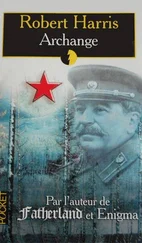
Похожие книги на «Archangel»
Представляем Вашему вниманию похожие книги на «Archangel» списком для выбора. Мы отобрали схожую по названию и смыслу литературу в надежде предоставить читателям больше вариантов отыскать новые, интересные, ещё непрочитанные произведения.

Обсуждение, отзывы о книге «Archangel» и просто собственные мнения читателей. Оставьте ваши комментарии, напишите, что Вы думаете о произведении, его смысле или главных героях. Укажите что конкретно понравилось, а что нет, и почему Вы так считаете.