Robert Harris - Archangel
Здесь есть возможность читать онлайн «Robert Harris - Archangel» весь текст электронной книги совершенно бесплатно (целиком полную версию без сокращений). В некоторых случаях можно слушать аудио, скачать через торрент в формате fb2 и присутствует краткое содержание. Год выпуска: 2009, ISBN: 2009, Издательство: Arrow, Жанр: Старинная литература, на английском языке. Описание произведения, (предисловие) а так же отзывы посетителей доступны на портале библиотеки ЛибКат.
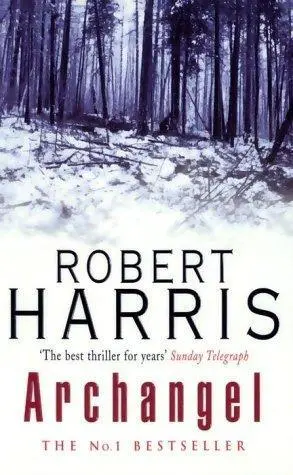
- Название:Archangel
- Автор:
- Издательство:Arrow
- Жанр:
- Год:2009
- ISBN:9780099282419
- Рейтинг книги:4 / 5. Голосов: 1
-
Избранное:Добавить в избранное
- Отзывы:
-
Ваша оценка:
Archangel: краткое содержание, описание и аннотация
Предлагаем к чтению аннотацию, описание, краткое содержание или предисловие (зависит от того, что написал сам автор книги «Archangel»). Если вы не нашли необходимую информацию о книге — напишите в комментариях, мы постараемся отыскать её.
Archangel — читать онлайн бесплатно полную книгу (весь текст) целиком
Ниже представлен текст книги, разбитый по страницам. Система сохранения места последней прочитанной страницы, позволяет с удобством читать онлайн бесплатно книгу «Archangel», без необходимости каждый раз заново искать на чём Вы остановились. Поставьте закладку, и сможете в любой момент перейти на страницу, на которой закончили чтение.
Интервал:
Закладка:
The car edged forwards, braked. He heard the engine switch off and then the hum of the driver's window being lowered. A blast of cold air. A gruff male voice said in Russian, 'Get out of the car please.'
The Toyota rocked as O'Brian clambered out.
With his heel, Kelso gently pushed at the satchel, jamming it further out of sight.
There was a second rush of cold as the rear door was lifted.
The sound of boxes being swung out, of catches snapping. Footsteps. A quiet conversation.
The door next to Kelso opened. He could hear the pattering of snowflakes, a man breathing. And then the door was closed - closed softly, with consideration, so as not to wake a sleeping passenger, and Kelso knew that he was safe.
He heard O'Brian load up the back and come round to the driver's seat. The engine started.
'It is surely most amazing,' said O'Brian, 'the effect of a hundred bucks on a cop who ain't been paid for six months.' He pulled the sleeping bag away from Kelso. 'This is your wake-up call, professor. Welcome to Archangel.'
THEY thumped across an iron bridge above the Northern Dvina. The river was wide, stained yellow by the tundra. Swollen currents rolled and flexed like muscles beneath its dirty skin. A couple of big black cargo barges, chained together, steamed north towards the White Sea. On the opposite bank, through the filter of snow and the spars of the bridge, they could see factory chimneys, cranes, apartment blocks, a big television tower with a winking red light.
As the vista broadened, even O'Brian's spirits seemed to fall. He called it a dump. He declared it a hole. He said it was the worst goddamn place he had ever seen. A goods train clanked along the railroad track beside them. At the end of the bridge they turned left, towards what seemed to be the main part of the city. Everything had decayed. The fa~ades of the buildings were pitted and peeling. Parts of the road had subsided. An ancient tram, in a brown and mustard livery, went rattling by, making a sound like a chain being dragged over cobbles. Pedestrians tilted drunkenly into the snow.
O'Brian drove slowly, shaking his head, and Kelso wondered what more he had been expecting. A press centre? A media hotel? They came out into the wide open space of a bus station. On the far side of it, on the waterfront, four giant Red Army men, cast in bronze, stood back to back, facing the four points of the compass, their rifles raised in triumph. At their feet, a pack of wild dogs scavenged among the trash. Nearby was a long, low building of white concrete and plate glass with a big sign: 'Harbour Master of Archangel'. If the city had a centre, this was probably it.
'Let's pull up over there,' suggested Kelso.
They cruised around the edge of the square and parked with their front bumper up close to the bent railings, looking directly out across the water. A husky watched them with detached interest, then brought its hind paw up to its neck and vigorously scratched its fleas. In the distance, through the snow, it was just possible to make out the flat shape of a tanker.
'You do realise,' said Kelso quietly, staring straight ahead across the water, 'that we are at the edge of the world? That at this point we are one hundred miles south of the Arctic Circle and there is nothing between us and the North Pole but sea and ice? You are aware of that?'
He started to laugh.
'What's funny?'
'Nothing.' He glanced at O'Brian and tried to stop himself, but it was no good, there was something about the reporter's utter dejection that set him off again. His vision was blurred by tears. 'I'm sorry,' he gasped. 'Sorry’
'Oh, go ahead, enjoy yourself,' said O'Brian, bitterly. 'This is my idea of a perfect fucking Friday. Drive eight hundred miles to some dump that looks like Pittsburgh after a nuclear strike to try to find Stalin's fucking girlfriend-'
He snorted and started to laugh as well.
'You know what we haven't done?' O'Brian managed to say after a while.
Kelso took a breath and swallowed. 'What?'
'We haven't been to the railway station and checked the radiation meter. . . We're probably. . . being. . . fucking... irradiated"
They roared. They cried. The Toyota rocked with it. The snow fell and the husky watched them, its head cocked in surprise.
O'BRIAN locked the car and they hurried through the snow, across the treacherous expanse of subsiding concrete, into the port authority building.
Kelso carried the satchel.
They were both still slightly shaky and the advertised ferry sailings - to Murmansk and the Groaning Islands - briefly set them off again.
The Groaning Islands?
'Oh come on, man. Stop it. We've got to do some work here.'
The building was bigger than it looked from the outside. On the ground floor there were shops - little kiosks selling clothes and toiletries - plus a cafe and a ticket booth. Downstairs, beneath banks of fluorescent lights, most of which had blown, was a gloomy underground market - stalls offering seeds, books, pirated cassettes, shoes, shampoo, sausages and some immense, sturdy Russian brassi~res in black and beige: miracles of cantilevered engineering.
O'Brian bought a couple of maps, one of the city and the other of the region, then they both went back upstairs to the ticket office where Kelso, in return for offering a dollar bill to a suspicious man in a greasy uniform, was permitted a brief look at the Archangel telephone directory. The book was small, red-bound, with hard covers and it took him less than thirty seconds to establish that no Safanov or Safanova was listed.
'Now what?' said O'Brian.
'Food,' said Kelso.
The caf~ was an old-style stolovaya, a self-service workers' canteen, its floor wet and filthy with melted snow. There was a warm fug of strong tobacco. At the next door table a couple of German seamen were playing cards. Kelso had a big bowl of shchi- cabbage soup with a dollop of sour cream bobbing in its centre - black bread, a couple of hard-boiled eggs, and the effect of all this on his empty stomach was immediate. He began to feel almost euphoric. This was going to be all right, he thought. They were safe up here. Nobody could find them. And if they played it properly, they could be in and out in a day. He tipped half a miniature of cognac into his instant coffee, looked at it, thought, Sod it, why not? and added the rest. He lit a cigarette and glanced around. The people up here appeared shabbier than they did in Moscow. They stared at foreign strangers. But when you attempted to meet their eyes they looked away.
O'Brian pushed his plate to one side. 'I've been thinking about this college, whatever it was - this "Maxim Gorky Academy". They'll have old records, right? And there was this girl she knew - what was her name, the ugly kid?'
'Maria.'
'Maria. Right. Let's find her class yearbook and find Maria.'
Class yearbook? thought Kelso. Who did O'Brian think she was? The Maxim Gorky prom queen, 1950? But he was too full of goodwill to pick a fight. 'Or,' he said, diplomatically, 'or we could try the local Party. She was in KomsomOl, remember. They might still have the old files.'
'Okay. You're the expert. How d'we find 'em?'
'Easy. Give me the town plan.'
O'Brian pulled the map from his inside pocket and scraped his chair round until he was sitting next to Kelso. They spread out the city plan.
The bulk of Archangel was crammed into a wide headland, about four miles across, with ribbons of development running out along either bank of the Dvina.
Kelso put his finger on the map. 'There,' he said. 'That's where they are. Or were. On the ploshchad Lenina, in the biggest building on the square. That's where the bastards always were.
'And you think they'll help?'
'No. Not willingly. But if you can provide a little financial lubrication... It's worth a try, anyway.
Читать дальшеИнтервал:
Закладка:
Похожие книги на «Archangel»
Представляем Вашему вниманию похожие книги на «Archangel» списком для выбора. Мы отобрали схожую по названию и смыслу литературу в надежде предоставить читателям больше вариантов отыскать новые, интересные, ещё непрочитанные произведения.




Обсуждение, отзывы о книге «Archangel» и просто собственные мнения читателей. Оставьте ваши комментарии, напишите, что Вы думаете о произведении, его смысле или главных героях. Укажите что конкретно понравилось, а что нет, и почему Вы так считаете.