Rupert Thomson - Katherine Carlyle
Здесь есть возможность читать онлайн «Rupert Thomson - Katherine Carlyle» весь текст электронной книги совершенно бесплатно (целиком полную версию без сокращений). В некоторых случаях можно слушать аудио, скачать через торрент в формате fb2 и присутствует краткое содержание. Год выпуска: 2015, ISBN: 2015, Издательство: Other Press, Жанр: Современная проза, на английском языке. Описание произведения, (предисловие) а так же отзывы посетителей доступны на портале библиотеки ЛибКат.
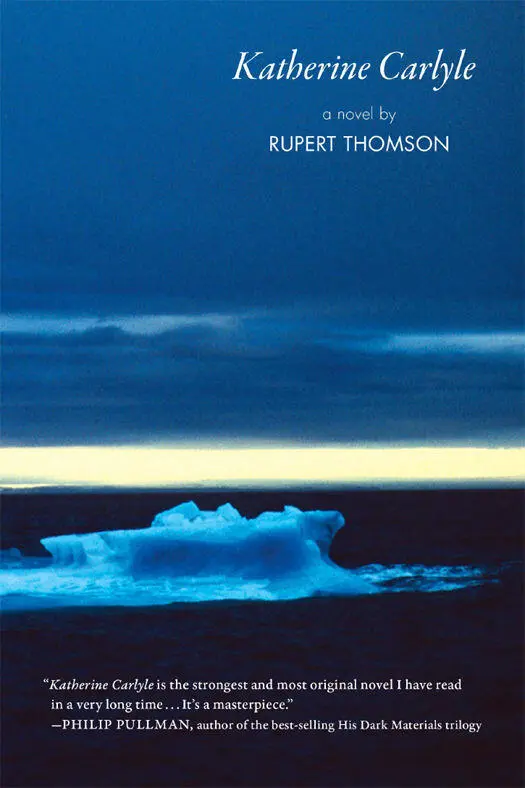
- Название:Katherine Carlyle
- Автор:
- Издательство:Other Press
- Жанр:
- Год:2015
- ISBN:9781590517390
- Рейтинг книги:5 / 5. Голосов: 1
-
Избранное:Добавить в избранное
- Отзывы:
-
Ваша оценка:
Katherine Carlyle: краткое содержание, описание и аннотация
Предлагаем к чтению аннотацию, описание, краткое содержание или предисловие (зависит от того, что написал сам автор книги «Katherine Carlyle»). Если вы не нашли необходимую информацию о книге — напишите в комментариях, мы постараемся отыскать её.
“[T]his road trip through a snow dome of mesmeric hallucinations is Thomson at his best.” —Richard Flanagan, author of The Narrow Road to the Deep North, winner of the 2015 Man Booker Prize
Katherine Carlyle is Rupert Thomson’s breakthrough novel. Written in the beautifully spare, lucid, and cinematic prose Thomson is known for, and powered by his natural gift for storytelling, it uses the modern techniques of IVF to throw new light on the myth of origins. It is a profound and moving novel about identity, the search for personal meaning, and how we are loved.
Unmoored by her mother’s death and feeling her father to be an increasingly distant figure, Katherine Carlyle abandons the set course of her life and starts out on a mysterious journey to the ends of the world. Instead of going to college, she disappears, telling no one where she has gone. What begins as an attempt to punish her father for his absence gradually becomes a testing ground of his love for her, a coming-to-terms with the death of her mother, and finally the mise-en-scène for a courageous leap to true empowerment.
Katherine Carlyle — читать онлайн бесплатно полную книгу (весь текст) целиком
Ниже представлен текст книги, разбитый по страницам. Система сохранения места последней прочитанной страницы, позволяет с удобством читать онлайн бесплатно книгу «Katherine Carlyle», без необходимости каждый раз заново искать на чём Вы остановились. Поставьте закладку, и сможете в любой момент перейти на страницу, на которой закончили чтение.
Интервал:
Закладка:
While we were eating the “English-style” meal — grilled meat, baked potato, baked beans — my mother noticed a Swiss couple pointing at the Neapolitan women and sniggering. Her lips tightened. She put down her knife and fork, rose to her feet, and walked over to where the Neapolitans were sitting.
She spoke to the woman in the leopardskin outfit. “I just wanted to tell you. Stai benissimo .” You look great.
“Sì, è vero,” the woman said. “Hai ragione.” Yes, it’s true. You’re right. She gestured at her friend. “E lei ?” And her?
“Anche lei,” my mother said. She looks great too.
Sitting down again and flushed by her behavior — she wasn’t usually such an extrovert — my mother poured herself more wine.
“To Neapolitans,” she said. “In fact, to all Italians.”
“Except Berlusconi,” I said.
We clinked glasses.
Clouds veiled the mountains and the water was dense as mercury. White mansions lined the southern shore. Their decks were made of dark wood and the green lawns sloped down to jetties where speedboats were moored.
After dinner three short men in tartan shirts appeared on a low stage. They played famous songs like “Night Train,” “Me and Bobby McGee,” and “California Blue,” and everybody had drunk enough by then to sing along. My mother sang too, one hand pressed to her collarbone. The boat seemed to have speeded up. Lights blinked and glittered all along the edges of the lake.
When the cruise was over we lay on a grass bank and stared up at the stars. The warm, almost brackish air lifting off the water. The tiny lazy waves collapsing …
My mother’s mobile rang. She glanced at the screen and hesitated, then she answered.
“No, we’re in Switzerland,” she said.
“Switzerland?” I heard my father say, his voice so small and pinched it sounded comical.
My mother stood up and walked a few paces. “She’s not going. She’s ill.” She listened again, then said, “Don’t worry. We’ll be home tomorrow.”
“You told him I was ill,” I said when the call ended.
“Well, you are,” she said. “Look at you. You’re in a terrible state.”
We both laughed, then she stared out across the lake into the blackness and sighed. “Perhaps we should go back.”
“But you’ve been drinking.”
“I only had two glasses.”
We drove through the night, stopping at a motorway hotel outside Milan. I went to school on Tuesday. Three months later her cancer returned and this time it proved too strong for her.
Tanzi appears in my doorway, making me jump. “The chicken’s ready. You want to eat with us?”
/
At the beginning of October the sky lowers over Berlin and an east wind whips dead leaves into vicious spirals. Angela Merkel embarks on her third term in office after victory in the elections. Uncontrolled Gypsy migration from Bulgaria and Romania is causing tension, and the last existing stretch of Hitler’s motorway network — the A11 — is to be resurfaced. On Paul-Lincke-Ufer a black umbrella leaps from a man’s hand and somersaults into the canal. I have a Russian visa but can’t use it yet. I feel thin-skinned, irritable. There’s the sense that I’m treading water. Marking time.
One afternoon I meet Oswald in Café Einstein. He starts talking about life at KaDeWe, and he’s being so outrageous that the waitress with the chestnut hair stops at our table to listen. Oswald’s supervisor — the burly woman — has been seen leaving an infamous nightclub in Mitte, but he isn’t overly surprised. A day job handling meat, a nocturnal fixation with leather. It’s only to be expected, he says. He has often felt the urge himself. We’re all still laughing when my phone vibrates. It’s Cheadle and he comes straight to the point. My services will be required that evening.
By the time the call is over the waitress has moved away and Oswald’s texting.
“Who was that?” he says.
I stare at the screen. “No one special.”
“Your mood’s changed completely. You’re like a different person.” Head cocked, he considers me. “Your phone never rings.”
Back at the apartment I wash my hair and shave my legs. Later, I slip into the clingy golden dress and the high heels. Standing in the hall by the front door I study myself in a dusty full-length mirror.
“You look great.” From where he’s sitting, in the kitchen, Cheadle can see all the way down the corridor.
“I look like an escort,” I say.
“High-class, though. Top of the range.” Cheadle rolls the tip of his cigar against the edge of the ashtray and reaches for his beer.
“That’s not the kind of thing a father’s supposed to say.”
“I’m new to this. I make mistakes.” He brings the cigar up to his lips. “Anyway, you haven’t agreed to be adopted yet.”
His phone beeps twice. It’s the taxi firm, he tells me. My car’s outside.
Our conversations always go like this. He veers between affection and callousness, and expects me to be able to handle both. There are times when he seems to think I’m too full of myself and wants to see me come unstuck. Like now.
I check myself in the mirror one last time. Thigh-length dress, gold high heels. I’m reminded of the girls I used to see on Via Flaminia, or on the dark sticky roads that surround the Stadio Olimpico. I have never looked so unlike myself, and for a moment I feel capable of anything. I put on my cashmere coat and pick up my purse, then I move across the hall to the front door.
“Not out of your depth, are you, baby?” Cheadle says.
I give him a look. “No one says baby anymore.”
He touches two fingers to his forehead in a mock salute. “Viel Glück.”
The dim light in the corridor and the upright rectangle of the doorway combine to frame part of the kitchen. A man hunched over a simple wooden table. The blue of cigar smoke, the dull gold of a glass of beer. If it were a painting it would be an Old Master.
Later, in the taxi, my thoughts circle back to the American who keeps asking if he can be my father. There was an uncharacteristic tenderness in the roundness of his shoulders and the attentive angle of his head, and also in those last two words, which he probably didn’t mean to say. Good luck .
In Potsdamerplatz a man who looks Turkish steps out in front of the taxi. My driver brakes, then swears at him. There are too many bloody foreigners, he says. They’re taking all the jobs.
“So there are all these Germans, are there,” I say, “desperate to clean offices at night?”
“You know what I mean.”
The Kempinski slides into view, its lobby brightly lit, its front steps carpeted in red.
I pay the fare on the meter, then lean close to the grille. “I know one job they should take.”
“What job’s that?”
“Yours.”
Before the taxi driver can respond, a man in a top hat opens the car door for me, his face a mask, revealing nothing. I thank him and set off up the steps. In the lobby of the Kempinski there are shiny wooden pillars ringed with polished metal and sofas the color of tangerines. The murmur of voices mingles with subdued Peruvian pipe music. The air feels staticky, filled with ions, as if a weather front is moving in.
/
The moment I enter the Bristol Bar I feel his eyes on me, even though I have yet to work out which of the many men he is. I’m acutely aware of the skin that covers me; it’s as if I have goose bumps. Then I see him. He’s sitting on a bar stool. Dark-blue suit, white shirt. No tie. I walk towards him. He doesn’t look round but watches me indirectly in the mirror where all the bottles are. He’s built like a wrestler, with wide shoulders and a deep chest. His hair is black.
Читать дальшеИнтервал:
Закладка:
Похожие книги на «Katherine Carlyle»
Представляем Вашему вниманию похожие книги на «Katherine Carlyle» списком для выбора. Мы отобрали схожую по названию и смыслу литературу в надежде предоставить читателям больше вариантов отыскать новые, интересные, ещё непрочитанные произведения.




Обсуждение, отзывы о книге «Katherine Carlyle» и просто собственные мнения читателей. Оставьте ваши комментарии, напишите, что Вы думаете о произведении, его смысле или главных героях. Укажите что конкретно понравилось, а что нет, и почему Вы так считаете.