Rupert Thomson - Katherine Carlyle
Здесь есть возможность читать онлайн «Rupert Thomson - Katherine Carlyle» весь текст электронной книги совершенно бесплатно (целиком полную версию без сокращений). В некоторых случаях можно слушать аудио, скачать через торрент в формате fb2 и присутствует краткое содержание. Год выпуска: 2015, ISBN: 2015, Издательство: Other Press, Жанр: Современная проза, на английском языке. Описание произведения, (предисловие) а так же отзывы посетителей доступны на портале библиотеки ЛибКат.
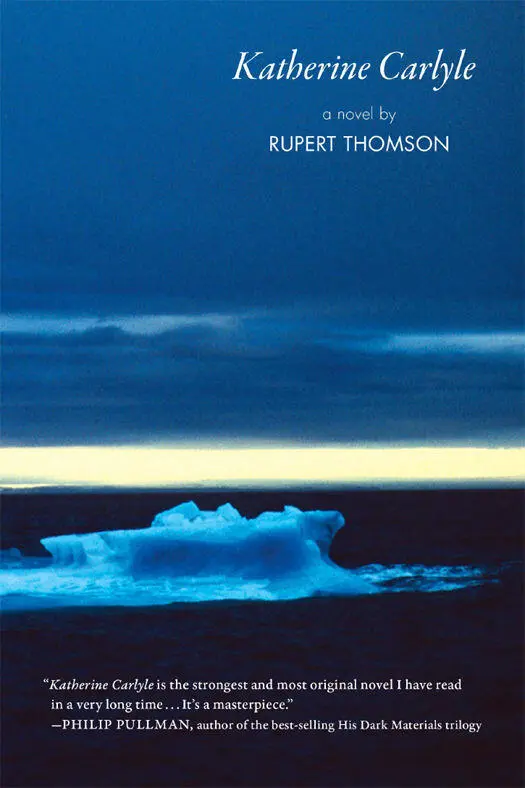
- Название:Katherine Carlyle
- Автор:
- Издательство:Other Press
- Жанр:
- Год:2015
- ISBN:9781590517390
- Рейтинг книги:5 / 5. Голосов: 1
-
Избранное:Добавить в избранное
- Отзывы:
-
Ваша оценка:
Katherine Carlyle: краткое содержание, описание и аннотация
Предлагаем к чтению аннотацию, описание, краткое содержание или предисловие (зависит от того, что написал сам автор книги «Katherine Carlyle»). Если вы не нашли необходимую информацию о книге — напишите в комментариях, мы постараемся отыскать её.
“[T]his road trip through a snow dome of mesmeric hallucinations is Thomson at his best.” —Richard Flanagan, author of The Narrow Road to the Deep North, winner of the 2015 Man Booker Prize
Katherine Carlyle is Rupert Thomson’s breakthrough novel. Written in the beautifully spare, lucid, and cinematic prose Thomson is known for, and powered by his natural gift for storytelling, it uses the modern techniques of IVF to throw new light on the myth of origins. It is a profound and moving novel about identity, the search for personal meaning, and how we are loved.
Unmoored by her mother’s death and feeling her father to be an increasingly distant figure, Katherine Carlyle abandons the set course of her life and starts out on a mysterious journey to the ends of the world. Instead of going to college, she disappears, telling no one where she has gone. What begins as an attempt to punish her father for his absence gradually becomes a testing ground of his love for her, a coming-to-terms with the death of her mother, and finally the mise-en-scène for a courageous leap to true empowerment.
Katherine Carlyle — читать онлайн бесплатно полную книгу (весь текст) целиком
Ниже представлен текст книги, разбитый по страницам. Система сохранения места последней прочитанной страницы, позволяет с удобством читать онлайн бесплатно книгу «Katherine Carlyle», без необходимости каждый раз заново искать на чём Вы остановились. Поставьте закладку, и сможете в любой момент перейти на страницу, на которой закончили чтение.
Интервал:
Закладка:
The cigarette is making me feel even dizzier.
“Let’s go for a walk,” I say.
Josef hears the word and jumps to his feet, eyes eager, tail whacking the fridge door.
Outside, on the pavement, the night smells of ash and salt. The sky looks brown. We hurry across Karl-Marx-Allee, which is wide and bleak, like some urban prairie. There are almost no cars. I wonder what Cheadle’s up to. He’s still determined to adopt me but I keep postponing it. I have discarded one father. Why would I want another?
When I was sixteen I got top grades in all my GCSEs, and shortly after the results came through, my father and I flew to London. One night he took me to a restaurant in South Kensington to celebrate. I wore an elegant black dress and pinned my hair up. I was trying to look sophisticated — I wanted him to be proud of me — but the evening proved awkward from the outset. When the waiter took my coat he gave me a sly look, and I knew he thought I was my father’s mistress. I couldn’t believe my father hadn’t noticed. He was a journalist, after all. An observer . It would have been so easy to clarify the situation — My daughter just did brilliantly in her exams — but he didn’t, and my discomfort led me to broach a subject that had always been taboo — for us, at least.
We had nearly finished our starters when I told him that something was bothering me. It had been bothering me for a long time, I said. As long as I could remember. My father chewed slowly, watching me. What I felt, in general terms, I said, was an absence of something, a sense of deprivation. A loneliness. But I had never been able to put it into words. How could I have done? I was too young — only a child. And then my mother died, and the feeling of having been neglected or forgotten became harder to make out, even harder to bring up. My mother’s death was so immediate, so shocking. So recent . My mother’s death had buried it. I looked at my father across the table, hoping he would understand, but we had never talked about the difficult things — there was no history, no precedent — and nothing was coming back. He just seemed puzzled, and slightly apprehensive.
“I’m not describing it very well,” I said.
My father told me to try again.
“OK.” I took a breath and decided to go straight to the heart of it. “When I was an embryo, why wasn’t I injected into my mother right away?”
The waiter, who had been hovering nearby, refilled our water glasses and then withdrew.
“I’m not sure injected is the right word,” I said, “but you know what I mean.”
My father leaned forwards, over the table. “Kit, for heaven’s sake. We’re in a restaurant .”
“You had me frozen and then you left me in the hospital —” My voice was trembling, despite my efforts to control it. “You left me there for eight years .”
My father put down his fork. His face had stiffened. It was obvious he had never expected — or even imagined — anything like this. Also obvious was his fear that I might make a spectacle of myself, and ruin the evening.
A kind of fury surged through me, scalding and bitter. “Why did you make me wait?” And then, before he could answer, “I know why. It’s because you thought I’d be a monster, didn’t you. And maybe that’s exactly what I am — to you.”
“This is ridiculous,” he said.
“You abandoned me …” But all the force had gone out of me, and I sounded sulky, a typical teenager, a spoiled child.
“Stop it.”
“I wish my mother was the one who was alive and you were dead. At least I could talk to her —”
I began to cry.
“Is everything all right?” Our waiter had returned and was standing at my father’s elbow, one hand cradling the other.
“Everything’s fine,” my father said, looking blankly into the middle distance. “Thank you.”
For the rest of the evening — and the visit — we did our best to avoid each other. I was horrified by what I’d said. I didn’t wish him dead. Of course I didn’t. At the time, though, I felt he hadn’t taken me seriously. He had driven me to it. I’d had to say something . To make matters worse, I had embarrassed him in one of his favorite restaurants, something he wouldn’t find it easy to forgive. Address one grievance and you create another. It seemed I couldn’t win.
Oswald calls out to me. “This way.”
We cross a bridge. Off to one side and far below are warehouses and lorry parks. A canal glistens like a seam of coal.
“Oswald,” I say suddenly, “I’m not going to sleep with you.”
He doesn’t respond.
When I glance at him, his eyes are lowered, and he has a frown on his face, as if he is trying to solve a problem that involves his shoes. Josef trots along beside him, looking worried.
I repeat the words twenty minutes later, when we’re slouched in a booth in the corner of a dimly lit bar.
“I wasn’t thinking about that.” He reaches for his beer, then puts it back on the table without drinking. “I mean, to be honest, I’ve probably thought about it,” he says after a while, “but I could never do it. I wouldn’t be able to. You’re too sort of — I don’t know — exotic .”
I laugh. “Exotic? You can talk, with a name like Oswald. I didn’t think anyone called Oswald still existed. I thought they all died out about a century ago — or maybe longer.”
He watches me with distance in his eyes, as if I’m a shimmering figure on the horizon, approaching slowly, and he’s curious to see who I turn out to be.
“When will you go back to Italy?” he asks.
“That’s not on the agenda.”
“Maybe your agenda needs updating.”
“It’s being updated right now. I’m just waiting for certain documents to come through.”
“More negotiations?”
“That’s one way of putting it.”
“Do you need money?” He studies me for a moment. “No, probably not.”
“What’s that supposed to mean?”
He doesn’t answer.
I think of his kitchen — the queasy green walls, the broken central heating. “You haven’t got any money anyway.”
“Someone’s looking after you. Someone’s paying.”
Since I told him I’m not going to sleep with him he seems to have become stronger. More of a man.
“I’ve got a free place to stay,” I say, “if that’s what you’re driving at.”
“Are you —” He checks himself.
“Am I what?”
“Nothing. It doesn’t matter.”
“You’re jealous.”
He gives me a look.
“You can’t have me,” I say, “so you want me gone.”
“There could be some truth in that.” He smiles wistfully down into his drink. “But it wasn’t what I was about to say.”
Later, on Britzerdamm, a white stretch limo glides past, tires trickling on the tarmac. A window opens. A pale hand waves. I’m reminded of the night I last saw Massimo, the boys with their Roma scarves and their loud mouths. Sometimes, when I think of where I am, I shiver, and I’m not sure if it’s terror or delight.
“I’m going home,” Oswald says.
It will take me an hour to get back to Cheadle’s apartment, and dawn isn’t far away. “Oswald, can I sleep at your place?” I pause. “Just sleep, I mean.”
After the way I spoke to him earlier he probably can’t believe what he’s hearing, but when I keep looking at him, too tired to be capable of anything manipulative, let alone flirtatious, his gaze drops to the pavement and he shakes his head.
“Come on, then,” he says.
/
When I walk into Cheadle’s apartment the next day, I find him sitting at the kitchen table with Anna. Dressed in a black coat with a fake-fur collar, she is showing him a series of images on a digital camera. In the daylight she looks even paler, and the pores show in her cheeks and in the sides of her nose.
Читать дальшеИнтервал:
Закладка:
Похожие книги на «Katherine Carlyle»
Представляем Вашему вниманию похожие книги на «Katherine Carlyle» списком для выбора. Мы отобрали схожую по названию и смыслу литературу в надежде предоставить читателям больше вариантов отыскать новые, интересные, ещё непрочитанные произведения.



Обсуждение, отзывы о книге «Katherine Carlyle» и просто собственные мнения читателей. Оставьте ваши комментарии, напишите, что Вы думаете о произведении, его смысле или главных героях. Укажите что конкретно понравилось, а что нет, и почему Вы так считаете.