Alexander Theroux - Darconville’s Cat
Здесь есть возможность читать онлайн «Alexander Theroux - Darconville’s Cat» весь текст электронной книги совершенно бесплатно (целиком полную версию без сокращений). В некоторых случаях можно слушать аудио, скачать через торрент в формате fb2 и присутствует краткое содержание. Год выпуска: 1996, Издательство: Holt Paperbacks, Жанр: Современная проза, на английском языке. Описание произведения, (предисловие) а так же отзывы посетителей доступны на портале библиотеки ЛибКат.
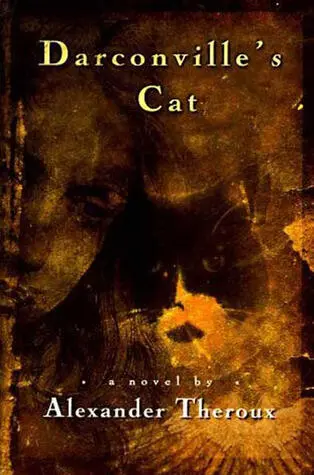
- Название:Darconville’s Cat
- Автор:
- Издательство:Holt Paperbacks
- Жанр:
- Год:1996
- ISBN:нет данных
- Рейтинг книги:3 / 5. Голосов: 2
-
Избранное:Добавить в избранное
- Отзывы:
-
Ваша оценка:
Darconville’s Cat: краткое содержание, описание и аннотация
Предлагаем к чтению аннотацию, описание, краткое содержание или предисловие (зависит от того, что написал сам автор книги «Darconville’s Cat»). Если вы не нашли необходимую информацию о книге — напишите в комментариях, мы постараемся отыскать её.
Darconville's Cat Its chapters embody a multiplicity of narrative forms, including a diary, a formal oration, an abecedarium, a sermon, a litany, a blank-verse play, poems, essays, parodies, and fables. It is an explosion of vocabulary, rich with comic invention and dark with infernal imagination.
Alexander Theroux restores words to life, invents others, liberates a language too long polluted by mutters and mumbles, anti-logic, and the inexact lunacies of the modern world where the possibility of communication itself is in question. An elegantly executed jailbreak from the ordinary,
is excessive; funny; uncompromising; a powerful epic, coming out of a tradition, yet contemporary, of both the sacred and the profane.
Darconville’s Cat — читать онлайн бесплатно полную книгу (весь текст) целиком
Ниже представлен текст книги, разбитый по страницам. Система сохранения места последней прочитанной страницы, позволяет с удобством читать онлайн бесплатно книгу «Darconville’s Cat», без необходимости каждый раз заново искать на чём Вы остановились. Поставьте закладку, и сможете в любой момент перейти на страницу, на которой закончили чтение.
Интервал:
Закладка:
They tried nevertheless to see each other as often as they could, and when, for whatever reason, they couldn’t meet at the apartment the two of them found a convenient rendezvous not far from the University of Virginia at the statue of George Rogers Clark — a public commemoration, perhaps, for his having by connivance obtained from the Georgia legislature an immense personal land grant on the Mississippi near the mouth of the Yazoo? — but at such times there were often disagreements and, just as often, they seemed to have little to say. To her way of thinking he seemed preoccupied; she to him preoccupied his thoughts. Resentment succeeded bewilderment. Her withdrawals evoked his reproaches, and his reproaches her anger. Sometimes each found cutting words for the other. I love her, thought Darconville. And Isabel thought she loved him. But it was as if these were the very worst emotions to feel that summer.
The periodic visits to Fawx’s Mt. were peculiar, as well; Isabel — Darconville had now come to notice it several times — grew nervous there, balked at being seen, avoided the street that crossed by the yard, looking only toward places where whatever she sought or sought to avoid was absent and catching herself up in the sudden half-turns by which, others notwithstanding, she even seemed to frighten herself, as if Tubriel, the unholy sefiroth of summer, shimmered towards her through the Virginia heat in waves of flame — but boding what? What was she afraid of? Or who? There was nothing to know, he found out, once meeting her on that head. Generally, they returned to Charlottesville that same day. And often in the bedroom of that low washed-out apartment — before Lisa returned, all thumbprints and reek, from visiting the hairy Idumean-from-UVa. she slept with — they made love, beautiful twins complected in the anonymous darkness they at once both needed and yet both feared.
But that was all by the way.
An event took place that put the entire affair on the shelf. It began with a party that was not significant and ended with a letter that was. But it was not really the party, not really the letter. Destiny, it might be said, simply opened its mouth to speak and, for reasons no one really knew, fambled to a halt.
It so happened that Lisa Gherardini, having suddenly decided to go to Hawaii, was given a farewell party (one made conspicuous notably by the absence of her boyfriend) on one of those flat-gold late summer evenings in Charlottesville when, shining down on things unlawfully begotten, the moon merely smiles and winks. Lisa’s parents, of course, invited Isabel, and Isabel, importuning him, asked Darconville to come up from Quinsyburg to attend. File, which ever attends to Rank, obliged. It was of course one of those gatherings in the mode heretofore described, a kind of social vivisepulture with whole platoons of things-in-orchids coming youward with bourbons in hand and vicious, premeditated smiles. The guests on this occasion, people predominantly from the horse-latitudes, still proved to be less homogeneous than usual — Mrs. G (pitifully born that way) so wanted to be open-minded — and one had the redoubtable pleasure, this time, of meeting not only the ubiquitous gongster-voiced matron and mahogany-faced whipper-in but also several jimkwims from the University of Virginia, some fraternity boys and their brother bungs, two terminal poets, a few telephone operators, and a lot of other spunky nots-and-dots from the neighborhood who’d spoiled around at one time or other with the Pineapple-Princess-to-Be. This particular party was characterized by that mood of horrid democracy one so loathes; disparate factions didn’t separate but actually tried to relate to each other — and while old farts, trying to dance, flapped about like wounded birds, self-assured teenagers — in whom confidence is such a vile characteristic— pontificated above the noise about politics, careers, and money-schemes. Here, a fifteen-year-old was revealing his plan for a nationwide megalopolization of paper-routes; there, Mr. Gherardini, bald as a Dutch cheese, was twirling around like a buffoon and trying to learn the intricate steps of a dance being taught him by a high-school girl in short shorts. Mrs. Gherardini, weaseling through a network of balloons, came up to Darconville and said, “You’re a writer.” “No, I’m not,” he replied and disappeared. It was a wonderful party.
As the evening wore on, Darconville noticed a man was flirting with Isabel across the room. Flirting perhaps was wrong: say pluming . The species was unmistakable, one of those over-pronounced middle-aged microlipets having some connection or other with the university— Charlottesville was full of them — who had never married, waved his hair in a fussy marcel, and had a handshake so ornate as to persuade you on the spot that you must hate him always: only another one in that grand group of prissy, theatrically erudite Episcopal hyperemians down South with his thousand-and-one stories about mother, Mozart, and miscegenation. He fit to type in his suit of rather ministerial cut, white shirt and black tie and kid slippers with soles as thin as dancing pumps, bold in the nose and given to whispering catty asides in little sibilants about everybody he met for the amusement of the maidenly young men from UVa. whom he loved to keep within a foot’s-length of himself wherever he went. He isn’t precisely homosexual — he is too passionless for that — but consistently worried about the size of his gibbals, he always drinks too much and, becoming sweetly nasty, affects to offer his rudeness as a general defense of style and good taste of which he invariably sees himself high-priest. He wears jewelry, keeps a British blue cat, and simply adores the novels of Jane Austen. Strangely, the type attracts women.
Fear is an eye. Darconville, nevertheless, stayed where he was, striking up a casual conversation with a pale, somewhat avitaminotic young man there whose ample ears jutted out of his long blond hair. He was rather plain and not very intelligent but likable enough, and, since both were alone, they quietly sipped their drinks and made small talk, quickly coming to agree that neither of them belonged there. Meanwhile, Isabel kept to her end, assiduously avoiding in her byerespects and bavarderie that part of the room where Darconville and friend waited; it was impossible to get her attention. The fop, vaunting, would occasionally take her waist and, leaning over, whisper whatever pretty-wilted thing it was that caused her, just as occasionally, to lower her head and, biting her lip, stifle laughter. But she seemed embarrassed. When a girl once began to be ashamed of what she ought not to be, thought Darconville, was it not perhaps then possible that she might not one day be ashamed of what she ought? A woman constantly blushing, thought Darconville, must be terribly well informed. Growing disgusted, he looked away. Then everything took a distinct turn for the worse.
Tapping on his glass for silence — clink! clink! — the fop stepped forward, calling for attention. “Here’s glasses then to our Lisa,” he sang, smiling over at the party girl, “the namesake, I trust, of that best-remembered of Elizabeths, the first so-named of English sovereignty and patroness of the Old Dominion, mmmm?” He spoke in the key of G-flat, like a mouse in cheese, and kissed her hand. “Bon voyage!”
Darconville gave out with a schwa of disgust.
Suddenly, the exquisite held up his hand, the poniards of his eyes fast on Darconville; he had been waiting for the opportunity all evening.
“Aren’t you drinking, handsome?” he called out, sarcastically. He repeated the question again, louder.
Everyone slowly turned toward Darconville.
“I’m sorry, were you addressing me?”
Читать дальшеИнтервал:
Закладка:
Похожие книги на «Darconville’s Cat»
Представляем Вашему вниманию похожие книги на «Darconville’s Cat» списком для выбора. Мы отобрали схожую по названию и смыслу литературу в надежде предоставить читателям больше вариантов отыскать новые, интересные, ещё непрочитанные произведения.










Обсуждение, отзывы о книге «Darconville’s Cat» и просто собственные мнения читателей. Оставьте ваши комментарии, напишите, что Вы думаете о произведении, его смысле или главных героях. Укажите что конкретно понравилось, а что нет, и почему Вы так считаете.