Alexander Theroux - Darconville’s Cat
Здесь есть возможность читать онлайн «Alexander Theroux - Darconville’s Cat» весь текст электронной книги совершенно бесплатно (целиком полную версию без сокращений). В некоторых случаях можно слушать аудио, скачать через торрент в формате fb2 и присутствует краткое содержание. Год выпуска: 1996, Издательство: Holt Paperbacks, Жанр: Современная проза, на английском языке. Описание произведения, (предисловие) а так же отзывы посетителей доступны на портале библиотеки ЛибКат.
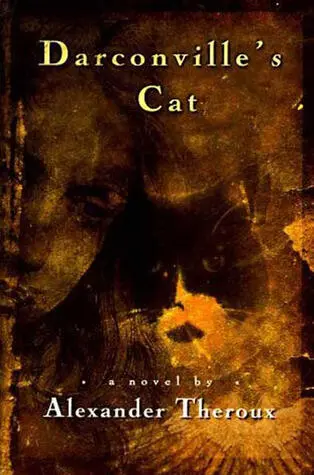
- Название:Darconville’s Cat
- Автор:
- Издательство:Holt Paperbacks
- Жанр:
- Год:1996
- ISBN:нет данных
- Рейтинг книги:3 / 5. Голосов: 2
-
Избранное:Добавить в избранное
- Отзывы:
-
Ваша оценка:
Darconville’s Cat: краткое содержание, описание и аннотация
Предлагаем к чтению аннотацию, описание, краткое содержание или предисловие (зависит от того, что написал сам автор книги «Darconville’s Cat»). Если вы не нашли необходимую информацию о книге — напишите в комментариях, мы постараемся отыскать её.
Darconville's Cat Its chapters embody a multiplicity of narrative forms, including a diary, a formal oration, an abecedarium, a sermon, a litany, a blank-verse play, poems, essays, parodies, and fables. It is an explosion of vocabulary, rich with comic invention and dark with infernal imagination.
Alexander Theroux restores words to life, invents others, liberates a language too long polluted by mutters and mumbles, anti-logic, and the inexact lunacies of the modern world where the possibility of communication itself is in question. An elegantly executed jailbreak from the ordinary,
is excessive; funny; uncompromising; a powerful epic, coming out of a tradition, yet contemporary, of both the sacred and the profane.
Darconville’s Cat — читать онлайн бесплатно полную книгу (весь текст) целиком
Ниже представлен текст книги, разбитый по страницам. Система сохранения места последней прочитанной страницы, позволяет с удобством читать онлайн бесплатно книгу «Darconville’s Cat», без необходимости каждый раз заново искать на чём Вы остановились. Поставьте закладку, и сможете в любой момент перейти на страницу, на которой закончили чтение.
Интервал:
Закладка:
Good manners in Charlottesville had long ago degenerated into etiquette, which of course thrived on those social occasions when one had to have the right enthusiasms, the right prejudices, the right indignations. But that bogus aristocracy — feudal reactionaries, seigneurial land-owners-in-rubber bowties, Dukes of Omnium, horse fanciers, Epis-copocrats, paid-up-in-full members of the Colonial Order of the Acorn, University of Virginia trustees, the Dames of 1890, etc. — was in fact only a kind of club, a stuffy composite of thrusting atti-tudinarians who managed in a general and well-disguised parvenuism to throw for the charming people who dressed just too divine the marvelous parties they simply adored ! They were nice without being nicer. Downward they climbed, backward they advanced. Venal, they were obsequious; obsequious, insecure; and insecure, they overstated themselves, out-anglicizing the English in that feeble mimicry which, born of inferiority, ironically made them even less secure. Dignity in the South became once again only a peculiar manifestation of gall.
Scenario: the Blacks invite you to their house, “Duchessa”; you accept and, appearing the following evening, are met under the porte-cochere by the small, sharplipped hostess herself — an overdressed grympen in peak shoes — who theatrically leads you by hand into the drawing room. There are paintings of celebrated race-horses on the wall, a Brown Bess over the hearth, its mantel a moonscape of old plate, and all of it surveyed from above by the glassy stare of a mounted buck’s head, the huge beam-and-times sticking out in a stiff blessing. Two black maids—”reliable help”—offer you hors d’oeuvres. The host hands you a drink.
It’s a fête worse than death. The room is full of people with faces like borzois, most of them drinking 8-to-1 ratio martinis and asserting one opinion after another with high-declarative candor, that subtlest form of deception. A group of over-perfumed fussocks, gossiping, and bilious old soldiers, chiming the gold in their crammed pockets, are standing around sipping — not just drinks — but the real Virginia possets: Col. Byrd’s Capital Night Cap, King William’s Toddy, and Daniel Parke Custis’s Original Floster.
The introductions are made. It’s the usual group of uniques and antiques. You meet the cheerful latitudinarian divine-cum-poacher and his young male friend. You meet the master of hounds who whispers a small salacity into your ear and wheezes good-naturedly into his cup. You meet the unsalvageable narcissist, a twenty-year-old blonde — her name is usually something like Grey Fauquier or Summer Bellerophon — who rides sidesaddle, infixes in every Southern male a compulsive desire to be flayed by her riding crop, and despises her mother for stealing her daddy with whom she is passionately in love. You meet the agitateuse -with-political-interests, wearing logic and fake jewels. You meet the Dear Ol’ Thing, a fusty dowager who, decaying beneath piles of old-fashioned clothes, is chairwoman of projects like “Save the Peakferns” and dares say anything she damn well pleases between puffs of her tiny green cigar. They’re all there, the blue-rinse set, city toparchs, university snobs, thorn-eyed starkadders with offensive orchids, gynecocrats from the hintermath of time, and all those over-advantaged rhetoricalists-in-ascots from Albemarle County who, gathered under one roof, would rather talk than breathe.
Then it’s time for dinner. At the table of candles and wine, one experiences plenitude itself: the fruit-motif silver, the napkins folded tricesimosecundo, the plates heaped full, and the fat-rolls of the generous-waisted barguests bulging in expectation through the small spaces in the heartbacked Hepplewhite chairs. A black in a white jacket, answering the bell, dishes no meat but in silver: pies of carp’s tongue, the carcasses of several ample wethers bruised for gravy, pig in sauce sage, and then flummery, jellies, and sweetmeats of twenty sorts, followed by cigars and cock-ale. The ladies and gentlemen then rise and retire to sit around the hearth and chat, your blissful if feigned half-sleep — a long vacation, no doubt, to Finibus Mundi — safeguard enough from having to have clarified for you, once again, the rubrics of dressage, the facts about racial inferiority, the virtues of Republicanism, and so forth and so on. It is only when they start— again — trotting out their parentals that you excuse yourself graciously and depart, not with any grudge or grievance, neither on the other hand with envy, but merely with the growing conviction, as you look back through the Charlottesville night, that there are some people in this world who are going to be gravely disappointed, indeed, on the Easter Sunday following their death.
But, oh, it went badly for Isabel and Darconville that summer. It wasn’t so much the terrible meaninglessness of Charlottesville. Isabel seemed to be finding a charm in the very vanities Darconville had given up. She reacquainted herself, for instance, with a former high-school chum, the daughter of a crapulous woman novelist from Charlottesville. The girl’s name was Lisa Gherardini, a dark-haired kakopyge with fat hands, an insipid smile, and the morals of a musk-cat. (Darconville suspected she was pregnant.) She had pretensions to art — of the craft-and-hobby sort — something Isabel both shared and admired, and when they took an apartment together Darconville tried as best he could to keep from bothering them, although it taxed him a bit, when he visited, to hear them giggling over secrets — of course there were secrets — from which he was excluded, only because good manners somehow forced him into the awkward position of having to inquire what they were. The taste for guessing puzzles he’d had enough of, God knows. But he was involved . St. Anthony, in the third century, offered the idea, Darconville knew further, that a seeker of God or any significant ideal, in spite of all his intentions, is doomed to community and in the end must intervene in the disputes of the world from which once he’d sought to flee. The commitment, in any case, had long been made.
The two girls were now working for the telephone company; for Lisa, with her gumball brain and strawberry-bright nails, a boon, indeed — but for Isabel? Why, her interests, as she’d often confided to Darconville, were wider by much. The possibilities — anything, she said, but a dull life in Fawx’s Mt.! — were infinite; she’d shown a desire at different times to become an actress, a flautist, a veterinarian, an oceanographer, a harpsichordist, an artist, a biologist, a zookeeper, an archaeologist, a stone-jewelry artisan, a model, and a thousand other freaks that died in the thinking, notwithstanding — this, always with a knowing smile — a wife. And added to this random list might be that curious infantilism not forgot: a princess! But aspirations at that time were not very high for either, and so were high for neither. There was a good deal of aimlessness and inactivity. They were either washing their hair or were about to. They ate a lot: snacks.
The summer misresolved itself in a hundred ways. In spite of the countless efforts made to unify, splits took place. Darconville felt changes come upon them, divisions which, because they happened, seemed inevitable: he grave; she gamesome; he studious; she careless; he without mirth; she without measure. Despising himself for it, Darconville began to resent what seemed to him to be the effusive attention (“I dislike people,” said Isabel, “who stare”) the almost uniformly blond undergraduates (“I dislike blond guys,” she added, “they seem to have no character in their faces”) from the University of Virginia (“I dislike wealthy little snobs”) paid to her in the street. The messages were welcome enough, thought Darconville, but the tone, the tone — and the values, if reversed, somehow would have been more agreeable. Isabel confused him. When she wasn’t nervous, she seemed smug; when not happy, subdued; and when not gentle, sarcastic, the pain provoked in their various misunderstandings seeming to brace her up, as if to assent to the beauty of pearls she had to assent to the irritations that produced them. Each wanted to give, it was true, tried to give, tried desperately to give, but it seemed that as each gave the coordinate disposition to receive — how? — just vanished. I can prove on my fingers’-ends, thought Darconville, that a dicto secundam quid ad dictum simpliciter . They fit each other like two torn halves of a sheet of paper ripped from the book he couldn’t write — belonging to each other, but unable to join. The same sensibility that brought her pleasure could always cause her pain, for being unhappy with what she was she couldn’t then accept him for what he loved, or was it something else? He wasn’t really sure, for often beyond each other’s reach they sometimes perversely seemed less acquainted with each other now than when first they met. How exactly does that happen in love?
Читать дальшеИнтервал:
Закладка:
Похожие книги на «Darconville’s Cat»
Представляем Вашему вниманию похожие книги на «Darconville’s Cat» списком для выбора. Мы отобрали схожую по названию и смыслу литературу в надежде предоставить читателям больше вариантов отыскать новые, интересные, ещё непрочитанные произведения.











Обсуждение, отзывы о книге «Darconville’s Cat» и просто собственные мнения читателей. Оставьте ваши комментарии, напишите, что Вы думаете о произведении, его смысле или главных героях. Укажите что конкретно понравилось, а что нет, и почему Вы так считаете.