Alexander Theroux - Darconville’s Cat
Здесь есть возможность читать онлайн «Alexander Theroux - Darconville’s Cat» весь текст электронной книги совершенно бесплатно (целиком полную версию без сокращений). В некоторых случаях можно слушать аудио, скачать через торрент в формате fb2 и присутствует краткое содержание. Год выпуска: 1996, Издательство: Holt Paperbacks, Жанр: Современная проза, на английском языке. Описание произведения, (предисловие) а так же отзывы посетителей доступны на портале библиотеки ЛибКат.
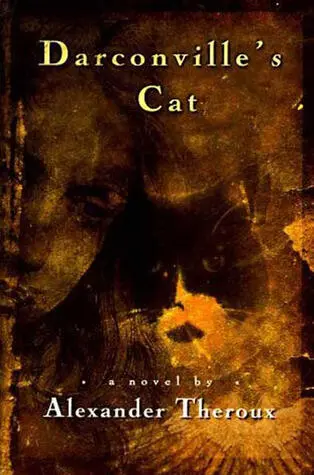
- Название:Darconville’s Cat
- Автор:
- Издательство:Holt Paperbacks
- Жанр:
- Год:1996
- ISBN:нет данных
- Рейтинг книги:3 / 5. Голосов: 2
-
Избранное:Добавить в избранное
- Отзывы:
-
Ваша оценка:
Darconville’s Cat: краткое содержание, описание и аннотация
Предлагаем к чтению аннотацию, описание, краткое содержание или предисловие (зависит от того, что написал сам автор книги «Darconville’s Cat»). Если вы не нашли необходимую информацию о книге — напишите в комментариях, мы постараемся отыскать её.
Darconville's Cat Its chapters embody a multiplicity of narrative forms, including a diary, a formal oration, an abecedarium, a sermon, a litany, a blank-verse play, poems, essays, parodies, and fables. It is an explosion of vocabulary, rich with comic invention and dark with infernal imagination.
Alexander Theroux restores words to life, invents others, liberates a language too long polluted by mutters and mumbles, anti-logic, and the inexact lunacies of the modern world where the possibility of communication itself is in question. An elegantly executed jailbreak from the ordinary,
is excessive; funny; uncompromising; a powerful epic, coming out of a tradition, yet contemporary, of both the sacred and the profane.
Darconville’s Cat — читать онлайн бесплатно полную книгу (весь текст) целиком
Ниже представлен текст книги, разбитый по страницам. Система сохранения места последней прочитанной страницы, позволяет с удобством читать онлайн бесплатно книгу «Darconville’s Cat», без необходимости каждый раз заново искать на чём Вы остановились. Поставьте закладку, и сможете в любой момент перейти на страницу, на которой закончили чтение.
Интервал:
Закладка:
The organ swelled up in a chord and burst into that old staple, “Just as I Am.” And toward the front of the church came the inevitable parade of hobblers and tame villatic fowl: weeping girls; the semi-cancroid; Malchians with severed ears; cured demoniacs; the now thankfully upright hemorrhoidal; the luckless, with bad draughts of fishes; the entrussed, the encrutched, and the enfeebled, all tapping, jerking, and lurching altarwards in the owl-light like the Beggars Come to Town.
Beaming, Dr. Cloogy stroked his huge nose. He greeted each soul with a congratulatory handquake and then aimed them quickly on a beeline into a backroom behind an ellipse there where each was given a fistful of leaflets and brochures — not unlike those, in fact, commonly distributed year round by Harriet Bowdler and Loretta Boyco — illustrated with pictures (lions nuzzling up to lambs, idealized couples-in-profile staring into a nebula, etc.) and chronicled by various physeters-of-lies who warned against the wicked system of things and generally proscribed: two-tone shoes, beards, polysyllabic words, ecologists, ritual, enemies of the N.R.A., educated blacks, corn liquor, long hair, the word whom , wayside shrines, uneducated blacks, actors, Harvard University, stickpins, Bolsheviks, and pomeranians.
The recessional at the Wyanoid Baptist Church went off without a hitch: Cloogy asked all ladies in the congregation who wished to engage in family-planning to please see him in his study, a last hysterical hymn was sung so loud it rocked the floor, and bonking out of their pews the little folks put on their sparrowbill caps and departed. Pastor Cloogy decamped to someone’s house for dinner. The doors were then locked tight.
And God? Abiit, excessit, evasit, erupit .
Darconville felt that Isabel — of no denomination herself and knowing nothing of religion — could never take it seriously again and so accepted the fact that, although he’d long fondly wished for her baptism, any commitment that way after this inefficacious Sunday must only be the first symptom of a great betrayal to which for her personal integrity she’d never consent to be party. That day would pass away, thought Darconville, with Isabel lost to the grace she deserved if only for showing that steadfastness so much less pronounced thousands of years ago when Mother Eve she span.
At the same time, the lapse of principle touching on his own failure to defend the black girls earlier caused him deep remorse. He tried to tell her what he felt, but before he could strangely she put a finger to his lips as if, expressing an impulse which exists only by opposition to the fear that ostensibly oppresses it, humbly to stifle the praise she wouldn’t, couldn’t, deserve.
“I will always love you,” said Darconville, taking her by the finger. She simply smiled.
“Me too.”
And they went to Darconville’s rooms and made love.
XLVII A Fallacy of the Consequent
Can reason untwine the line that nature twists?
— St. ALEXIS, the Vagabond of GodDARCONVILLE’S CAT peered from one to another in the darkened room, to Isabel asleep for her rhythmical breathing, to Darconville awake for his eyes moving down the rungs of a syllogism. It was the end of the year, a time for reckoning, and in consequence of his perhaps marvelous but certainly tenuous affair with a student it had been judiciously pointed out to him — by certain colleagues, to intercept fate — that no Quinsy girl was able to love. Interesting, thought Darconville, for because of her poor academic showing Isabel by rights was no longer a Quinsy girl. And yet, having just made love, wasn’t she then a lover? And so what, he wondered, from that given value were the values of other propositions immediately inferred by opposition and education?
1. No Quinsy girl is a lover. (GIVEN)
2. Some lover is a Quinsy girl. (False)
3. Some Quinsy girl is a lover. (False)
4. Some lover is not a non-Quinsy girl. (False)
5. Some Quinsy girl is not a non-lover. (Fabe)
6. No lover is a Quinsy girl. (True)
7. Every Quinsy girl is a non-lover. (True)
8. Every lover is a Quinsy girl. (False)
9. No lover is a non-Quinsy girl. (False)
10. No non-Quinsy girl is a lover. (False)
11. Every non-Quinsy girl is a non-lover. (False)
12. Every Quinsy girl is a lover. (False)
13. Some lover is not a Quinsy girl. (True)
14. Some lover is a non-Quinsy girl. (True)
15. Some non-Quinsy girl is a lover. (True)
16. Some non-lover is a Quinsy girl. (True)
17. Some Quinsy girl is not a lover. (True)
18. Some non-lover is a non-Quinsy girl. (?)
19. Some Quinsy girl is a non-lover. (True)
20. Every lover is a non-Quinsy girl. (True) No !
A paw stopped Darconville, almost sitting up in panic; he’d tripped, unbalancing himself, over proposition %18 and fell with a wild clutch at the question mark: the value was impossible to determine. It was the one proposition — her very age, at that — not available to formal inquiry. Words that cannot exceed where they cannot express enough cannot succeed when they try to learn too much. Yet mightn’t that matter unillumined by, or contrary to, be above reason? He looked at Isabel. She sometimes smiled in her sleep like a cat whose upcurvital mouth showed perpetual joy. A non-lover? Verbatim ac literatum . Ridiculous, thought Darconville, for when with logic, he asked himself again, had love to do? If green is unripe, why then blackberries are red when they’re green. And in that very same darkness that muddled his poor thoughts hadn’t been consummated that sweet warfare having victors only? True enough, one needn’t necessarily be in love in order to—
Darconville frowned.
No value could be inferred. Better count the pulses of Methuselah. Thank you, logic.
XLVIII Charlottesville
Now are they come nigh to the
Bowre of blis,
Of her fond favorites
So nam’d amis.
— EDMUND SPENSER, The Faerie QueeneTHE FIRST DAYS of June, fickle, were cooled and freshened by a touch of rain and then lapsed back again to a.languorous warmth, the shivelights of bright sun teasing out of every throughway and thicket the pale first fruits; mead blew, feed grew, sounded the cuckoo, and summer, a-coming, came in.
The school year ended, forcing neither Darconville nor Isabel to any decision of consequence concerning the future. With his help she vacated her room at Quinsy and without any fanfare — save for the last-minute appearance of doting Miss Ballhatchet who, puffing across the lawn for a farewell, presented her with a gift ( The Poems of Sappho ) — they drove away, Isabel silent, her collar up, and Darconville feeling quite sad and empty.
Isabel took a job as a telephone operator in Charlottesville. And Darconville stayed on in Quinsyburg. He lived alone as usual, making occasional visits to Miss Trappe’s house, and after some consideration took up writing his book again, not with the vigor he’d once known, rather with the comportment of the crane of legend who, to keep awake, gripped a stone in its footclaw. He felt vigor: it was not that he didn’t: but his vigor was divided, a bilocation of spirit he felt necessary to support the half he loved more, and she was now sixty miles away.
Although the writer is a man who, paradoxically, must have nothing to do to do what nothing intimates he must do, Darconville felt he stole for art—” You always never stop writing !”—what life owned, hesitating too often before the thought of now trying to repay some fraction of his debt to her by offering her a book that was meant to be and then feeling she had nothing whatsoever to do with it at all. It was not so much a question of where commitment should lie in facing the divided self as to who should be the judge. It was with sadness, when he wrote, that he saw each page come up violent, with every loop a gallownoose, every period a bullethole, every break between sentences a crawlspace into which guilt crept home to hide; the words themselves sank down into the inkcrimped paper and perversely seemed to have an existence only on the other side of the page: a bebeloglyphics of revolt and refusal, backwards in dead black.
Читать дальшеИнтервал:
Закладка:
Похожие книги на «Darconville’s Cat»
Представляем Вашему вниманию похожие книги на «Darconville’s Cat» списком для выбора. Мы отобрали схожую по названию и смыслу литературу в надежде предоставить читателям больше вариантов отыскать новые, интересные, ещё непрочитанные произведения.





Обсуждение, отзывы о книге «Darconville’s Cat» и просто собственные мнения читателей. Оставьте ваши комментарии, напишите, что Вы думаете о произведении, его смысле или главных героях. Укажите что конкретно понравилось, а что нет, и почему Вы так считаете.