Kingsley Amis - Dear Illusion - Selected Stories
Здесь есть возможность читать онлайн «Kingsley Amis - Dear Illusion - Selected Stories» весь текст электронной книги совершенно бесплатно (целиком полную версию без сокращений). В некоторых случаях можно слушать аудио, скачать через торрент в формате fb2 и присутствует краткое содержание. Год выпуска: 2015, Издательство: New York Review of Books, Жанр: Современная проза, на английском языке. Описание произведения, (предисловие) а так же отзывы посетителей доступны на портале библиотеки ЛибКат.
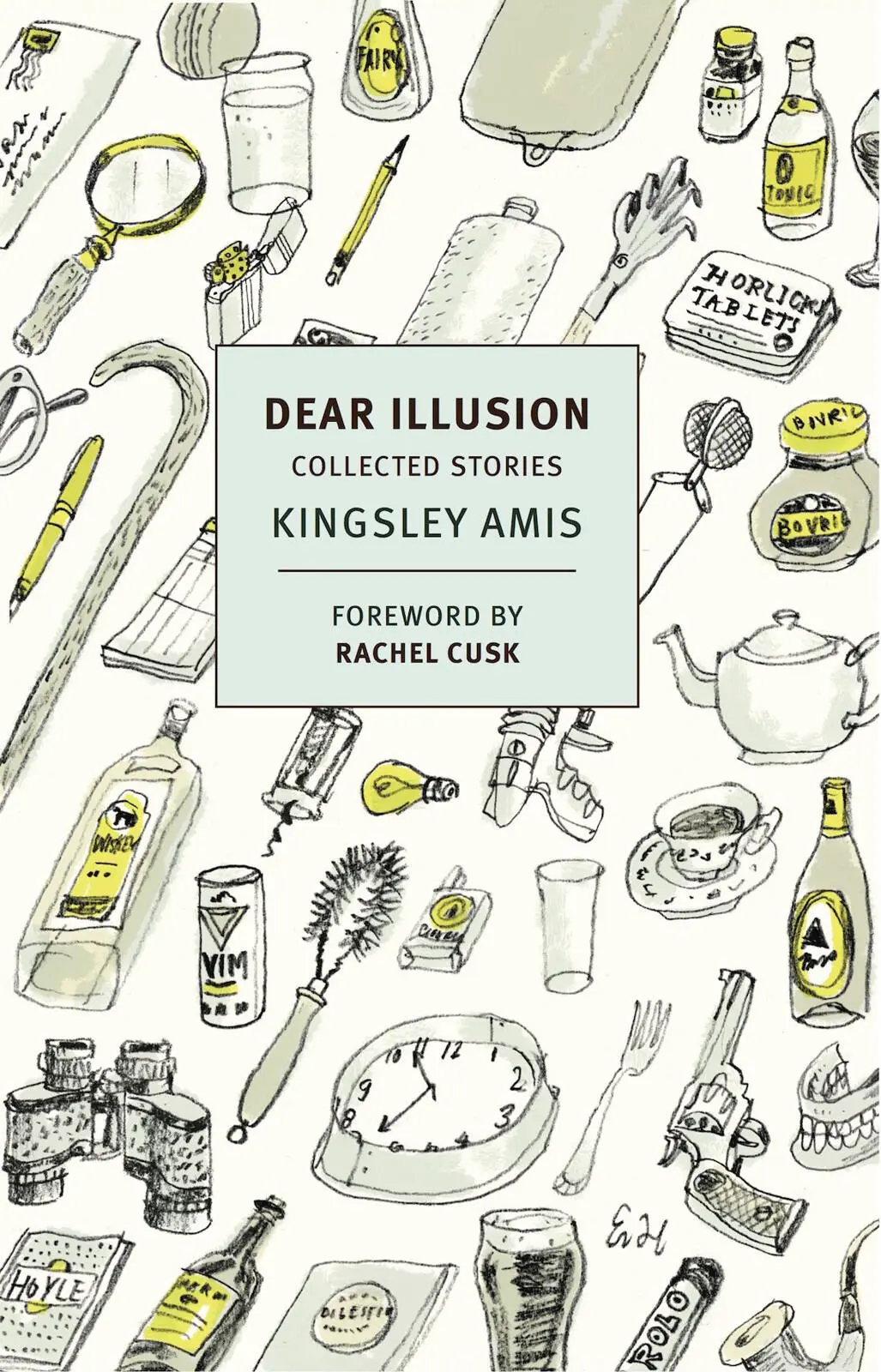
- Название:Dear Illusion: Selected Stories
- Автор:
- Издательство:New York Review of Books
- Жанр:
- Год:2015
- ISBN:нет данных
- Рейтинг книги:4 / 5. Голосов: 1
-
Избранное:Добавить в избранное
- Отзывы:
-
Ваша оценка:
Dear Illusion: Selected Stories: краткое содержание, описание и аннотация
Предлагаем к чтению аннотацию, описание, краткое содержание или предисловие (зависит от того, что написал сам автор книги «Dear Illusion: Selected Stories»). Если вы не нашли необходимую информацию о книге — напишите в комментариях, мы постараемся отыскать её.
Dear Illusion: Selected Stories — читать онлайн бесплатно полную книгу (весь текст) целиком
Ниже представлен текст книги, разбитый по страницам. Система сохранения места последней прочитанной страницы, позволяет с удобством читать онлайн бесплатно книгу «Dear Illusion: Selected Stories», без необходимости каждый раз заново искать на чём Вы остановились. Поставьте закладку, и сможете в любой момент перейти на страницу, на которой закончили чтение.
Интервал:
Закладка:
Edward had his usual room at the eastern end of the house, usual at least since Louise’s death. For some months after that death, he had thought he would never have been able to come down here again, but when once he decided to try, it had not proved so difficult. These days, in fact, the place was only fitfully one where he had known some happy moments with her; he valued it more for itself, for its spaciousness, though it was not very grand or very old, and its silence. He liked this part of East Anglia too, never sunny for long, but at some time every day full of light from its enormous sky, which Constable had never forgotten.
Of course this was Lucy’s place too. Now that she was momentarily out of his sight, he found it easier to think of her as an entire person, easier too to consider with some objectivity her resemblances to her aunt, seen in her colouring and the look of her face with its round eyes and arched brows, and felt rather than seen in the way she held herself, upright but with head a little bowed. He now doubted the truth of his earlier impression that the glance of those brown eyes had grown more direct recently. But was he accurate in supposing that he saw her first of all as a version of Louise?
He was tying his tie at the dressing table when out of the tail of his eye he caught a distant movement through the east window. He soon saw a car descending a low hill in the nearer distance. For a few seconds it vanished before reappearing and entering the short driveway, an expensive-looking car sprayed a very dark blue picked out with crimson. After it drew up, just beyond rather than below where Edward was standing, nothing happened for a short time. Then a youngish man in a dark suit and a chauffeur’s cap got out of the driving seat and another about Edward’s age out of the passenger’s seat. What could be seen of the latter showed him to be an average sort of man in a dinner jacket, not tall, not short, with a mop of brown hair that seemed to have kept most of its colour, but there was something about the presumable Colonel Procope that made Edward draw cautiously back from his window.
There was no trace of that something to be seen when in due course the two men met. Indeed, the colonel made a favourable impression with his generally straightforward manner and the restrained warmth with which he greeted the three Mastermans. When he came to Edward, he managed to convey satisfaction at meeting one he had heard good reports of. He was quite unmilitary in his appearance, which by including a remnant of stubble by one ear and a loosely tied tie rather suggested some colleague of Edward’s, or the popular idea of one. It might perhaps have been said that he talked a little too quietly for perfect manners.
The first patch of conversation that Edward remembered afterwards came during dinner, and was preceded by a brief warning look, or glare, at him from Lucy.
‘Oh, colonel,’ she said, ‘I am right in thinking, am I not, that you got a medal for something brave you did in the war?’
Before answering, Procope moved his eyes to her and only then turned his head, a slightly disconcerting trick Edward had noticed in him before. ‘A medal?’ he echoed with humorous pomposity. ‘Come, every Tom, Dick and Harry gets a medal. What they gave me was a decoration, what? The old MC, you know. In fact, Lucy girl, you know perfectly well.’
‘I wanted to be sure because one of my college mates I happened to be telling about you said she was pretty sure she remembered her father saying he’d known somebody with your name or something like it in the war in North Africa somewhere.’
‘When you’ve got your breath back, tell me what unit he was in.’ The colonel made a vaguely conspiratorial face at Lucy’s mother, Kate Masterman, who beamed back at him. The two were certainly on good terms, Edward thought, but in no more than a companionable way, without any trace on Kate’s side of the old softie of her daughter’s description.
Lucy seemed to search her memory. ‘Could he have been a Desert Rat?’
‘Certainly he could. I had very little to do with them. They were strictly the Seventh Armoured; I was with the Tenth. Most of the time.’
‘Of course, Edward was in the desert too, weren’t you, uncle?’
‘Only for a couple of weeks,’ said Edward discouragingly. He had seen his share of action, but had got no nearer ‘the desert’ than Anzio in Italy.
If Lucy had hoped to drive Procope into some sort of corner, to force him into undue reticence or talkativeness, she was disappointed. In five minutes or so he had shown that he had either experienced fighting in North Africa at first hand or been thoroughly briefed by somebody who had. Whichever it was, Edward could see nothing at all in him of any kind of man that might have tried to fake a couple of Gray’s Elegy quatrains. On the other hand, it had to be conceded that he did look a bit like one given to changing his name about, as Lucy had put it. Edward felt this strongly enough to see something false in the chummy au revoir the fellow sent Kate when the two women left the table.
So, what with one thing and another, Edward was more than adequately surprised to hear Procope say, almost as soon as the door was shut, ‘I gather you’re a great authority on Thomas Gray, Dr Saxton. The chap who wrote the Elegy .’
‘I suppose one might put it like that. Nice of you to anyhow, colonel.’
Procope made one of his faces. ‘Well, it’s true. Now you obviously think Gray’s pretty good as a poet, otherwise you wouldn’t have bothered to turn yourself into an authority on him.’
‘Yes, at least pretty good.’
‘Sorry. Of course, I know I’m a complete what-you-may-call-it, a layman, an amateur, but I’ve always been fond of the old hoary-headed swain and the rest of it. Time was when I could have repeated whole chunks that I’d got by heart. Don’t you worry, Toby, I’m not about to start polluting your dining room with a poetry recital.’
Toby Masterman made some inoffensive remark. To Edward’s eyes he looked indisputably more like a military man than his guest, but like nothing positive that could be thought of, stout, almost florid, unlike his dead sister with a completeness once mildly comic to Edward and now the cause of mild thankfulness. The only surprising thing about him was that he had produced Lucy.
After a laudatory word or two about the port now in circulation, Procope said with renewed vivacity, ‘Things being as they are, I consider myself lucky to have run across an expert like you, Dr Saxton, just when there’s been this thing in the paper about some extra verses of the poem seeming to have turned up from somewhere. You must have seen that, naturally. Tell me, off the record, so to speak, what did you think of them, those verses? I quite see you may prefer not to commit yourself until you know more about the thing.’
Edward tried to remember that the question had come from the apparent author of the verses in question. ‘Well,’ he said cautiously, ‘as regards poetical merit, what I saw struck me as distinctly below par, below the general standard of the Elegy , but then what Gray wrote is so familiar that one can’t be sure. What I’m trying to say is, it’s hard to compare the known with the unknown.’
‘I’m pretty hopeless myself when it comes to anything like that. But I value your opinion, welcome it too, because it throws some light on a question I have to admit interests me more, the authenticity of those eight lines. Taking into account your first reaction to them as poetry, do you think they’re Gray’s work or not? As far as you can tell.’
This seemed to Edward one to fend off. ‘That’s more difficult,’ he said. ‘Not really one for me at all. I don’t know enough about Gray’s lesser contemporaries to be sure.’
Читать дальшеИнтервал:
Закладка:
Похожие книги на «Dear Illusion: Selected Stories»
Представляем Вашему вниманию похожие книги на «Dear Illusion: Selected Stories» списком для выбора. Мы отобрали схожую по названию и смыслу литературу в надежде предоставить читателям больше вариантов отыскать новые, интересные, ещё непрочитанные произведения.



Обсуждение, отзывы о книге «Dear Illusion: Selected Stories» и просто собственные мнения читателей. Оставьте ваши комментарии, напишите, что Вы думаете о произведении, его смысле или главных героях. Укажите что конкретно понравилось, а что нет, и почему Вы так считаете.