Kingsley Amis - Dear Illusion - Selected Stories
Здесь есть возможность читать онлайн «Kingsley Amis - Dear Illusion - Selected Stories» весь текст электронной книги совершенно бесплатно (целиком полную версию без сокращений). В некоторых случаях можно слушать аудио, скачать через торрент в формате fb2 и присутствует краткое содержание. Год выпуска: 2015, Издательство: New York Review of Books, Жанр: Современная проза, на английском языке. Описание произведения, (предисловие) а так же отзывы посетителей доступны на портале библиотеки ЛибКат.
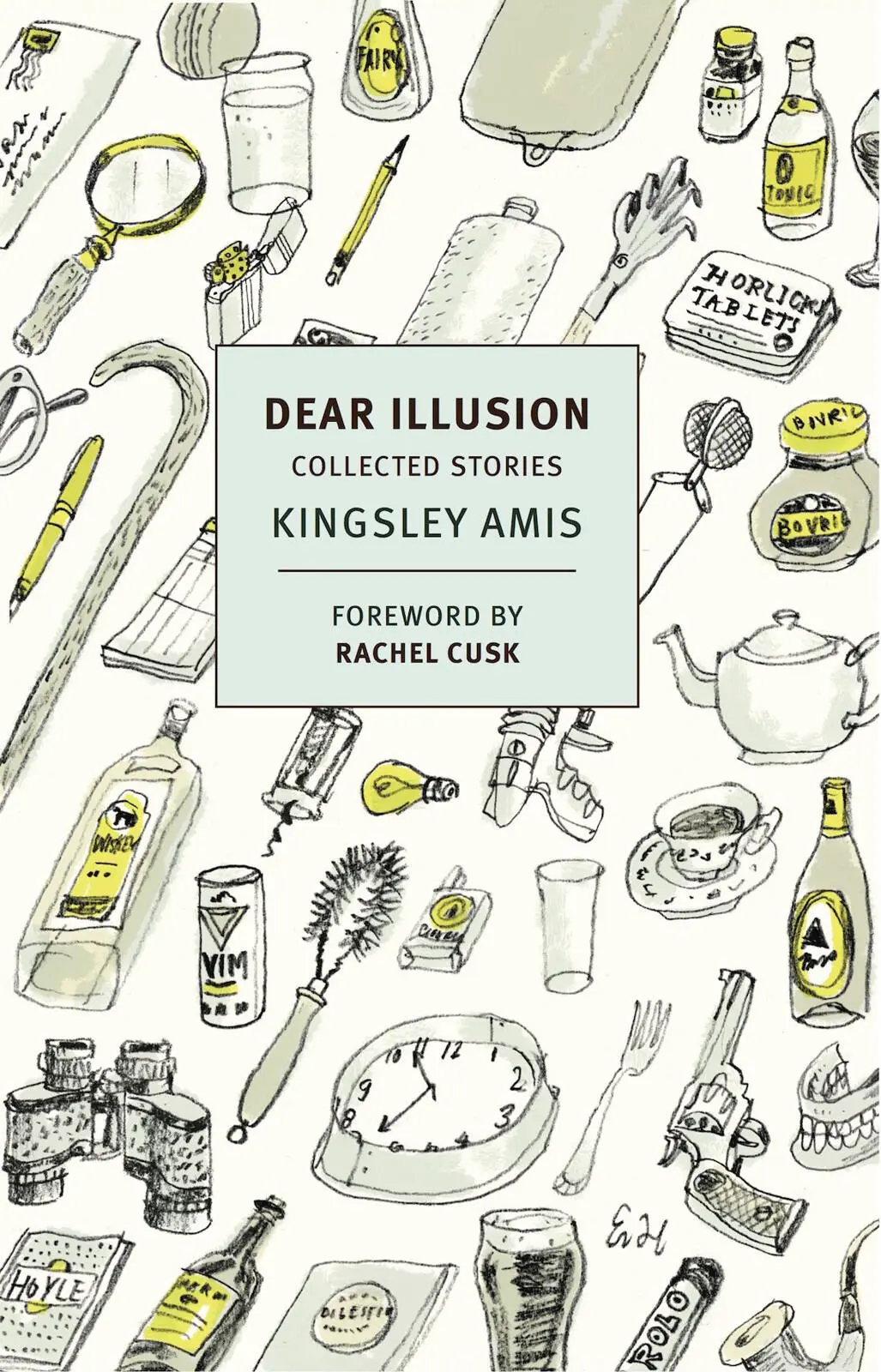
- Название:Dear Illusion: Selected Stories
- Автор:
- Издательство:New York Review of Books
- Жанр:
- Год:2015
- ISBN:нет данных
- Рейтинг книги:4 / 5. Голосов: 1
-
Избранное:Добавить в избранное
- Отзывы:
-
Ваша оценка:
Dear Illusion: Selected Stories: краткое содержание, описание и аннотация
Предлагаем к чтению аннотацию, описание, краткое содержание или предисловие (зависит от того, что написал сам автор книги «Dear Illusion: Selected Stories»). Если вы не нашли необходимую информацию о книге — напишите в комментариях, мы постараемся отыскать её.
Dear Illusion: Selected Stories — читать онлайн бесплатно полную книгу (весь текст) целиком
Ниже представлен текст книги, разбитый по страницам. Система сохранения места последней прочитанной страницы, позволяет с удобством читать онлайн бесплатно книгу «Dear Illusion: Selected Stories», без необходимости каждый раз заново искать на чём Вы остановились. Поставьте закладку, и сможете в любой момент перейти на страницу, на которой закончили чтение.
Интервал:
Закладка:
IV — Countess Valvazor’s Journal
Later — It was not Death that came; I am tempted to call it Life. The change was complete and immediate, as soon as I set eyes on him. When — with what reluctance — I sent him away to make ready for the evening, I went instantly to the bookcase and took down the volume of Cantacuzinu I used to treasure so, and the pages fell open at ‘Mary in Spring’, and the tears sprang to my eyes just as they did in the past. Not content with that I hurried upstairs to the gallery and — I had almost forgotten where it was, but the moment I caught sight of the big Puvis de Chavannes, ‘St Martin of Vertou in his Hermitage’, I knew the veil had lifted; the work, by common consent our best picture, was restored in my eyes to all its old power and beauty. If I had needed proof, here it was.
My first impressions of him. Around forty, maybe a year or two older, rather tall, very dark — but I know that, anyone can see that. What else, what more? Honourable, brave, chivalrous, sentimental, a little shy at the best of times, a little cautious, a little fussy, enormously English. I find I forgot to say that, while far from being the best-looking man I ever saw, he is beyond question the loveliest one — no, the only lovely one. Every time he looks me in the eye, and he has a very straight look, I am afraid I will swoon.
A little shy at the best of times — and very shy at the worst of times, like on first meeting the love of his life; he knows that and the rest of it as well as I do. Shy, cautious, even conventional. I must make it easy for him. Certainly easier than I have made it so far, jolted with such violence by my feelings that I behaved as awkwardly as he, cannot remember anything I said for the first few minutes. I must have inquired his business, overridden any protests he might have made against the notion of becoming my guest — I do remember the feebleness of his attempt to seem anything but delighted — and no doubt discussed some of the Valvazor history. During our conversation I discovered something more about him: he is an interesting man. This quality is not necessary in somebody one loves — from what depth of experience do I write that? — but it is very agreeable. I was naturally full of curiosity about his remarks on vampires and what led him to study the subject. By this time I reckon I had ceased to blush and stammer and fall over my own feet like an infatuated schoolgirl.
‘The whole thing fascinates me,’ he said. ‘The idea of a creature once human, now no longer so, and yet in theory and on a low plane immortal, somehow protected from the destructive effects of time, existing at all only at night, its only desire to feed on human blood, driven by nothing else but fear, fear of the sun, fear of the crucifix and of the stake through the heart — it isn’t believable in these modern times and it isn’t in the least beautiful, but I feel its power, a sort of sullen, outlandish, desolate poetry. If I didn’t, I should never have travelled thousands of miles in pursuit of it.’
‘I understand,’ I replied. ‘It’s so much part of the local tradition, or rather it was, that I can’t think of it in any kind of elevated way without an effort. It’s just there. Now, may I offer you a drink, Mr Hillier?’
‘You may and welcome, countess,’ he said with a smile and, when I handed him a martini cocktail of my own making, sipped it attentively and pronounced it excellent.
‘You were saying a moment ago,’ I observed after making sure he was right about my mixing, ‘that your version of the vampire legend wasn’t believable today. It’s certainly hard to believe, but what’s your alternative explanation? Take the story of Red Mathias, for instance. What really happened in that vault? I mean, these weren’t superstitious peasants too terrified to see straight, nor mountebanks telling tall stories in the hope of picking up a few centimes — they were highly educated, responsible men. Are you going to tell me they were lying? What would be the point?’
He shook his head decisively. ‘They weren’t lying.’
‘Then,’ I pursued, ‘Red Mathias was a vampire and the bishop destroyed him.’
‘Not that either,’ he said to my bewilderment, but went on, ‘I can give you the answer in one word. Ergot.’
‘Ergot,’ I repeated. ‘A fungus that grows on…’
‘Rye. Yes. And the contaminated rye gets made into bread, and people eat the bread, and they go mad, for a time, until all the bad bread has been eaten. While they’re mad they see things, they suffer vivid and detailed hallucinations. They have convulsions and die a good deal too. There was a famous case in Prussia in the time of Frederick the Great, when a whole village fancied its dead had risen from their graves.’
‘I heard of something like that in one of the mountain villages.’
This surprised him. ‘Not recently?’
‘No, it was before I was born.’
‘Now these hallucinations are very easily communicated,’ he told me in the most charming professorial way imaginable. ‘If one man says he sees something, his friends will say they see it too. So if the original hallucination is of a creature returning to its coffin just before daybreak…’
‘Yes, but why should it be that rather than anything else?’ I objected.
‘An old folk-belief based on some long-forgotten incident such as the robbing or desecration of a grave. If this were Scandinavia people would “see” trolls and ogres.’
‘It’s possible.’
‘As time went by more care was taken to prevent ergot from getting into the bread. The vampire has died out in the last thirty or forty years because of improved baking methods.’ The smile he sent me then made me catch my breath. ‘I see you’re not convinced.’
‘There must be something more,’ I managed to say; ‘something strange and unearthly. You’re too reasonable, Mr Hillier.’
‘I can assure you, countess,’ he said, laughing, ‘I’m not too reasonable to find the mystery still absorbing when I think I know the explanation. But I’ve digressed. The family history. What about Baron Aleku Valvazor?’
‘My great-uncle. We have something.’
‘I hope it’s good. The accepted story is a sad let-down. All those promising tales about the young girls who died with the name of Aleku on their lips, and then he goes and dies himself, of typhus, and that’s that.’
‘I don’t think he’ll disappoint you altogether.’
‘We shall see. That’s a fine portrait of him in the hall.’
‘I noticed you were examining it. You’ll see more of him. I mean of course there are other pictures of him in the castle.’
He seemed to find this less than obvious, but remarked mildly, ‘On the evidence so far, a remarkable-looking man.’
And there I have to stop. In a moment my beloved and I are to meet again, and I must strive with all my might to prevent myself from perpetrating some idiocy. But I want to say one more thing. Thank you. It’s all I can say.
V — Stephen Hillier to A. C. Winterbourne, St Matthew’s Hall, Oxford, England
Castle Valvazor,
Nuvakastra,
Dacia
1 September 1925
… This brings me almost to dinner-time yesterday. You’ll have to forgive me, Charles, for telling my story in the strictest, most unadorned chronological order, without forward references to what I later did or discovered; I feel it’s only in that way that I stand the remotest chance of making sense of it.
After a couple of wrong turnings (the place really is huge) I found my way to the parlour pretty exactly at the appointed hour. A short, wiry man of about sixty, who I saw at once wasn’t a Dacian, rose politely to greet me. His name is Robert Macneil and he acts as a kind of steward, supervising the affairs of the castle and its estates and also acting as librarian — it was to fill this post that he had come to Valvazor in the first place. So much I had been told already; what I saw or thought I saw for myself was that, under a veneer of reserved amiability and a kind of donnishness more suggestive of the stage than any seat of learning I know, here was a very tough, determined fellow indeed.
Читать дальшеИнтервал:
Закладка:
Похожие книги на «Dear Illusion: Selected Stories»
Представляем Вашему вниманию похожие книги на «Dear Illusion: Selected Stories» списком для выбора. Мы отобрали схожую по названию и смыслу литературу в надежде предоставить читателям больше вариантов отыскать новые, интересные, ещё непрочитанные произведения.









Обсуждение, отзывы о книге «Dear Illusion: Selected Stories» и просто собственные мнения читателей. Оставьте ваши комментарии, напишите, что Вы думаете о произведении, его смысле или главных героях. Укажите что конкретно понравилось, а что нет, и почему Вы так считаете.