Kingsley Amis - Dear Illusion - Selected Stories
Здесь есть возможность читать онлайн «Kingsley Amis - Dear Illusion - Selected Stories» весь текст электронной книги совершенно бесплатно (целиком полную версию без сокращений). В некоторых случаях можно слушать аудио, скачать через торрент в формате fb2 и присутствует краткое содержание. Год выпуска: 2015, Издательство: New York Review of Books, Жанр: Современная проза, на английском языке. Описание произведения, (предисловие) а так же отзывы посетителей доступны на портале библиотеки ЛибКат.
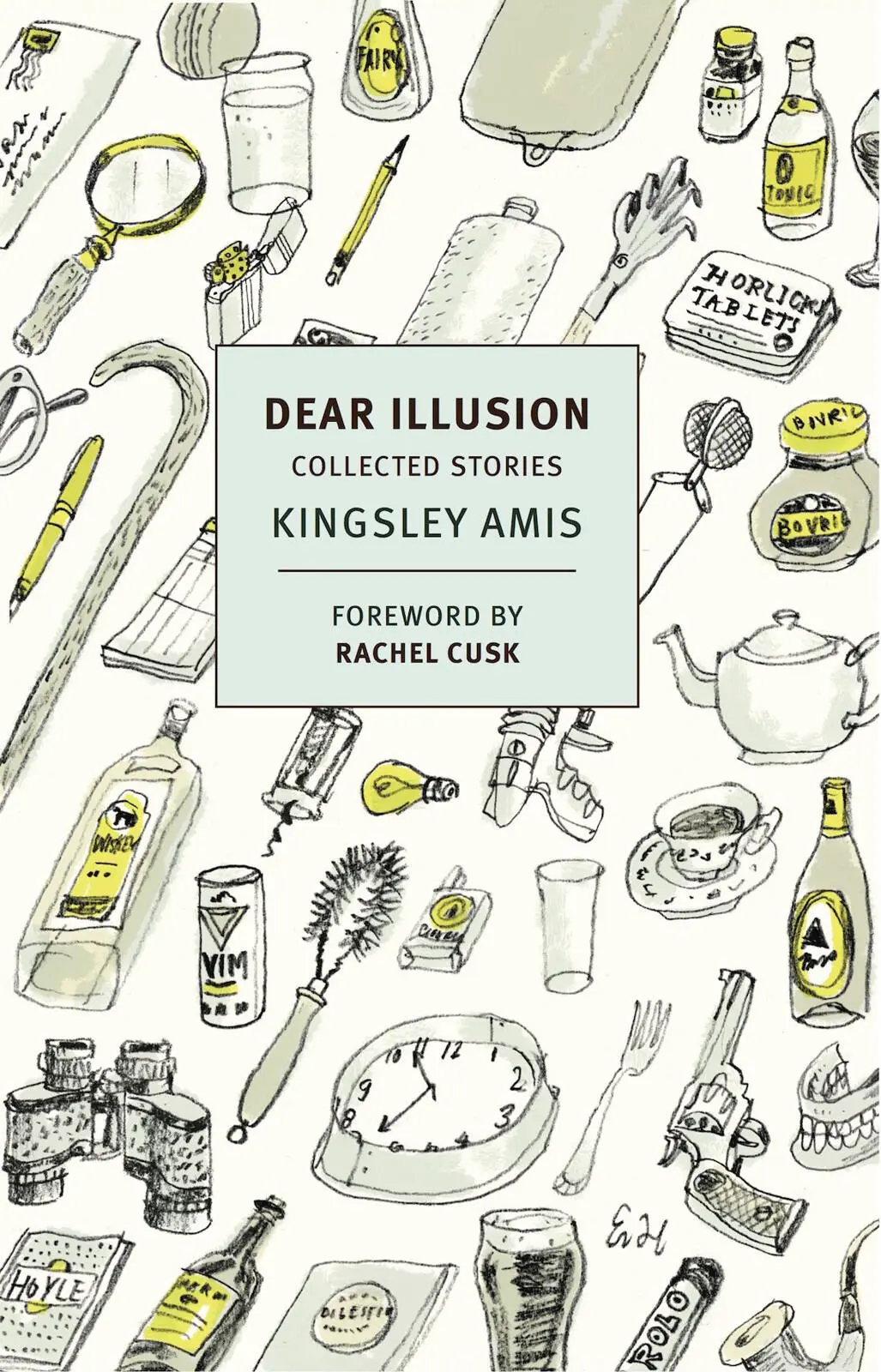
- Название:Dear Illusion: Selected Stories
- Автор:
- Издательство:New York Review of Books
- Жанр:
- Год:2015
- ISBN:нет данных
- Рейтинг книги:4 / 5. Голосов: 1
-
Избранное:Добавить в избранное
- Отзывы:
-
Ваша оценка:
Dear Illusion: Selected Stories: краткое содержание, описание и аннотация
Предлагаем к чтению аннотацию, описание, краткое содержание или предисловие (зависит от того, что написал сам автор книги «Dear Illusion: Selected Stories»). Если вы не нашли необходимую информацию о книге — напишите в комментариях, мы постараемся отыскать её.
Dear Illusion: Selected Stories — читать онлайн бесплатно полную книгу (весь текст) целиком
Ниже представлен текст книги, разбитый по страницам. Система сохранения места последней прочитанной страницы, позволяет с удобством читать онлайн бесплатно книгу «Dear Illusion: Selected Stories», без необходимости каждый раз заново искать на чём Вы остановились. Поставьте закладку, и сможете в любой момент перейти на страницу, на которой закончили чтение.
Интервал:
Закладка:
My call has been heeded — no, impossible, for the unknown has been moving towards me since the middle of the month at latest. But all the same, now, without question, something, somebody, one or the other, is at hand. And this is no fancy — as I write these words there are sounds of movement under my window. What visitor is here?
Is it Death?
III — Stephen Hillier to Constance Hillier
Castle Valvazor,
Nuvakastra,
Dacia
Later, 31 August
Darling Connie,
A new address calls for a new salutation. Well, your brainy husband has brought off the most stunning coup , as you can see. Here’s how it came about.
Fifteen minutes’ walk from the inn brought me to the front door of the castle, which I must explain isn’t a castle as we at home think of it but a large and splendid house, in this case in a sort of Byzantine style, all domes and pillars. (Early seventeenth century, I heard later.) I’d been intending just to have a look round and sample the atmosphere, and certainly the place looked sinister enough in all conscience, with the moon not yet risen and an owl hooting in a fashion that sounded more than just dismal. There was a lighted window on an upper floor that somehow caught my attention, and though I’d had no intention of paying a call until the next day I suddenly found myself at the great front door operating an enormous wrought-iron knocker. Two minutes later I was talking to Countess Valvazor — in Dacian!
To have got inside without an appointment was a sufficient surprise; these old families aren’t usually so accessible. Then the countess herself — all I’d been able to gather from the embassy in London was that the castle was occupied by someone of that style and name, someone older, I’d rather thought, than the youngish, expensively dressed woman in front of me. Quite striking, I suppose, if you like that aquiline type. But the real shock came when she led me out of the hall, which was about the size of a church and full of tapestries and suits of armour and goodness knows what, and into a (comparatively) small parlour opening off it. There are old pictures and old chairs and so on in here too, but also a cigarette-box, a typewriter, a gramophone and records (including some of Paul Whiteman, it turned out) and among other magazines (you won’t believe this) a copy of the Tatler ! I’d just about taken all this in when the countess spoke to me again. She said she agreed it made a slightly bizarre sight, but she said it in English ! Perfect English, too, or rather perfect American. It shouldn’t have been as surprising as all that, after the Tatler , but it was, just the same.
Well, she went on to explain that she’d been educated in America, and she was very nice about my Dacian, and she said I’d said I was a scholar, and I said the Dacian word skolari was the nearest I knew, but really I was just an amateur, a dabbler in popular mythology, and I told her a bit about the book, and in no time… Look, my old Constance, I may as well do things in style and set this out like a proper story, so far as I can. It’ll save time in the end, because I want to keep a detailed record and this way I won’t have to make a separate set of notes. And I think even you will find parts of it mildly interesting, or at least odd. Here goes.
The countess asked, in effect, ‘What brings you to Castle Valvazor?’ I sort of jumped in with both feet and mentioned vampires, and she said, ‘Oh, so you know about us! I suppose we must be quite famous, even in England!’
What a relief — I should have told you that she spoke in a completely friendly, natural way. I said, ‘Only among the well informed.’
She said, ‘For the moment, perhaps. Of course I’ll be glad to tell you everything I know, and let you see the family documents.’
I thanked her, and offered my cigarette-case, and she took one, saying she adored State Express. Then she asked me where my luggage was. (Actually she called it ‘baggage’ in the American style.)
I said it was in the — sorry. I said, ‘In my room at the Albergu Santu Ioanni.’
Without a second’s thought she rang a hand-bell and said, ‘We always keep a guest-room ready.’
Can you imagine how I felt! I tried to protest; I said, ‘You mustn’t let me impose myself on you.’
‘I’m doing the imposing,’ she said. ‘We get so few visitors here, and most of them are boring relatives. I’m being practical, too; it’ll take you at least a whole day to get through the archives.’
I murmured my thanks (I was really quite overwhelmed), and then the maidservant or housekeeper who had answered the front door came into the room. Name of Magda, it seems; about fifty; typical Dacian peasant stock; obviously devoted to the countess. Arrangements to fetch my things were quickly made. I gave special instructions about the letter to you I had left in my room (I have it in front of me now), and handed over a ten-florin note to compensate the landlord of the albergu for his trouble. (I had already paid for a full day’s board.) And that was that. So here I am, installed as a guest in the house of the most celebrated family of vampires in the whole of Dacia!
When Magda had gone, I said to the countess something like, ‘I have to admit I know virtually nothing about you, just that you’re the only child of the late Count and that you’re the mistress of this castle and its estates. Do you live here alone?’
‘Not quite,’ she said. ‘But I am the last of the Valvazors, this branch anyhow. I don’t imagine I’ll be around here very much longer.’
I asked her why not.
She said, ‘The kind of life my family used to live in this house is becoming a thing of the past. The Great War has changed everything. Very soon I shan’t be able to survive. In fact I spend most of my time putting the place in order so I can sell up and get out.’
‘I’m sorry to hear it.’
‘Don’t be,’ she said. ‘There was a lot wrong with our old ways.’ I didn’t know quite how to take that, but she went on straight away to ask, ‘How are you on the family history?’
‘Well,’ I said, ‘I begin of course with Benedek Valvazor, who terrorized the whole province two hundred years ago.’
‘Of course nothing,’ drawled the countess with a smile. ‘ We begin with Tristan the Wolf in the late seventeenth century.’ Seeing my look of surprise, she went on, ‘Surely you must know of him?’
‘Oh yes, but only as a warrior against the Turks.’
‘He was that too, but he was, or should I say his corpse, was beheaded and burnt and the ashes thrown into the air over running water in 1696.’
‘But he died in 1673,’ I protested, sure of my facts.
‘Right. The story never really leaked out because the king was hard on superstition, and a thing like that would have made him really mad.’
I nodded thoughtfully. Gregory IV had been on the throne at the material time, and his opposition to all forms of pagan belief and practice (and of course anything even remotely to do with vampirism comes under that heading) is a byword among historians of eastern Europe.
The countess said, ‘There’s a whole raft of stuff about Tristan in the files.’
‘Excellent,’ I said, still thinking.
‘Benedek too. But the star of the show is Red Mathias.’
‘Ah. The only vampire known to have been dispatched by a bishop.’
‘We have an eye-witness account by the bishop’s chaplain.’ She was obviously quoting from memory when she went on, ‘So dreadful was the cry when the stake reached the heart that my lord sank to his knees and begged me to pray for his soul forthwith and in that place.’
The utterly matter-of-fact tone in which she said this only made it the more convincing; I wish you could have heard her, Connie. Anyway, that wasn’t the end of our conversation by a long chalk, but it’s as far as I can take you just now. I’m to present myself for dinner in five minutes, and somehow I know that the Countess Valvazor wouldn’t take kindly to being kept waiting. So I’ll stop for now, but as always I have time to say that my loving thoughts go out to you and a little piece of you is here in my heart.
Читать дальшеИнтервал:
Закладка:
Похожие книги на «Dear Illusion: Selected Stories»
Представляем Вашему вниманию похожие книги на «Dear Illusion: Selected Stories» списком для выбора. Мы отобрали схожую по названию и смыслу литературу в надежде предоставить читателям больше вариантов отыскать новые, интересные, ещё непрочитанные произведения.










Обсуждение, отзывы о книге «Dear Illusion: Selected Stories» и просто собственные мнения читателей. Оставьте ваши комментарии, напишите, что Вы думаете о произведении, его смысле или главных героях. Укажите что конкретно понравилось, а что нет, и почему Вы так считаете.