John Gardner - Nickel Mountain
Здесь есть возможность читать онлайн «John Gardner - Nickel Mountain» весь текст электронной книги совершенно бесплатно (целиком полную версию без сокращений). В некоторых случаях можно слушать аудио, скачать через торрент в формате fb2 и присутствует краткое содержание. Год выпуска: 2010, Издательство: Open Road Media, Жанр: Современная проза, на английском языке. Описание произведения, (предисловие) а так же отзывы посетителей доступны на портале библиотеки ЛибКат.
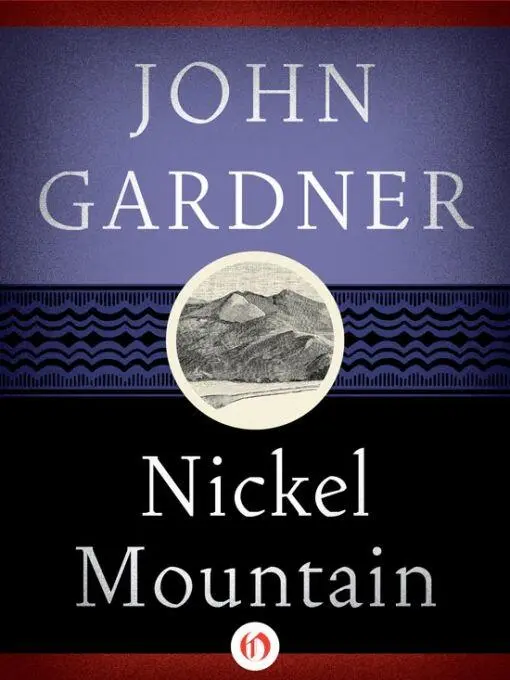
- Название:Nickel Mountain
- Автор:
- Издательство:Open Road Media
- Жанр:
- Год:2010
- ISBN:нет данных
- Рейтинг книги:5 / 5. Голосов: 1
-
Избранное:Добавить в избранное
- Отзывы:
-
Ваша оценка:
Nickel Mountain: краткое содержание, описание и аннотация
Предлагаем к чтению аннотацию, описание, краткое содержание или предисловие (зависит от того, что написал сам автор книги «Nickel Mountain»). Если вы не нашли необходимую информацию о книге — напишите в комментариях, мы постараемся отыскать её.
is an uncommon love story: when at 42, the obese, anxious and gentle Henry Soames marries seventeen-year-old Callie Wells — who is pregnant with the child of a local boy — it is much more than years which define the gulf between them. But the beauty of this novel is the gradual revelation of the bond that develops as this unlikely couple experiences courtship and marriage, the birth of a son, isolation, forgiveness, work, and death in a small Catskill community in the 1950s. The plot turns on tragic events — they might be accidents or they might be acts of will — involving a cast of rural eccentrics that includes a lonely amputee veteran, a religious hysteric (thought by some to be the devil himself) and an itinerant "Goat Lady." Questions of guilt, innocence, and even murder are eclipsed by deeds of compassion, humility, and redemption, and ultimately by Henry Soames' quiet discovery of grace.
Novelist William H. Gass, a friend and colleague of the author, has written an introduction that shines new light on the work and career of the much praised but often misunderstood John Gardner.
Nickel Mountain — читать онлайн бесплатно полную книгу (весь текст) целиком
Ниже представлен текст книги, разбитый по страницам. Система сохранения места последней прочитанной страницы, позволяет с удобством читать онлайн бесплатно книгу «Nickel Mountain», без необходимости каждый раз заново искать на чём Вы остановились. Поставьте закладку, и сможете в любой момент перейти на страницу, на которой закончили чтение.
Интервал:
Закладка:
So that if Henry had no reasons for having taken Simon in, he nevertheless accepted the fact that he’d done it and couldn’t get out of it now, come hell or high water — and they would. George Loomis and Doc Cathey still came in from time to time, but between them and Henry there was a coolness now that none of them could dispel. Ironically — as Henry saw — George Loomis’s anger was partly at what Henry was doing to himself, letting Simon Bale take over his house, pervert his natural feeling for justice to a sick kind of pity, turn his diner into a beggar’s banquet, rob him of all he had ever saved, all he had every right to call his own. And partly, of course, George’s anger was the effect of just and reasonable envy. The two of them had been close once, and it was unforgivable that Simon should have Henry’s ear, should be free to talk nonsense without fear of contradiction or reproach, and George Loomis not. What right had Simon Bale to dawdle in Henry Soames’ garden or dispossess him of his bench? But he was there, apparently settled there more or less permanently; he showed no sign of going down again to the Grant Hotel. Thinking about that gulf yawning wider and wider between himself and George, Henry Soames would clench his fists in anger. He would rather have George to talk to, late at night; there was no question about that. George was brighter, even if he was sometimes irascible and overbearing; and he’d been around longer — though by now Simon Bale seemed to have been here, not only inside Henry’s house but inside his skin, forever. And George was not, like Simon, a bore. They would fight far into the night, in the old days, battling over nothing at all with splendid thrusts and sallies and glorious alarums, never knowing for sure who was winning or who was losing and not caring much, since nobody ever really lost in those airy wars. But it was different now. Though they still talked, they talked as if from opposite ends of an expanding universe: because one of them no longer talked with his own voice or defended what he could honestly consider his own kingdom.
As for Doc Cathey, he came and went like a shadow no longer of any great significance. Sometimes in the past he had been for Henry an older and wiser spirit, someone to lean on, likely to come up with outrageous opinions but nevertheless sure to come up with opinions that, one way or another, would be of use. But he had nothing whatever to say, now. If he approved Henry’s course he gave no sign. He would laugh sometimes, as if at nothing, but he left in his wake nothing solid to catch hold of, only the nameless turbulence of his indefinite, violent moods.
Most of the time Simon Bale would sit there in the sun, watching Jimmy play, telling him stories, or sleeping. At other times they would find Simon crying in his room. Both the sitting and the familiar grief, by now an old friend to Simon, were disgusting to Henry, and he would be tempted to lash out at the man with all the thunder of his indignation. He didn’t, though, and in fact couldn’t, because the fact was that Simon had every right to his grief, and it was his grief that lay both behind his dawdling, day after day, and his mourning alone in his room.
But idleness and crying weren’t enough for him. He went further: He began to appear in the diner with his pamphlets (he was shaving again now; that much could be said; but on the other hand he’d given up taking off his suit when he went to sleep). He would get into conversation with the customers, smiling his idiotic smile or standing there with his mouth hanging open, rolling his eyes, craning his dirty, wrinkled neck.
Callie said, “Henry, do something!”
And so Henry said, “Simon, this is a diner. You go do your preaching somewheres else.”
“The Lord’s work—” Simon said, lifting his eyebrows.
“Not while they eat,” Henry said. “Go someplace else.”
Simon did not like it. He had no natural feeling for ordinary requirements of Nature. But he accepted it. After that Simon would meet them at the door as they were leaving, and he would press his pamphlets on them and writhe along with them as they went to their cars, Simon smiling and hissing about Kingdom Come. Callie compressed her lips and said nothing, and Henry, despairing, pretended not to see. George Loomis said once, coming into the diner, jerking his thumb toward the gas pumps where Simon ministered, “You know what that bastard’s telling them? He’s telling them they’re going to hell. You ought to trade him in on a goat or something.” Henry clenched his jaw and tried to think, then at last went over to the door and pushed it open and stuck his head out. “Simon!” he said.
Simon looked up, his head far forward, like a buzzard’s, his tie hanging outside the front of his suitcoat. At last he came over.
“I don’t mean just the diner,” he said, “I mean noplace in my sight. Leave the customers alone. You hear?”
“God forgive you,” Simon Bale said.
Henry clenched his jaw tighter yet and pulled his head in and let the door slam shut behind him. He started back toward the counter, then on second thought turned and ducked down to peer darkly through the glass. Simon was heading straight back to the people he’d been talking to, but he didn’t disobey — at least not yet. The car started up and swerved out onto the highway and escaped.
“Damn it, Henry,” George Loomis said, “that man’s crazy.”
“Maybe so,” Henry said. “How can I say?”
But he was thinking: Those fifteen people in New York City might be right in the end, but you had to act, and beyond that you had to assert that they were wrong, wrong for all time, whatever the truth might be. And it was the same even if you only thought you saw an old man being stabbed: You ran to the center of the illusion and you jumped the illusory man with the knife, and if it was empty, sunlit sidewalk you hit, too bad, you had to put up with the laughter, and nevertheless do it again the next time and again and again. So Simon. It wasn’t true that the world was about to end or that sinners were going to torment, but all the same he was right to go out with his crackpot pamphlets: Henry Soames would try to persuade him, but he wasn’t going to stop him — except in the diner, because the diner, at least, was still his own.
And yet he felt no quiet. The truth was that there was something Henry was afraid of, something as undefined in his mind as the substance of his child’s nightmares, but real, for all its ghostliness: some possibility that became increasingly troublesome. He thought of the money he still hadn’t said one word about to Callie or to Simon either, though the woman was buried now, with no one at the graveside at all, and he felt sick for a minute, but that fear was different, because Callie’s finding out was inevitable, the only question was whether he could somehow cover the loss, make it back again or anyway make some of it back so the shock to her wouldn’t be so great when it came. What troubled him was something else. He remembered something very strange, though this wasn’t what was the matter either, though somehow it seemed related:
One night almost a year ago he’d been sleeping on the floor in Jimmy’s room (he couldn’t remember why anymore; maybe he’d just fallen asleep there, or maybe they’d had company that night and the beds were in use; it didn’t matter). Jimmy was asleep on the floor beside him. Jimmy had moved, or had said something, and Henry had sat up and opened his eyes without quite waking up. He’d thought there was some kind of animal in the room, and, thinking of Jimmy (vaguely identifying the voice, perhaps), he’d lunged at the animal, and it had run, the legs moving fast — a kind of blur, very much the way a rabbit would run — out into the hallway where the light was on, and Henry had caught it and lifted it up with a shout and then he’d come wide awake and he was holding Jimmy by the waist and Jimmy was screaming. Henry had calmed him almost at once, and Jimmy had seemed never to remember it, but for Henry the memory of that night was like a wound that would never heal. He would wonder, again and again, later, at odd moments when it all rose up in his mind more real than the diner or the dim-lit kitchen around him, what would have happened if he hadn’t awakened just that instant. And he couldn’t answer it. Then something else: He began to wonder if it had ever happened at all. There was no way of finding out.
Читать дальшеИнтервал:
Закладка:
Похожие книги на «Nickel Mountain»
Представляем Вашему вниманию похожие книги на «Nickel Mountain» списком для выбора. Мы отобрали схожую по названию и смыслу литературу в надежде предоставить читателям больше вариантов отыскать новые, интересные, ещё непрочитанные произведения.




Обсуждение, отзывы о книге «Nickel Mountain» и просто собственные мнения читателей. Оставьте ваши комментарии, напишите, что Вы думаете о произведении, его смысле или главных героях. Укажите что конкретно понравилось, а что нет, и почему Вы так считаете.