John Gardner - Nickel Mountain
Здесь есть возможность читать онлайн «John Gardner - Nickel Mountain» весь текст электронной книги совершенно бесплатно (целиком полную версию без сокращений). В некоторых случаях можно слушать аудио, скачать через торрент в формате fb2 и присутствует краткое содержание. Год выпуска: 2010, Издательство: Open Road Media, Жанр: Современная проза, на английском языке. Описание произведения, (предисловие) а так же отзывы посетителей доступны на портале библиотеки ЛибКат.
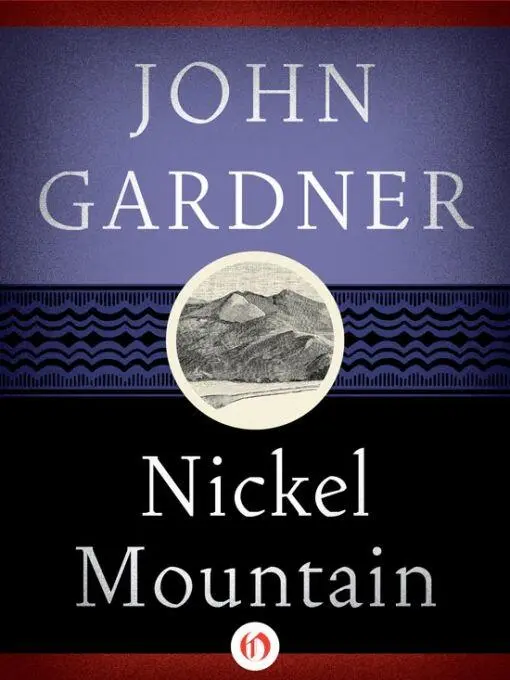
- Название:Nickel Mountain
- Автор:
- Издательство:Open Road Media
- Жанр:
- Год:2010
- ISBN:нет данных
- Рейтинг книги:5 / 5. Голосов: 1
-
Избранное:Добавить в избранное
- Отзывы:
-
Ваша оценка:
Nickel Mountain: краткое содержание, описание и аннотация
Предлагаем к чтению аннотацию, описание, краткое содержание или предисловие (зависит от того, что написал сам автор книги «Nickel Mountain»). Если вы не нашли необходимую информацию о книге — напишите в комментариях, мы постараемся отыскать её.
is an uncommon love story: when at 42, the obese, anxious and gentle Henry Soames marries seventeen-year-old Callie Wells — who is pregnant with the child of a local boy — it is much more than years which define the gulf between them. But the beauty of this novel is the gradual revelation of the bond that develops as this unlikely couple experiences courtship and marriage, the birth of a son, isolation, forgiveness, work, and death in a small Catskill community in the 1950s. The plot turns on tragic events — they might be accidents or they might be acts of will — involving a cast of rural eccentrics that includes a lonely amputee veteran, a religious hysteric (thought by some to be the devil himself) and an itinerant "Goat Lady." Questions of guilt, innocence, and even murder are eclipsed by deeds of compassion, humility, and redemption, and ultimately by Henry Soames' quiet discovery of grace.
Novelist William H. Gass, a friend and colleague of the author, has written an introduction that shines new light on the work and career of the much praised but often misunderstood John Gardner.
Nickel Mountain — читать онлайн бесплатно полную книгу (весь текст) целиком
Ниже представлен текст книги, разбитый по страницам. Система сохранения места последней прочитанной страницы, позволяет с удобством читать онлайн бесплатно книгу «Nickel Mountain», без необходимости каждый раз заново искать на чём Вы остановились. Поставьте закладку, и сможете в любой момент перейти на страницу, на которой закончили чтение.
Интервал:
Закладка:
It came to him that she wouldn’t have taken Jimmy with her. No doubt he’d be in the garden with Simon, if Simon hadn’t left yet, but he’d better go make sure. He went down the steps and around the corner of the house. Simon was asleep on the bench, and he was alone. Henry went back into the house and through the downstairs rooms, calling. He called up the stairs, but there was still no answer. He went up the stairs, pulling himself up on the railing and puffing like an old woman. He’d just reached the top when Jimmy screamed. Henry’s heart banged in his chest as if to split it. When he got to the door and looked in, Jimmy was crouching on the floor by his crib, clinging to the railing and staring into the shadows in the corner of the room.
“What’s the matter?” Henry roared.
“It’s the devil!” Jimmy screamed, coming across to him now on all fours, as if he’d forgotten how to run, “Daddy! Daddy! It’s the devil!”
And then Simon Bale was standing there too, behind him in the hallway, panting from his sprint from where he’d heard the screams in the garden. When he saw Henry’s face he went back two steps, smiling as if in horror, ducking his head quickly down and to the left and whispering, “Forgive—”
“You!” Henry yelled, and it came out as much like awe as like rage. His rage came slowly — or so it seemed to Henry’s suddenly racing mind — but when it hit it was like a mountain falling. He might have killed him if he could have done it (so Henry Soames would say later, dead calm, at the coroner’s inquiry), but he couldn’t even hit him because he was holding Jimmy in his arms; he could only advance on him, howling in his fury, feeling his neck puffing up and throbbing. The room around him was red and his lips felt thick. Simon was whispering, “Forgive, forgive,” again and again and smiling as if his brain had stopped running (which perhaps it had, recalling like motionless, final judgments when Time was over and what was was — pictures standing out from the newsprint around them — his son Bradley Bale with a sign niggers and something more that was out of sight, his daughter Sarah looking out with a thousand centuries of icy, prophetic eyes) and suddenly he turned and bolted toward the stairs. Henry shrieked, driving, as the man reached the top. He did not seem to step down but to leap, looking over his shoulder with a fierce grin, as though he thought he could fly, and Henry rushed toward him in alarm and hate or was rushing toward him already by that time. (He would wonder later which came first, the scene rising up in his mind undiminished; and he would wring his hands). He saw him hit halfway down and tumble and fly out in all directions, reaching. At the bottom he lay still a minute, upside down, his arms flung out and one knee bent, the light from the kitchen door like a halo on his murderous face, and then his body jerked, and quickly Henry turned his back so that Jimmy wouldn’t see.
He sat on the toybox in the child’s room, holding him, shaking his head and groaning, seeing it again and knowing Simon was still lying there staring toward heaven, waiting. It began to get dark — he could feel the mountains closing in. He wished Callie would come home and tell him what to do.
VI. NIMROD’S TOWER
1
After the death of Simon Bale, Henry Soames took a turn for the worse. Doc Cathey said, wiping his forehead with the sleeve of his suitcoat, wholeheartedly meaning every word of it, at least for that moment (in the muggy, baking heat of August more impatient than ever with the mere humanity that always finally eluded his craft), “The hell with you.”
Now, perhaps partly because of the heat — weather unheard of in the Catskills, a sure sign of witchcraft at work, or miracles brooding — the nervous eating that had troubled Henry Soames all his life slipped out of control, became a mindless external power against which it was impossible for him even to struggle, a consuming passion in the old sense, a devil (but blind, indifferent as a spider) in his guts. When he talked with customers in the diner he seemed on the surface as cheerful as ever; too cheerful, if anything, shouting over the drone of the fans in that high, thin voice of his like a goat’s, banging the counter-top, whinnying with laughter; and he seemed at least relatively cheerful, considering, when he drove out on still, hot Sunday afternoons to look at the hills, the green-brown river, the corn going yellow for want of rain. He’d sit sweating behind the steering wheel, pulled over beside the triangular white concrete posts at the edge of the highway, looking down at the valley that gasped away toward brown-blue mountains as if he owned it, for what it was worth, owned all the Catskills as far as the eye could see. Because of his fat he sat tipped back like a medieval baron, and he surveyed the world over his heavy shoulder as if with imperatorial disdain. Sometimes if the heat was unusually bad he would get out of the car and open the door for his wife and child — the dog would be back at the house, asleep — and lead them over to the shade of a pine grove. They were fair-skinned, Callie and the boy, and the heat made both of them nauseous and light-headed. Henry would lower himself onto a large, dusty surface root (the grass beside it bristly brown) and would fan himself with his hat. His hair was dark with sweat where the hat had been, and the folds of his neck were gritty. At last he would say like a king pronouncing judgment, “Hot.” Both his son and his wife would nod, solemn. The pine needles over their heads were whitish from the heat and drought. But wherever he walked or stood or lay, Henry Soames had food with him, and he ate. He ate steadily, calmly, his small teeth grinding on and on, like Time setting out to fill all the void with Space.
(“Like an elephant,” Old Man Judkins said, with more insight than any of them guessed, though even in his own mind the idea was obscure. He was thinking, vaguely, being old and tired, of the time he’d stood for an hour-and-a-half at the Coliseum in Buffalo — that sick-sweet chemical stench in the air — looking through the bars at a gigantic lean old African bull whose left hind leg was chained to the floor: he would lift the leg a little and find the chain still there, and he would be — as it seemed to Old Man Judkins, who knew about elephants only what he saw — so enraged that he couldn’t even trumpet, could merely set down his foot again and stand there hopeless, like an Indian waiting to die. After an hour or more of this he’d begun to walk around and around in a circle, sideways, each step a great, slow shifting of unspeakable weight. Old Man Judkins thought of Henry Soames’ father walking by the roadside, enormous and placid as a saint, singing in his reedy voice, Every time it rains it rains … pennies from heaven. “Terrible,” Old Man Judkins said, but no one paid attention.)
Henry Soames’ wife would say, more cross than usual, in this weather, “What’s the matter with you, Henry?”
“I’m sorry,” he would say, and he would seem to mean it, rolling his eyes up toward her; but he would go on eating, taking it in like a combine, or like a cutting-box, or a silo. She watched the weight he had lost coming back, pound by pound. He began to need his little white pills more often; he seemed to her to eat them like candy. It was not frightening to her but acutely annoying, one more irritation among a thousand — the movement of clothes on chafing skin, the piercing pinpricks of the bell on the diner door in front, the dust that lay over everything, no matter what you did to get rid of it — on the piano keys, on every flange of the old carved picture frames on the walls, on the soup cans and tops of boxes in the diner. One night she exploded, “Henry, you act like a crazy person.” As the words came out (she had said them many times before), she saw the truth. It was no matter of locked attics, burning churches, ice-cold hands around one’s throat — the kinds of madness she’d heard stories about and seen in movies at Athensville. That kind of madness she hardly believed in, accepted merely as she accepted technicolor movies of, say, San Francisco; but this was real, not a matter of poetry but a study for her country rules — the rules that a child should have a father, that a wife should have a husband, and that a man trying to kill himself should be stopped.
Читать дальшеИнтервал:
Закладка:
Похожие книги на «Nickel Mountain»
Представляем Вашему вниманию похожие книги на «Nickel Mountain» списком для выбора. Мы отобрали схожую по названию и смыслу литературу в надежде предоставить читателям больше вариантов отыскать новые, интересные, ещё непрочитанные произведения.


Обсуждение, отзывы о книге «Nickel Mountain» и просто собственные мнения читателей. Оставьте ваши комментарии, напишите, что Вы думаете о произведении, его смысле или главных героях. Укажите что конкретно понравилось, а что нет, и почему Вы так считаете.