John Gardner - Nickel Mountain
Здесь есть возможность читать онлайн «John Gardner - Nickel Mountain» весь текст электронной книги совершенно бесплатно (целиком полную версию без сокращений). В некоторых случаях можно слушать аудио, скачать через торрент в формате fb2 и присутствует краткое содержание. Год выпуска: 2010, Издательство: Open Road Media, Жанр: Современная проза, на английском языке. Описание произведения, (предисловие) а так же отзывы посетителей доступны на портале библиотеки ЛибКат.
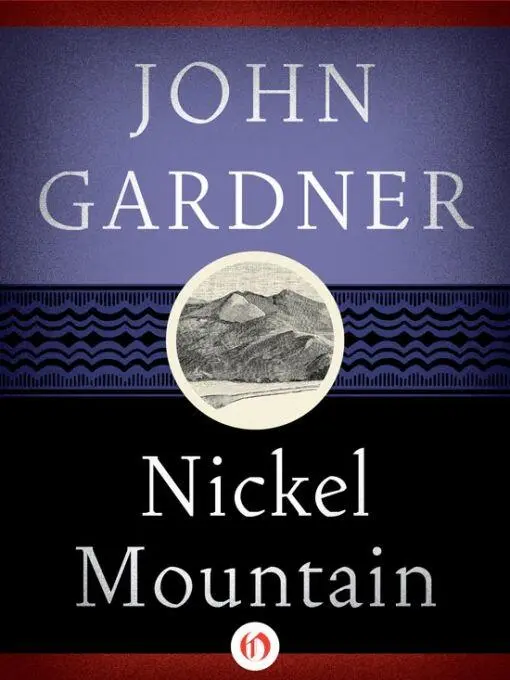
- Название:Nickel Mountain
- Автор:
- Издательство:Open Road Media
- Жанр:
- Год:2010
- ISBN:нет данных
- Рейтинг книги:5 / 5. Голосов: 1
-
Избранное:Добавить в избранное
- Отзывы:
-
Ваша оценка:
Nickel Mountain: краткое содержание, описание и аннотация
Предлагаем к чтению аннотацию, описание, краткое содержание или предисловие (зависит от того, что написал сам автор книги «Nickel Mountain»). Если вы не нашли необходимую информацию о книге — напишите в комментариях, мы постараемся отыскать её.
is an uncommon love story: when at 42, the obese, anxious and gentle Henry Soames marries seventeen-year-old Callie Wells — who is pregnant with the child of a local boy — it is much more than years which define the gulf between them. But the beauty of this novel is the gradual revelation of the bond that develops as this unlikely couple experiences courtship and marriage, the birth of a son, isolation, forgiveness, work, and death in a small Catskill community in the 1950s. The plot turns on tragic events — they might be accidents or they might be acts of will — involving a cast of rural eccentrics that includes a lonely amputee veteran, a religious hysteric (thought by some to be the devil himself) and an itinerant "Goat Lady." Questions of guilt, innocence, and even murder are eclipsed by deeds of compassion, humility, and redemption, and ultimately by Henry Soames' quiet discovery of grace.
Novelist William H. Gass, a friend and colleague of the author, has written an introduction that shines new light on the work and career of the much praised but often misunderstood John Gardner.
Nickel Mountain — читать онлайн бесплатно полную книгу (весь текст) целиком
Ниже представлен текст книги, разбитый по страницам. Система сохранения места последней прочитанной страницы, позволяет с удобством читать онлайн бесплатно книгу «Nickel Mountain», без необходимости каждый раз заново искать на чём Вы остановились. Поставьте закладку, и сможете в любой момент перейти на страницу, на которой закончили чтение.
Интервал:
Закладка:
She must act, she saw (wearily and angrily, flushed and spent, past all endurance), but how she must act would not come clear. With a part of her mind she wished him dead, the whole world dead; the heat coming up to her from the grill and flooding out into the heat of the room made her want to break free into violence. And yet even now, though abstractly, now, she “loved” him, for lack of a better word. She could think about her love — still there, she knew perfectly well, but dormant, an emotion locked up, waiting for September — as she might think about a pain she’d felt long ago and would one day feel again. It was the most vital emotion she had ever felt, on one hand, but, on the other, an emotion partly revolting to her: She had not seen much sign of it in her mother and father; it was an emotion they shrank from, lashed out against as they might at something obscene. She understood. But Henry, like her cousin Bill, or like Cousin Mary Lou, had accepted that feeling, had in a way made it into his identity, hugging her in his great loose arms, womanishly patting some truck driver’s shoulder, bending down to kiss the forehead of their child as he slept. He was obscene to her, to tell the truth. His whole gross being, the very possibility of his existence at the height of a weedy, rainless summer was obscene. When he stood at the kitchen door watching her with eyes like an infinitely gentle pig’s, his face thrown forward, leaning against the warm (she imagined) edge of the door, he would smooth the paint with absentminded fingers; and sometimes he would turn his face and touch the wood with his lips, this, too, absentmindedly, trying the texture with his mouth as a child would, and Callie would look down, revolted. Once she had said, “Henry, you’re kissing that door!” and he had looked ashamed. Instantly she’d thought she shouldn’t have said it, though she wasn’t sorry. She’d never caught him doing it again, and, almost below thought, in the dark of her mind, she’d been annoyed at her pettiness and his, for paying attention.
“Crazy,” she thought, coming suddenly awake, toying with the word’s dull echo in her head, standing over the hissing grill and staring through the grill’s blackness at the pitch-dark center of things. She thought of George Loomis, sitting alone in his unlighted, funereal old brick house on Crow Mountain, watching television in the kitchen, his eyes like a murderer’s. Henry respected George, and George had a kind of sense: He could talk to Henry if anyone could, and George could do it without making them all feel like worms. She set her lips and, as though someone else had suggested it, she nodded.
And so George Loomis sat down grinning in the armchair facing the davenport late one night and stretched out his legs, his left hand over his belly, relaxed, the empty right sleeve pinned up to the shoulder of his shirt. He smelled of whiskey. It gave her a turn, but she said nothing. She thought of her father, the car parked down in the creek below the DL&W bridge where he’d pulled to sleep it off. When he brought in the smell of whiskey with him, her mother would sometimes cry. “You never think of anybody but yourself,” she would say, “that’s truly all you think about.” And he would nod, scowling, not offended by what she said but outraged by the maudlin vulgarity of her saying anything at all. Once, long ago, he’d hit her. When Callie was little, she too would cry, and her father would wince, looking at her, and then he’d shut his eyes with disgust and sit down and cover his face with his hands and wait for them to go. His verdict was right, she knew, and she knew that all women were evil. When they were loading hay he would lift her in his arms, laughing, and would throw her up onto the load. She was terrified — the load was high and round, and she was sure she’d roll off on the other side from the force of his throw — yet she would wish he would do it again and again, hoist her up in his arms and laugh, looking at her face for just a second, and throw her up at the white clouds and the deep blue glodes between. Her mother would say, “She’ll be hit by dry lightning up there, Frank Wells. You know what happened to Covert’s boy.” “Crap,” he would say. He would lift his arms and say, “Ok, scout,” and Callie would half-slide half-jump and he would catch her. Her mother said someday he would break her leg, and Callie thought, Evil, evil! Once he had turned his back and let her fall. She was fourteen. He and the two hired men had laughed, leaning on their forks, showing their dark yellow teeth. That night she had run away, intending to drown herself, but beside the creek — Prince running up and down joyfully, yipping at shadows — she’d found herself too cowardly and base for even that; there was no hope left for her but forgiveness. It was the troopers that had found her, and when she got home her father was asleep in his chair, snoring like a horse.
George Loomis said, “How things going, boy?”
“Oh, so-so,” Henry said.
Still no relief from the heat had come. Her head ached, and their voices sounded hollow, like voices in a dream.
George Loomis looked down for perhaps a minute, then cleared his throat and looked over at little Jimmy, playing with a truck on the davenport arm. George’s hair was going prematurely gray, but across from Henry he looked like a high school boy. He had a boy’s face, a boy’s way of sitting — except for the one boot locked rigid in its iron brace. He had a look of innocence like a boy’s, too, vaguely associated in Callie’s mind with virginity.
“Sure dry,” George said.
Henry nodded. “Things burning right up.” His voice was mechanical, like his words. Even his eating looked mechanical, and George was doing nothing to help.
Callie looked toward heaven in despair.
(The Preacher would come to see Callie’s father and would go out to the barn where he was milking, and Callie would go with him to show him the way. He’d step gingerly, behind the cows, worrying about getting manure on his pointed black shoes — good honest shit, her father called it and when her father saw him he would nod politely. In front of her mother, her father would mock religious people, but he was always polite to them otherwise. He was not a cruel man — she had learned that only lately, from Henry, or rather had only lately discovered by way of Henry that that was what she’d always known. He too was like a boy, her father — in a different way from George Loomis, though. Her father was easygoing, open, free with his money, a storyteller people would listen to for hours. He didn’t believe or disbelieve in God, he said; he just didn’t like churches. He didn’t like hearing what he had to believe and what he mustn’t believe — the very word believe made him curl his lip as he would when he listened to tear-jerking poetry or talk about flowers or songs about faraway places — and above all, he said, he didn’t like grown men standing up and confessing in front of everybody, like drunks or like young lovers. But that was not what he said to the Preacher. He said, “Evening, Reverend,” and nodded, and when the Preacher talked about what a fine herd of cows he had (it had chronic mastitis and there wasn’t a cow in the barn that gave more than a gallon) he would agree. Rightly, Henry said. (That too she had always known but had realized only when he said it.) If you told the Preacher the truth he would soon have control of you, would milk you dry. The Preacher would say, “We’ve missed you lately in church, Frank,” and her father would say only, “I haven’t been going very regular, that’s true.” He hadn’t darkened those doors in fifteen years. The Preacher would talk to him sadly, man to man, high-tone Biblical language that embarrassed Callie, and after her father had heard him out he’d look thoughtful and say, “There’s a lot to what you say, Reverend.” She would want to laugh, and only later had she come to see that she’d wanted to laugh with fury. There was something vile in her father’s arrogant detachment. She wondered what her father would say if someone smarter than he was had come to talk about religion to him. Henry’s father, for instance, when he was alive, who’d read hundreds and hundreds of books. But she knew what her father would have done, of course. How could even arguments have touched him?)
Читать дальшеИнтервал:
Закладка:
Похожие книги на «Nickel Mountain»
Представляем Вашему вниманию похожие книги на «Nickel Mountain» списком для выбора. Мы отобрали схожую по названию и смыслу литературу в надежде предоставить читателям больше вариантов отыскать новые, интересные, ещё непрочитанные произведения.


Обсуждение, отзывы о книге «Nickel Mountain» и просто собственные мнения читателей. Оставьте ваши комментарии, напишите, что Вы думаете о произведении, его смысле или главных героях. Укажите что конкретно понравилось, а что нет, и почему Вы так считаете.