John Gardner - Nickel Mountain
Здесь есть возможность читать онлайн «John Gardner - Nickel Mountain» весь текст электронной книги совершенно бесплатно (целиком полную версию без сокращений). В некоторых случаях можно слушать аудио, скачать через торрент в формате fb2 и присутствует краткое содержание. Год выпуска: 2010, Издательство: Open Road Media, Жанр: Современная проза, на английском языке. Описание произведения, (предисловие) а так же отзывы посетителей доступны на портале библиотеки ЛибКат.
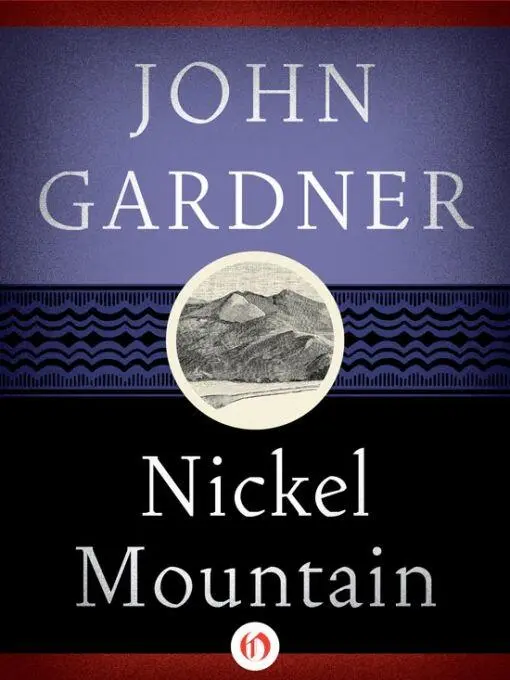
- Название:Nickel Mountain
- Автор:
- Издательство:Open Road Media
- Жанр:
- Год:2010
- ISBN:нет данных
- Рейтинг книги:5 / 5. Голосов: 1
-
Избранное:Добавить в избранное
- Отзывы:
-
Ваша оценка:
Nickel Mountain: краткое содержание, описание и аннотация
Предлагаем к чтению аннотацию, описание, краткое содержание или предисловие (зависит от того, что написал сам автор книги «Nickel Mountain»). Если вы не нашли необходимую информацию о книге — напишите в комментариях, мы постараемся отыскать её.
is an uncommon love story: when at 42, the obese, anxious and gentle Henry Soames marries seventeen-year-old Callie Wells — who is pregnant with the child of a local boy — it is much more than years which define the gulf between them. But the beauty of this novel is the gradual revelation of the bond that develops as this unlikely couple experiences courtship and marriage, the birth of a son, isolation, forgiveness, work, and death in a small Catskill community in the 1950s. The plot turns on tragic events — they might be accidents or they might be acts of will — involving a cast of rural eccentrics that includes a lonely amputee veteran, a religious hysteric (thought by some to be the devil himself) and an itinerant "Goat Lady." Questions of guilt, innocence, and even murder are eclipsed by deeds of compassion, humility, and redemption, and ultimately by Henry Soames' quiet discovery of grace.
Novelist William H. Gass, a friend and colleague of the author, has written an introduction that shines new light on the work and career of the much praised but often misunderstood John Gardner.
Nickel Mountain — читать онлайн бесплатно полную книгу (весь текст) целиком
Ниже представлен текст книги, разбитый по страницам. Система сохранения места последней прочитанной страницы, позволяет с удобством читать онлайн бесплатно книгу «Nickel Mountain», без необходимости каждый раз заново искать на чём Вы остановились. Поставьте закладку, и сможете в любой момент перейти на страницу, на которой закончили чтение.
Интервал:
Закладка:
“Did you ever have arguments with your wife?”
Simon seemed baffled, and the older trooper said, “How did you and your wife get along, Simon?”
Simon said, “We never had any trouble.”
“We’ve talked to your son Bradley,” the younger trooper said. Then, casually: “We understand you used to beat him some, with your fists.”
Simon flushed and said nothing. He leaned his elbows on the counter and began folding and unfolding his hands.
“Is it true?” the trooper asked.
Henry’s hands were sweating. He began to doubt things he’d have sworn to five minutes before. Why were they questioning him here, in front of strangers?
“He’d sinned,” Simon said. It was almost too soft to hear, and he cleared his throat and said it louder.
“Sinned?” It was as if it were the first time the trooper had heard the expression.
Simon said nothing, and the trooper said with distaste, “Let’s talk about your daughter, Simon. Your son tells us you used to lock her in the shed for days.” He waited. “Is that true?”
“Not days,” Simon said in a whisper. He went on folding and unfolding his hands.
“But you locked her in the shed.”
He said nothing.
“Did she cry, Simon?” It was faintly ironic. After a moment: “Did she scream sometimes — for hours?”
“God forgive—” he began vaguely. No one spoke for a minute.
The younger trooper sat watching Simon’s hands. “What was the argument with your wife that night?”
He shook his head. “We didn’t argue.”
“Your neighbors say—”
“False witnesses!” For an instant anger flared up in his look, but he stopped it.
The older one said, “What was her sin, Simon?”
Again he shook his head. He was pale, and he was wringing his hands as if in anguish, but his jaw was set.
“Why would they lie — your son, your neighbors?” the younger one said. “What difference would it make to them?”
Henry pulled at his lip. He kept from breaking in, but he knew he wouldn’t keep still much longer. His anger was confused now, aimed at all of them. Strange to say, he was angriest of all at Callie’s mother, who had nothing to do with it. Her face was turned away and he couldn’t read her expression. But he could see the eavesdropping tilt of her head, the tense, righteous indignation in every muscle and bone.
“Mr. Bale,” the trooper said, “the fire at your house was arson, set with burlap and gas from your own shed. Who had any reason to set it? Who knew you had the makings right there?” And after a second: “Besides you.”
And at that Henry did break in, no more knowing now than he would know later why he did it. “That’s not fair, officer.” He went over to stand bent toward them, in front of them, the blood stinging in his face, and Callie’s mother, behind them, looked up at him, wide-eyed. “Any tramp could have come onto the gas and rags. And the neighbors — anybody in the county, for that matter — maybe they took it into their heads to hate him. It would be natural. No, let me finish. He does what he believes in, he even sneaks around trying to convert your children behind your back. It’s natural it would make people mad — maybe so mad they tell lies about him, or imagine things. You can’t take a man to jail because people don’t like him.” In his excitement Henry didn’t see George Loomis’s pickup truck pull in in front of the diner, and, though he saw the door open, he paid no attention. “People don’t believe in Simon’s God, the end of the world anyday now, things like that. They think a man that believes such things has to be crazy, and crazy people burn houses, so Simon must have burned his own house down. Pretty soon they remember a fight they never heard, and it fits in with everything they know and pretty soon it’s not even remembered any more, it’s predestined fact. People think—”
“Simon,” the younger trooper said, getting the floor from Henry without ever raising his voice, “have you ever seen the devil?”
Henry waited, checked, not sure what the man was driving at but thrown off balance, frightened again.
Simon nodded.
“Many times?” the trooper said, as if innocently, as if strictly from curiosity.
Simon nodded again.
The trooper looked at Henry, and there was no triumph in the look; a kind of helplessness. “How can you know if he’s sane, a man like that?”
George Loomis was leaning against the doorpost. He said heartily, “What the hell! Of course he’s sane. Lots of people see the devil. Happens all the time. You ever see the Watkins Man? I do. I believe in him. The Watkins Man is good.”
“Don’t clown, George,” Henry said.
George came over to the counter, the brace on his boot clumping on the linoleum, the empty sleeve dangling. To Simon Bale he might have been, even then, the devil himself: triangle-faced, maimed, a cynic, waspish in his irony; but Simon was grinning apologetically, his mouth trembling, ducking his head away from George Loomis as if afraid George might strike at him.
George said, “What’s going on around here, Ellie?”
Ellie said, tight-lipped, “They think Simon—” All at once she was in tears, and George looked startled. Henry hurried around to her, furious, and furious at Simon Bale and himself as well. “It’s all right,” he said. “Here now, after all—”
The two troopers sat relaxed and patient, watching, looking vaguely interfered-with but mainly just patient.
“Look, you guys leave Henry alone,” George said.
Henry said, “They’re just doing their job.” He felt furious at the troopers now, too. “I’m sorry I lost my temper,” he said. He went on awkwardly patting Callie’s mother’s shoulder. She cried into her apron as well as she could; it was too short to get up to her eyes. A little peeping noise came out as she cried, and she said, “I’m sorry, I’m truly sorry.”
The troopers looked at each other, and at last the younger one shook his head. “Well, thanks for your time,” he said. He looked over at the older one again, and they both stood up. The older one put two dimes on the counter, and then they walked over to the door. The older one said, nodding toward Simon but looking at Henry, “He’ll be here if we need him?”
After a second, Henry nodded.
Simon said all at once, earnestly, “I’m sorry.”
They looked at him as one might look at a sideshow freak — mildly curious, mildly embarrassed. The younger one smiled at Henry and shook his head; then they went out to their car. Henry and George watched them pull away. When they were out of sight, over the crest of the hill to the south, Henry wiped his forehead on his sleeve. Callie’s mother blew her nose on a paper napkin and went over, sniffing, to refill the matchbook box by the cash register. “I don’t know what came over me,” she said.
“Now, just don’t you think about it,” Henry said.
George Loomis slid onto the stool beside Simon and bent down to look into his eyes. “What does the devil look like, exactly, Simon?” he asked.
“Now that’s enough, George,” Henry said.
8
Henry had not defended Simon Bale in order to win his love or praise; nothing of the kind. But he was shocked to find how little it meant to Simon. When he said, as he was getting George Loomis his coffee, “Don’t you worry, Simon, we won’t let them go after you that way again,” Simon merely waved, his face falling into that idiot’s smile, and said, “Oh, no importance.” His hands were folded and quiet now. Henry said, “No importance if they put you in jail?” “Ah, well,” Simon said. He looked up at the ceiling.
George Loomis said, “If you think it’s God’s will that you’re sitting here, mister, you’re mistaken. God and the devil are out watching the sparrow, and all you got to look to is that man right there.” He pointed at Henry.
Читать дальшеИнтервал:
Закладка:
Похожие книги на «Nickel Mountain»
Представляем Вашему вниманию похожие книги на «Nickel Mountain» списком для выбора. Мы отобрали схожую по названию и смыслу литературу в надежде предоставить читателям больше вариантов отыскать новые, интересные, ещё непрочитанные произведения.

Обсуждение, отзывы о книге «Nickel Mountain» и просто собственные мнения читателей. Оставьте ваши комментарии, напишите, что Вы думаете о произведении, его смысле или главных героях. Укажите что конкретно понравилось, а что нет, и почему Вы так считаете.