Xiao Bai - French Concession
Здесь есть возможность читать онлайн «Xiao Bai - French Concession» весь текст электронной книги совершенно бесплатно (целиком полную версию без сокращений). В некоторых случаях можно слушать аудио, скачать через торрент в формате fb2 и присутствует краткое содержание. Год выпуска: 2015, Издательство: HarperCollins, Жанр: Современная проза, на английском языке. Описание произведения, (предисловие) а так же отзывы посетителей доступны на портале библиотеки ЛибКат.
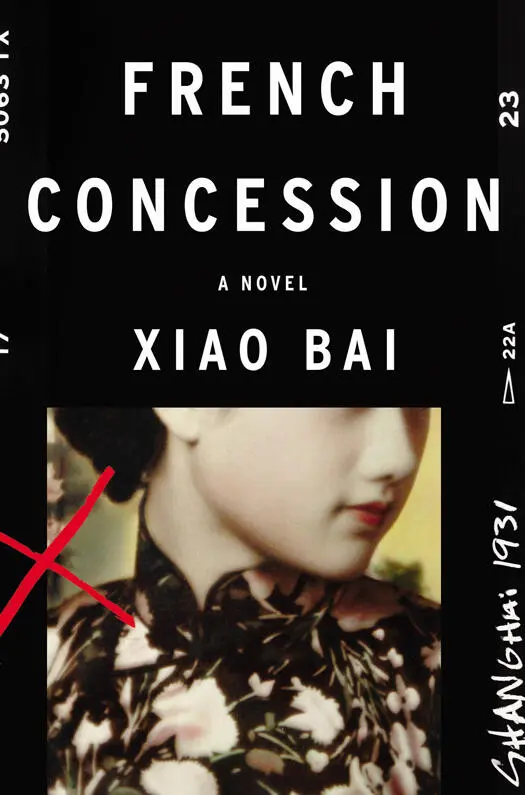
- Название:French Concession
- Автор:
- Издательство:HarperCollins
- Жанр:
- Год:2015
- ISBN:нет данных
- Рейтинг книги:3 / 5. Голосов: 1
-
Избранное:Добавить в избранное
- Отзывы:
-
Ваша оценка:
French Concession: краткое содержание, описание и аннотация
Предлагаем к чтению аннотацию, описание, краткое содержание или предисловие (зависит от того, что написал сам автор книги «French Concession»). Если вы не нашли необходимую информацию о книге — напишите в комментариях, мы постараемся отыскать её.
A boat from Hong Kong arrives in Shanghai harbor, carrying an important official in the Nationalist Party and his striking wife, Leng. Amid the raucous sound of firecrackers, gunshots ring out; an assassin has shot the official and then himself. Leng disappears in the ensuing chaos.
Hseuh, a Franco-Chinese photographer aboard the same boat, became captivated by Leng’s beauty and unconcealed misery. Now, she is missing. But Hsueh is plagued by a mystery closer to home: he suspects his White Russian lover, Therese, is unfaithful. Why else would she disappear so often on their recent vacation? When he’s arrested for mysterious reasons in the French Concession and forced to become a police collaborator, he realizes that in the seamy, devious world of Shanghai, no one is who they appear to be.
Coerced into spying for the authorities, Hseuh discovers that Therese is secretly an arms dealer, supplying Shanghai’s gangs with weapons. His investigation of Therese eventually leads him back to Leng, a loyal revolutionary with ties to a menacing new gang, led by a charismatic Communist whose acts of violence and terrorism threaten the entire country.
His aptitude for espionage draws Hseuh into a dark underworld of mobsters, smugglers, anarchists, and assassins. Torn between Therese and Leng, he vows to protect them both. As the web of intrigue tightens around him, Hsueh plays a dangerous game, hoping to stay alive.
French Concession — читать онлайн бесплатно полную книгу (весь текст) целиком
Ниже представлен текст книги, разбитый по страницам. Система сохранения места последней прочитанной страницы, позволяет с удобством читать онлайн бесплатно книгу «French Concession», без необходимости каждый раз заново искать на чём Вы остановились. Поставьте закладку, и сможете в любой момент перейти на страницу, на которой закончили чтение.
Интервал:
Закладка:
Hsueh’s footsteps faded in the lobby.
For half a year now, she had been wondering about something. A vast sum of money had disappeared, and Hsueh had never told her what happened to it. Ku’s assassination squad had bought some expensive German firearms from her, and they had agreed that Hsueh would not hand over the goods until he got the check. He was to make contact via a series of flashlight signals that she had revealed to no one but him. And he was not to send the signals until he had the check in his hands.
But she was very fond of his Chinese ribs, of how they pressed tightly against her body, against the scar throbbing on her abdomen.
Cannons thundered outside the window, to the northeast. She felt the return of an old thrill.
POSTSCRIPT
On a sunny August morning during the gestation of this story, which was then populated only by a few dim shadows, a sentence appeared on the page in front of me. Even I didn’t realize its significance at the time. It came like a ray of sunlight piercing the fog on the Whampoa and falling on a desk on the eastern end of the reading room at the Shanghai Municipal Archives:
It was the White Russian woman who first attracted Lieutenant Sarly’s attention.
That is how it all started. In 1931, Lieutenant Sarly of the Political Section was attempting to make sense of the chaos in the French Concession in order to crack an unsolved case. He was poring over old files when he found this White Russian woman. Almost eighty years later, I was sitting in the reading room trying to piece together a chain of events that happened at the beginning of the 1930s in the French Concession. As I was reading the same files Sarly would have read, the same woman leaped out at me right away.
The colonial authorities often kept slipshod records, and the Political Section’s file on this woman was no exception. After the Japanese invaded Shanghai, the file would have remained within the possession of the Vichy Concession government until Wang Ching-wei’s puppet government claimed jurisdiction over the concessions, at which point all the important documents at the Concession Police would have been handed over to “No. 76,” Wang’s secret police nicknamed after its headquarters at No. 76 Jessfield Road. Either they or the Tokkô, the Japanese secret police, may have removed some of the key documents in that file for an ultimately unsuccessful investigation into the White Russian woman. It is also possible — many things are possible — that Hsueh, who continued to be influential in the Political Section, destroyed part of the file, whether for reasons of national security or for his own private ends. Even if he had attempted to preserve them, they would probably be irrecoverable today.
At the end of the war in 1945, these files were transferred to the recently established police branch in Lokawei, and then, in 1949, to the new Communist government’s police branch there. The brand-new country was so pressed for resources that police officers were forced to write on the reverse sides of prewar documents deemed irrelevant by an Intelligence Advisory Committee composed primarily of Kuomintang defectors. Today’s historians must understand that dealing with present difficulties was more important to them than preserving the past. Many prewar documents have been destroyed. Some were pasted together out of sequence on the reverse sides of unrelated files, making them difficult to recover. I once found an important document on the reverse side of a report concerning a certain counterrevolutionary industrialist. The pages had been turned inside out and glued together with inferior glue. They came unstuck with time, allowing me to pry apart the page in accordance with the Archives’ strict reading rules, without having to damage the binding, so that I could copy out the contents of this page using the brighter light at the seat near the window.
The file itself survived. It was handed over to the Shanghai Municipal Archives and cataloged by staff there. But no more than fragments of the original documents remain, and there is no way to ascertain how they relate to one another. (See appendices for some of these fragments.)
This book must hence be read as a work of fiction. Imagine that a certain kidnapping that took place on a movie set was invented by the author on a windy summer night, with certain familiar rotting smells in the air. Nor can the author hope to reconstruct the plans and hopes brewing in the minds of historical characters. Instead, he employs a shifting narrative perspective, lending his imagined motives a degree of ambiguity, coaxing the reader to believe his fabrications where evidence is scarce. Emotions are the trickiest. How much genuine affection was there between Hsueh and Therese, and how much were they taking advantage of each other? How much of what took place between Hsueh and the innocent Leng can be attributed to passion rather than premeditated calculation?
If an impartial Court of History were to exist, this author would be accused of misleading the jury with a tale spun from incomplete evidence. There are only a handful of documents, and the connections between them are inferred — they would not stand up in court. In fact, the story of what eventually happened to Hsueh and his White Russian lover is instructive. As mentioned, some of the relevant documents had been deliberately mislaid, which led to a postwar investigation into Hsueh’s wartime actions by the Kuomintang authorities, focusing on the period between 1937 and 1941 when the isolated concessions had found themselves under increasing pressure from the rest of Japanese-occupied Shanghai. But the investigation itself had to be abandoned because of a lack of evidence, and a dubious statement from Lieutenant Sarly in Hsueh’s favor was used as an excuse to wrap it up summarily.
We don’t live in the enchanted world of certain movies, in which the sorcerer has a book of infinite pages that writes the never-ending story of everything he does and all his most intimate feelings as they are taking place. If that book were to exist, not only would historians be out of a job, so would novelists.
APPENDICES
Extracts from the archives. (The full documents are not displayed here for reasons of space.)
I. NOS. U731—2727–2922—7620:
Description and extract:
An investigation by the Political Section of the imperialist French Concession Police into an assassination and related firearms deal. Contains a report on the investigation, newspaper cuttings, photographs, and an extract from a wanted list, as well as records of fingerprints, customs searches, and house searches.
Principal suspect: IRXMAYER THERESE. ( Italics quoted directly from source material.)
The name “Weiss Hsueh” appears on the back of a photograph. This must be our Hsueh. On closer inspection, the image is revealed to contain a figure in the bottom right corner who is mostly outside the frame. He has his back to the camera and his left hand is reaching for his face. Is he in the habit of rubbing his nose? He is depicted in profile, and he has a nice square jaw. The shot is focused on the White Russian woman, so his figure is blurred, and you can’t even see if he is fat or thin. This is the only photograph we have of Hsueh.
II. DOCUMENT FRAGMENT.
Description: These papers may have been removed from the file after 1949 when paper was rationed, or they may never have been added to the file in the first place, which would not be surprising, given the colonial police’s halfhearted work ethic. This is a report presented to the Concession Police by the British secret service, concerning European pirates arrested by the Japanese marine police in Talien, in which Therese’s name appears. In the margins, someone has drawn a huge question mark in black ballpoint, pointing to Hugo Irxmayer’s name, which appears in parentheses.
Читать дальшеИнтервал:
Закладка:
Похожие книги на «French Concession»
Представляем Вашему вниманию похожие книги на «French Concession» списком для выбора. Мы отобрали схожую по названию и смыслу литературу в надежде предоставить читателям больше вариантов отыскать новые, интересные, ещё непрочитанные произведения.










Обсуждение, отзывы о книге «French Concession» и просто собственные мнения читателей. Оставьте ваши комментарии, напишите, что Вы думаете о произведении, его смысле или главных героях. Укажите что конкретно понравилось, а что нет, и почему Вы так считаете.