Xiao Bai - French Concession
Здесь есть возможность читать онлайн «Xiao Bai - French Concession» весь текст электронной книги совершенно бесплатно (целиком полную версию без сокращений). В некоторых случаях можно слушать аудио, скачать через торрент в формате fb2 и присутствует краткое содержание. Год выпуска: 2015, Издательство: HarperCollins, Жанр: Современная проза, на английском языке. Описание произведения, (предисловие) а так же отзывы посетителей доступны на портале библиотеки ЛибКат.
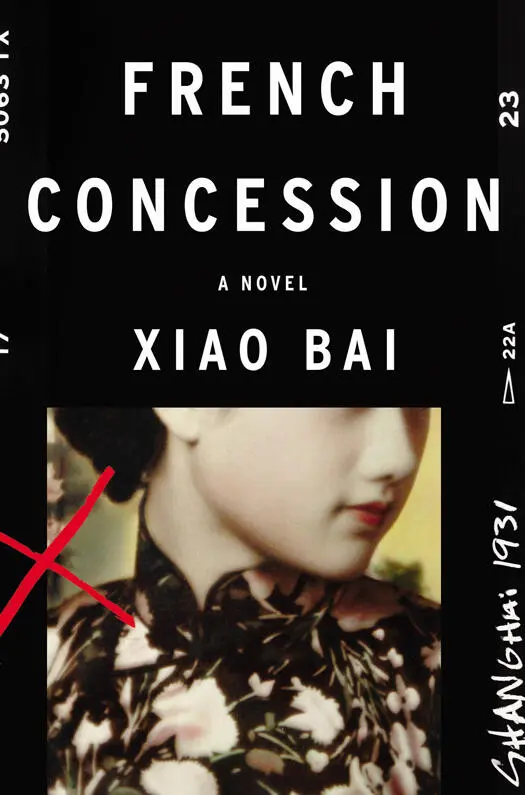
- Название:French Concession
- Автор:
- Издательство:HarperCollins
- Жанр:
- Год:2015
- ISBN:нет данных
- Рейтинг книги:3 / 5. Голосов: 1
-
Избранное:Добавить в избранное
- Отзывы:
-
Ваша оценка:
French Concession: краткое содержание, описание и аннотация
Предлагаем к чтению аннотацию, описание, краткое содержание или предисловие (зависит от того, что написал сам автор книги «French Concession»). Если вы не нашли необходимую информацию о книге — напишите в комментариях, мы постараемся отыскать её.
A boat from Hong Kong arrives in Shanghai harbor, carrying an important official in the Nationalist Party and his striking wife, Leng. Amid the raucous sound of firecrackers, gunshots ring out; an assassin has shot the official and then himself. Leng disappears in the ensuing chaos.
Hseuh, a Franco-Chinese photographer aboard the same boat, became captivated by Leng’s beauty and unconcealed misery. Now, she is missing. But Hsueh is plagued by a mystery closer to home: he suspects his White Russian lover, Therese, is unfaithful. Why else would she disappear so often on their recent vacation? When he’s arrested for mysterious reasons in the French Concession and forced to become a police collaborator, he realizes that in the seamy, devious world of Shanghai, no one is who they appear to be.
Coerced into spying for the authorities, Hseuh discovers that Therese is secretly an arms dealer, supplying Shanghai’s gangs with weapons. His investigation of Therese eventually leads him back to Leng, a loyal revolutionary with ties to a menacing new gang, led by a charismatic Communist whose acts of violence and terrorism threaten the entire country.
His aptitude for espionage draws Hseuh into a dark underworld of mobsters, smugglers, anarchists, and assassins. Torn between Therese and Leng, he vows to protect them both. As the web of intrigue tightens around him, Hsueh plays a dangerous game, hoping to stay alive.
French Concession — читать онлайн бесплатно полную книгу (весь текст) целиком
Ниже представлен текст книги, разбитый по страницам. Система сохранения места последней прочитанной страницы, позволяет с удобством читать онлайн бесплатно книгу «French Concession», без необходимости каждый раз заново искать на чём Вы остановились. Поставьте закладку, и сможете в любой момент перейти на страницу, на которой закончили чтение.
Интервал:
Закладка:
He sat by her bedside holding her hand, and feeling her fingers twitch. He didn’t leave the hospital until it grew dark.
At home that night, he wasn’t able to convince Leng to leave with him. He didn’t even get a chance to bring up his plan. Leng was unrecognizable. He didn’t know what had happened to her while he was at the police station, but she was energetic and completely refreshed. He soon realized that his plan wasn’t going to work.
Hsueh couldn’t understand why Leng had changed so dramatically. Ku had deceived her, she said. Now that she was back in the Party, she felt alive again. When he told her he wanted to leave Shanghai, she grew quiet.
“Why not stay here? You could help us,” she said.
“Help with what?” he said unenthusiastically.
“You’re a good person. You sympathize with our cause,” she said, reminding him of his own words.
Again she looked like someone he knew from a movie, as if she were an actress who had just gotten out of a bad rut and was back onstage in top form. For some time now, perhaps because she had been falling to pieces with exhaustion, she had stopped reminding him of an actress. He didn’t know which Leng he liked better: the new Leng, glowing with energy, or the old Leng, confused, disoriented, careless of her appearance. Then he decided he liked them both.
“How can I help?” he asked.
“We have a pressing mission for you.” Hsueh was amused that Leng had unconsciously used the word mission .
“Before that truck robbery happened, Ku kidnapped a cameraman from a film studio and ordered him to film the whole thing. We found out about this through several other comrades misled by Ku. In that film, Ku makes a statement in which he poses as a Communist, and it could really hurt us. We have to find the film and destroy it! The Party has intelligence that if it gets into the hands of imperialists, it could seriously damage our cause.”
“How?” He was only half paying attention.
“Our mole reports that a handful of imperialist speculators in the Concession still hope to blame Ku’s crimes on the Communists, which will give the foreigners an excuse to send more troops to Shanghai, and turn it into a bona fide colony!”
The plan was for Hsueh to pay a visit to the cameraman in his capacity as a police investigator, and ask him to hand the film over. It had the added advantage that as a photographer, Hsueh would also know what he was doing.
Hsueh got hold of his friend the poet, and asked him to help drive the police van somewhere. Lieutenant Sarly had told the poet that Hsueh was on a special mission he could not reveal; he should simply do as Hsueh said. The cameraman was not at home, so they drove to the studio, where the guard told them that he was in the editing room.
Negatives, a finished print that could be copied, and a wax record for the sound track all lay piled on the living room floor next to the table.
They were waiting for Lin, who would take it all away to be examined by Party operatives, and then destroyed.
It had rained the night before.
During the day it was sunny, but a typhoon was supposed to reach Shanghai that evening. It rained hard, and the windows wouldn’t stop rattling. Leng was in the kitchen doing the dishes. Hsueh opened a roll of film and looked at it frame by frame, marveling.
Leng came out of the kitchen with a towel. “It’s raining, I wonder—”
She suddenly stopped and stared at the doorknob.
It was turning. He looked at Leng, and turned to look at the door.
It swung open, and a shadow in a canvas raincoat with a hat pulled way over his face stood outside. It was Ku Fu-kuang.
The gun in Ku’s hands swung slowly between him and Leng, back and forth. A puddle formed beneath him on the floor. The wind grew louder. Ku’s arms were tense, and he appeared to be making up his mind. He looked tired to Hsueh, perhaps even a little wistful.
Hsueh smiled at him and began to say, “Ku—”
But before he could say anything, Ku made his decision, pointing his gun at Hsueh.
“No!” Leng screamed, drowning out the roar of the typhoon and the rattling windows. She leapt at Hsueh, and her cry made Ku hesitate for a few seconds before pulling the trigger.
A shot rang out, cutting off the scream. Hsueh thought he could hear the bullet penetrate Leng’s body, but he couldn’t describe the sound. It seemed to come from him, as if the bullet had hit him.
He looked up at Ku.
Ku looked disoriented and a little melancholy, as if he had been reminded of something.
Hsueh felt for the gun beneath the reels of film. It was Leng’s gun, the pistol she had been given as a present. She had given it to Hsueh that morning, so that he could go out on a mission. The pistol was loaded, and she had disengaged the safety during dinner. At the time, Hsueh had privately made fun of this melodramatic gesture to protect the film reels with her life, as if she were acting. He couldn’t understand why she and her friends in the Party cared this much about a documentary film.
He had never fired a gun. He had seen other people open fire countless times, and had taken countless photos of them. But this was the first time he had fired a gun himself. He pulled the trigger several times.
Ku collapsed in the pool of rainwater he had made himself.
The bullet had penetrated Leng’s heart. She was convulsing just like all the other gunshot victims Hsueh had seen.
She must be in agony. Hsueh held her, gazing at her furrowed brow. He thought he could feel a spasm of her pain.
Her brain was slowly being deprived of oxygen. The pain was melting away, and her brows unfurrowed. Her lips moved. She was saying something to Hsueh, but he couldn’t tell what. She kept speaking. For a moment, Hsueh thought he could understand her, and he thought she sounded more genuine than usual, completely genuine. Right this moment, she wasn’t acting at all, he thought. Her expression grew wearier. .
EPILOGUE
FEBRUARY 7, YEAR 21 OF THE REPUBLIC.

Four bombs had struck the Libia , an Italian cruiser. That attack and many other bomb attacks in the concessions, as well as plainclothes Japanese officers attacking shops and harassing civilians, forced the Chinese army to retaliate by dispatching plainclothes officers to arrest Japanese spies and Chinese traitors. Since the bombings of Chinese-administered Shanghai on the night of January 28, many European businessmen had watched the conflict from the safe distance of their expatriate clubs. They now woke up to the fact that war had broken out. No one would be safe from the conflict euphemistically referred to in diplomatic documents as the Shanghai Incident.
Count Ciano, the Italian consul in Shanghai, had the captain of the Libia speak to the diplomatic community about their investigation. The bombs had made deep holes in the deck, but fortunately none of them had exploded. Most of the soldiers on deck at the time had been asleep.
They soon discovered markings on the unexploded bombshells that showed they had been made in China, and ballistics experts demonstrated that they had been fired from the direction of the Chinese camp. Baron Harada couldn’t help feeling pleased. He had been sent to Shanghai to liaise with foreign powers as the secretary to an important Japanese prince.
The mayor of Shanghai, Wu Tiecheng, expressed sincere regret that the hostilities had affected a neutral country. He promised that the Chinese army would do its best to avoid similar incidents in the future. But Mayor Wu also pointed out that this incident could not be entirely separated from the fact that the Japanese were allowed to move freely within the concessions. Japanese ground forces landed at piers in the concessions, their frontline command headquarters were located in the concessions, retreating Japanese forces could regroup safely inside the concessions, and a Japanese cruiser was moored right next to the Libia. We can’t very well prevent the Chinese troops from defending themselves, he pointed out.
Читать дальшеИнтервал:
Закладка:
Похожие книги на «French Concession»
Представляем Вашему вниманию похожие книги на «French Concession» списком для выбора. Мы отобрали схожую по названию и смыслу литературу в надежде предоставить читателям больше вариантов отыскать новые, интересные, ещё непрочитанные произведения.











Обсуждение, отзывы о книге «French Concession» и просто собственные мнения читателей. Оставьте ваши комментарии, напишите, что Вы думаете о произведении, его смысле или главных героях. Укажите что конкретно понравилось, а что нет, и почему Вы так считаете.