Xiao Bai - French Concession
Здесь есть возможность читать онлайн «Xiao Bai - French Concession» весь текст электронной книги совершенно бесплатно (целиком полную версию без сокращений). В некоторых случаях можно слушать аудио, скачать через торрент в формате fb2 и присутствует краткое содержание. Год выпуска: 2015, Издательство: HarperCollins, Жанр: Современная проза, на английском языке. Описание произведения, (предисловие) а так же отзывы посетителей доступны на портале библиотеки ЛибКат.
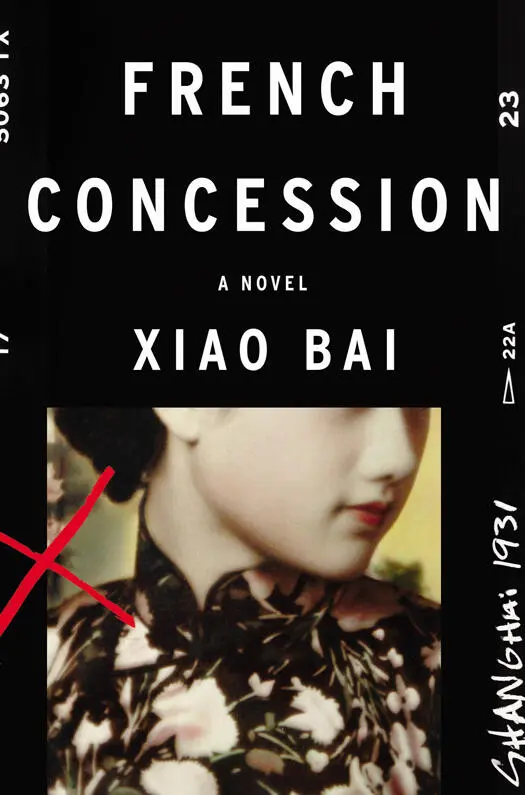
- Название:French Concession
- Автор:
- Издательство:HarperCollins
- Жанр:
- Год:2015
- ISBN:нет данных
- Рейтинг книги:3 / 5. Голосов: 1
-
Избранное:Добавить в избранное
- Отзывы:
-
Ваша оценка:
French Concession: краткое содержание, описание и аннотация
Предлагаем к чтению аннотацию, описание, краткое содержание или предисловие (зависит от того, что написал сам автор книги «French Concession»). Если вы не нашли необходимую информацию о книге — напишите в комментариях, мы постараемся отыскать её.
A boat from Hong Kong arrives in Shanghai harbor, carrying an important official in the Nationalist Party and his striking wife, Leng. Amid the raucous sound of firecrackers, gunshots ring out; an assassin has shot the official and then himself. Leng disappears in the ensuing chaos.
Hseuh, a Franco-Chinese photographer aboard the same boat, became captivated by Leng’s beauty and unconcealed misery. Now, she is missing. But Hsueh is plagued by a mystery closer to home: he suspects his White Russian lover, Therese, is unfaithful. Why else would she disappear so often on their recent vacation? When he’s arrested for mysterious reasons in the French Concession and forced to become a police collaborator, he realizes that in the seamy, devious world of Shanghai, no one is who they appear to be.
Coerced into spying for the authorities, Hseuh discovers that Therese is secretly an arms dealer, supplying Shanghai’s gangs with weapons. His investigation of Therese eventually leads him back to Leng, a loyal revolutionary with ties to a menacing new gang, led by a charismatic Communist whose acts of violence and terrorism threaten the entire country.
His aptitude for espionage draws Hseuh into a dark underworld of mobsters, smugglers, anarchists, and assassins. Torn between Therese and Leng, he vows to protect them both. As the web of intrigue tightens around him, Hsueh plays a dangerous game, hoping to stay alive.
French Concession — читать онлайн бесплатно полную книгу (весь текст) целиком
Ниже представлен текст книги, разбитый по страницам. Система сохранения места последней прочитанной страницы, позволяет с удобством читать онлайн бесплатно книгу «French Concession», без необходимости каждый раз заново искать на чём Вы остановились. Поставьте закладку, и сможете в любой момент перейти на страницу, на которой закончили чтение.
Интервал:
Закладка:
A quarter past three. He rapped on the rear window of the truck cab, signaling to Park to start the engine. The truck edged slowly toward the northern end of Rue Vouillemont. A 35 mm camera peeked out from under the tarp covering the cargo bed, near the front of the truck.
A moment later, their target emerged from Avenue Édouard VII.
The first car was an armored police vehicle equipped with a cannon. The second was a small truck, another armored vehicle that had been newly reinforced with steel plates. It carried the takings from that day’s races in cash. According to the papers, the Race Club could make 100,000 silver yuan in a single day. On a day like this, for the Champagne Stakes, there must be at least 500,000 yuan circulating in the Race Course, and Ku was certain that at least 100,000 would be in this armored truck. This was the first cash transport of the day, and it was leaving the Race Course quietly, before the last race ended. It would send most of the Race Club’s takings for the day directly to its coffers. This was the truck he would attack.
Marksmen were waiting on the roof of a two-story building on the left-hand side of Rue Vouillemont. They were armed with the grenade launchers that the White Russian woman had sold him. He had recognized them from a glance at the diagram, having seen photos of many different weapons in the Soviet ammunition course he took. They looked like rifles mounted on a two-legged tripod, but they fired grenades, not bullets. He didn’t know the precise Chinese name for these weapons, but then they probably weren’t available on the Chinese market. The most exciting thing about these launchers, and the reason why he had planned this particular operation, was that they could fire grenades that penetrated armor, straight into the heart of a target, where they would explode.
Unfortunately, he hadn’t had much time to train the marksmen. They took their boats beyond Wu-sung-k’ou, where he had them float buoys in the water and sail about fifty meters away. Then his men would lie prostrate on the roof of the boat’s cabin, in the exact positions they would be taking up during the operation, and shoot at the buoys. He didn’t care about wasting ammunition; he wanted to make sure they would get it right. When the waters were calm, they always hit their targets — he had handpicked the best marksmen. But whenever it was windy, and the buoys began to drift, their hit rates plummeted. They weren’t used to these launchers, or to the trajectory of the grenades as they traveled toward their targets.
But he had planned for all that. That was precisely why they were attacking from Rue Vouillemont. He knew the armored vehicle’s route inside out. It had to drive along Avenue Édouard VII, the boundary between the French Concession and the International Settlement, and turn onto Rue Vouillemont from there. Those arrogant bastards, he thought. They hadn’t even thought to change the route occasionally in case they might be attacked.
The rules of the road differed between the French Concession and the International Settlement. In the latter, cars drove on the left according to the British system, but the Municipal Office stipulated that cars in the Concession had to drive on the right, and it wouldn’t budge.
(Ku had no way of knowing that the Board of Works and the Municipal Office were in talks to standardize traffic rules in Shanghai, and that from the end of that year onward, all cars in Shanghai would have to drive on the left. Shortly thereafter, the Kuomintang government would turn that into national law.)
The armored motorcade drove out of the road to the left of the public toilets, and made a U-turn around the opening in the median on Avenue Édouard VII. As it turned into Rue Vouillemont, it would have to stop briefly on the left-hand side of the road.
Shanghailanders had long thought that the traffic rules in the two concessions should really be standardized. At this intersection, for instance, cars making a left turn out of Rue Vouillemont would have to turn onto the far left lane of Avenue Édouard VII. Drivers often began to turn the steering wheel before they even reached the street corner, to avoid the traffic on Avenue Édouard VII and cut directly into the queue. But this also meant that they were driving straight into southbound traffic on the left-hand side of Rue Vouillemont. Ku discovered that the armored truck always made this turn very carefully. It would stop for about ten seconds, to avoid running into those impatient drivers. After all, it was carrying a truckload of cash.
The sun beat down on the red armored trucks. Snipers hid inside the police vehicle, which had machine guns on the turrets. Ku peered out at the truck from behind the tarp. The camera slid to one side, beneath his chin, to give him room. Once he started shooting, the cameraman appeared to forget how frightened and exhausted he was. There were two parallel rows of rivets along the edge of the armored truck’s rectangular body. Ku waited.
The road was white with the sunshine, and he couldn’t make out the glow of the launchers. But in the split second before his eardrums vibrated with the explosion, he saw the grenades tear open the armor of the police vehicle and explode its turret, the top of which lifted off altogether and lodged in the branches of a nearby tree.
All the way along Avenue Édouard VII, Race Course Road, and Mohawk Road, firecrackers rang out. He had arranged for them to explode along the route to the Race Course, like a string of those ancient beacon towers used to warn against invasion. Finally, the Race Course itself would be rocked by explosions. The deadliest bombs he had were hidden in the toilets beneath the VIP box.
He saw Park jump out of his own truck and run toward the armored truck. According to the plan, he would kill everyone on that truck, and drive it away to the film studio on Rue Gaston Kahn, where he would hide until it was dark. Then he would drive quietly to the banks of Chao-chia Creek, where a small boat would be waiting for him.
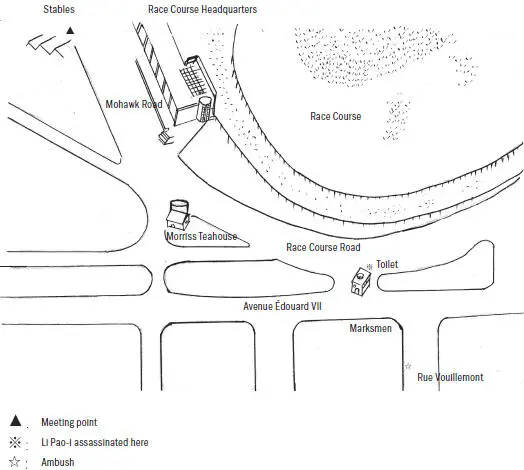
The Race Course and environs
With the finish line in sight, he turned to look at the cameraman. He wanted to watch the film of his own masterpiece as soon as he had time. But just then, he saw the steel plate on the right-hand side of the armored truck shift just a crack, and he realized that he had overlooked the rivets. A pale face shimmered behind the dark holes, he saw the glow of a machine gun, and the two men running behind Park fell dead to the ground. Park pulled out his Mauser, and waved his arms, as though he was about to leap into the river. Then his arm was torn off at the shoulder by a barrage of bullets, and it fell to the ground before he did.
He could see them all retreating, rushing out of the longtang, jumping off the truck. Those losers. He could feel his anger welling up through the veins in his neck and going straight to his head. The skin behind his ears pulsed, nearly exploding with rage. He picked up the launcher in the corner of the cargo bed and took a deep breath while his hands calmly loaded another round. Without even bothering to take aim, he fired. The grenade tore off the entire back of the armored truck, which began to smoke. Ku pulled out his gun, jumped out, and made for the other truck. Its driver was unconscious from the impact of the grenade. He opened the door, fired his remaining bullets into the body, and then shoved it aside with his knees. He started the engine. He had no time to wait for anyone else, for his own truck, or even to get the film inside the camera. He sped southward in the armored truck.
For a moment, he mourned for Park. He had lost his most loyal follower, the one who was almost a brother to him. He sometimes wondered whether he had made the anonymous phone call betraying Park’s older brother to the police in order to take his place.
Читать дальшеИнтервал:
Закладка:
Похожие книги на «French Concession»
Представляем Вашему вниманию похожие книги на «French Concession» списком для выбора. Мы отобрали схожую по названию и смыслу литературу в надежде предоставить читателям больше вариантов отыскать новые, интересные, ещё непрочитанные произведения.






Обсуждение, отзывы о книге «French Concession» и просто собственные мнения читателей. Оставьте ваши комментарии, напишите, что Вы думаете о произведении, его смысле или главных героях. Укажите что конкретно понравилось, а что нет, и почему Вы так считаете.