Xiao Bai - French Concession
Здесь есть возможность читать онлайн «Xiao Bai - French Concession» весь текст электронной книги совершенно бесплатно (целиком полную версию без сокращений). В некоторых случаях можно слушать аудио, скачать через торрент в формате fb2 и присутствует краткое содержание. Год выпуска: 2015, Издательство: HarperCollins, Жанр: Современная проза, на английском языке. Описание произведения, (предисловие) а так же отзывы посетителей доступны на портале библиотеки ЛибКат.
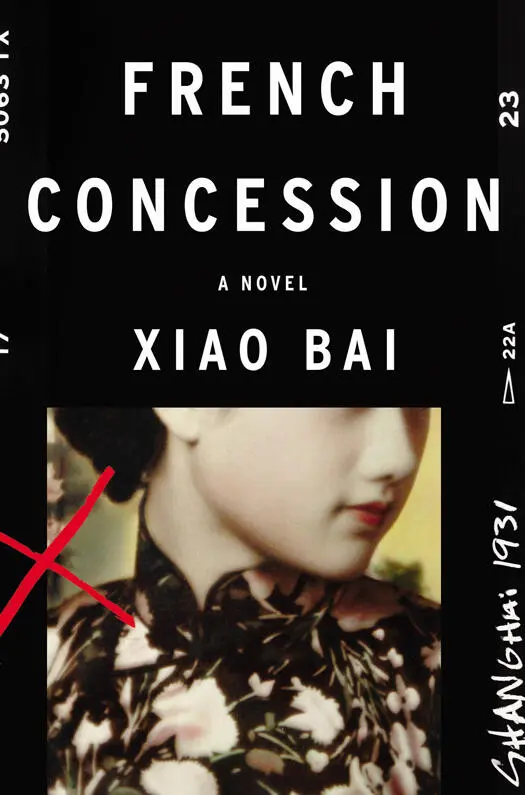
- Название:French Concession
- Автор:
- Издательство:HarperCollins
- Жанр:
- Год:2015
- ISBN:нет данных
- Рейтинг книги:3 / 5. Голосов: 1
-
Избранное:Добавить в избранное
- Отзывы:
-
Ваша оценка:
French Concession: краткое содержание, описание и аннотация
Предлагаем к чтению аннотацию, описание, краткое содержание или предисловие (зависит от того, что написал сам автор книги «French Concession»). Если вы не нашли необходимую информацию о книге — напишите в комментариях, мы постараемся отыскать её.
A boat from Hong Kong arrives in Shanghai harbor, carrying an important official in the Nationalist Party and his striking wife, Leng. Amid the raucous sound of firecrackers, gunshots ring out; an assassin has shot the official and then himself. Leng disappears in the ensuing chaos.
Hseuh, a Franco-Chinese photographer aboard the same boat, became captivated by Leng’s beauty and unconcealed misery. Now, she is missing. But Hsueh is plagued by a mystery closer to home: he suspects his White Russian lover, Therese, is unfaithful. Why else would she disappear so often on their recent vacation? When he’s arrested for mysterious reasons in the French Concession and forced to become a police collaborator, he realizes that in the seamy, devious world of Shanghai, no one is who they appear to be.
Coerced into spying for the authorities, Hseuh discovers that Therese is secretly an arms dealer, supplying Shanghai’s gangs with weapons. His investigation of Therese eventually leads him back to Leng, a loyal revolutionary with ties to a menacing new gang, led by a charismatic Communist whose acts of violence and terrorism threaten the entire country.
His aptitude for espionage draws Hseuh into a dark underworld of mobsters, smugglers, anarchists, and assassins. Torn between Therese and Leng, he vows to protect them both. As the web of intrigue tightens around him, Hsueh plays a dangerous game, hoping to stay alive.
French Concession — читать онлайн бесплатно полную книгу (весь текст) целиком
Ниже представлен текст книги, разбитый по страницам. Система сохранения места последней прочитанной страницы, позволяет с удобством читать онлайн бесплатно книгу «French Concession», без необходимости каждый раз заново искать на чём Вы остановились. Поставьте закладку, и сможете в любой момент перейти на страницу, на которой закончили чтение.
Интервал:
Закладка:
He couldn’t see behind him, so he didn’t know that the chassis of the truck had been completely torn open, spilling a trail of silver onto the road. The inhabitants of the French Concession would celebrate. Three whole days later, the municipal street cleaners would still be digging silver yuan coins from crevices in the drains.
CHAPTER 56
JULY 19, YEAR 20 OF THE REPUBLIC.
3:20 P.M.

Days later, Yan Feng couldn’t stop thinking about that afternoon. He had slipped away from Rue Vouillemont in the chaos, with his camera and tripod in tow. He had run all the way to the imposing gate of the Foreigners’ Cemetery, which towered over it like a city wall. There he flagged down a rickshaw, and had the rickshaw man take him back to the studio on Rue Gaston Kahn.
Dozens of cars were crowded at the entrance to T’ing-yüan Lane. Policemen swarmed in and out, and he didn’t dare go in. The actress Pearl Yeh was rushed out in the bathrobe she had been wearing on set. She jumped in her car and hurried away.
What could he possibly say to the police? What would the others say? There was no way they would believe his story that he had been forced at gunpoint into accepting a side gig from a Communist.
A few years ago, he had been a war zone reporter for the National Revolutionary Army, shooting footage that was cut into newsreels and shown alongside Hollywood flicks in the concessions’ movie theaters. He even got an award from the Artistic Editing Group of the Central Propaganda Department’s Shanghai office. But all those newsreels had been faked. He was never asked to shoot a real battle. As a matter of fact, he wouldn’t have been able to follow the soldiers up steep hills or wade through rivers with that 35 mm camera of his. The newsreels all had scripted, predetermined storylines. Soldiers would lie on the ground dressed as rebels, with uniforms stripped from real corpses on the battlefield, which came ragged with bullet holes.
But in the reel he had shot that afternoon, all the bodies were real. As he hid behind his camera, he thought about how the scene didn’t look all that different from a movie set. Bullets crumbled the brick walls as though centuries of weathering had been compressed into seconds. The injured lay convulsing on the ground. Blood didn’t spurt from their wounds — it leaked like ketchup from a spilt bottle. The explosions deafened him, and it felt like listening to bombs echo from a distance. The turret on the armored police vehicle looked like an exploding eggshell. In fact, the sheets of metal that tore off and curled up looked softer than eggshells. In the blinding sunlight, he could see bullets spark against the metal sides of the truck from behind his viewfinder.
Only later did he realize that these men were Communists. On Mohawk Road, before setting out, they had sworn an oath and made a statement on camera, declaring war on imperialists and counterrevolutionaries. He even got their hammer-and-sickle flag into the shot.
Not long ago, a few of the ghost movies he had shot for Hua Sisters Motion Picture Studio had been sent to the Shanghai Movie Inspection Committee, which had forced them to cut the movie. It had to be resubmitted a few times, and was only passed after his bosses had put in a few words with the right people, but his best scenes had all been cut. He started feeling that the Communists had a point. The motion picture world had had its own run-in with imperialism just that past year, over Welcome Danger , an imported film with a demeaning view of the Chinese. Protesters showed up at the cinema, making speeches during screenings and staging protests outside. Yan went along to chant slogans and wave his flag. He was tagging along at the very end of the procession, but the police arrested him and locked him up for half a day anyway. The film turned Yan into an enemy of imperialism.
He loved cameras, and he loved making movies. He would usually go anywhere with anyone who wanted him to shoot film. He didn’t want anyone touching his camera, and shooting film was his job.
But now that it was over, he was terrified. He was afraid of being questioned by the police. This was a huge deal, and they could charge him with anything they liked. They could even accuse him of collaborating with the Communists and send him to the Kiangsu Provincial Supreme Court. That would mean an automatic minimum sentence of eight or ten years, and whenever they felt like being tough on Communists, they could simply have him shot.
He told the rickshaw man to turn around and head in the opposite direction.
He didn’t know whether to develop that reel of film. He wasn’t satisfied with his work. He hadn’t had an assistant, and those men knew nothing about film — they didn’t even bring a light-proof changing bag. From where he had been standing on the truck, his camera was too high up and there wasn’t enough depth of field, so the strong sunlight would turn most of the background white. These men would want to be recognizable; they wanted to be heroes. That meant he couldn’t make the aperture any narrower, and risked ruining the film by overexposing it. He hadn’t had his Watkins Bee Meter with him. It was still in his jacket pocket, draped over the chair in the film studio. An exposure meter like that wasn’t easy to come by.
But this film was unlike any he had ever shot in his life. It was real, more real than all the weapons he had ever seen. He shot wide shots, then close-ups, then wide shots, then close-ups, wanting to convey the volatility in every moment.
He didn’t dare show up at work. When he finally called in, someone told him that Pearl Yeh had taken fright and announced she would be resting at home. The studio had no choice but to stop production on the movie, and delay its release. But they couldn’t complain, because the sensational news would make the movie a box office success. The following night, he could hardly stop himself from destroying the film. It would be so easy. Cellulose nitrate burns instantly, so a single match would do the trick.
Then last night, he had been sitting by the window, reading the papers. It was humid, and the clouds hung oppressively low over the city. Lightning sliced through the night sky. It could rain any moment.
He didn’t hear the key turn in the lock. But when he looked up, there was a man standing in the doorway with a canvas raincoat on. His silhouette looked familiar. The man closed the door, locked and bolted it, and turned to face him. He was wearing a sou’wester pulled down over his eyes.
The tea-colored glasses with tortoiseshell rims threw him off, but within seconds, he recognized the leader of the gang. The hero of his latest film, and the protagonist of the day in all the newspapers. His name was said to be Ku Fu-kuang. His newspaper fluttered gently onto the table.
“I’ve come to get it,” he said.
“I haven’t got the film. The police came for it.” He didn’t dare give the film to this man. He didn’t know what he wanted with it. Did he want a souvenir to corroborate his shaky memory? What if he decided to show it openly, and Yan’s own name appeared in the credits? That would land him a charge of collaboration and ten years in prison. You disagree? Well then the penalty is death, to be carried out immediately.
“Mr. Yan.” The man was carrying a messenger bag, like an errand boy at a trading firm. He put the bag on the table and took out a cigarette case, matches, and a gun, which he tossed on the table. “I’ve been watching you for days. You haven’t gone to work, you’ve been hiding at home, and the cops haven’t been to see you. You still have it.”
Читать дальшеИнтервал:
Закладка:
Похожие книги на «French Concession»
Представляем Вашему вниманию похожие книги на «French Concession» списком для выбора. Мы отобрали схожую по названию и смыслу литературу в надежде предоставить читателям больше вариантов отыскать новые, интересные, ещё непрочитанные произведения.










Обсуждение, отзывы о книге «French Concession» и просто собственные мнения читателей. Оставьте ваши комментарии, напишите, что Вы думаете о произведении, его смысле или главных героях. Укажите что конкретно понравилось, а что нет, и почему Вы так считаете.