Xiao Bai - French Concession
Здесь есть возможность читать онлайн «Xiao Bai - French Concession» весь текст электронной книги совершенно бесплатно (целиком полную версию без сокращений). В некоторых случаях можно слушать аудио, скачать через торрент в формате fb2 и присутствует краткое содержание. Год выпуска: 2015, Издательство: HarperCollins, Жанр: Современная проза, на английском языке. Описание произведения, (предисловие) а так же отзывы посетителей доступны на портале библиотеки ЛибКат.
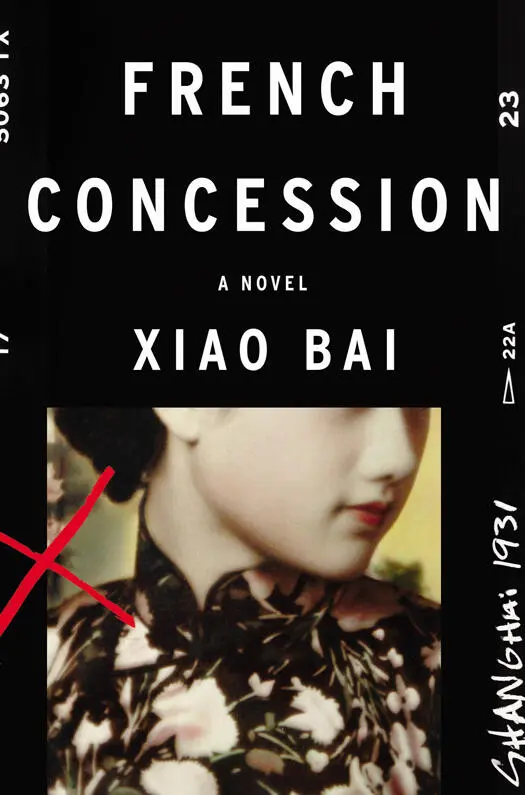
- Название:French Concession
- Автор:
- Издательство:HarperCollins
- Жанр:
- Год:2015
- ISBN:нет данных
- Рейтинг книги:3 / 5. Голосов: 1
-
Избранное:Добавить в избранное
- Отзывы:
-
Ваша оценка:
French Concession: краткое содержание, описание и аннотация
Предлагаем к чтению аннотацию, описание, краткое содержание или предисловие (зависит от того, что написал сам автор книги «French Concession»). Если вы не нашли необходимую информацию о книге — напишите в комментариях, мы постараемся отыскать её.
A boat from Hong Kong arrives in Shanghai harbor, carrying an important official in the Nationalist Party and his striking wife, Leng. Amid the raucous sound of firecrackers, gunshots ring out; an assassin has shot the official and then himself. Leng disappears in the ensuing chaos.
Hseuh, a Franco-Chinese photographer aboard the same boat, became captivated by Leng’s beauty and unconcealed misery. Now, she is missing. But Hsueh is plagued by a mystery closer to home: he suspects his White Russian lover, Therese, is unfaithful. Why else would she disappear so often on their recent vacation? When he’s arrested for mysterious reasons in the French Concession and forced to become a police collaborator, he realizes that in the seamy, devious world of Shanghai, no one is who they appear to be.
Coerced into spying for the authorities, Hseuh discovers that Therese is secretly an arms dealer, supplying Shanghai’s gangs with weapons. His investigation of Therese eventually leads him back to Leng, a loyal revolutionary with ties to a menacing new gang, led by a charismatic Communist whose acts of violence and terrorism threaten the entire country.
His aptitude for espionage draws Hseuh into a dark underworld of mobsters, smugglers, anarchists, and assassins. Torn between Therese and Leng, he vows to protect them both. As the web of intrigue tightens around him, Hsueh plays a dangerous game, hoping to stay alive.
French Concession — читать онлайн бесплатно полную книгу (весь текст) целиком
Ниже представлен текст книги, разбитый по страницам. Система сохранения места последней прочитанной страницы, позволяет с удобством читать онлайн бесплатно книгу «French Concession», без необходимости каждый раз заново искать на чём Вы остановились. Поставьте закладку, и сможете в любой момент перейти на страницу, на которой закончили чтение.
Интервал:
Закладка:
If this accident had happened at any other time, the Shanghailanders would not have let it slide. But although there were thousands of foreign troops in Shanghai and dozens of cruisers moored in the Whampoa, not to mention the fact that the American naval fleet in Manila could arrive in Shanghai within forty-eight hours, the representatives of the neutral foreign countries said nothing and let the furor die down. Never before had they shown such restraint. But over the past few days, they had all been impressed by the surge of patriotism in Shanghai and the unexpected fearlessness of the Chinese troops.
Lieutenant Sarly was standing at the door to the police headquarters together with the chief of police, getting ready to welcome their guests in the senior officer uniform that he reserved for special occasions. All the foreign police officers were standing to one side of the door in three rows awaiting inspection, carrying rifles and wearing black helmets edged in white. Japanese planes had taken to hovering over Concession airspace, and a number of “accidental” bombing incidents had been reported in commercial areas. Nonetheless, curious spectators had gathered on Route Stanislas Chevalier outside the iron fences enclosing the gardens on the western side of the building. The winter sun gave the porcelain-tiled roof of the octagonal pagoda in the corner of the garden a tranquil, almost lazy glow. Under the sign of Heng Tai and Co., the corner store across the road, several children stopped playing and stood there, as though the mere sight of the policemen had rooted them to the ground. The police were welcoming the commander in chief of the Japanese Army stationed in the International Settlement, and the first secretary of the Japanese consulate, Sawada-san. They had arranged to discuss public security in the concessions.
Sarly was feeling dejected. Since the events of January 28, when the Japanese Navy and ground forces had begun to attack Chapei, Jiangwan, and other places in Chinese-administered Shanghai, Shanghailanders had grown increasingly pessimistic. But Sarly’s pessimism predated the attack. Since the incident the previous July that had rocked the Concession and even piqued the interest of observers in Paris, he had begun to feel that the Shanghailanders’ days of colonial leisure were numbered. He used to be very optimistic about the future of the concessions, but he no longer was. Even though no one would blame him for this state of affairs, he blamed himself and people like him, men in positions of responsibility, who had insisted on sticking to old colonial ways. They had thought they could control the concessions and keep millions of Chinese in line with power politics. All these men intent on milking the concessions of their riches had caused its downfall.
The secretary on duty rushed down the steps and into the main door of the police headquarters, to give a memorandum of a phone conversation to the chief of police. The chief glanced at the memo and handed it to Sarly. It was a phone call from the Japanese consulate, informing them that Sawada-san’s visit to the Concession Police headquarters that morning would regrettably have to be canceled. Two grenades had landed inside the northeastern walls of the consulate at eight thirty that morning. Although no one had been hurt, the Japanese considered it unsafe for Sawada-san to leave the building. As soon as he received the report, the secretary had made enquiries about the incident, and Commander Martin in the International Settlement had told him that the grenades had been hurled into the consulate from the rooftop of a nearby warehouse on Whangpoo Road.
Baron Pidol was sitting at the bar in the French Club, reading a newspaper. The windows had been shut tight, the lawn was parched, and the parasol tree was bare. Indoors it was warm as spring.
A political cartoon in the newspaper caught his eye. Signed by Mario, the Italian man, it was of a plane hovering over a map of Shanghai, dropping bombs on the city. It had already burned a large hole in the northeast corner of the map, and a gust of wind was blowing the bombs in the center of the map toward the southwest, toward the land that he and his partners had bought for huge sums of money.
Not until the third day after hostilities began did Baron Pidol realize the gravity of the situation. Before then he had secretly been pleased by the turn of events. He and the other speculators privately believed that it wouldn’t be a bad thing for the Japanese Army to teach Nanking a lesson. At cocktails at the Japanese consulate, he had even suggested to Sawada-san that many foreign businessmen like himself felt that a civilized Asian country such as Japan could play a greater role in the concessions. In fact, if all the Japanese wanted to do was bomb the newly built northeast of the city, which the government had begun to develop in the name of the Greater Shanghai Plan, everyone would profit.
But three days ago, he had watched Japanese soldiers in civilian clothes toss bombs out of a car into the crowd. He had seen shrapnel slit the throat of a passerby and intestines spill out of a man’s belly, a dusty mass of what looked like spaghetti-shaped cream and bread crumbs with jam. He had clutched the hand of a friend of his, a worldly speculator type, who died as blood bubbled out of his throat.
Lin P’ei-wen and Ch’in Ch’i-ch’üan had waited for a break in the bombing before crossing Garden Bay in a sampan boat. The bay was where Soochow Creek flowed into the Whampoa. They moored the boat at a pier in the Chinese-administered Old Town and walked through its streets until they got to Boulevard des Deux Républiques. The French Concession had already been sealed off by military police. Electrified fences had been erected all along the French side of Chao-chia Creek and other canals, and there were armored cars parked behind them.
The gates had also been closed, to stop refugees from flooding into the Concession. But Lin and Ch’in kept slipping in and out of the Concession as they pleased, all because of the unusual location of their safe house, an advantage that no one had anticipated when they first rented it. The shih-k’u-men building itself was in the French Concession, but its east wing looked out onto Chinese-administered territory, and the Concession Police hadn’t bothered to barricade the full length of Boulevard des Deux Républiques — all they did was block off the major intersections. Lin and Ch’in were able to get into the Concession by climbing up a rope ladder that hung from the window of the apartment. In the early hours of the morning, they wormed their way onto the roof of a warehouse on Whangpoo Road, and lobbed a few grenades into the Japanese consulate as retaliation for the Japanese attacks on civilians.
A few days ago, it had been rumored that the Japanese Army was about to attack the Old Town. Its residents flooded toward the neutral Concession, but the police stopped them with their rifles and armored cars. Lin immediately decided he would help as many ordinary civilians as possible flee the war zone. A few hundred refugees fled into the Concession via his rope ladder.
Hsueh had just come out of Therese’s apartment. Via her connections in the White Russian gangs, he had discovered where a certain White Russian businessman was hiding. The man had been renting his trading firm’s trucks out to plainclothes Japanese officers who were murdering civilians in the Concession. Someone had made a note of his license plate number, 1359, and reported it to the police. Hsueh passed the intelligence on to the Nanking observers in Shanghai, as well as his old friend Lin. But neither of them was able to find the man, who had long since gone into hiding. Only a tightly knit circle of Russians knew where he was.
Therese had been recuperating for half a year now. She felt stronger on the inside, as if she had died and come back to life. She had been tested before, long ago, both in Talien and in the Japanese marine police prison at Hoshigaura. She had become cold as ice, and hard as iron. Her past hadn’t just molded her character, it had also reshaped her memory. From that time onward, all her memories, whether she was recounting them to someone or talking to herself in the dead of night, sounded to her as though they had been made up. They could be beautiful illusions or ghastly nightmares. She didn’t hate the Japanese police, even though they had tortured her to make her tell them where Hugo had kept his money. She didn’t hate the German either — when she was forced to tell the police something, she described him as a blond Austrian, Hugo Irxmayer, the man who had given her his name. The whole time they were together, he had never told her he was a pirate who commandeered freight ships in the Bohai Sea, and sold their silks and coal on to Japanese businessmen at the piers of the South Manchuria Railway. She had been a happy White Russian woman until the day that the Japanese police barged into her rooms in Talien and found a Lee-Enfield rifle in her trunk — not that she knew the name of the rifle until much later. Only after she was released did someone come to tell her that Hugo, the redhead, had been killed in a gunfight, and left her some money and a pile of jewels.
Читать дальшеИнтервал:
Закладка:
Похожие книги на «French Concession»
Представляем Вашему вниманию похожие книги на «French Concession» списком для выбора. Мы отобрали схожую по названию и смыслу литературу в надежде предоставить читателям больше вариантов отыскать новые, интересные, ещё непрочитанные произведения.










Обсуждение, отзывы о книге «French Concession» и просто собственные мнения читателей. Оставьте ваши комментарии, напишите, что Вы думаете о произведении, его смысле или главных героях. Укажите что конкретно понравилось, а что нет, и почему Вы так считаете.