Kathleen Spivack - Unspeakable Things
Здесь есть возможность читать онлайн «Kathleen Spivack - Unspeakable Things» весь текст электронной книги совершенно бесплатно (целиком полную версию без сокращений). В некоторых случаях можно слушать аудио, скачать через торрент в формате fb2 и присутствует краткое содержание. Год выпуска: 2016, Издательство: Knopf, Жанр: Современная проза, на английском языке. Описание произведения, (предисловие) а так же отзывы посетителей доступны на портале библиотеки ЛибКат.
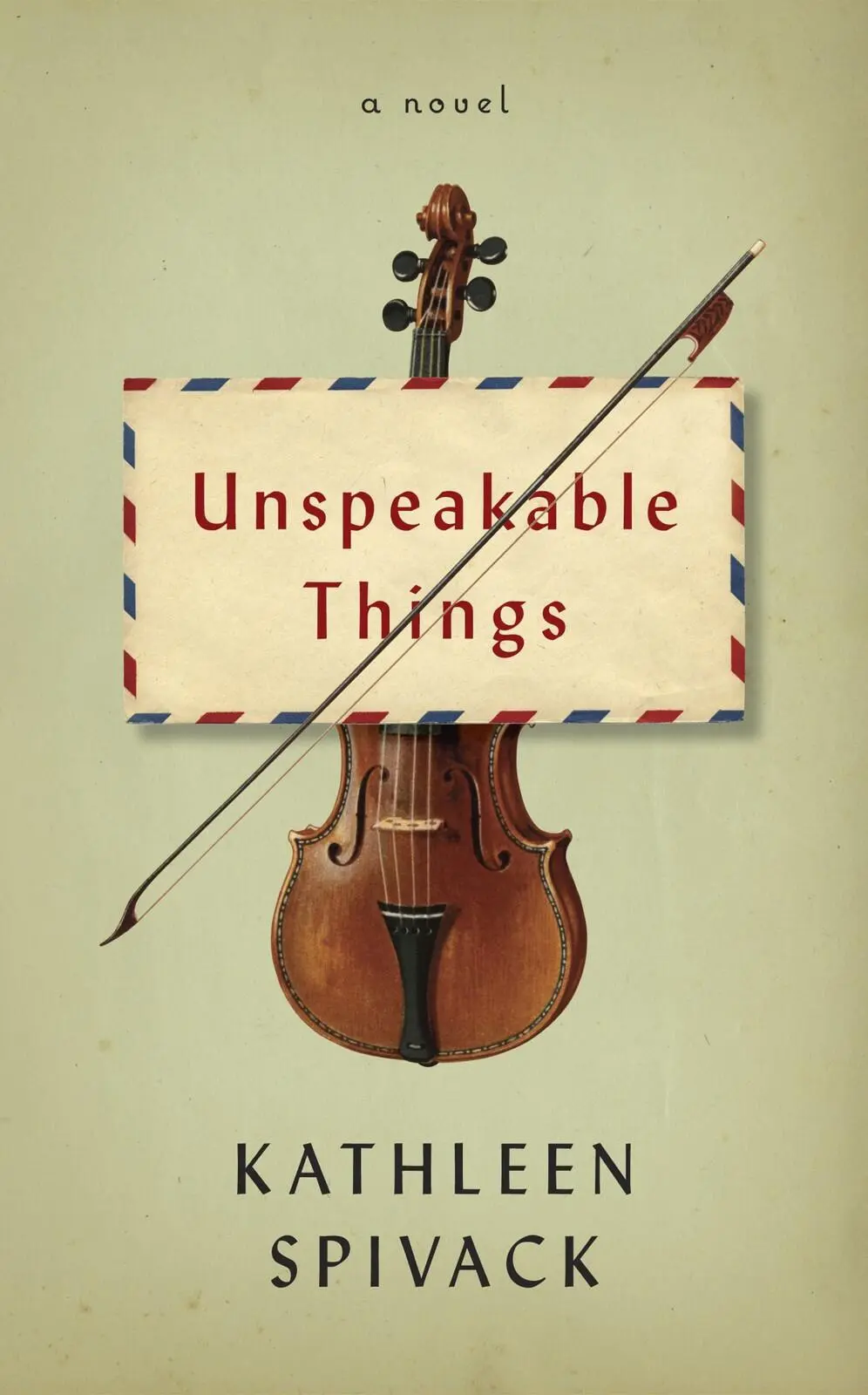
- Название:Unspeakable Things
- Автор:
- Издательство:Knopf
- Жанр:
- Год:2016
- ISBN:нет данных
- Рейтинг книги:4 / 5. Голосов: 1
-
Избранное:Добавить в избранное
- Отзывы:
-
Ваша оценка:
Unspeakable Things: краткое содержание, описание и аннотация
Предлагаем к чтению аннотацию, описание, краткое содержание или предисловие (зависит от того, что написал сам автор книги «Unspeakable Things»). Если вы не нашли необходимую информацию о книге — напишите в комментариях, мы постараемся отыскать её.
and
. A strange, haunting novel about survival and love in all its forms; about sexual awakenings and dark secrets; about European refugee intellectuals who have fled Hitler’s armies with their dreams intact and who have come to an elusive new (American) “can do, will do” world they cannot seem to find. A novel steeped in surreal storytelling and beautiful music that transports its half-broken souls — and us — to another realm of the senses.
The setting: the early 1940s, New York — city of refuge, city of hope, with the specter of a red-hot Europe at war.
At the novel’s center: Anna (known as the Rat), an exotic Hungarian countess with the face of an angel, beautiful eyes, and a seraphic smile, with a passionate intelligence, an exquisite ugliness, and the power to enchant. . Her second cousin Herbert, a former minor Austrian civil servant who believes in Esperanto and the international rights of man, wheeling and dealing in New York, powerful in the social sphere yet under the thumb of his wife, Adeline. . Michael, their missing homosexual son. . Felix, a German pediatrician who dabbles in genetic engineering, practicing from his Upper East Side office with his little dachshund, Schatzie, by his side. . The Tolstoi String Quartet, four men and their instruments, who for twenty years lived as one, playing the great concert halls of Europe, escaping to New York with their money sewn into the silk linings of their instrument cases. .
And watching them all: Herbert’s eight-year-old granddaughter, Maria, who understands from the furtive fear of her mother, and the huddled penury of their lives, and the sense of being in hiding, even in New York, that life is a test of courage and silence, Maria witnessing the family’s strange comings and goings, being regaled at night, when most are asleep, with the intoxicating, thrilling stories of their secret pasts. . of lives lived in Saint Petersburg. . of husbands being sent to the front and large, dangerous debts owed to the Tsar of imperial Russia, of late-night visits by coach to the palace of the Romanovs to beg for mercy and avoid execution. . and at the heart of the stories, told through the long nights with no dawn in sight, the strange, electrifying tale of a pact made in desperation with the private adviser to the Tsar and Tsarina — the mystic faith healer Grigory Rasputin (Russian for “debauched one”), a pact of “companionship” between Anna (the Rat) and the scheming Siberian peasant — turned — holy man, called the Devil by some, the self-proclaimed “only true Christ,” meeting night after night in Rasputin’s apartments, and the spellbinding, unspeakable things done there in the name of penance and pleasure. .
Unspeakable Things — читать онлайн бесплатно полную книгу (весь текст) целиком
Ниже представлен текст книги, разбитый по страницам. Система сохранения места последней прочитанной страницы, позволяет с удобством читать онлайн бесплатно книгу «Unspeakable Things», без необходимости каждый раз заново искать на чём Вы остановились. Поставьте закладку, и сможете в любой момент перейти на страницу, на которой закончили чтение.
Интервал:
Закладка:
“Yes?” asked Herbert rather indifferently.
“A friend well known to the family,” muttered David. Then, with a kind of malicious, darting pleasure, he leaned forward. “A certain doctor.”
To his surprise, his father did not seem in the least dismayed. “Is it true?” was all he asked his son mildly. David nodded, feeling deflated, deprived of his moment of triumph. He had hoped to shock his father, or at least surprise him. But the old man betrayed nothing.
“So…,” Herbert said, half-closing his eyes again, sinking into his own reverie. David realized his father was exhausted and saw Herbert’s age upon his face. The thin winged shoulders, the faded overcoat, the sagging, wrinkled demeanor — but wait, wasn’t that deceptive? Even as David watched, Herbert seemed to gather his coat about him, seemed to gather force. And, still immobile, it was as if a faint pulsation of light surrounded Herbert’s creased dilapidation.
Herbert muttered to himself, then deliberately changed the subject. “Have you seen your mother yet?” He looked his son directly in the eyes.
David sighed with exasperation. He had traveled all night on the train to bring his little moment of triumph, dropping the letter like a bone at his father’s feet, wanting approval, wanting to be noticed. Wanting to hear, “Very good, my son. You have done well.” Wanting to be acknowledged. Instead, he felt his weariness: small, useless, stupid. The old man probably knew it all along anyway. Why had he bothered? Would he ever be free of this family? Hopelessness swept over him. Couldn’t his father ever let him rest?
Herbert called the waitress for two more cups of coffee. He leaned toward David. Herbert allowed his son to see into his opaque weariness, the sunken eyes, the brows curving downward in immense fatigue. Then, as David watched, the eyes took on their keen liquidity again, small, red-rimmed, and piercing. “Felix, did you say?” he questioned, looking intently into David’s face. Like a blow, like a wake-up call, David felt the force of his father’s personality upon him once again. He straightened, invigorated.
“Very good, my David,” Herbert said approvingly. And the small boy, reaching for the first move of the first pawn, glowed.
“Does anyone else know?” asked Herbert.
“No,” David said. “I wanted to talk with you first.”
“Ah.” Both men sat now in companionable silence, drinking their coffee.
“I am not surprised,” said Herbert softly. It always seemed too easy. Deals made in secret with anonymous persons. Too simple for the Countess to get out. “Yes, it fits,” mused Herbert. He wondered how Felix had gotten his hands on his letter to Anna. But that was not important now. “Did Felix read Esperanto? Probably,” thought Herbert.
“We know he has been receiving shipments from Europe,” David said thoughtfully. Both men looked at each other. Of course. “The net will be closing now.”
“Ah yes, checkmate.”
“But not right away. We must be patient.”
Herbert nodded, his eyes fully closed now.
Chapter 19 DON’T LEAVE
Across town, in their jar, the severed fingers of the Tolstoi Quartet musicians were going wild. It was always so in the evenings, when they sensed the beginning of music time. In the dusk, driven to a frenzy by the vibrations in the air, the fingers started their undisciplined dances against the sides of the jar. The urge to feel — anything. Even glass. As Adeline danced upon her bed linens, so the fingers, more sensitive for being their severed selves, began to twitch. The familiar rhythms, sound without voice, those faint tremblings in the air, became intolerable. The fingers knew their parts by heart. Adeline thrummed, raising the presence of her dearest child. And the fingers thrummed against the sides of their pickle jar: “Let us out!”
With one accord, they sought again the frequencies of Schubert’s Death and the Maiden. Da, da da duh da, they played, each in his own part. The chemicals in which they lay sloshed to the music. They hammered against the sides of the glass. They would play as if compelled. For they were summoning now, summoning David to come and find them. “Come, save us,” they played to David. “We are here. We are waiting. Come to us. Hear us.”
But David did not hear them that night. He couldn’t sleep, sharing the uncomfortable cold couch with his wife. He twitched restlessly; he stared at the ceiling.
“Don’t leave,” Ilse begged, although she knew that he would have to go.
“It’s only for a little while,” he promised. He sensed a moment of irritation; something crossed his concentration. Were they never to have time enough together, never space of their own? “We are together always.”
“Always?” questioned Ilse. She thought of the distance between them, her job, the children, the problems of money and food and health.
David remembered the stale basement in which he worked, the temporary lodgings he shared with three other tired, impatient German refugees, all deciphering and translating what was for the most part nonsense, useless print. “Yes,” he said, against all evidence. “We are always together; you know that. Even when we must be apart.”
“Especially when we’re apart,” said Ilse thoughtfully.
Michael watched from the corner. “Love her. Be happy. Nothing else matters.” He uncoiled himself into smoke. David and Ilse drew in their breaths. Michael entered their mouths, kissing them both as he allowed himself to be inhaled. “I am with you.”
“He died for us,” thought the lovers. Then, quickly, as if to drown that thought, David kissed his wife deeply.
“My darling,” Ilse whispered. Was it to Michael or to David that she gave herself? It did not matter. Her love flowed toward him, out of the past they had lived together, all of them.
“Yes,” said the watching spirit of Michael from both within and without. Pressing himself inside their bodies, he felt the force of their lives’ pulsation. He sighed, expiring again, this time in ecstasy. He panted; he could not breathe. But it was all right, this not breathing.
The orgasm took David and Ilse, and at the crest, right where the wave curled, they saw the pale floating face of their skeletal beloved. David gasped as he took his wife in love.
“Help me!” begged Michael as he clawed at the jar of their memory.
“Oh,” cried David and Ilse in one hoarse whisper to each other. And spent, they lay upon each other while a black despair came over them. They held each other and tried to brush despair away. They would never succeed; it lay on the underside of every happy moment they were to have. Shaken by the depth of their love, they lay, not needing to speak, gazing into the bare room, each holding the precious body of the other.
“We will find a place for ourselves as soon as this bloody war is done,” David promised, kissing her. He stroked her strong hands, which lay softly opened toward him still. “We will find a little house, one with our own room.”
“Yes,” agreed Ilse, curling herself around her husband’s body. “David,” she whispered. “How I love you; I’ve always loved you. Yes, right from the moment I saw you.”
“And I, I, too, loved you,” David lied. For in fact, he had not noticed her in his university classes at first, this quiet girl. “But I love you more now than ever.” This was truly spoken. Quietly, they lay while the interchange softened their bodies, and finally they gave themselves together in sleep.
Was it Adeline who was dreaming this whole story? Adeline, who lay in her crazy bed, far removed from any action? Adeline drummed her fingers on the edges of her sheets and blankets, as if her blind fingers could find their way home through music. Her fingers found their way through the scores her brain half knew. Schubert, Brahms, Mendelssohn. “My son, I am calling you. From my bereft womb, I am calling you.” Michael sat beside her. His breath wreathed about her, and his parted lips still held, as a kiss, his last denied breath.
Читать дальшеИнтервал:
Закладка:
Похожие книги на «Unspeakable Things»
Представляем Вашему вниманию похожие книги на «Unspeakable Things» списком для выбора. Мы отобрали схожую по названию и смыслу литературу в надежде предоставить читателям больше вариантов отыскать новые, интересные, ещё непрочитанные произведения.








Обсуждение, отзывы о книге «Unspeakable Things» и просто собственные мнения читателей. Оставьте ваши комментарии, напишите, что Вы думаете о произведении, его смысле или главных героях. Укажите что конкретно понравилось, а что нет, и почему Вы так считаете.