Hedi Kaddour - Waltenberg
Здесь есть возможность читать онлайн «Hedi Kaddour - Waltenberg» весь текст электронной книги совершенно бесплатно (целиком полную версию без сокращений). В некоторых случаях можно слушать аудио, скачать через торрент в формате fb2 и присутствует краткое содержание. Год выпуска: 2009, Издательство: Vintage, Жанр: Современная проза, на английском языке. Описание произведения, (предисловие) а так же отзывы посетителей доступны на портале библиотеки ЛибКат.
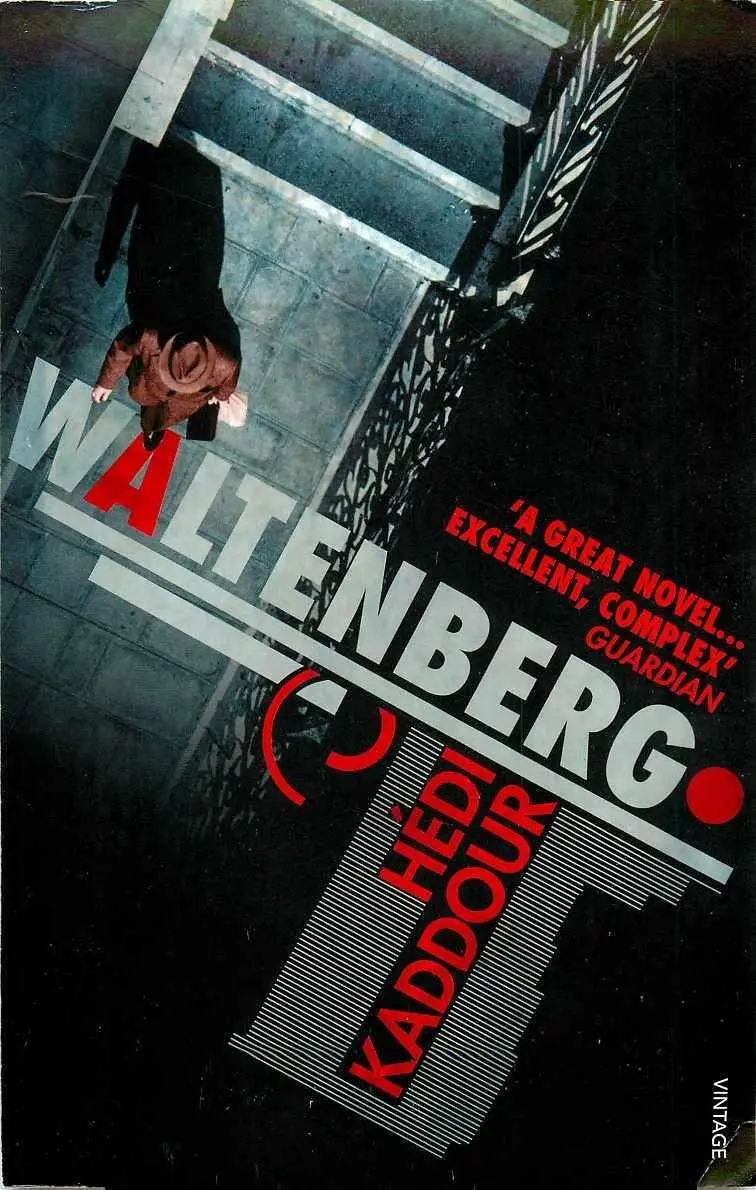
- Название:Waltenberg
- Автор:
- Издательство:Vintage
- Жанр:
- Год:2009
- ISBN:нет данных
- Рейтинг книги:3 / 5. Голосов: 1
-
Избранное:Добавить в избранное
- Отзывы:
-
Ваша оценка:
Waltenberg: краткое содержание, описание и аннотация
Предлагаем к чтению аннотацию, описание, краткое содержание или предисловие (зависит от того, что написал сам автор книги «Waltenberg»). Если вы не нашли необходимую информацию о книге — напишите в комментариях, мы постараемся отыскать её.
Waltenberg
Waltenberg — читать онлайн бесплатно полную книгу (весь текст) целиком
Ниже представлен текст книги, разбитый по страницам. Система сохранения места последней прочитанной страницы, позволяет с удобством читать онлайн бесплатно книгу «Waltenberg», без необходимости каждый раз заново искать на чём Вы остановились. Поставьте закладку, и сможете в любой момент перейти на страницу, на которой закончили чтение.
Интервал:
Закладка:
A smile, Max’s eyes swivel towards the garden gate:
‘But I’ll get even!’
While they wait for the guest of honour to arrive, the Consul’s wife suggests a game of croquet, there was no time for her husband to do more than glare at her, the others acquiesced, fancy, the best she can come up with is a game of croquet saying it was the latest thing in Singapore.
Max was enthusiastic:
‘It’s starting up again, 1914 all over, no, ’25 or ’26, I did play in 1914 but the last time was ’26, in Rabat, in the gardens of the Residence, Lyautey’s place, a great moment, I’ll have to tell you about Lyautey, you know in those days I talked a lot with our beloved Lyautey, who’d overstayed his welcome, about the colonies, the Riff war. He was all Indochina, he’d interrupt me and say, Clappique, I’m an Asia man, absolutely! And I’d have to listen, and fascinating it was too, now and then I’d be permitted to say a word about the Riff, anyway, until he gets here, everyone look to their mallets!’
Max has explained the rules to the beginners, the Morels and the two diplomats, the grey one and the pink one: the nine hoops stuck in the lawn, the ball you hit with a mallet, but please not as in golf, you barbarian, watch me, face forward, legs apart, mallet swinging like a pendulum between the legs, eyes front, then a smart, sharp tap, clack, taking turns, in teams of two, through the nine arches, yes nine, I didn’t make the rules, (to the pink diplomat) no sniggering! nine hoops, in order, and then turn for home, Rabat, though, was a different kettle of fish!
Max is starting to feel hot, he swings his arms about, shuffles his feet, blinks a lot, no, he says to de Vèze, I never liked being called ‘The African’, in those days, during the Riff wars, I wasn’t very good at my trade, shush! not a word, at times Max goes off into a kind of trance and ignores all and sundry, he lets his eyes settle on the ocean, the lawn, the trees, not very good at my trade at all.
In one corner of the garden, on the side nearest the sea, there is a twisted knot, which looks beyond unravelling, of roots which turn into branches or trunks, branches that take root in the soil, a tangle of trees and leaves so intricately intertwined that you can’t make out what’s what, your eye returns to the lawn, the Consul said that his garden is a bottomless pit, you stop tending, draining, uprooting for just one week, and nature sneaks back, puts out shoots, you can’t see it happening, and then one fine morning you find yourself with creepers swarming all over the veranda, and as for the lawn, don’t ask! a very fragile thing is a real lawn, the soil, the climate, a true, even green, cut with shears once a week by gardeners on their knees.
Max surveys the garden, a large white patch stands out against the green, nine hoops, ages ago a chap in a white djellaba is playing croquet, only has one eye, in 1925 in the gardens of the Residence at Rabat, the man’s right eye is fine, he’s a quick learner, he plays well, he’s one of the finest shots in the whole of the Atlas, old man, lost his eye in a shoot-out with our side, now he’s one of us, one of the best formal surrender ceremonies we ever organised, you should have seen the way he handed over his rifle! Anyone would have thought he was giving it to us to clean, us the overlords! Pity that times change, a terrific do, yes that’s really the scent of orange blossom, 1925, end of an era that no one sees coming, the moment when Lyautey is about to be pushed on to the sidelines by Pétain, but no one sees it coming.
Spit-roasted mutton, no, braised lamb, at the Residence the spit-roasts are generally left to the tourists, we have more sophisticated palates, a baked-mud oven, a very fierce flame, when the fire begins to make hot embers a bucket of water is thrown on to them, two or three sucking lambs are laid on the cinders, the oven is closed and made airtight, it’s left to cook for ten or twelve hours, the meat is incomparably tender, Lyautey is very partial to a game of croquet, see how considerate he is with the man with one eye, a government school, strategy, alliances, your shot, you’ll understand.
In Morocco at that time things are not going at all well, so play a game of croquet, make an effort not to gloat too much over Spanish setbacks in the northern Riff, thirteen thousand hidalgos killed in two nights at the start of the revolt, they never recovered from that, lots of prisoners, the privates, had their throats cut; for the officers the Riffians demanded ransoms with fairly short deadlines, Lyautey likes watching his guests eat, Moroccan-style, with their fingers, looks down rather on those who use both hands and the ones who guzzle their food and leave nothing on their plates, it was better to be a prisoner of Abd el-Krim’s regulars, with them you didn’t get much to eat but at least they tried to abide by modern laws, whereas the others, the not-so-regulars who fought only when the enemy crossed their land, had no idea of how to treat prisoners.
The ones whose throats they did not cut were tied head down to a stake, then a fire was lit at the foot of the stake, to some they dangled the prospect of the fiery furnace and to the rest they talked of paradise, mind you, our soldiers didn’t take many prisoners either, photos of heads lined up in a row on a low wall by grinning squaddies, they send stuff like that home, when they kept a prisoner, it was to make him talk, and their letters to their mates, yesterday we occupied a village, bints to bust your tackle. Lyautey’s officers did not care for that sort of thing.
On the lawn of the Consulate, de Vèze has noticed the historian’s wife, yellow dress, bare shoulders, wispy floating material, he tries to approach her, a reflex, for something to do until the guest of honour comes, because she’s married, because he wants her to look at him, she’s not a tease, not very tall, almost plump, light auburn hair, pointed nose, quick movements, not my type, it would be a change.
And the historian-husband has twigged what de Vèze is up to, like the dog which instinctively positions himself between its mistress and the passer-by, he spends his time coming between de Vèze and his wife, accidentally as it were, like Moine, Albert Moine, who also went to school at the Lycée Montaigne, Moine is in a restaurant with his wife, she is ten times better-looking than him, one day he was seen with this woman, no one ever knew how he’d managed it, dark hair, beautiful and, as in Brave New World, pneumatic, with eyes that shine. The moment he sees de Vèze coming towards their table Moine gets up, round face, small round glasses which make him look like Beria, he stands in front of the table, says hello, shakes hands, darling this is my friend Henri de Vèze, Éliane, my wife, it’s twenty years ago since that happened but you can still hear Moine’s intonation, very refined, ‘my wife’, intended to indicate that you’re not such close friends as all that, he smiles, Moine knows you only too well, he stood in your path, with his left hand extended holding his napkin to remind you that he has better things to do than talk to you, no way will you be invited to join them, show’s over, the women have been shared out and you sense that if you try to force the pace the distinguished husband will grab you and wrestle you to the ground, it comes to the same with the historian and his wife.
All de Vèze can do is glance at the young woman out of the corner of his eye, plumpish, vivacious, against a background of greenery, a weird display of vegetation obviously assembled by a collector who put tropical plants next to a few species imported from Cornwall, the ones that have survived, for broadly speaking European plants need winter, a proper winter.
Max has picked the croquet teams: the Consul and his wife, no, said the Consul, I have to keep an eye out for the arrival of our guest, must stick to protocol, very well, said Max, de Vèze I’ll inflict you on our Consuless.
Читать дальшеИнтервал:
Закладка:
Похожие книги на «Waltenberg»
Представляем Вашему вниманию похожие книги на «Waltenberg» списком для выбора. Мы отобрали схожую по названию и смыслу литературу в надежде предоставить читателям больше вариантов отыскать новые, интересные, ещё непрочитанные произведения.






Обсуждение, отзывы о книге «Waltenberg» и просто собственные мнения читателей. Оставьте ваши комментарии, напишите, что Вы думаете о произведении, его смысле или главных героях. Укажите что конкретно понравилось, а что нет, и почему Вы так считаете.