Hedi Kaddour - Waltenberg
Здесь есть возможность читать онлайн «Hedi Kaddour - Waltenberg» весь текст электронной книги совершенно бесплатно (целиком полную версию без сокращений). В некоторых случаях можно слушать аудио, скачать через торрент в формате fb2 и присутствует краткое содержание. Год выпуска: 2009, Издательство: Vintage, Жанр: Современная проза, на английском языке. Описание произведения, (предисловие) а так же отзывы посетителей доступны на портале библиотеки ЛибКат.
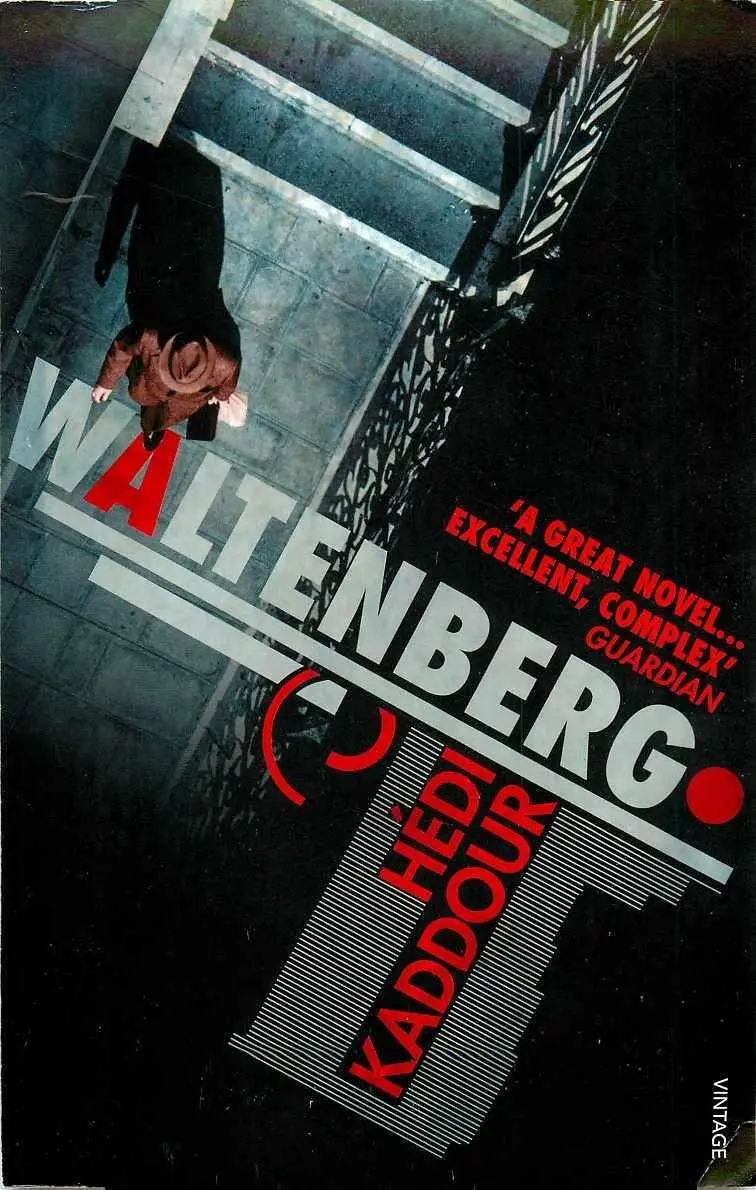
- Название:Waltenberg
- Автор:
- Издательство:Vintage
- Жанр:
- Год:2009
- ISBN:нет данных
- Рейтинг книги:3 / 5. Голосов: 1
-
Избранное:Добавить в избранное
- Отзывы:
-
Ваша оценка:
Waltenberg: краткое содержание, описание и аннотация
Предлагаем к чтению аннотацию, описание, краткое содержание или предисловие (зависит от того, что написал сам автор книги «Waltenberg»). Если вы не нашли необходимую информацию о книге — напишите в комментариях, мы постараемся отыскать её.
Waltenberg
Waltenberg — читать онлайн бесплатно полную книгу (весь текст) целиком
Ниже представлен текст книги, разбитый по страницам. Система сохранения места последней прочитанной страницы, позволяет с удобством читать онлайн бесплатно книгу «Waltenberg», без необходимости каждый раз заново искать на чём Вы остановились. Поставьте закладку, и сможете в любой момент перейти на страницу, на которой закончили чтение.
Интервал:
Закладка:
You stayed on for a few days at Waltenberg, an informal session of the Forum, barely thirty participants, on the question of interest rates in Europe, dry-as-dust. You are the only French person there. You followed the debate but did not speak.
That evening, in the lounge, there was a freer and more political discussion, about rumours of the tramp of Soviet jackboots in the East, in Afghanistan, you thought about what you’d said to Lilstein, you weren’t taken in, you can see through his game, even his melancholy, he is never stronger than when his morale is low, he loves playing the part, he relaxes into it, he seems to be asking for help, but you know he could give an order and have you liquidated, no, you can’t convince yourself that the thing is possible, you run through your multiple Lilsteins, there’s the first, the one you’ve only just left, who eats his Linzer like a little boy, his spirits are low, he is against the warmongers, he agreed to go to bed with the butchers to change the world but the world hasn’t changed, so he does all he can to make it change, you are friends, and the world does change, only not the way he wanted, he decides to retire and drops everything, he shows you the trumps in his side’s hand to prevent the worst from happening, just like Cuba, because he hates the mangy dogs of war, as he calls them, he passes you everything so that the Americans will react swiftly, ruthlessly, and force the Soviets to back down, thus no invasion of Afghanistan.
But you’re not entirely sure of this first Lilstein, there is undeniably a second, without scruples, we’re not going to allow the said Asian country to turn the clock back, revive the droit du seigneur and feudal dues, progress has been made and must be preserved, there are the frontiers of socialism to defend, an interventionist Lilstein who uses both his own doubts and you to persuade the West that there are very high-placed Soviets who are opposed to this intervention, intelligent men in other words, and the West must help these intelligent communists by being flexible, and making the most of this flexibility the Soviets, the warmongering crowd, will march into Afghanistan and present the West with a fait accompli, yet maybe Lilstein is genuinely opposed to this intervention, in which case he would use the flexibility of the West to tell Moscow that American flexibility is in all likelihood a trap set by the Americans.
The Americans demonstrate by their flexibility that they would like the Soviets in turn to land themselves in a pit of shit in Afghanistan, so going into Afghanistan would mean walking into an imperialist trap, so they shouldn’t go in.
But if Lilstein does favour intervening, he can also say that by making the Soviets believe that intervention is an imperialist trap, the Americans want the Soviets to back off the idea of intervening and thus demonstrate a weakness which would be prejudicial to the interest of socialism across the globe. That’s Lilstein number four. You tell yourself that there must be others.
And then you’d got tired of pondering all this by yourself, you banished Lilstein from your thoughts that evening, in the lounge of the Waldhaus, so that you could address a few Forum colleagues and two or three good-looking women, and you gave your hypotheses another airing.
You delivered under several headings, in a thorough-going Kriegspiel, a sheaf of hypotheses, like an exquisite papyrus flower, from one end of a sofa, to ten or so people, sometimes a brief pause to savour the smoke of your Monte-Cristo, and the non-smokers smile and are happy to breathe in what is rare and costly, you are elated, you have never spoken as freely, you don’t give a shit about Chagrin, Lilstein, his retirement, everything, you know that in Paris your slanging-match with Chagrin has thrown everything into the mixing-bowl, she will cut off your access to the President.
And when you got back, reception party at Orly, three tight-lipped men, a Citroën, the SM which you don’t like, the suspension makes you feel car-sick, they drove you directly to the Élysée, taking you in through the garden.
The chief’s floor, the chiefs antechamber, he doesn’t like being called ‘chief, everyone is tense, you feel you are no longer the man everyone likes because he puts the chief in a good mood, you can’t catch anybody’s eye, one of the men who is escorting you knocks on a door, stands back to let you in, closes it behind you and then the President comes on to you like a jealous lover:
‘My dear fellow, they tell me that at Waltenberg you gave a dazzling analysis of Soviet policy, you see I already know all about it, you mustn’t be so modest, it wasn’t you in journalistic mode, I was told that you made four points, the logic was incisive, but they weren’t able to give me details, but really, when you hand out the brilliant analyses you could at least let me be the first to hear them, just the two of us, instead of shooting your mouth off in the lounge of a Swiss hotel, I’m jealous, I said just us two, you must know I never repeat any of our conversations. Way back, during the Cuba crisis, you gave first-rate advice, but let’s not beat about the bush: if the Afghanistan situation were to develop, what would you advise?’
You tell your jealous chief you have no idea, he insists, eventually you say that now is the time to display those qualities of diplomacy which have been the rule since Choiseul and Talleyrand: neither prudence nor impulsiveness, allow time to look before you leap. If the Russians invade Afghanistan and win, it would still be just a dump, full of peasants, and if they lose, it will be a terrific result for the West.
‘Couldn’t agree more,’ says the President, ‘words of wisdom. Over Cuba you took a harder line, that was more like you.’
You get a smile from him, a smile of amused benevolence for your concern about the West as a whole and even the Atlantic Alliance, an acute analysis which in reality boils down to little more than a policy of ‘wait and see’.
‘But as head of state, I have to act, I have to think of the interests of France, not just of the Atlantic Alliance, this time the Russians must not be weakened too much, otherwise you can say goodbye to our national independence, there’ll have to be a painful face-to-face with the hot-dog eaters, the Russians must not be humiliated and made to withdraw, Cuba was lesson enough for them, and that god-forsaken Asian hole can remain within their traditional sphere.’
You tell him maybe he’s right, that you don’t know, you imagined he would be a lot less like de Gaulle, he’s very fond of acting up like an Englishman or a New Englander, and here he is talking about national independence, in the election he stood against a Gaullist who nowadays is reduced to attending parties given by the Marshal’s widow, but once elected he pursued the very policies he had previously denounced and rejected, evidently with forked tongue, he runs a risk in doing so, he loves playing this role when you’re with him, he probably doesn’t do it often, but when you are his audience of one he doesn’t pass up the chance, journalists reckon that this concern with national independence is the product of certain French constants, your man is constrained by history, geography, economics, pommes-frites, but you know that if he’s acting this way now it’s basically because for some time he’s been increasingly drawn to doing things he doesn’t like doing, he feels easier when he’s doing them, it’s a rule of politics: if you choose to do what you don’t like doing it gives you better control, and you aren’t so disappointed.
You reflect that there must be one last Lilstein, the one who anticipated that you would suspect him of having at least four faces, that you would build four hypotheses, and that those hypotheses would eventually lead you to the office of the President, who will eventually tell you that he has opted for a policy of flexible response to the Soviets, that the Germans will follow suit, and then even the Americans have just confirmed that they won’t push too hard on this one.
Читать дальшеИнтервал:
Закладка:
Похожие книги на «Waltenberg»
Представляем Вашему вниманию похожие книги на «Waltenberg» списком для выбора. Мы отобрали схожую по названию и смыслу литературу в надежде предоставить читателям больше вариантов отыскать новые, интересные, ещё непрочитанные произведения.










Обсуждение, отзывы о книге «Waltenberg» и просто собственные мнения читателей. Оставьте ваши комментарии, напишите, что Вы думаете о произведении, его смысле или главных героях. Укажите что конкретно понравилось, а что нет, и почему Вы так считаете.